


Landing at Keflavik International Airport is the start of most Iceland adventures, and for many travelers that adventure begins with a rental car key. Driving yourself from Keflavik (KEF) opens up the Ring Road, the South Coast waterfalls, the Golden Circle, and easy detours to the Blue Lagoon. Yet Iceland’s unique weather, road conditions, and insurance quirks mean that picking up a car at KEF is not as simple as it is in many other countries. This guide walks you through how to rent a car directly from Reykjavik Keflavik Airport for an Iceland road trip, what kind of vehicle you really need, how to handle winter driving, and how to time your Blue Lagoon stopovers and return so your trip runs smoothly.
Get the latest updates straight to your inbox!
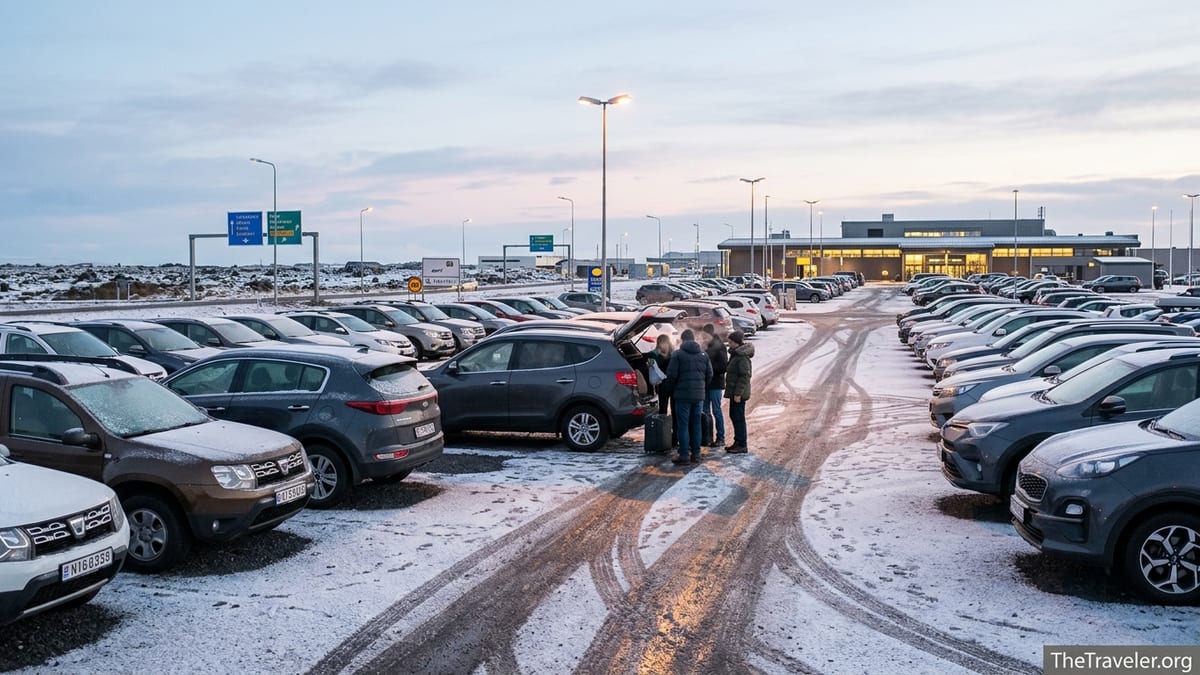
How Keflavik Airport car rental works
All international flights to Reykjavik arrive at Keflavik International Airport, about 45 minutes’ drive from downtown Reykjavik. Car rental here is well set up for self-drive trips. Major international brands like Hertz, Avis, Budget, and Enterprise operate alongside Icelandic specialists such as Blue Car Rental, Lava Car Rental, Lotus, and Reykjavik Rent a Car. Most companies have counters inside the arrivals hall or in a dedicated car rental area just outside, with vehicles parked in nearby lots.
In practice, you clear immigration, collect your luggage, then follow signs for “Car Rental” or “Car Hire.” If you have booked with an international brand like Hertz Iceland, you typically complete paperwork at the desk and walk 3 to 5 minutes to the parking area to inspect your car. With local companies like Blue or Lava, you may either find a small desk in the terminal or meet a representative just outside arrivals who shuttles you a few minutes to their off-airport lot. Pickup is usually quick, but in peak summer afternoons queues can form, so build at least an extra 30 to 45 minutes into your schedule if you plan to drive a long distance on arrival day.
Real-world rental prices at Keflavik vary with season and demand. As a rough guide, a compact 2WD hatchback in shoulder season might start around the equivalent of 50 to 70 US dollars per day, while a mid-size 4x4 SUV like a Kia Sportage or Dacia Duster in July or August can easily range closer to 110 to 160 dollars per day before insurance extras. Automatic transmission is common, but manuals are still offered; if you need an automatic, explicitly choose it when booking. Booking at least a few weeks ahead, and often several months for peak summer or Christmas/New Year travel, usually gives you better choice and pricing than trying to rent on arrival.
Before you leave the lot, always walk around the car with your phone out and record slow video of every panel, wheel, the windshield, and the interior. Gravel chips, minor scratches and small windshield stars are common in Iceland. Companies are generally professional, but the more documentation you have, the easier it is to avoid disputes about what damage is new versus pre-existing when you return to Keflavik at the end of your trip.
Choosing the right rental car for your Iceland itinerary
The best car at Keflavik for your Iceland road trip depends on three main factors: season, route, and your comfort with winter or rough-road driving. For a summer trip focused on paved routes like the Golden Circle, the South Coast to Vik, the Snaefellsnes Peninsula, and a full Ring Road loop, a standard 2WD compact or mid-size car is usually sufficient in normal conditions. Companies such as Reykjavik Rent a Car and Go Car Rental explicitly say that for a paved Ring Road itinerary in July, a 2WD is typically fine and often more fuel-efficient than a heavier SUV.
Once winter enters the picture, or if your plans include gravel and mountain routes, a 4x4 becomes far more compelling. Local rental providers and driving guides generally recommend a 4WD SUV between roughly November and March for travelers doing more than just a short Reykjavik city stay. Vehicles commonly rented for winter Ring Road or South Coast trips include Dacia Duster, Kia Sportage, Toyota RAV4, Hyundai Tucson, and larger models like the Toyota Land Cruiser for groups or heavy luggage. These SUVs do not make you invincible in snow and ice, but they add traction, ground clearance, and stability in side winds that can be intense on open stretches of Route 1.
If you plan to access Iceland’s interior highlands in summer, pay close attention to “F-roads” on your map or GPS. These highland tracks are clearly marked with an F, such as F35 or F208, and are legally restricted to 4x4 vehicles. Rental contracts usually prohibit taking small cars or 2WDs on F-roads, and damage from river crossings is almost always excluded from insurance. For example, Hertz Iceland and several local agencies state that a 4x4 is mandatory for any F-road use and emphasize that drivers must respect road closures and river conditions, especially in the highlands, where no amount of insurance will cover careless fording of deep rivers.
Beyond terrain and season, think about space and comfort. Two people with light luggage might be perfectly comfortable in a compact car, but a family of four doing a 10-day Ring Road circuit will appreciate a mid-size SUV’s cargo room. Add up your suitcases, camera gear, and groceries you may carry between remote guesthouses. Iceland’s weather is changeable, so it is not unusual to pack bulky waterproof and cold-weather gear; having room to spread things out rather than stacking bags to the ceiling makes day-to-day travel more pleasant and safer.
Understanding Iceland car rental insurance at KEF
Insurance decisions can feel like the most confusing part of renting a car at Keflavik. In Iceland, most rental packages automatically include a basic Collision Damage Waiver (CDW) and third-party liability. CDW reduces your financial responsibility if you damage the car, but it usually carries a high deductible that can run to hundreds or even a few thousand US dollars. Many companies then offer Super Collision Damage Waiver (SCDW), which lowers that deductible substantially. For instance, Icelandic operators like Hey Iceland and Hertz Iceland note that SCDW can cut your self-risk to something in the region of tens of thousands of Icelandic krona rather than several hundred thousand.
On top of CDW and SCDW, you will typically see add-ons like Gravel Protection, Sand and Ash Protection (often labeled SAAP), windshield and tire protection, and sometimes theft protection bundles. Gravel Protection is particularly relevant on Iceland’s many unpaved roads and even on sections of the Ring Road where passing traffic can throw small stones. Companies such as Reykjavik Rent a Car build Gravel Protection into their higher-tier “Platinum” cover, which can shield you from paying out of pocket for typical stone chips to bodywork or glass. Sand and Ash Protection is a more Iceland-specific product, designed to cover damage when volcanic ash or sand carried by high winds effectively “sandblasts” the paint and glass, most commonly in exposed areas of the South Coast.
Travelers often wonder whether credit card insurance from cards like Chase Sapphire or American Express Premium Car Rental Protection is enough to skip local insurance. These cards can provide valuable primary collision coverage, sometimes even with zero deductible, but they usually exclude specialty Icelandic risks such as sand and ash or gravel-blasting. Iceland-based agents and many seasoned visitors suggest reading your card’s policy language carefully and, if necessary, combining card coverage with at least Gravel Protection and Sand and Ash Protection bought from the rental company. Remember that no policy will cover reckless behavior, such as driving through closed roads, crossing rivers in a standard SUV, or ignoring strong wind warnings.
Because insurance names and bundles differ slightly between companies, a practical approach is to compare a “max coverage” package with a mid-level one when booking. For example, a basic CDW-only rate for a 2WD compact might appear much cheaper than the same car with SCDW, Gravel Protection, and SAAP, but the difference per day can be far less dramatic than the cost of a single windshield replacement or sandblasting respray. Many visitors ultimately choose a near-comprehensive package for peace of mind, especially in winter or when planning a long Ring Road itinerary with thousands of kilometers of potential exposure to gravel, wind, and fast-changing conditions.
Winter driving from Keflavik and along the Ring Road
Winter driving in Iceland can be spectacular and stressful in equal measure. From approximately November through March, and sometimes into April, road surfaces around Keflavik, Reykjavik, and the Ring Road can alternate rapidly between wet, icy, snowy, and dry. Rental companies equip cars with appropriate seasonal tires; in winter, that usually means studded tires or quality winter tires, which provide much better grip than typical all-season tires used in milder climates. However, even with winter tires and a 4x4, you should expect shorter daylight hours, strong crosswinds, and sudden whiteouts in some regions.
A common KEF scenario is landing early on a winter morning and immediately driving toward the South Coast or the Golden Circle. If you are arriving from a warm climate with little snow-driving experience, it may be wise to schedule a gentler first day: pick up your car, drive the 45 minutes to Reykjavik in daylight, rest, and then head out on longer legs the next morning. Iceland’s national road authority operates a detailed conditions map and webcams that locals check daily; using these before you depart Reykjavik or Keflavik gives you a realistic picture of what you will face on the road between, for example, Selfoss and Vik or Akureyri and Egilsstadir.
Along the Ring Road in winter, winds can be as much of a hazard as snow. Open sections of Route 1 in the South and East are notorious for gusts that can push high-sided vehicles sideways or throw loose gravel and sand. Rental companies and local driving guides often emphasize that if wind warnings show speeds above certain thresholds, it is safer to delay travel for a few hours or reschedule a leg. Many visitors heading from Reykjavik to Jokulsarlon or the East Fjords build an extra day or two of slack into their itineraries specifically to accommodate weather-related delays without needing to drive when conditions are unsafe.
Practical winter tips include reducing your speed well below posted limits when ice or packed snow is visible, leaving large following distances, and avoiding sudden braking or sharp steering inputs. In a Dacia Duster or similar 4x4, use gentle throttle and low gears on steep or slippery descents and be wary of black ice on bridges and shaded curves. In extreme conditions, even large 4x4s are regularly seen pulled over waiting out squalls. Locals will frequently advise that the most important piece of winter equipment is not the vehicle itself but the driver’s willingness to turn back, stop, or change plans when conditions deteriorate.
Do you really need a 4x4 at Keflavik for Iceland road trips?
Whether you “need” a 4x4 from Keflavik is a nuanced question. For a July or August itinerary that sticks to well-traveled paved routes like Reykjavik, the Golden Circle, the South Coast to Vik or Skaftafell, and perhaps Snaefellsnes, many Icelandic rental companies state plainly that a 2WD car is adequate for most travelers. This is especially true if you are comfortable driving in rain and wind, are traveling light, and are not attempting any F-roads or interior tracks. You save on both rental price and fuel, and parking in Reykjavik’s older districts can be easier with a compact vehicle.
As shoulder seasons approach, such as late September or early May, the balance starts to shift. Road conditions on the Ring Road can be largely fine one day and wintry the next. Several local experts and long-term visitors describe doing autumn Ring Road trips in 2WD sedans without issue but admit that if prices are close, they would choose a 4x4 for added security. In practice, this might mean booking a compact SUV like a Kia Sportage instead of a small hatchback, accepting a small increase in daily rate as a form of weather insurance.
In full winter, from roughly November through March, strong consensus among Iceland-based companies and frequent travelers is that a 4x4 or all-wheel-drive vehicle is highly recommended for any significant road trip beyond Reykjavik itself. While the Ring Road is generally well-maintained, snow drifts, ice, and wind mean that extra traction can make the difference between feeling in control and feeling constantly on edge. For example, travelers who have driven the South Coast in February in both 2WD and 4x4 vehicles often report that, while a 2WD can technically complete the route when conditions are mild, the 4x4 offered noticeably more stability and confidence in slush, on packed snow, and when pulling away from icy parking areas at sights like Skogafoss or Diamond Beach.
Finally, any plan involving F-roads or the highlands in summer, such as driving to Landmannalaugar or across Kjolur (F35), strictly requires a 4x4 and usually one with higher ground clearance. Many companies list specific models as suitable for F-roads, such as Toyota Land Cruiser or modified 4x4 campers, and explicitly forbid smaller crossovers from these tracks. If your dream itinerary includes these routes, ensure your KEF rental agreement allows F-road use and that you understand which types of river crossings are not covered by insurance, even in a capable four-wheel-drive.
Planning KEF pickup, Blue Lagoon stopovers, and Ring Road timing
Keflavik’s location on the Reykjanes Peninsula makes it a natural starting point for both quick self-drive day trips and multi-day Ring Road journeys. A popular pattern is to pick up your rental car at KEF, drive directly to the Blue Lagoon, soak for a few hours, then continue to Reykjavik or onward along the South Coast. The Blue Lagoon sits roughly 15 to 20 minutes by car from the airport and is essentially on the route toward Reykjavik, so stopping there adds minimal detour. Official guidance from both the airport and the lagoon notes that parking for self-drive visitors is straightforward and signposted, making this one of the easiest first-day activities if you are not too jet-lagged.
Many travelers with morning arrivals at Keflavik aim for an afternoon Blue Lagoon booking, leaving enough time for passport control, luggage, rental pickup, and the short drive. If your flight lands around 7:00 or 8:00, a lagoon slot around midday often works well. Afterward, you can drive the remaining 40 to 45 minutes into Reykjavik, check into your accommodation, and enjoy an early night. For evening arrivals, consider saving the Blue Lagoon for your departure day or a later slot in your itinerary, especially in winter when driving unfamiliar roads in the dark after a long-haul flight can be tiring.
For longer itineraries, distances on the Ring Road may look short on a map but can take more time than expected. The full loop is roughly 1,300 kilometers, and a classic 8 to 10 day self-drive route includes overnight stops in South Iceland, the Southeast near Skaftafell and Jokulsarlon, the East Fjords, north around Lake Myvatn and Akureyri, and back to Reykjavik. Starting directly from Keflavik with a long drive to, say, Hofn after an overnight flight is not advisable. A more sustainable plan is to break the first day in Reykjavik or the South Coast and build one or two “flex days” into your schedule for weather delays so you do not feel pressure to drive in unsafe conditions just to meet hotel bookings.
When planning your days, factor in slower speeds on gravel detours, time at viewpoints, and the reality that Iceland’s scenery constantly tempts you to pull over. Travelers who over-pack their schedules often find themselves racing past waterfalls or skipping side stops to reach evening accommodations before dark. Choosing realistic driving segments when departing KEF, such as Keflavik to Reykjavik or Hella on day one, then Hella to Vik or Skaftafell on day two, makes your trip feel like an unhurried road journey rather than a series of deadline drives.
Returning your rental car to Keflavik and timing your departure
Most Iceland road trips end where they began: at Keflavik Airport. Returning a rental car here is generally simple, but timing matters. Airlines often recommend arriving at KEF 2 to 3 hours before departure for international flights. If you are returning a rental car, add at least 30 to 60 minutes, especially in summer or at popular morning departure times when multiple cars are dropping at once. For example, if your flight leaves at 10:00, planning to reach the rental lot around 7:00 to 7:30 is usually sensible.
Return procedures vary slightly by company. Some on-airport brands direct you back to the same multi-level or outdoor lot where you collected your car, with clear “Car Rental Return” signage. Staff may do a quick exterior walk-around, checking for new damage and confirming fuel level, then shuttle you or direct you on a short walk to the terminal. Off-airport companies like Lava or Blue often have you drop the car at their depot, complete an inspection, and then ride a dedicated shuttle that takes 5 to 10 minutes to reach departures. In early morning hours, confirm shuttle schedules in advance and allow buffer time for full vans or minor delays.
If you are combining a Blue Lagoon visit with your departure day, think carefully about time. The lagoon is approximately 20 minutes from KEF and also about 45 minutes from Reykjavik. A typical departure-day pattern for an afternoon or evening flight is to leave Reykjavik in the morning, soak for 2 to 3 hours, then drive directly from the lagoon to the rental return and the terminal. In this scenario, it is often worth staying relatively close to Reykjavik the night before rather than several hours away on the South Coast or in the north. In winter, always build extra time for slower driving or unexpected weather-related detours.
Finally, refueling before return is usually cheaper than paying the rental company’s per-liter surcharge. There are petrol stations in and around Keflavik town and along the main road leading to the airport. If your rental agreement specifies “full to full,” look for a station close to the airport, refill completely, and keep the receipt in case of any questions. If you have driven mostly rural sections of the Ring Road, remember that in remote areas petrol stations can be over 100 kilometers apart, so it is good practice throughout your trip to refill when your tank drops below half rather than waiting for the low-fuel warning light.
The Takeaway
Renting a car at Reykjavik Keflavik Airport is one of the most flexible ways to explore Iceland, but it pays to approach the process with local realities in mind. Arriving travelers should think through season, route, and comfort with winter conditions before choosing between a 2WD compact and a 4x4 SUV, and should allow generous time at pickup and drop-off to avoid rushing after long flights or before departures. Understanding Iceland-specific insurance options such as Gravel Protection and Sand and Ash Protection can prevent unpleasant financial surprises if rough weather or flying stones mark your trip.
With realistic daily distances, a buffer day or two for weather, and smart timing of Blue Lagoon visits and KEF returns, a self-drive itinerary becomes far more enjoyable. Whether you are circling the Ring Road over ten days, tracing the South Coast to Jokulsarlon, or simply using a rental car to explore the Golden Circle and Reykjanes Peninsula at your own pace, the combination of well-maintained vehicles, clear road signage, and Iceland’s dramatic landscapes makes the effort worthwhile. Careful planning at Keflavik is less about worrying and more about giving yourself the freedom to slow down when the scenery demands it.
FAQ
Q1. Do I need to book my Keflavik Airport rental car in advance?
It is strongly recommended to book in advance, especially for summer, major holidays, and winter weekends. Booking online before you fly gives you more choice of vehicle types, better prices in most cases, and reduces the risk of long waits or sold-out categories on arrival. Walk-up rentals at Keflavik are possible but you may be limited to whatever is left, which can be expensive SUVs or manual-transmission cars you might not want.
Q2. Is a 4x4 required to drive Iceland’s Ring Road from Keflavik?
No, a 4x4 is not strictly required for the Ring Road in summer, and many visitors successfully complete the loop in standard 2WD cars when roads are clear. However, from roughly late autumn through early spring, local rental companies and experienced travelers commonly recommend a 4x4 or all-wheel-drive vehicle for added traction and stability in snow, ice, and strong winds. If you plan to drive the Ring Road between November and March, or if you are nervous about winter conditions, renting a 4x4 from Keflavik is a prudent choice.
Q3. What car rental insurance do I really need in Iceland?
Basic Collision Damage Waiver is usually included, but the deductible is often high. Most visitors add Super CDW to lower that deductible and then strongly consider Gravel Protection and Sand and Ash Protection, which address Iceland-specific risks like flying stones and wind-blown volcanic material. Credit card insurance can be helpful but often does not cover gravel, sand, or ash damage, so you should read your policy carefully before declining local coverage. Many travelers find that a mid to high tier package from the rental company offers the best peace of mind.
Q4. Can I drive straight from Keflavik Airport to the Blue Lagoon?
Yes, the Blue Lagoon lies roughly 15 to 20 minutes by car from Keflavik and is conveniently located on the way toward Reykjavik. A common plan is to pick up your rental car, drive to the lagoon for a few hours, then continue to the city or your next stop. You should pre-book your bathing slot, especially in high season, and allow extra time after landing for passport control, baggage claim, and rental pickup so you do not feel rushed getting to your reservation.
Q5. How much time should I allow to return my rental car at Keflavik?
Plan to arrive at the rental return at least 30 to 60 minutes before the time you want to be inside the terminal. Since airlines advise reaching Keflavik Airport 2 to 3 hours before international departures, a good rule is to aim for the rental lot roughly 2.5 to 3.5 hours before your flight. This buffer covers traffic, refueling, car inspection, and any shuttle transfer from an off-airport depot to the terminal.
Q6. Are Iceland’s rental cars equipped with winter tires?
Yes, reputable Icelandic rental companies fit their vehicles with appropriate seasonal tires. In winter months this usually means studded or quality winter tires that offer much better grip on snow and ice than standard all-season tires. Regulations influence when studded tires can be used, so if you are traveling in shoulder seasons like October or April, ask your rental company what tires will be fitted during your dates. Even with winter tires, you should still drive cautiously and adjust your speed to conditions.
Q7. Can I take my Keflavik rental car on F-roads in the highlands?
You may only drive F-roads in a properly equipped 4x4 or high-clearance vehicle, and even then only if your rental contract allows it. Many standard SUVs from Keflavik are not permitted on more demanding F-roads or through deep river crossings, and damage from water is generally excluded from all insurance. If you plan to visit highland areas like Landmannalaugar or interior tracks such as F35, choose a vehicle and rental company that explicitly authorizes these routes and always check current road and river conditions.
Q8. Is GPS necessary for driving from Keflavik around Iceland?
GPS is useful but not essential, as Iceland’s main roads are well signposted and the Ring Road is a single numbered route around the island. Many rental cars include built-in navigation or offer portable units for a fee, and most travelers rely on offline maps in smartphone apps. What matters most is downloading maps in advance, as mobile coverage can be patchy in remote areas, and always cross-checking directions with common sense and official road information in case navigation apps suggest shortcuts on unsuitable tracks.
Q9. How early in the trip should I attempt long driving days?
It is wise to avoid very long drives on your arrival day from Keflavik, particularly in winter or after an overnight flight. A comfortable pattern is to drive only to Reykjavik or somewhere on the South Coast for your first night, then tackle longer legs, such as from the South Coast to the Southeast or from North Iceland back toward the west, once you are rested and familiar with the car. Spacing big drives later in the itinerary and including one or two buffer days reduces fatigue and makes it easier to flex around bad weather.
Q10. Are fuel and parking expensive for road trips starting at Keflavik?
Fuel in Iceland is relatively expensive compared with many countries, so it is worth choosing a vehicle size that matches your needs rather than an oversized SUV. Petrol stations are common on main routes but more spaced out in remote regions, so refuel when your tank is around half full. Parking in central Reykjavik often requires payment at meters or via apps, while parking at natural attractions along the Ring Road may involve small fees at popular sites. Including these costs in your budget from the outset will give you a more realistic picture of the total price of renting and running a car from Keflavik.