


Landing at Reykjavik Keflavik Airport is the start of most trips to Iceland, but for many visitors it can also be a little confusing. The terminal has been expanding, construction is ongoing in the arrivals area, and most international flights land early in the morning when you may not be at your sharpest. This guide walks you through exactly what happens after your plane’s doors open, using real examples and up-to-date information so you know what to expect from the jet bridge right through to your hotel in Reykjavik or beyond.
Get the latest updates straight to your inbox!
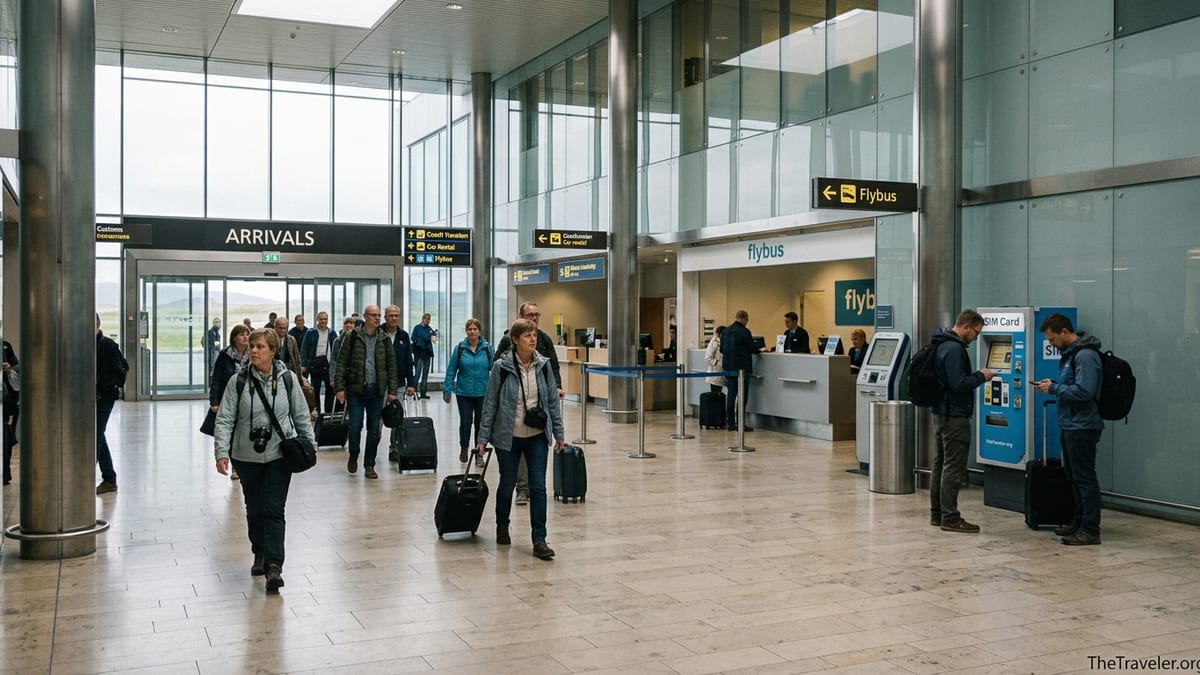
First steps after landing at Keflavik Airport
When your aircraft parks at Keflavik (airport code KEF), you will either disembark via a jet bridge directly into the terminal or be bussed in from a remote stand. In both cases you simply follow the overhead "Arrival" and "Baggage claim" signs. The walk to passport control typically takes 5 to 10 minutes from most gates in the main terminal. Early morning banks of flights can make the corridors feel busy, but the flow is straightforward, with staff on hand to direct passengers.
Many long-haul arrivals from North America land between 06:00 and 08:00. Recent travelers report that at quiet times it can take as little as 20 minutes from landing to exiting the customs area if you have hand luggage only and do not stop at duty free. At busier times in peak summer, plan on 45 to 60 minutes before you are fully through the arrivals process, and more if you intend to shop or collect a rental car.
It is worth using the restrooms before you join any line for border control, since you may be standing for a while if several widebody aircraft have just arrived. Free airport Wi‑Fi is available throughout the arrivals corridors, so if you need to message a pickup driver or check a Flybus timetable, you can usually do so as soon as you leave the aircraft and your phone has reconnected.
Passport control and the new EES kiosks
All passengers arriving from outside the Schengen Area, including most travelers from North America and the United Kingdom, must pass through passport control at Keflavik. Citizens of Schengen countries generally use the EU/EEA lanes, while others use the "All passports" or "Non‑EU" lanes. Queue times vary significantly depending on time of day and the current mix of flights, but recent accounts from June and July 2026 mention waits of around 15 to 30 minutes for non‑EU travelers in the morning waves.
Iceland is rolling out the EU’s Entry/Exit System (EES), which adds biometric checks for many non‑EU visitors. You may see self‑service kiosks where you scan your passport, have your photo taken and record fingerprints, then proceed to a staffed booth to have your entry confirmed. Travelers arriving in early summer 2026 report that not all kiosks are always active and occasional technical issues can slow things down, so it is wise not to schedule a tight activity, like a Blue Lagoon timeslot, immediately after landing.
To speed up your time at passport control, keep your passport and any required documents ready before you reach the officer. Check well before travel whether you need a visa or other formalities based on your nationality and length of stay. U.S. and Canadian tourists typically receive a simple entry stamp for short visits, but must still show a passport that is valid for at least three months beyond their planned departure date from the Schengen Area.
Baggage claim, customs and arrivals duty free
After passport control, you follow the signs down to the baggage claim hall. Electronic screens list flight numbers and the assigned belt. Bags from European flights often appear within 10 to 20 minutes, though in busy spells, especially when several transatlantic flights land together, waits closer to 30 or 40 minutes are not unusual. If you have bulky equipment such as skis or camping gear, check the oversize baggage area beside the main carousels.
One notable feature of Keflavik is the large arrivals duty free shop located right beside the baggage belts. ÍSLAND Duty Free operates a store that is open 24 hours a day, every day of the year, and many locals plan their shopping around it. Alcohol and some cosmetics and confectionery can be significantly cheaper here than in government‑run liquor stores in Reykjavik, which typically have shorter opening hours and higher prices. For example, visitors commonly pick up a couple of bottles of Icelandic gin, wine for the week, or local craft beers directly at arrivals instead of buying in town.
Once you collect your luggage, you proceed through customs. The system is the familiar green and red lane format: use the green lane if you have nothing to declare and are within duty free allowances, or the red lane if you are over alcohol or tobacco limits or are bringing in restricted items. Most visitors simply walk through the green channel in a matter of seconds, but random inspections do occur. If you are carrying specialist gear such as drones, professional camera kits or large quantities of food, check Icelandic customs rules in advance to avoid issues.
As you exit the customs area, you emerge into the arrivals hall, which has been undergoing upgrades and expansion. Recent works have added a new convenience store and more space for retail and seating, so even during busy bursts of traffic there are more pockets where you can pause, rearrange bags or check onward transport information without blocking the main flow.
Connectivity on arrival: SIM cards, eSIMs and Wi‑Fi
Free Wi‑Fi at Keflavik is generally reliable enough for messaging, email and light browsing, and many travelers rely on it until they reach Reykjavik. However, if you prefer having mobile data the moment you clear customs, there are several options. In the arrivals hall you may find vending machines or small kiosks selling physical SIM cards from local providers such as Síminn, Nova or Vodafone Iceland. These often offer tourist‑friendly prepaid bundles, for example around 10 to 20 GB of data plus some local calls and texts for a fixed price, usually for 7 to 30 days.
eSIMs have become very popular for trips to Iceland. Many visitors now purchase an Iceland‑compatible eSIM from a global provider or directly from an Icelandic carrier before departure. This allows you to activate data as soon as your plane lands, with no need to queue or swap physical cards. For a week‑long stay, travelers commonly choose packages in the range of 15 to 30 GB, which is usually enough for navigation, social media, photography backups and some streaming on the road.
If you only need occasional connectivity, another approach is to rely on the airport Wi‑Fi, then connect again at your accommodation. Most Reykjavik hotels and guesthouses offer strong Wi‑Fi as standard, and many cafes in the city center are accustomed to travelers working or planning their days over coffee while using the network. Car rental companies based near the airport also often rent portable Wi‑Fi hotspots, which can be useful if you are driving into more remote regions where mobile coverage becomes patchy.
Finding Flybus, other coaches and public transport
For most visitors headed to Reykjavik, the Flybus or another airport coach is the simplest onward option. The Flybus information desk and self‑service ticket kiosks are located in the arrivals hall just beyond the customs exit, clearly visible as you step out from the restricted area. You can buy a ticket on the spot, use a printed voucher, or show a barcode on your phone if you pre‑booked online. Buses typically wait outside the terminal in a dedicated bay, and departure times are generally coordinated with incoming flights so that you rarely need to wait more than 30 to 45 minutes.
The standard Flybus service runs between Keflavik Airport and the BSÍ bus terminal in central Reykjavik, a journey of about 45 minutes in normal traffic. Many travelers also book a Flybus Plus ticket that includes a connection from BSÍ to major hotels and guesthouses or to the smaller Reykjavik domestic airport for onward flights to Akureyri, Ísafjörður or Egilsstaðir. For example, an early morning arrival from Boston might allow you to catch a mid‑day domestic flight to Akureyri with a comfortable three‑hour buffer if you use this combination.
Alternative coach operators, such as Airport Direct, run similar services, some with smaller shuttle buses and others with large coaches. They generally have their own counters or representatives in the arrivals hall and marked stops just outside the terminal. For travelers on a tight budget, public bus route 55 operates between the airport and central Reykjavik, with a stop at the BSÍ area, but it runs less frequently and involves a longer, more local route. This option can make sense if you are traveling light, already familiar with Reykjavik’s public transport app, and do not mind a slower start to your trip.
Taxis, ride options and avoiding overpaying
Taxis line up outside the arrivals area on the ground level. Official taxis are metered, have prominent signage on the roof and doors, and drivers can usually accept both credit cards and cash. Transport from Keflavik Airport to central Reykjavik by taxi is relatively expensive compared with shuttle buses. Local passengers and recent visitors often report typical fares in the region of 18,000 to 22,000 Icelandic krónur for a one‑way trip to a downtown hotel, depending on time of day, traffic and the exact address.
For couples or solo travelers, this can be considerably more than a pair of Flybus tickets. For families or groups of three to four, a taxi starts to become more competitive, especially if you value a direct door‑to‑door service and have bulky luggage or tired children. Before getting in, it is sensible to confirm with the driver whether the meter will be used and whether there are any extra charges for late‑night service or additional bags. Iceland does not currently have ride‑hailing services like Uber or Lyft, but some local apps such as Hopp can help you estimate taxi costs and in‑city journeys once you are in Reykjavik.
If you only need a very short transfer, for instance to a nearby guesthouse in Keflavik town for your first night, a taxi ride of 7 to 10 minutes will cost much less than going all the way to Reykjavik. Some guesthouses offer their own shuttle or will pre‑book a local cab for you if you share your arrival time in advance. It is worth checking this when you make your reservation, particularly if you are landing late in the evening and do not want to navigate bus timetables after dark.
Car rental, fuel and hitting the road
Keflavik Airport is a major base for car rental in Iceland, serving visitors who plan to drive the Reykjanes Peninsula, the Golden Circle or the full Ring Road. Several international brands, including Avis, Hertz, Budget and Europcar, have counters either inside the arrivals hall or in a nearby car rental center linked by frequent shuttle buses. Local firms such as Blue Car Rental, Lotus, SADCars and others operate from dedicated lots around the airport area, also with their own shuttle vans that pick up outside arrivals.
Travelers who check in online with local companies often report efficient handovers: for example, one visitor who had completed all paperwork the day before arrival at Blue Car Rental noted that it took about an hour and a quarter from leaving the aircraft, passing passport control, stopping briefly at duty free and reaching their car. In quieter periods, others describe moving from baggage belt to rental shuttle in as little as 25 to 30 minutes. These are useful benchmarks when deciding whether to schedule a same‑day activity such as a soak at the Blue Lagoon or a short drive around Reykjanes after landing.
Most rental cars are supplied with a full tank of fuel, and Keflavik and the surrounding area have several 24‑hour self‑service fuel stations operated by brands like N1, Orkan and Olís. Pay‑at‑pump machines usually accept major credit cards, sometimes requiring a four‑digit PIN. If you are planning longer drives on your first day, for example to the South Coast or to the Snæfellsnes Peninsula, it can be sensible to fill up near the airport and avoid rushing to find fuel later in the evening when you are already tired.
Before you drive away, check that you have received any extras you booked, such as a Wi‑Fi hotspot, child seats or a roof box, and that you understand the rental company’s rules on gravel road coverage, sand and ash protection and highland driving. Photograph the car from all angles, including wheels and windshield, so that any previous damage is documented. Iceland’s weather can change quickly, and even in summer high winds and sideways rain are common on exposed roads, so take a few minutes in the parking lot to adjust mirrors, seat position and wiper settings before merging onto the main road.
Onward travel timing and planning your first day
One of the most frequent questions about Keflavik is how long it takes from landing to reaching Reykjavik. While experiences vary, a reasonable planning assumption for a typical morning arrival with checked bags and a short duty free stop is about 60 to 90 minutes from aircraft door to boarding a Flybus or reaching your rental car, followed by roughly 45 minutes of driving to central Reykjavik. This means that landing at 07:00 often translates into arriving at a downtown hotel between 09:00 and 10:00, depending on exact timing and whether you make any extra stops.
If you are connecting to a domestic flight from Reykjavik Airport, authorities and airlines generally recommend allowing at least three hours between your international arrival at Keflavik and scheduled domestic departure from Reykjavik. This buffer accounts for immigration, baggage claim, coach transfer to BSÍ, and a short taxi or shuttle ride to the smaller city airport, plus normal check‑in and security procedures. During winter, when storms can slow road traffic or cause short‑notice schedule changes, a longer buffer is prudent.
For those heading straight to attractions like the Blue Lagoon or the newer Sky Lagoon, many tour operators now offer direct transfers from Keflavik. For example, a common pattern is to leave baggage at a Reykjavik hotel’s luggage room if your room is not yet ready, then take a lagoon shuttle for a midday or afternoon soak. Alternatively, some visitors book a transfer that stops at the Blue Lagoon first and then continues into Reykjavik in the late afternoon, effectively turning the arrival day into a relaxed spa day before checking in.
However you choose to plan your first hours in Iceland, it helps to build some flexibility into the schedule. Occasional longer passport control lines, baggage delays or bad weather can throw off tight connections. Most experienced visitors recommend avoiding non‑refundable activities with fixed times too close to your scheduled landing, especially in high season or in winter when conditions are more unpredictable.
The Takeaway
Reykjavik Keflavik Airport is not a huge hub by global standards, but its steady expansion and the sharp peaks in flight arrivals can make the first hour after landing feel busy and unfamiliar. With a bit of advance understanding of the layout and flow, however, the process is usually straightforward. You will clear passport control, pass baggage claim and duty free, walk through a simple customs checkpoint and emerge into an arrivals hall that puts you within a few steps of SIM card options, Flybus counters, taxi ranks and car rental shuttles.
By keeping realistic expectations about timing, taking advantage of arrivals duty free and local SIM or eSIM solutions, and pre‑thinking your chosen onward transport, you can turn what might otherwise feel like a chaotic transfer into a smooth beginning to your Icelandic adventure. Whether you are hopping on a coach to Reykjavik, sliding behind the wheel of a rental car to chase waterfalls, or checking into a nearby guesthouse after a late‑night landing, Keflavik’s arrivals process is designed to get you out into the landscapes that brought you here as quickly and calmly as possible.
FAQ
Q1. How long does it usually take to get through Keflavik Airport after landing?
At quieter times you might be in the arrivals hall within 30 to 45 minutes of landing, but in busy morning peaks it is safer to allow 60 to 90 minutes, especially if you check bags and stop at duty free.
Q2. Is it worth shopping at the arrivals duty free in Keflavik?
Yes, many visitors and locals use arrivals duty free to buy alcohol, cosmetics and snacks, as prices are often lower than in Reykjavik’s state‑run liquor stores and downtown shops, and the shop is open around the clock.
Q3. Can I buy a local SIM card or use an eSIM at Keflavik Airport?
In the arrivals hall you may find vending machines or kiosks selling prepaid SIM cards from Icelandic operators, and eSIMs from both local and international providers can usually be activated as soon as you land, with free airport Wi‑Fi available for setup.
Q4. Where do I find the Flybus and other airport coaches after I clear customs?
Once you walk out of customs into the arrivals hall, the Flybus information desk and self‑service ticket machines are just ahead, and buses depart from clearly marked bays outside the terminal, with staff on hand to direct you.
Q5. How much does a taxi from Keflavik Airport to central Reykjavik cost?
Fares vary by time and traffic, but travelers commonly report paying in the region of 18,000 to 22,000 Icelandic krónur for a metered ride to downtown Reykjavik, so it can be economical mainly for families or small groups.
Q6. Are there rental cars available directly at Keflavik Airport?
Yes, several big brands such as Avis, Hertz, Budget and Europcar operate at or near the terminal, along with local companies like Blue Car Rental and Lotus, with dedicated counters or shuttles from outside arrivals, and most offer online check‑in to speed up collection.
Q7. How much layover time do I need between arriving at Keflavik and a domestic flight from Reykjavik?
Plan for at least three hours between your scheduled arrival at Keflavik and a domestic departure from Reykjavik Airport, allowing for immigration, baggage claim, the 45‑minute coach ride to BSÍ, and a short transfer to the city airport.
Q8. Is there public transportation from Keflavik Airport to Reykjavik?
Yes, in addition to dedicated airport coaches there is a public bus route, typically number 55, that connects Keflavik and Reykjavik, though it is slower and less frequent than the Flybus and similar services and is best suited to light travelers familiar with the local system.
Q9. What should I do if my bags are delayed or lost at Keflavik?
If your luggage does not appear on the belt, go to the airline’s baggage service counter in the reclaim area before leaving customs, where staff can start a trace, file a report and arrange delivery to your accommodation once the bag is found.
Q10. Is it safe and practical to drive immediately after landing in Iceland?
Many visitors pick up a rental car on arrival and drive to Reykjavik or nearby areas, which is generally safe if you are rested, stick to main paved roads, check the weather forecast and take a few minutes at the rental lot to get used to the car before heading out.