


More news on this day
Cleanup efforts in downtown Richmond, Virginia are expected to extend through the upcoming weekend after three freight train cars carrying grain derailed into the city’s canal corridor, disrupting traffic, recreation and nearby businesses along the popular waterfront area.
Get the latest news straight to your inbox!
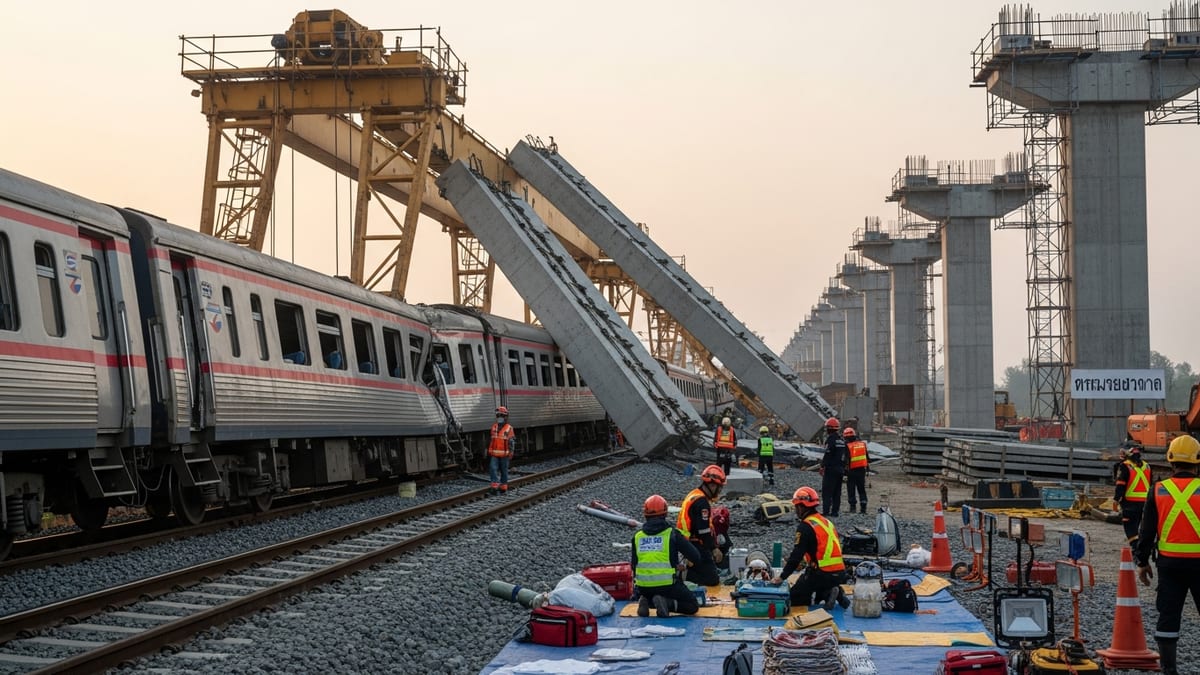
Canal corridor remains an active work zone
Publicly available information from Richmond and local news outlets indicates that the derailment occurred in early July along the elevated rail line near Dock and 20th streets, where trains run above the city’s canal walk. Several cars from a long freight consist left the tracks, with three grain cars coming to rest in the waterway below.
Initial recovery efforts focused on stabilizing the remaining rail equipment and clearing cars from the damaged section of track. Local coverage reports that all cars have now been removed from the rails, but work has shifted to repairing track infrastructure and planning how to safely extract the submerged cars from the canal itself.
The affected stretch of Dock Street remains closed between 18th and 22nd streets, and segments of the popular Virginia Capital Trail near the canal are also shut down. Residents and visitors are being directed to use East Cary Street and other nearby routes, as the canal corridor continues to function as a construction site rather than a riverfront promenade.
Photos and videos shared in local coverage and on social media show cranes, heavy trucks and rail maintenance crews staged along the embankment, underscoring the scale of the recovery operation in a tight urban setting.
Cleanup timeline expected to run through weekend
According to published coverage from Richmond news outlets, the city expects cleanup activities linked to the derailment to continue through the coming weekend. Track repairs are reported to be nearing completion, but removal of the remaining wreckage and restoration of the canal banks will take additional days of work.
The freight train involved was reported to be roughly 200 cars long, and all of the derailed cars that entered the canal were carrying grain rather than hazardous materials. That detail has eased some public concern, yet cleanup teams still face the challenge of lifting heavy steel cars out of a relatively narrow waterway without causing additional damage to the historic canal structures.
Reports indicate that once rail repairs are finished and basic structural checks are completed, crews will pivot fully to canal-side operations. That phase is expected to involve barge-mounted cranes or other specialized equipment capable of working from both the water and the canal banks, a process that tends to move slowly in confined urban spaces.
Local reporting notes that residents should plan for intermittent noise, truck traffic and nighttime work as crews use cooler hours to maneuver equipment and secure the derailed cars for removal.
Transportation detours impact residents and visitors
The derailment’s location above a key east–west corridor has created travel challenges for drivers, cyclists and pedestrians trying to navigate between Shockoe Bottom, the riverfront and neighborhoods to the east. Dock Street closures and restrictions around the canal walk have rerouted both daily commuters and visitors exploring Richmond’s waterfront.
Publicly available information from the city indicates that posted detours are steering most vehicle traffic onto East Cary Street and adjacent downtown routes. Cyclists who typically rely on the Virginia Capital Trail’s riverfront segment are finding temporary closures and are being encouraged, through local coverage, to jump on connecting streets until the canal section reopens.
Rail travelers have also felt the effects. Social media posts and local dispatch reports describe intercity passenger trains diverting to alternative stations or operating with delays while freight operations are adjusted around the damaged stretch of track. While freight traffic is expected to resume incrementally once repairs are verified, full normalization of schedules may lag behind the initial reopening of the line.
For visitors, the changes are particularly noticeable around the canal walk, a popular path lined with public art, historic markers and access points to riverfront parks. The sight of cranes and construction fencing has temporarily replaced the usual stream of joggers, bike tours and walking groups.
Tourism and canal-front businesses feel the disruption
The derailment has arrived at the height of summer travel season, when Richmond’s canal district typically draws both locals and out-of-town visitors. Nearby restaurants, bars and tour operators are contending with reduced foot traffic as portions of the canal walk and connecting streets remain off limits.
Coverage in local and niche travel outlets notes that businesses closest to the detour zone are seeing fewer spontaneous walk-in customers, particularly in the evening when visitors often combine canal strolls with dining or drinks. Some operators are adjusting hours, promoting alternative access routes and encouraging customers to approach from the north via East Cary Street rather than along the closed waterfront segment.
At the same time, travel observers in Richmond report that some venues slightly removed from the immediate closure have experienced a modest uptick, as visitors redirect plans to open sections of the riverfront or shift activity to other neighborhoods such as Scott’s Addition, Jackson Ward and Church Hill.
City tourism information suggests that most major attractions remain open, including nearby museums and riverfront parks, but visitors are being advised through public-facing updates and news coverage to check the latest local guidance on parking and walking routes before heading downtown.
Safety, environment and what travelers should expect next
Reports from Richmond’s municipal channels and local media emphasize that the derailed cars carried corn or other grain products, sparing the city from the kind of hazardous-materials concerns that have accompanied other recent derailments in North America. Environmental and emergency management summaries describe the primary impacts in Richmond as physical obstruction, local waterway disturbance and short-term traffic disruption rather than long-term contamination.
Even so, cleanup along the canal involves careful handling of spilled grain and debris to minimize water quality issues and avoid attracting wildlife or creating odors in the dense downtown corridor. Publicly available updates suggest that crews are skimming floating material and removing bulk grain where possible as part of the broader recovery plan.
For travelers, the canal district will likely remain an active work zone for several more days. Visitors arriving in Richmond this week can expect construction equipment, fenced-off segments of the canal walk and occasional nighttime lighting along the damaged stretch of track. Those hoping to bike or stroll the full length of the waterfront path may need to substitute nearby streets or focus on open sections of the James River Park System.
Local coverage indicates that the city intends to provide further public updates as the weekend approaches, including any changes to street closures and trail access. Once the last railcars are removed and inspectors sign off on the repaired line and canal infrastructure, attention is expected to shift from emergency recovery to longer-term questions about inspection regimes, freight traffic through downtown and the resilience of infrastructure in one of Richmond’s most visited urban landscapes.