


More news on this day
Canada’s transportation safety watchdog is urging patience as investigators probe a freight train derailment northeast of Montreal, saying it is too soon to pinpoint what caused more than 40 railcars to jump the tracks near residential neighbourhoods.
Get the latest news straight to your inbox!
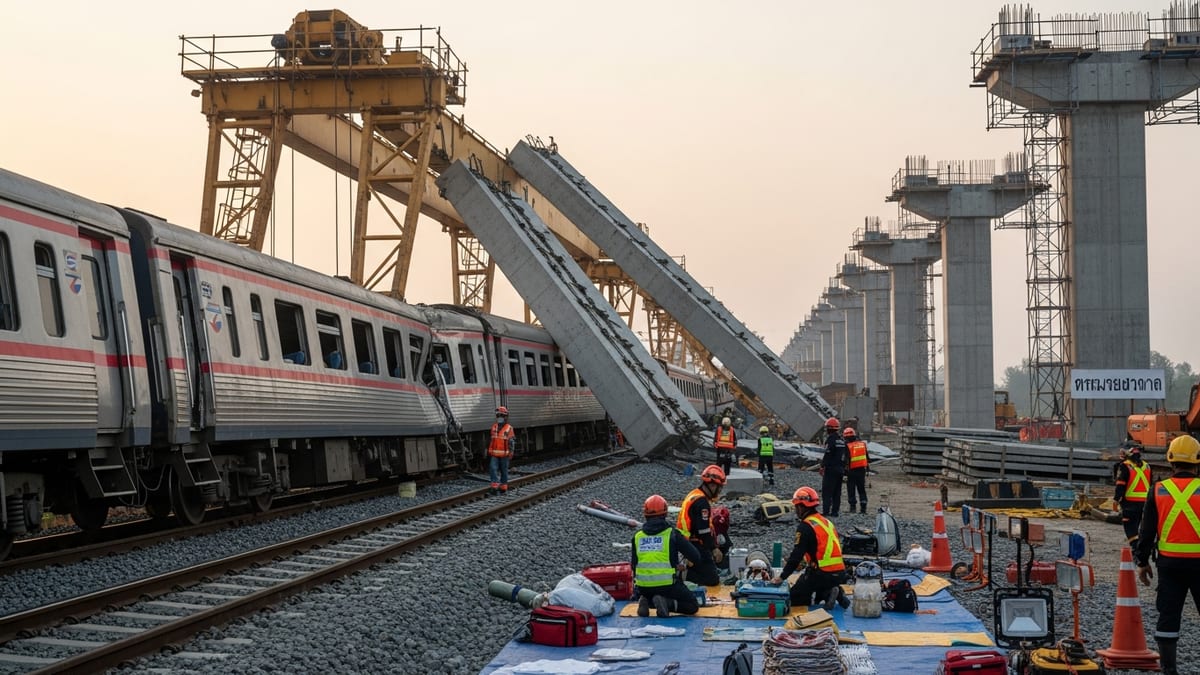
Investigators Focus on Evidence Gathering After Repentigny Derailment
Publicly available information shows that the Transportation Safety Board of Canada has deployed investigators to Repentigny, a suburb northeast of Montreal, following the derailment of a Canadian National freight train on July 5. Early reports indicate that between 45 and 46 railcars left the tracks near homes, prompting temporary evacuations but causing no injuries.
Coverage from Canadian outlets describes investigators documenting the scene, inspecting the condition of the track and equipment, and coordinating with railway personnel. The Board has indicated through published statements that this initial phase is devoted to data collection rather than drawing conclusions, consistent with its standard practice after major rail occurrences.
Local media reports note that the derailed train included tank cars, but current information suggests they were not carrying dangerous goods that posed a significant risk to nearby residents. The absence of a hazardous materials release has allowed cleanup crews to move more quickly to clear wrecked rolling stock and begin repairs to a key freight corridor serving the Montreal region.
For travelers, the presence of national investigators underscores that the event is being treated as a serious transportation occurrence, even in the absence of injuries. Their findings, once released, typically feed into broader safety recommendations that can influence future train operations through populated areas.
Safety Board Says It Is Too Early to Identify a Cause
According to published coverage of the investigation, representatives of the Transportation Safety Board have stressed that it is premature to identify a single cause or contributing factor. While local discussion has centered on recent maintenance work and extreme summer heat, the Board’s early messaging emphasizes that multiple lines of inquiry remain open.
Reports indicate that, in line with Canadian investigation protocols, the safety agency is collecting information on train handling, track condition, recent repairs, signaling, and weather at the time of the incident. Only after that information is cross-checked with event recorder data, inspection records and physical evidence will investigators begin to form hypotheses about what went wrong.
Specialists familiar with previous Canadian rail inquiries note that final findings can take months and sometimes longer than a year to be published. Intermediate updates are occasionally released when urgent safety issues are identified, but the Board typically avoids speculation while work is in progress. Travelers following the story are therefore unlikely to see definitive answers in the immediate days after the derailment.
This cautious approach is intended to prevent early assumptions from driving public expectations. For communities living along rail corridors, it also means that any potential changes to operating rules, train speeds or infrastructure standards will only follow once evidence-based conclusions are reached.
Local Concerns Revive Memories of Lac-Mégantic
Media coverage from Quebec highlights that the Repentigny derailment occurred almost exactly 13 years after the catastrophic Lac-Mégantic disaster of July 2013, in which a runaway crude oil train derailed and exploded in the town’s core, killing dozens of people. That earlier tragedy continues to shape public perceptions of rail risk in the province.
Residents interviewed in local reports have expressed relief that no one was hurt in the most recent event, while also voicing anxiety about long freight trains passing close to homes. The visual impact of more than 40 railcars off the tracks, even without fire or chemical release, has reinforced questions about what further protections might be needed in built-up areas.
For travelers to the Montreal region, the derailment serves as a reminder of the province’s complicated relationship with rail transport. Freight traffic remains crucial for ports, industry and consumer goods, yet communities intersect with major rail lines at grade crossings, station approaches and suburban corridors.
Publicly available information suggests that municipal leaders are monitoring the federal investigation closely and will look to forthcoming findings for guidance on whether additional local measures, such as land-use adjustments or emergency planning enhancements, are warranted near the Repentigny corridor.
Rail Operations and Travel Impact in the Montreal Corridor
Logistics advisories and rail industry updates describe the derailment as blocking a significant Canadian National route northeast of Montreal, at least temporarily. Freight movements through the corridor have been disrupted while wreckage is removed and track structure is rebuilt, with rail operators working to reroute some traffic to alternative lines.
Passenger services in the immediate vicinity appear limited, and early reporting indicates that intercity rail operations in the broader Montreal hub have remained largely intact. Travelers using trains into and out of the city are advised by carriers to monitor schedule notices, but there have been no widespread cancellations attributed solely to the Repentigny incident.
From a tourism perspective, the derailment has generated concern more for its imagery than for direct effects on visitor mobility. Highways and regional roads near the site have remained open, and airports serving Greater Montreal continue to function normally. For most visitors, the event is unlikely to alter itineraries beyond potential minor freight-related delays that can ripple into certain passenger routes.
Nevertheless, the incident highlights how closely freight and passenger networks are intertwined. Even in cases where travelers are not directly affected, significant infrastructure damage on a main freight artery can have secondary consequences for supply chains, regional commerce and longer-term planning for rail capacity around a major metropolitan area.
Broader Rail Safety Context for Travelers
The Repentigny derailment is being examined in a wider context of rail safety discussions across North America. Recent investigations by Canadian and United States safety agencies have focused on issues such as track integrity, maintenance practices, long-train operations and the transport of hazardous materials, all of which influence the risk profile of trains moving through urban regions.
Regulatory records and expert commentary show that many derailments occur at relatively low speeds and often within rail yards, where consequences are typically limited. Events like the Montreal-area incident, occurring close to homes and recalled against the backdrop of past disasters, receive heightened attention and can accelerate calls for stricter oversight or infrastructure investment.
For travelers, these developments underscore the importance of transparent safety reporting and continuous improvement to inspection regimes. While rail remains one of the safer modes of long-distance transport, high-visibility accidents can shake public confidence, especially when video and images of derailed cars circulate widely on social media and news broadcasts.
As investigators continue their work in Repentigny, the key message emerging from official channels and published analyses is one of caution against premature conclusions. The causes, when established, may feed into recommendations that shape future train operations not only in the Montreal region but along passenger and freight corridors across Canada.