


More news on this day
Airlines and regulators are keeping extra restrictions on parts of Saudi and Gulf airspace in place into early 2027 after an October 10 missile strike on Riyadh’s King Khalid International Airport and subsequent projectile activity across the region, forcing ongoing cancellations, diversions and longer routings for passengers who rely on Middle East corridors between Europe, Asia and Africa.
Get the latest news straight to your inbox!
What has been confirmed so far about the Riyadh attack and wider threats
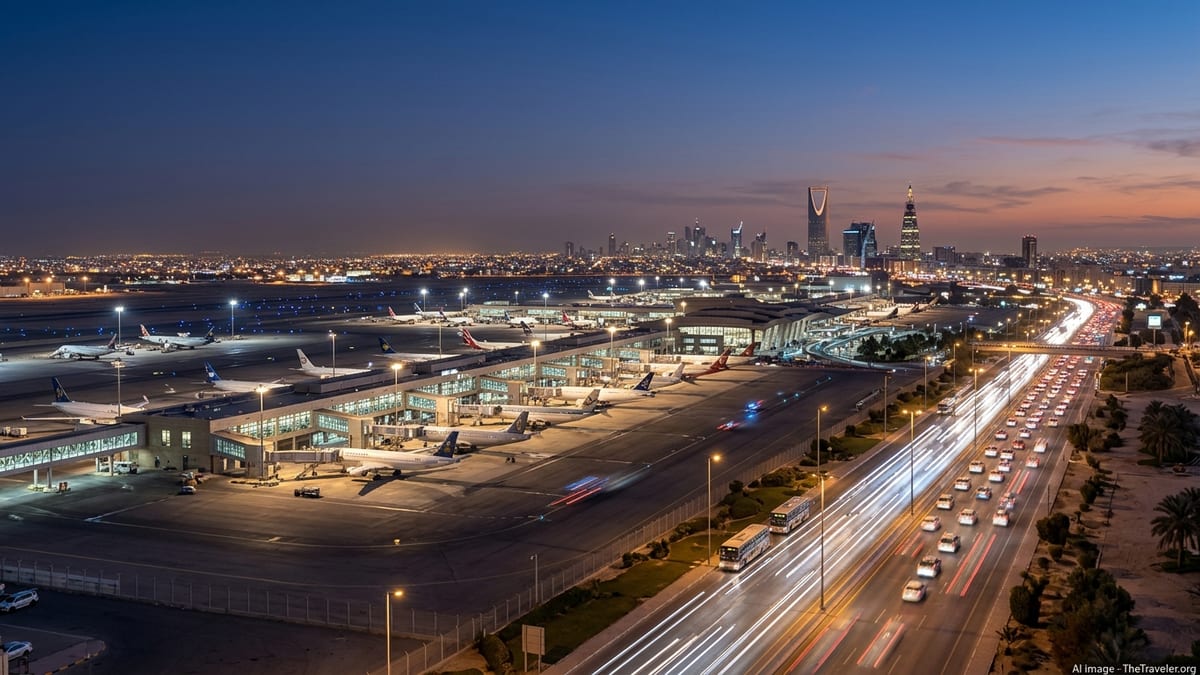
Saudi authorities and multiple international reports confirm that a missile struck King Khalid International Airport on October 10 2026, killing at least 12 people and injuring more than 300. The impact damaged terminal infrastructure and triggered a fire in one of the airport’s buildings, prompting an immediate shutdown of most international flights while emergency crews secured the site and investigators assessed the damage. Subsequent coalition briefings and independent monitoring indicate that the October incident formed part of a broader series of Houthi attacks on Saudi airports and infrastructure during the same month.
In the weeks that followed, Saudi-led coalition statements and United Nations correspondence documented further missile and drone launches towards Riyadh and other populated areas. Many of these were intercepted before reaching their intended targets, but authorities acknowledge that projectiles have on several occasions fallen close to civilian sites, including energy and commercial facilities. The correspondence sent by Saudi Arabia to the UN Security Council in mid November describes ballistic missile and drone attacks during October against “civilian airports, critical infrastructure and populated areas” and highlights the risk they pose to international civil aviation in and around Saudi airspace.
Alongside these strikes on land targets, shipping and energy security updates in October and November report attempted and, in some cases, successful missile and drone attacks on tankers and port infrastructure in the Red Sea, Persian Gulf and nearby waters. While most of these incidents have not directly involved civilian aircraft, they contribute to a picture of elevated risk along sea lanes and air corridors that are central to both global energy exports and long-haul flight paths linking Europe, Asia and Africa.
Houthi officials have continued to publicly frame Saudi territory as being within their operational reach. Statements from Houthi-linked bodies in early and mid October warned civil aviation operators about using Saudi airspace, and Yemeni sources cited in regional media in late November describe ongoing efforts to develop weapons that could threaten aircraft and shipping near the Bab el Mandeb strait and parts of the southern Red Sea and Gulf of Aden. These claims are one of the factors feeding into updated airspace risk assessments even where no direct attack on an aircraft has occurred.
How regulators have updated conflict-zone guidance for Saudi and Gulf airspace
The most specific regulatory response has come from the European Union Aviation Safety Agency, which maintains Conflict Zone Information Bulletins for areas where airspace risk is considered elevated. EASA’s dedicated bulletin on the airspace of Saudi Arabia was first issued on September 30 2026 and was last updated on November 16. In that revision, the agency extended the validity of the bulletin through January 31 2027 and explicitly cited the October 10 attack on King Khalid International Airport and subsequent military activity as key elements of the risk picture.
The Saudi Arabia bulletin advises EU air operators not to operate within defined portions of Saudi airspace, or to apply specific altitude and routing restrictions if they do, depending on the exact coordinates. The document stresses that the regional security situation remains “highly volatile,” with significant kinetic military activity and the use of ballistic missiles and drones capable of reaching flight levels used by civil aircraft under some circumstances. It also reminds operators that national aviation authorities can impose stricter rules on flights registered in their jurisdictions.
Separate EASA guidance covers the broader Middle East region, including the Persian Gulf and Gulf of Oman. An earlier bulletin that applied to Gulf waters has not been extended beyond July 8 2026, following a reduction in short-term tensions there, but EASA and European risk assessment groups continue to note that missile and drone capabilities in Yemen and Iran may pose a residual threat to aircraft over international waters and coastal areas. Yemeni airspace, covered by an older bulletin on the Sana’a Flight Information Region, remains effectively closed to most commercial overflights, and operators under EASA oversight are advised to avoid it entirely.
National governments have echoed and sometimes reinforced these regional messages in their travel and operational advisories. The United Kingdom’s travel guidance for Saudi Arabia explicitly records that King Khalid International Airport was struck by a missile on October 10 and warns that further attacks on airports are very likely, noting that any new incident could lead to sudden closures, diversions and tighter security screening. United States government notices point airlines and travelers to Federal Aviation Administration special rules and advisories for portions of Saudi and neighbouring airspace and underline that restrictions may be imposed or tightened at short notice if the security picture deteriorates.
Which airlines and routes have adjusted schedules, and how
The most immediate airline schedule changes have centered on Saudi Arabia itself, particularly Riyadh and Dammam. Etihad Airways initially cancelled flights between Abu Dhabi and the Saudi cities of Riyadh, Jeddah and Dammam shortly after the October 10 attack as part of a broader response to regional disruption. Subsequent statements and travel-advisory notices show that the carrier has repeatedly extended the suspension on its Abu Dhabi to Riyadh and Abu Dhabi to Dammam routes. As of mid November, Etihad has confirmed that all passenger and cargo flights on these two city pairs are cancelled through November 30 2026, while other Abu Dhabi to Saudi services, such as certain Jeddah flights, continue to operate.
Other Gulf-based airlines have taken a more selective approach, often maintaining a presence in Saudi markets while trimming the highest-risk routes or varying timings and aircraft types. Publicly available schedules and monitoring by regional aviation outlets indicate that carriers such as Emirates and Qatar Airways have preserved a reduced number of flights into Saudi cities, with a particular focus on Jeddah and Medina, and have adjusted frequencies to Riyadh and Dammam in response to both demand and security assessments. These airlines have not published detailed, route-by-route security rationales, but they are routinely warning passengers that services remain subject to change at short notice.
Within Saudi Arabia, domestic services operated by Saudi carriers have resumed at King Khalid International Airport following emergency repairs and the partial reopening of affected terminals. Nevertheless, operators and passenger reporting suggest that these flights are still vulnerable to disruption when projectile alerts or interceptions occur in the vicinity of the capital. Timetables for some domestic and regional sectors have been tightened or reprofiled to create additional operational flexibility if aircraft need to hold, divert or reposition on relatively short notice.
The knock-on effects reach beyond Saudi borders to other Gulf hubs that depend heavily on stable overflight arrangements. Data from airline booking systems and route announcements confirm that British Airways, which had earlier cut some Middle East flying, has now resumed services from London Heathrow to Dubai, with the route returning in early November after a suspension period linked to regional tensions earlier in the year. Lufthansa has restored its Munich to Dubai flights from late November. Other European and Asian airlines have kept or reinstated services to hubs such as Dubai and Doha, sometimes with behind-the-scenes routing adjustments to avoid the most sensitive segments of Saudi or Yemeni airspace while keeping schedules outwardly similar.
Effects on long-haul connections via the Gulf and Red Sea corridor
For many travelers, the most noticeable impact is not the cancellation of a specific city pair but the gradual reshaping of long-haul routings that once took near-direct tracks across parts of Saudi Arabia, the Gulf and the Red Sea. With Yemeni airspace effectively off limits and portions of Saudi skies subject to conflict-zone advisories, airlines have increased their use of alternative corridors, most commonly farther north over Iraq and Turkey or farther south across the Arabian Sea and Indian Ocean.
These detours can add measurable time to flights that connect Europe with South or Southeast Asia and East Africa. Airline schedule data and flight tracking show that some Europe to Southeast Asia services now operate with longer block times than they did before October, reflecting both altered routings and buffers to protect minimum connection windows at hub airports. Travelers may see small but noticeable timetable shifts on connecting itineraries that tie together two or more long sectors, as carriers seek to avoid tight turns that could be jeopardized by airspace-related holds or reroutes on the day of travel.
Carriers that have traditionally used Saudi or Gulf stopovers to reach East Africa, the Indian subcontinent and Southeast Asia are among the most affected. Some have temporarily suspended flights to higher-risk Saudi destinations such as Riyadh and Dammam while preserving or rebuilding capacity to lower-risk hubs in the United Arab Emirates or Qatar. Others have opted for broader capacity reductions across the region, choosing to reduce frequencies to multiple cities rather than withdraw entirely from a single market, in order to maintain network coverage while controlling exposure to delays and diversions.
Humanitarian and specialist operations into Yemen and adjacent areas face additional constraints. Reports from aid organizations and aviation support providers indicate that repeated attacks on facilities around Aden and other southern Yemeni locations in 2026 have led to intermittent airport closures, last-minute changes in permitted approach procedures and evolving no-fly zones around frontline areas. This narrows the number of viable flight combinations on any given day and raises the cost and complexity of staging medical evacuations, cargo flights and staff rotations that previously relied on predictable access to the Bab el Mandeb and southern Red Sea corridor.
What travelers using Saudi and Gulf routes should monitor next
Because the key developments have taken place within a span of weeks, not months, schedules into and over the Gulf region are likely to remain more changeable than usual at least through late 2026 and into January 2027, while EASA’s current Saudi Arabia conflict-zone bulletin remains active. Travelers booked to or via Saudi airports that have been mentioned in recent missile and drone reporting, particularly Riyadh and Dammam, should first confirm that their airline is still operating the route on their specific dates, using both airline websites and booking tools.
Etihad passengers with bookings on suspended Abu Dhabi to Riyadh or Abu Dhabi to Dammam flights through November 30 are currently being offered rebooking or refund options in line with the airline’s disruption policy, subject to ticket conditions and place of purchase. Other airlines in the region have introduced similar waivers where services are cancelled outright because of security concerns. In all cases, travelers should check the most recent advisories issued by their carrier, as conditions may evolve quickly if restrictions are extended, shortened or altered.
Even when a flight remains in the timetable, passengers should monitor its status repeatedly, including the day before departure and again shortly before leaving for the airport. Airlines across the Gulf are making frequent overnight and same-day updates to routings and timings as they receive fresh security assessments and airspace clearances. Some carriers are using mobile apps and messaging tools to issue “security-related” notifications about altered routings, longer flight times or changes to connection guidance, and travelers who enroll in these alerts are more likely to receive early warning of disruption.
For those who have flexibility, it may be worth comparing routings via hubs that currently face fewer direct constraints tied to the latest attacks, particularly if the itinerary involves only transit rather than entry into Saudi Arabia. That can mean prioritizing connections through Dubai, Doha or other regional hubs instead of Riyadh or Dammam when fares and timings are broadly comparable, while remembering that all airlines using Middle East corridors remain subject to broader airspace decisions taken by regulators and national authorities.
Looking further ahead, travelers and corporate travel planners should watch for policy updates around late January 2027, when EASA’s present Saudi Arabia conflict-zone bulletin is scheduled for review. If attacks subside and security agencies judge that the risk has eased, some airlines may gradually restore suspended services or shorten diversions on affected routes. If instead new strikes occur or threats escalate, regulators could tighten restrictions or extend the bulletin’s validity beyond January, which would likely translate into fresh timetable changes and, in some cases, further reductions in Saudi-bound capacity.
Until the situation becomes more predictable, anyone planning to use Gulf and Saudi routes should build additional margin into their trips by allowing longer connection windows, avoiding very tight same-day interline transfers where possible and choosing tickets that include reasonable options for changes or refunds if flights are cancelled, rerouted or significantly delayed for security reasons. For travel to or from Saudi Arabia itself, travelers should also keep an eye on government travel advice and airport operational updates, as these can influence not only whether a particular flight operates but also the level of security screening and potential waiting times on the ground.