


More news on this day
A powerful coastal storm lingering off the Mid-Atlantic and Northeast on Friday, November 27, 2026, is continuing to disrupt U.S. air travel and has triggered a fresh round of delays and cancellations for flights into and out of Florida, as weather-related constraints at major East Coast hubs ripple through heavily traveled north–south holiday routes.
Get the latest news straight to your inbox!
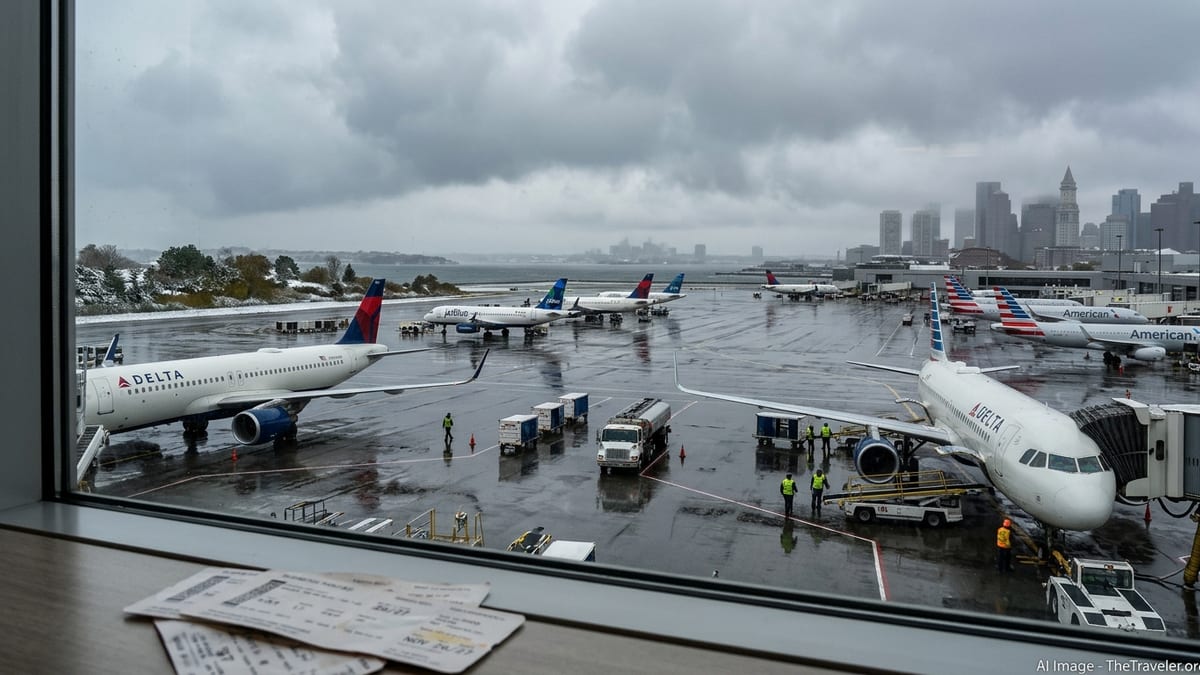
Coastal storm shifts disruption from Thanksgiving Day into Friday
The latest wave of disruption comes less than 24 hours after heavy rain, strong winds and coastal flooding struck much of the Eastern Seaboard on Thanksgiving Day, November 26, soaking communities from the Mid-Atlantic through New England and knocking out power to large numbers of customers. National Weather Service forecast discussions on Wednesday and Thursday highlighted the development of a deep coastal low off the Mid-Atlantic, warning that hazardous winds, heavy rain and coastal flooding would persist into Friday as the system tracked slowly northeastward.
By Friday morning, meteorologists were still flagging breezy to windy conditions, rough coastal waters and lingering pockets of coastal flooding from the Delmarva Peninsula through the New York City area and into coastal New England, even as the heaviest rain bands shifted offshore. While the storm’s center remained well north of Florida, it continued to affect air operations at major Northeast and Mid-Atlantic airports including New York, Boston and Washington, where low clouds, gusty crosswinds and wet runways limited the number of arrivals and departures that could be handled each hour.
Thanksgiving Day itself had already been challenging for travelers. Data compiled by flight-tracking and passenger-rights services show that on Thursday, November 26, more than 1,400 flights within, into or out of the United States were disrupted, including nearly 400 cancellations, as the storm intensified and airlines implemented weather-related schedule adjustments. Miami was among the harder-hit airports on Thursday, with average delays of several hours on some routes, particularly those tied to the Northeast, even though severe thunderstorms were no longer affecting the Florida peninsula directly by evening.
Friday’s impact on Florida airports and key routes
On Friday, November 27, the operational picture shifted but did not fully clear. As of late Friday morning, data aggregated from U.S. flight-status trackers indicated that around 85 flights at Florida airports had been canceled for the day, out of roughly 445 cancellations nationwide, with several hundred additional Florida flights delayed. The bulk of the disruption was again concentrated at the state’s busiest gateways, including Miami, Orlando, Fort Lauderdale and Tampa, which handle large volumes of traffic to and from storm-affected Northeast and Mid-Atlantic cities.
Federal Aviation Administration system advisories showed that, at various points during Thursday and Friday morning, some Northeastern hubs were placed under ground delay programs or experienced flow restrictions because of low ceilings, gusty winds or airspace congestion. By contrast, Florida airports were generally not subject to broad FAA weather delay programs on Friday, reflecting largely acceptable local flying conditions and normal runway capacity. However, that system-level snapshot understated the extent of disruption that Florida-bound passengers experienced, because many delays were driven by late-arriving aircraft and crews from weather-affected parts of the East Coast.
Travelers reported that early-morning departures from major Florida airports on Friday often left close to schedule on routes to the Midwest, West and unaffected parts of the South, while flights tied to New York, Boston, Washington, Baltimore and Philadelphia were more likely to depart late or to see rolling delay estimates. Some northbound services were held at the gate even under clear Florida skies while airlines waited for revised takeoff slots into constrained Northeast airspace. In several cases, airlines opted to preemptively cancel individual rotations in order to keep crews within duty limits and create room in the schedule for later flights once conditions improved.
How a Northeast storm ripples through Florida’s holiday air network
The disruption underscores how tightly Florida’s air travel network is connected to the rest of the East Coast, particularly during peak holiday periods. All of the largest U.S. network carriers route substantial Thanksgiving-week traffic between the Northeast and Florida’s leisure markets, using hubs in New York, Newark, Washington, Philadelphia and Boston to funnel travelers toward Orlando’s theme parks, South Florida beaches and cruise departure ports. When severe weather reduces the number of flights those hubs can handle per hour, the effects reach far beyond the immediate storm zone.
In practice, the FAA and airlines use a suite of traffic management initiatives to maintain safety when storms degrade conditions over the Northeast. Ground delay programs can require flights bound for a constrained airport to remain at their origin until a controlled departure time, effectively spacing arrivals into crowded airspace. Short-lived ground stops may temporarily halt departures altogether while controllers manage rapidly changing winds, visibility or runway configurations. For Florida-bound flights leaving the Northeast on Friday, this translated into longer-than-normal gate holds and taxi times, particularly in the morning as airlines worked through backlogs from Thanksgiving Day.
Flights starting their day in Florida also felt the impact. Many aircraft based in Miami, Orlando, Tampa or Fort Lauderdale are scheduled to operate multiple north–south segments in quick succession, often shuttling between Florida and several East Coast cities before returning south in the evening. If a midday leg into New York or Washington is delayed by weather, every subsequent sector using that aircraft can depart late. On a busy day like the Friday after Thanksgiving, when seat demand is high and spare planes are limited, it is harder for airlines to swap in reserve aircraft or crews. That makes Florida routes especially vulnerable to knock-on delays originating in distant weather systems.
Thanksgiving week strain compounds storm-related issues
The coastal storm arrived on top of an already stretched U.S. air travel system. Industry and transportation forecasts issued ahead of the holiday had projected one of the busiest Thanksgiving travel periods in recent years, with tens of millions of Americans expected to journey at least 50 miles from home and domestic airlines operating dense schedules from Friday, November 21, through Sunday, November 30. Historical data compiled from the three Thanksgiving weeks preceding 2026 indicated that the Sunday after the holiday typically saw the highest volume of flights and the largest share of delays, with the Friday after Thanksgiving ranking among the next-busiest days.
In 2026, the lead-up to Thanksgiving was further complicated by a series of technology outages at major U.S. carriers, including system glitches at United Airlines and Delta Air Lines earlier in November that briefly halted some operations and contributed to rolling delays. Although those issues had largely been resolved by the holiday itself, they highlighted the limited margin for error in a network that then had to contend with a significant coastal storm arriving at one of the peak demand points of the year.
Data from prior Novembers show that late autumn and early winter are already prone to weather-driven disruption, with a mix of coastal storms, early-season snow events and low cloud ceilings often affecting the same Northeast corridor that links Florida to much of the rest of the country. While precise numbers vary year by year, publicly available analyses of airline on-time performance indicate that a notable share of November and December flights typically arrive at least 15 minutes late, and that significant coastal systems like the one affecting the U.S. this week disproportionately impact airports along the Eastern Seaboard. For Florida travelers, the 2026 Thanksgiving period has largely followed this pattern, with local conditions in the state often good, but schedules nevertheless shaped by weather hundreds of miles away.
What Florida-bound travelers should verify and what to expect next
Looking ahead, National Weather Service outlooks on Friday indicated that the coastal low responsible for the recent disruption will continue to move away from the Eastern Seaboard late Friday into Saturday, November 28, with winds gradually easing and flooding concerns receding along most of the Mid-Atlantic and Northeast coastlines. As weather-related constraints lift, airlines and airports are expected to spend part of the weekend working through residual delays, repositioning aircraft and rotating crews back into place so that schedules are better aligned for the heavier traffic days still to come.
For travelers flying on Friday afternoon, Friday evening or Saturday, the most important step remains to monitor flight status directly with their airline before leaving for the airport and again upon arrival. Carriers are continuing to update departure and arrival times in response to evolving traffic management restrictions and equipment availability, and some are offering limited flexibility for customers ticketed on routes most exposed to the storm’s effects. Policies vary by airline and can change as conditions improve, so passengers should check the latest rebooking and same-day change options via official websites or mobile apps.
Given the recent pattern of disruptions, travelers starting trips in Florida on Friday or early Saturday may wish to budget additional time at the airport, particularly if they are booked on northbound flights or on tight domestic connections through East Coast hubs. Where itineraries allow, some passengers may be able to reroute through less affected connecting points outside the storm’s core impact area, though alternative seats on peak holiday dates can be limited. Those with nonessential travel still to come this weekend might consider whether shifting to a later date is feasible if airlines permit changes without fees.
As the coastal storm moves away and weather returns closer to seasonal norms, aviation conditions over the broader Eastern United States are expected to stabilize. However, with the remainder of the Thanksgiving period still ahead, including the typically busy return-travel Sunday, isolated delays and localized congestion remain possible even after the main storm has passed. For Florida-bound and Florida-originating passengers, regularly checking flight status, remaining flexible where possible and being prepared for schedule adjustments will remain key to navigating the final days of this year’s holiday travel week.