


More news on this day
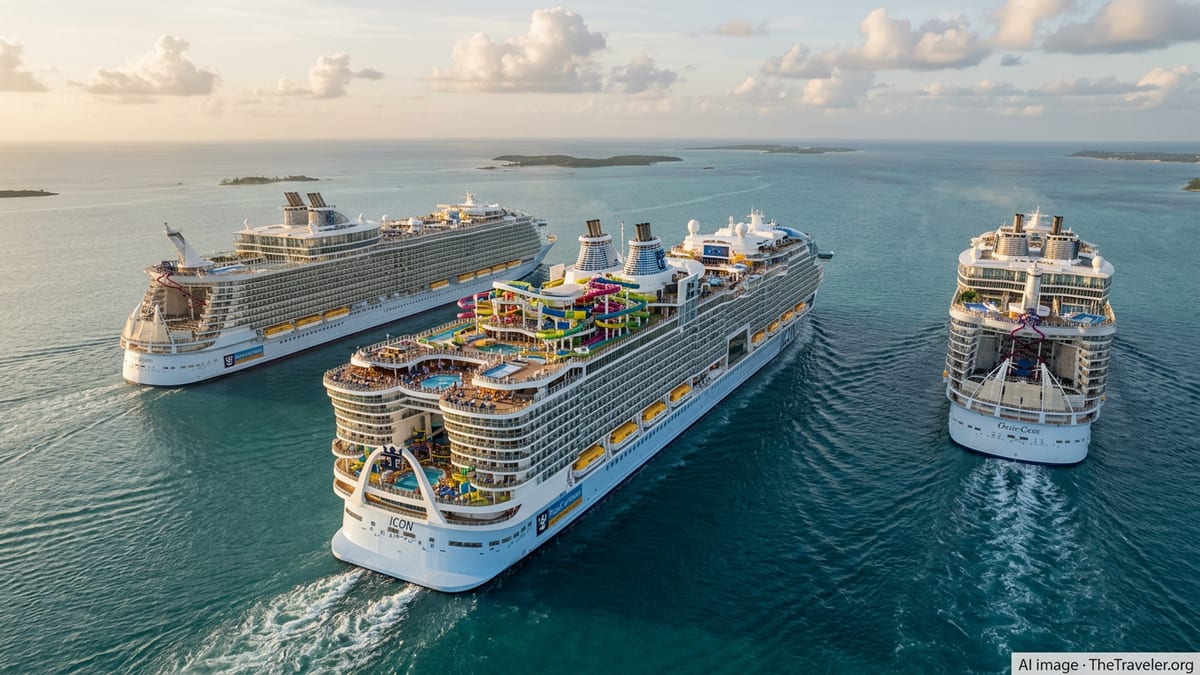
Royal Caribbean is leaning harder than ever into short cruises, expanding a network of two to five night Caribbean getaways that the company argues can deliver higher yields, attract new travelers and keep its newest mega-ships sailing full year-round.
Get the latest news straight to your inbox!
A Strategic Shift Toward Shorter Sailings
Royal Caribbean has been steadily reshaping its deployment, moving more of its newest and largest ships into the short-cruise market. Itineraries of two to five nights from Florida and other U.S. ports are becoming a core part of its portfolio, particularly in the Caribbean. Publicly available deployment schedules for the 2026 to 2027 seasons show an expanded roster of ships dedicated to itineraries under a week, including high-capacity vessels that once focused primarily on seven-night voyages.
The company’s marketing emphasizes these trips as “short Caribbean getaways,” aiming squarely at travelers who cannot commit to a week at sea but still want the full big-ship experience. Royal Caribbean materials highlight three and four night sailings that leave on a Friday and return on Monday, framing them as long-weekend escapes that require minimal time off from work.
According to published financial presentations, the Caribbean already accounts for a large share of Royal Caribbean Group’s capacity and is a key driver of net yield growth. By increasing the proportion of short cruises within that mix, the company is effectively using the region’s strong demand to push higher pricing and onboard spending across more sailings each week.
Earnings-call commentary over the past two years has repeatedly described short sailings as the “on-ramp” to cruising, reinforcing the idea that compact itineraries are now central to the brand’s long-term strategy rather than a niche product.
Why Short Cruises Can Be More Profitable
Behind the deployment changes is a straightforward financial logic. Short cruises often carry a lower total fare than weeklong trips, but on a per-day basis, pricing tends to be higher. Industry commentary and investor materials indicate that three and four night itineraries frequently command premium pricing per passenger cruise day, supported by demand from travelers willing to pay more for a tightly packaged break.
Shorter itineraries also allow Royal Caribbean to turn its largest ships more frequently. A ship sailing back-to-back three and four night cruises can complete two voyages in the time it would otherwise spend on a single seven-night itinerary, effectively doubling the number of embarkations per week. Each new sailing brings a fresh set of guests spending on drinks, specialty dining, shore excursions and casino gaming, categories that are consistently cited as major contributors to onboard revenue.
Recent financial disclosures point to rising onboard and pre-cruise spending across the fleet, trends that particularly benefit short cruises where guests tend to compress activities into a limited window. Reports from Royal Caribbean-focused analysis describe weekend Bahamas sailings where travelers spend heavily on add-ons to maximize a few days away, from beach club passes to high-thrill attractions.
Company guidance for 2025 and 2026 highlights continued net yield growth in the Caribbean, supported in part by “industry-leading hardware” and exclusive destinations. Short cruises operating from multiple Florida ports sit at the center of that strategy, acting as high-yielding products even in a competitive pricing environment.
Mega-Ships, Private Islands and Beach Clubs as Differentiators
A key element of Royal Caribbean’s short-cruise bet is the decision to place some of its most advanced ships on these compact itineraries. Cruise deployment announcements show Oasis- and Icon-class vessels scheduled for three and four night loops from Florida, including newly introduced ships designed with resort-style amenities that can carry thousands of guests at a time.
These deployments are closely tied to Royal Caribbean’s investment in private destinations. Many short Caribbean sailings concentrate on just one or two ports, typically Nassau and the company’s private island in the Bahamas. The line is also preparing to add the Royal Beach Club at Paradise Island, a Nassau-area development positioned as a premium day experience, with opening targeted for late 2025.
Corporate presentations describe these private destinations as central to the value proposition, allowing Royal Caribbean to control more of the guest experience and capture a larger share of vacation spending. On short cruises, where time in port is limited, a curated private-island day or beach-club visit becomes a main event that can support premium pricing for cabanas, water parks, dining upgrades and other extras.
Marketing materials for the 2026 to 2027 short Caribbean program underscore that approach, highlighting ships with dozens of bars and restaurants, multiple pools and water attractions, and dedicated family zones. The message is that travelers can fit a full-scale resort vacation into three or four nights, particularly when combined with a privately managed beach day.
Targeting New-to-Cruise and Time-Pressed Travelers
Royal Caribbean’s focus on shorter trips is also a demographic play. Public commentary from executives and investor-facing summaries repeatedly identifies short cruises as the primary way first-time guests sample the product. By placing its newest hardware into this segment, the company is betting that new cruisers will receive a heightened first impression and ultimately return for longer or more premium itineraries.
The strategy aligns with wider travel trends showing strong demand for frequent, shorter getaways that fit around work and school schedules. Royal Caribbean’s own travel guides position three to five night cruises as ideal for travelers with limited paid time off, suggesting that a quick sailing from Florida can stand in for more complex, land-based vacations.
Data shared in recent earnings materials also point to a mix of loyal and first-time guests on these sailings. Analysts summarizing the company’s results have noted that a substantial share of passengers are loyalty-program members, while a significant percentage are brand new to Royal Caribbean. This blend supports both immediate revenue and long-term customer acquisition.
The company is further leaning on its digital ecosystem to amplify spending and engagement on short cruises. Investor commentary highlights rapid growth in mobile-app usage for pre-cruise purchases and onboard transactions, a dynamic that can be particularly powerful when guests have only a few days to plan and book experiences.
Balancing Short-Cruise Expansion With Guest Concerns
The shift toward short cruises has not been universally welcomed among regular cruisers. Cruise community discussions frequently question why so many newer ships are locked into three and four night Bahamas rotations, with some travelers expressing frustration over limited port variety and higher per-night pricing.
Critics argue that repeatedly visiting the same two or three destinations can make itineraries feel repetitive, especially for longtime fans who once used the line’s ships as a way to explore a wider range of Caribbean ports. Some also highlight the added cost of airfare for travelers who do not live near a cruise port, noting that short itineraries may feel less compelling when flight costs are factored in.
Royal Caribbean’s financial disclosures, however, suggest the company remains confident in its direction. Strong bookings at higher prices, rising onboard revenue and solid load factors in the Caribbean indicate that demand for short getaways is more than offsetting dissatisfaction among a subset of repeat cruisers.
Looking ahead, deployment schedules show the line continuing to refine its short-cruise offerings with a mix of mega-ships, smaller vessels and new beach experiences. For now, the numbers appear to support the company’s assertion that concentrating its most advanced hardware and private destinations on short sailings is not just a marketing experiment but a central pillar of its growth strategy.