


More news on this day
Air Tanzania has reversed a brief suspension of its Dar es Salaam–Moscow route following new safety checks, underscoring how evolving risk assessments in and around Russian airspace are reshaping airline decision-making worldwide.
Get the latest news straight to your inbox!
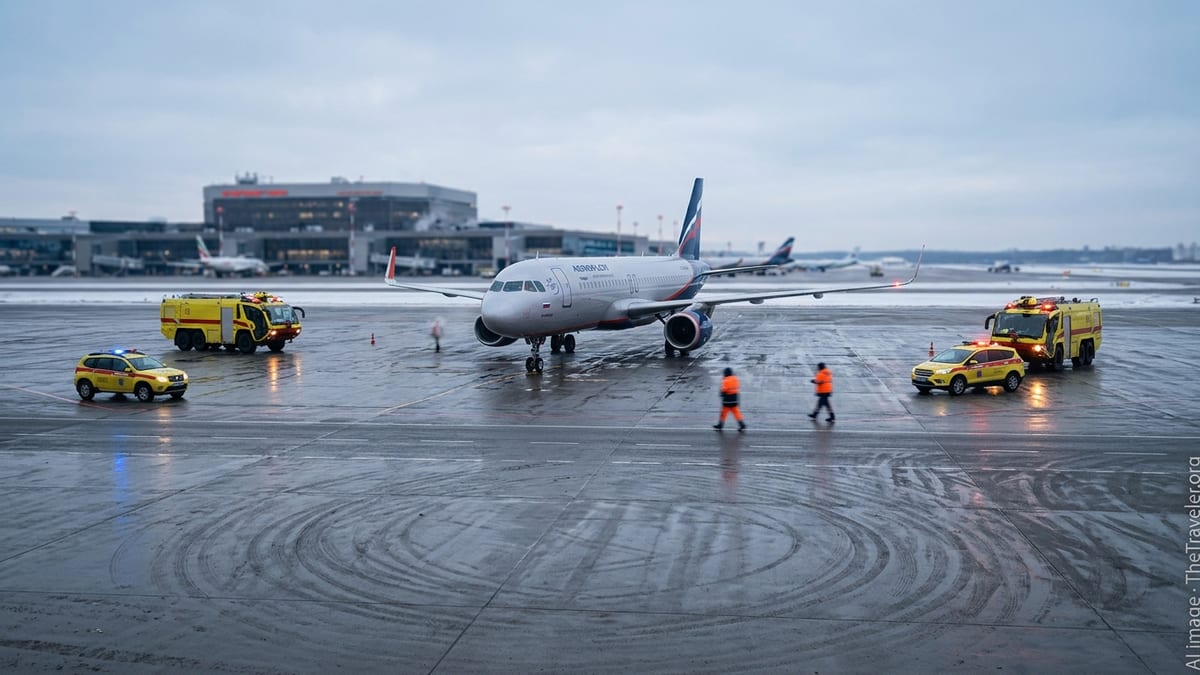
Air Tanzania Restores Dar es Salaam–Moscow Link After Brief Pause
Air Tanzania Company Limited announced that flights TC422 and TC423 between Dar es Salaam and Moscow will resume on Monday, September 7, after a short-lived suspension attributed to a reassessment of the operating environment along the route. According to Tanzanian press coverage, the airline communicated the resumption only a day after indicating that services would be halted, framing the decision as the outcome of a routine risk evaluation rather than a structural change to the route itself.
Local reporting indicates that the carrier described the pause as precautionary, with operations restarting once internal checks were completed on factors such as routing, overflight permissions and geopolitical developments affecting Russian and adjacent airspace. Russian media have similarly reported that Air Tanzania plans to continue scheduled services to Moscow, reinforcing bilateral ambitions to expand passenger and cargo flows between the two countries.
The route rests on a broader framework of cooperation. Publicly available documents from both governments show that Russia and Tanzania signed a bilateral air services agreement in Moscow on June 19, 2024, creating a formal basis for direct flights and future expansion of frequencies. That treaty context helps explain the airline’s stated intention to maintain the link while refining its risk calculus, rather than withdraw from the Russian market altogether.
Russian Airspace Remains Under Heightened International Scrutiny
Air Tanzania’s move comes against a backdrop of sustained international concern about operations in Russian airspace since the full-scale invasion of Ukraine in February 2022. Many carriers from Europe, North America and parts of Asia have been unable to overfly Russia due to sanctions or government-level prohibitions, while others that are not subject to such bans have faced a difficult trade-off between shorter great-circle routes and perceived safety and reputational risks.
The European Union Aviation Safety Agency has issued and repeatedly updated a Conflict Zone Information Bulletin for the airspace of the Russian Federation, warning of a high risk of civil aircraft being unintentionally targeted or affected by air defense activities. The latest versions emphasize that Ukrainian drone and missile strikes, along with Russian air defense responses, have extended across a wide geography, including areas near major Russian airports, and recommend that European operators avoid affected portions of Russian airspace where feasible.
U.S. authorities maintain their own prohibitions. Notices to Air Missions and related Federal Aviation Administration (FAA) materials restrict U.S. civil aviation from operating in specified Russian flight information regions and highlight the potential hazards arising from military activities and limited conflict-related transparency. These advisories, while focused on U.S.-certificated operators, contribute to a global risk picture that other regulators and airlines factor into their own assessments.
Regulators Refine Tools to Judge Conflict-Zone Flight Risks
International regulators have gradually developed more formal structures to evaluate conflict-zone risks such as those over Russia. The FAA’s crisis-management framework describes a cross-divisional process that monitors conflicts, missile activity and air-defense deployments, and then translates those assessments into advisories, restrictions or prohibitions for U.S. operators. This model, along with similar mechanisms in Europe, has become a reference point for how civil-aviation authorities respond when a conventional conflict affects airspace used by commercial traffic.
In Europe, EASA’s Conflict Zone Information Bulletins serve as a central channel for risk information shared by EU member states and the European Commission. For Russian airspace, the bulletin stresses uncertainties in civil-military coordination and the hazard of misidentification where air-defense systems are active at all altitudes. National aviation circulars, such as France’s guidance on overflight of conflict zones, further reinforce recommendations to avoid large portions of the Russian flight information region and neighboring areas around Ukraine and Belarus.
Beyond specific conflict advisories, oversight initiatives like the FAA’s International Aviation Safety Assessment program examine whether countries meet core International Civil Aviation Organization (ICAO) safety oversight standards. While these programs are not designed specifically for war-related risks, they form part of the broader safety landscape within which decisions to operate to or over a given state, including the Russian Federation, are made.
Tanzania’s Expanding Aviation Ties With Russia
The quick restoration of the Dar es Salaam–Moscow service also reflects Tanzania’s wider efforts to deepen aviation and trade ties with Russia. The June 2024 bilateral air services agreement is listed among Tanzania’s growing portfolio of air-services treaties and provides a legal foundation for scheduled passenger and cargo operations by designated airlines of both sides.
The Tanzania Civil Aviation Authority, which regulates air transport and provides air navigation services, has highlighted in public documents its role in aligning national rules with ICAO standards and updating sector regulations. Against this backdrop, new long-haul routes such as Dar es Salaam–Moscow are seen domestically as part of a wider strategy to position Tanzania as a regional hub and attract tourism and investment from nontraditional markets.
For Air Tanzania, the Russian market offers both opportunity and complexity. The carrier is seeking to expand its long-haul footprint beyond traditional African and Middle Eastern destinations, but each new route into or over high-risk regions demands additional internal scrutiny, contingency planning and coordination with regulators. The rapid reassessment and restart of Moscow flights suggest that the airline is calibrating those ambitions in real time as the geopolitical situation evolves.
Global Airlines Recalculate Routes Around Russia
While some non-Western carriers continue to traverse Russian airspace, global network patterns have shifted markedly since 2022. Airlines subject to EU and U.S. sanctions have routed around Russian territory on flights between Europe and Asia, adding hours to some itineraries and increasing fuel burn. These detours have reshaped traffic flows over Central Asia, the Middle East and the Arctic, and prompted airports along alternative corridors to pitch themselves as new hubs for long-haul connections.
Conflict-zone guidance related to Russia now forms part of a wider mosaic of airspace risk, alongside pre-existing cautions over parts of Ukraine, the Middle East and other regions experiencing armed conflict. Advisories from agencies in Europe and North America highlight how attacks using drones and missiles, and the corresponding activation of sophisticated air-defense systems, can create fast-changing hazards even far from front lines.
In this environment, the decision by carriers such as Air Tanzania to continue or resume services involving Russian destinations illustrates the diversity of approaches emerging around the world. Airlines are weighing commercial opportunities, diplomatic ties and national regulatory positions against dynamic security assessments and the expectations of increasingly safety-conscious travelers. How these calculations evolve will help determine whether more carriers follow Air Tanzania into Moscow, or continue to route cautiously around Russian airspace.
Air Tanzania makes sudden U-turn on Moscow flight suspension
Air Tanzania to resume Moscow flights
EASA guidance on Russian airspace conflict risks