


More news on this day
More than 1,990 flights across the United States were delayed and at least 78 were canceled in a single day of late-summer storms, as severe weather and lingering operational strains combined to disrupt travel plans for thousands of passengers nationwide.
Get the latest news straight to your inbox!
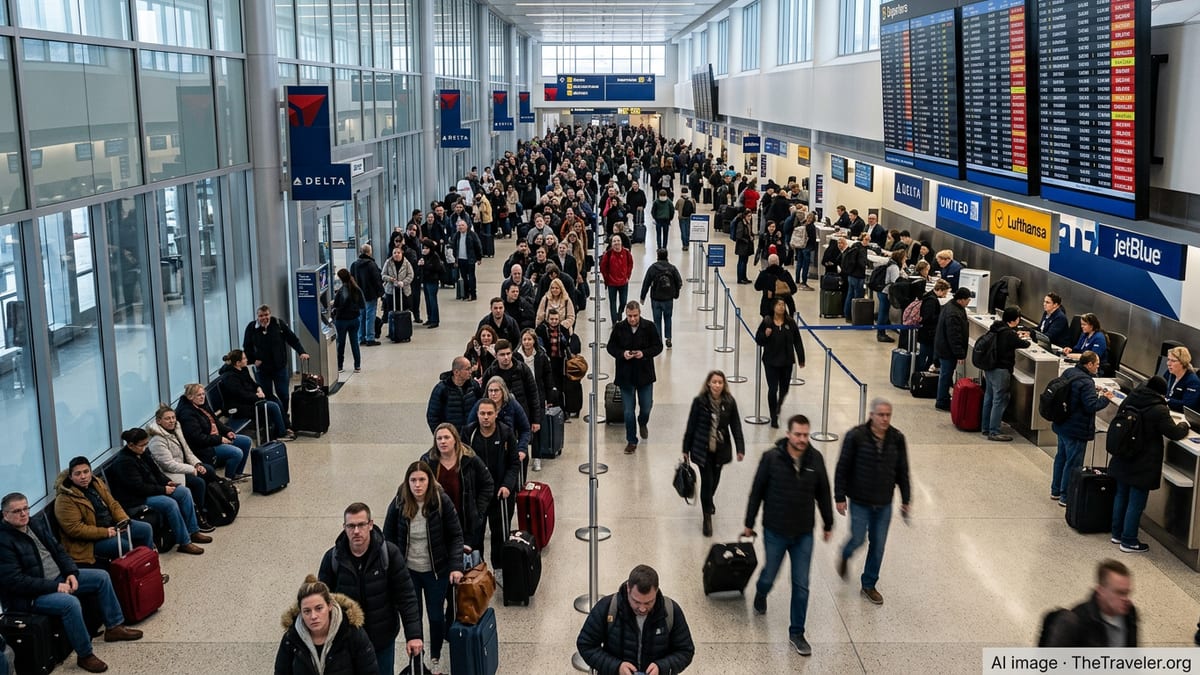
Storm systems trigger fresh wave of nationwide disruption
Published tallies from flight-tracking services show that U.S. airlines faced a new round of heavy disruption as storms swept through key aviation corridors, with more than 1,990 flights delayed and at least 78 canceled within, into, or out of the country in a 24-hour period. The latest wave followed several consecutive days of challenging operations, underscoring how quickly bad weather can ripple through a tightly scheduled network.
Thunderstorms and low cloud over the Northeast and Mid-Atlantic again played an outsized role. Federal aviation updates for early September highlighted weather impacts in New York, Philadelphia, Washington, Houston and several Florida airports, noting that convective storms and reduced visibility were likely to slow arrivals and departures at multiple hubs at once. Taken together, those conditions translated into miles of airborne holding patterns and long queues for takeoff on already congested taxiways.
Industry observers point out that the headline figures for delays and cancellations often understate the real impact for travelers. A single delayed aircraft can cascade through the schedule over the course of a day, turning one weather hit into missed connections and overnight disruptions across the country. With peak late-summer demand still high and many aircraft operating near capacity, there is little slack in the system when weather turns volatile.
East Coast hubs bear the brunt of the storms
Major East Coast airports once again sat at the heart of the disruption. Recent storm systems have repeatedly slowed operations at New York’s three-airport system, Boston Logan, Philadelphia International and Washington Reagan National, with ground-delay programs and brief ground stops used to manage traffic during the most intense cells. Flight-tracking snapshots from this latest episode show those hubs recording some of the highest combined totals of delayed and canceled flights.
On similarly stormy days this season, New York LaGuardia alone has reported well over 200 delays and dozens of cancellations, while neighboring John F. Kennedy International and Newark Liberty have also posted elevated disruption levels. Boston Logan and Philadelphia have at times led the national rankings for cancellations when thunderstorms parked over their approach paths or when low cloud forced controllers to increase spacing between aircraft.
The concentration of problems at a relatively small number of coastal hubs has national consequences. Many cross-country itineraries route through New York, Boston, Philadelphia, Chicago or Washington, so a slowdown in those cities often reverberates into the Midwest, the South and the Mountain West. Even airports far from the storms can see late-arriving aircraft, tight connection windows and rebooked travelers competing for the same limited seats.
Operational strain magnifies weather impact
While storms have been the primary trigger, recent disruptions highlight how weather interacts with staffing and scheduling pressures that have persisted through the busy 2026 travel season. Publicly available analyses of airline operations note that crew availability, aircraft positioning and technology reliability all influence how severe a weather-hit day ultimately becomes.
On days when storms arrive after a period of sustained high demand, airlines often have fewer reserve crews and spare aircraft available to recover from early cancellations. Once a series of flights is scrubbed or significantly delayed, crews can “time out” of their duty limits in one part of the network, leaving later departures elsewhere without the staff needed to operate. This compound effect has been evident in recent weeks as airlines work to match robust passenger volumes with finite staffing and equipment.
Regulatory data released this summer also show that overall delay rates remain elevated compared with some pre-pandemic periods, reflecting the tight margins under which carriers and airports are operating. The latest thunderstorm-driven disruption sits against that backdrop, turning what might previously have been an afternoon of localized delays into a system-wide event affecting thousands of itineraries.
Knock-on effects likely to linger into the weekend
Travelers affected by the latest round of storms may continue to feel the impact beyond the day when the 1,990 delays and 78 cancellations were recorded. When aircraft and crews end a storm day out of position, recovery can take several subsequent schedule cycles, particularly on busy late-summer weekends when most flights are already heavily booked.
Recent disruption summaries from passenger-rights services describe how missed connections at Boston, New York and Chicago have led to rolling delays at smaller airports as aircraft arrive late and turnarounds compress. Even when skies clear, airports may need hours to work through backlogs of flights that were held, rerouted or re-sequenced during the worst of the weather. For some travelers, that can mean overnight stays, downgraded seat assignments or rebooked routes that add extra stops.
Air traffic planning reports indicate that similar patterns could recur if storm systems continue to form along the Eastern Seaboard and central U.S. storm tracks through early September. With hurricane season also approaching its climatological peak, aviation planners are preparing for additional weather-related constraints on top of the routine summer thunderstorm cycle.
What the latest disruption means for U.S. air travelers
For travelers, the latest figures reinforce the importance of building flexibility into late-summer itineraries. While the 1,990 delays and 78 cancellations tied to the recent storm day represent a fraction of all flights operated nationwide, they are heavily concentrated in dense corridors and peak travel windows, where any disruption is felt more acutely. Passengers connecting through New York, Boston, Chicago or major Florida hubs remain particularly exposed when storms line up with afternoon and evening departure banks.
Consumer advocates note that weather-related disruptions of this scale highlight the limits of compensation frameworks, especially on days when storms and low visibility are the primary cause. In many cases, travelers are not entitled to financial payouts, though they can still expect options such as rebooking or refunds when flights are significantly delayed or canceled. Airlines also often publish temporary waivers that allow affected passengers to move their trips without change fees when large-scale weather events are forecast.
More broadly, the repeated waves of delays across late August and early September suggest that high-demand travel periods in the U.S. are likely to remain vulnerable to sudden spikes in disruption. As airlines, airports and regulators continue to refine schedules, staffing plans and technology resilience, passengers may increasingly factor operational reliability into decisions about when and where to fly, especially during storm-prone seasons.
Storms cancel 930 flights at Newark, JFK and LaGuardia
Storms disrupt flights at Boston, New York and Chicago hubs
Over 1,572 flights delayed amid widespread U.S. travel disruptions