


More news on this day
Russia is pledging to prevent major disruption to its civil aviation network after Ukrainian President Volodymyr Zelensky warned that intensified long-range drone operations would make Russian airspace increasingly unsafe for airlines and insurers.
Get the latest news straight to your inbox!
Russia Seeks to Reassure Passengers and Airlines
Publicly available information shows that Russian transport officials have moved quickly to calm concerns around domestic air travel following Zelensky’s warning that “the war started by Russia is closing its own skies.” The Ukrainian leader’s message, delivered in a late-night address this week, urged airlines, insurers and other aviation stakeholders to treat Russian skies as increasingly risky due to ongoing drone strikes deep inside the country.
Russia’s Transport Minister Andrei Nikitin has been cited in multiple outlets as saying civil aviation authorities are continuously tightening flight safety and airport security requirements. According to coverage of his comments, Nikitin argued that the country has contingency measures in place and emphasized that significant disruption to civil air traffic would not be permitted. Russian media and international wire services describe his remarks as a direct response to Kyiv’s attempt to cast Russian airspace as unsafe for commercial operations.
Major urban hubs such as Moscow and St Petersburg remain the core of Russia’s domestic aviation system, and Russian statements have underscored a determination to keep those airports functioning despite the evolving security situation. Analysts note that flights within Russia have already adapted repeatedly since the full-scale invasion of Ukraine in 2022, including the closure of several airports near the front line.
Ukraine Escalates Warnings Over Russian Skies
Zelensky’s latest warning to the aviation sector marks a notable escalation in Kyiv’s efforts to pressure Russia by targeting its wider logistics and economic infrastructure. In his address, widely shared by European media, the Ukrainian president told airlines and insurers that Russian airspace is becoming “completely unsafe,” citing the growing range and tempo of Ukrainian drone operations inside Russia. He insisted that Ukraine does not seek to target civilian airliners but argued that the density of military activity now poses unavoidable risks for civil flights.
Following the speech, Ukraine’s foreign ministry announced that it had formally notified the International Civil Aviation Organization that Russian skies should be considered dangerous for civil aviation. Euronews and other European outlets report that Kyiv’s submission frames the warning as a safety advisory rather than a threat to shoot down passenger aircraft, positioning it as a response to sustained Russian missile and drone attacks on Ukrainian cities.
Travel industry observers say the message is aimed at airlines that still overfly Russia or serve its major airports, even as carriers from the European Union, the United States and several allies have avoided Russian airspace since 2022. Routes operated by airlines from countries such as China, Turkey, the United Arab Emirates, Qatar and India, however, continue to pass through or into Russian territory, making them the primary audience for Kyiv’s warning.
Flight Delays, Cancellations and Early Market Reaction
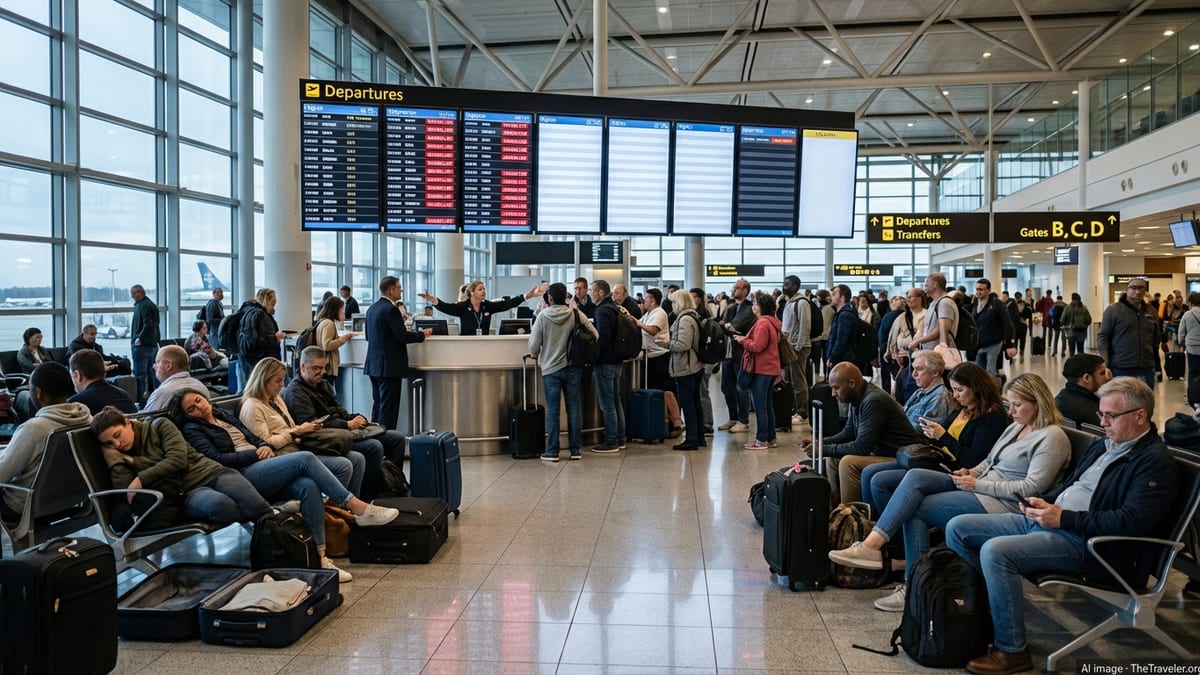
Within hours of Zelensky’s remarks, disruptions began to appear in Russia’s domestic schedules. Flight-tracking data cited by Moscow-based and international outlets indicated that Moscow’s Sheremetyevo Airport logged dozens of cancellations and more than two hundred delays, while Vnukovo Airport also reported a noticeable spike in flight disruptions. These irregularities were not officially attributed to any specific threat, but they unfolded against the backdrop of Ukraine’s warning and ongoing drone activity.
Some foreign carriers have already adjusted their operations. Turkish low-cost airline Pegasus, for example, confirmed it had canceled a series of flights to and from Moscow, describing the moves as driven by “technical and operational” reasons without elaborating further. Russian airport statements referenced multiple Pegasus arrivals and departures being scrubbed on a single day, along with notices that additional overnight services would be affected even as other flights continued as scheduled.
Financial markets have reacted as well. Aggregated coverage of Russian blue-chip stocks shows that shares of national carrier Aeroflot dipped after Zelensky’s comments circulated, reflecting investor unease over the prospect of tighter insurance standards, rerouted flight paths or broader reputational risk. Aviation risk consultancies have also circulated new bulletins to clients, highlighting the near-certainty of ongoing strikes inside Russia through 2026 and warning about the potential for miscalculation in crowded air corridors.
Persistent Drone Campaign Raises Safety and Insurance Questions
Specialist aviation security firms tracking the conflict assess that Ukraine’s drone and missile operations are likely to continue reaching targets hundreds of kilometers inside Russian territory. One widely cited alert from Osprey Flight Solutions, referenced in multiple news reports, suggests that daily strikes deep within Russia are close to a certainty this year and may increase in frequency. The firm notes a realistic possibility of misidentification or miscalculation in areas where civilian and military aviation intersect, a scenario of particular concern for insurers.
Travel risk analysts point out that civil aviation in conflict zones is not governed only by government permission for flights to operate. Insurers, lessors and corporate travel departments each apply their own safety thresholds, which can be triggered by conflict-related advisories even if formal airspace closures are not imposed. Ukraine’s decision to frame Russian skies as unsafe directly targets these decision-makers, potentially making it more difficult and expensive for airlines to justify continued operations across Russian territory.
For passengers, the implications may include longer journey times on certain Asia–Europe routes should more carriers opt to avoid Russia. During earlier phases of the war, rerouting to avoid Russian and Ukrainian airspace added hundreds or even thousands of kilometers to some flights, increasing fuel burn and prompting schedule alterations. Analysts say a fresh round of diversions would likely have similar effects, albeit concentrated among airlines that have continued to use Russian routes.
Broader Impact on Global Connectivity
The latest exchange between Moscow and Kyiv over aviation safety illustrates how the war increasingly affects travelers far beyond the frontline. Russia’s pledge to keep its air network functioning is aimed at reassuring domestic passengers and foreign partners that schedules will hold, even as air-defense activity and drone operations intensify around key metropolitan hubs. For now, domestic flights across much of Russia are continuing, but delays and selective route suspensions suggest the system is under growing strain.
At the same time, Ukraine’s outreach to international aviation bodies places added pressure on global carriers and regulators to reassess any use of Russian airspace. While many Western airlines already avoid the country, several Middle Eastern, Asian and Turkish carriers still rely on Russian routes for competitive flight times between Europe and Asia. Industry watchers say these operators could face more difficult risk calculations if insurers demand higher premiums or impose stricter conditions following Kyiv’s advisory.
For the travel sector, the situation underscores the volatility that comes with operating near or over an active conflict. Airline route planners, corporate travel managers and individual passengers will be watching closely for any further changes in advisories, insurance guidance or de facto route closures that could reshape long-haul networks once again.
The Moscow Times: Russia Says It Will Not Let Ukraine Disrupt Air Travel
Euronews: Zelenskyy Warns Russian Airspace Will Effectively Be Closing
Reuters: Moscow Vows to Avoid Airspace Disruption Despite Zelensky Warning
Euronews: Ukraine Formally Warns Airlines That Russian Airspace Is Unsafe