


More news on this day
Russia has pledged to keep civil aviation operating without major disruption after Ukrainian President Volodymyr Zelenskiy warned that Kyiv’s expanding drone campaign had made Russian airspace increasingly dangerous for commercial flights.
Get the latest news straight to your inbox!
Zelenskiy’s Warning Puts Russian Skies Under Scrutiny
The latest tensions over Russian airspace follow a public warning by President Volodymyr Zelenskiy on September 1, 2026. In an evening address, he cautioned airlines, insurance companies and operators that the presence of Ukrainian drones responding to Russian attacks was turning the country’s skies into a risk zone. In his message, he argued that the conflict launched by Moscow was effectively “closing its own skies,” while emphasizing that Ukraine does not intend to target civilian aircraft.
Ukrainian officials have moved to formalize these concerns at the international level. Foreign Minister Andrii Sybiha has stated that Kyiv has notified the International Civil Aviation Organization that Russian airspace should not be considered safe for civil aviation. This step places additional pressure on regulators, airlines and insurers that still rely on Russian routes for long-haul connectivity between Europe, Asia and the Middle East.
European and United States carriers have already avoided Russian airspace since the full-scale invasion of Ukraine in February 2022, but many airlines from countries such as China, Turkey, the United Arab Emirates and other Gulf states continue to use Russian corridors for passenger and cargo flights. Zelenskiy’s latest warning is therefore directed primarily at those operators and their insurers, which must now weigh heightened security concerns against the economic costs of rerouting.
Moscow Signals Determination to Keep Airports and Routes Open
In response, Moscow has underlined its intention to prevent serious disruption to domestic and international air services. Transport Minister Andrei Nikitin has been quoted in Russian and international media as saying that aviation authorities are constantly upgrading flight safety and airport security requirements and that Russia has the means to address emerging risks. Publicly available reports indicate that the ministry is working closely with defense and security agencies as it seeks to reassure airlines and passengers.
Nikitin has also expressed confidence that Russia will not allow significant interruptions to civil aviation, framing the current situation as a challenge that can be managed through technical, operational and security measures. Russian officials have rejected Kyiv’s portrayal of their skies as unsafe, presenting domestic airports and key hubs around Moscow and St Petersburg as capable of operating under enhanced protective conditions.
The Kremlin’s stance aligns with its broader objective of maintaining economic connectivity despite sanctions and warfare. Air travel within Russia and between Russia and partners in Asia, the Middle East and parts of Africa remains a vital channel for trade and mobility. Any sustained closure or severe restriction of airspace would deepen the country’s isolation, complicate logistics and further strain an aviation sector already grappling with restricted access to aircraft parts and services.
Flight Disruptions Highlight Operational Strain
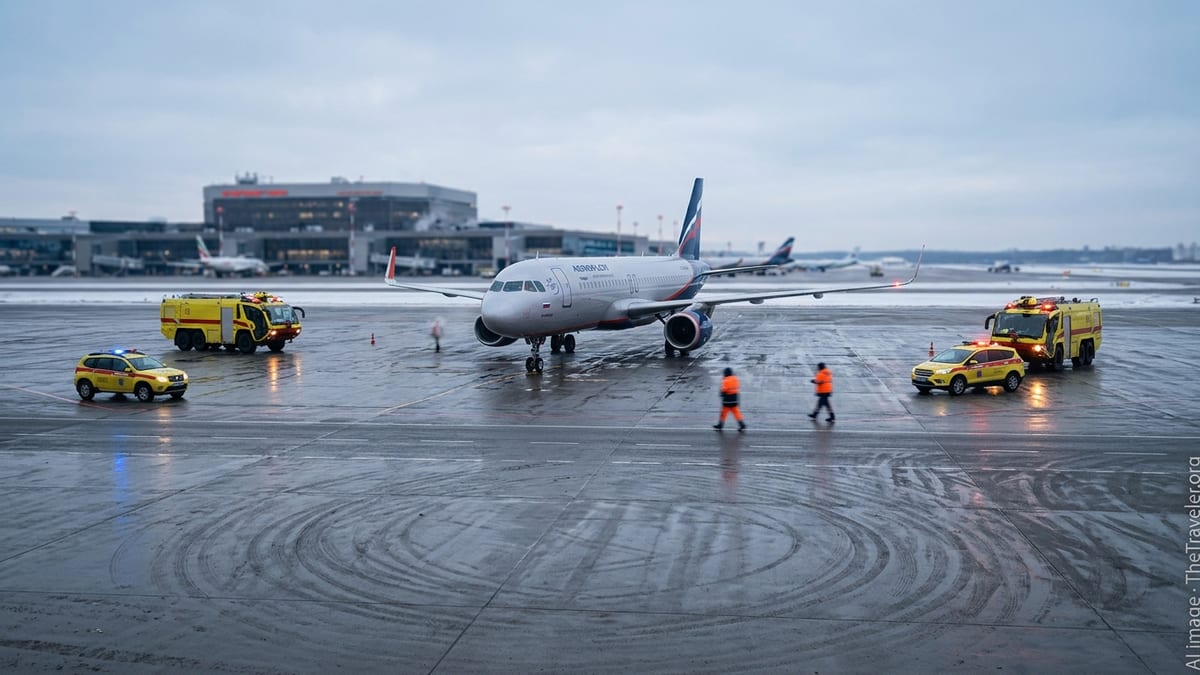
Despite Moscow’s assurances, data from flight-tracking services point to mounting operational strain at major Russian airports. Published coverage based on Flightradar24 information indicates waves of cancellations and delays at Sheremetyevo and Vnukovo airports around the time of Zelenskiy’s statement and Russia’s response. Some services into Moscow were reportedly cancelled or rescheduled, with airlines often citing technical or operational reasons rather than security concerns.
Carriers based in the Gulf and Turkey, including operators that routinely use Russian routes, have signaled that they are monitoring the situation and adjusting schedules as needed. Public statements from at least one regional airline describe ongoing assessments of routing and potential diversions to ensure passenger and crew safety, reflecting industry caution even as most flights continue.
Aviation risk specialists are also sharpening their guidance. Advisory firm Osprey Flight Solutions has circulated assessments suggesting that while the majority of Ukrainian drone and missile activity is expected within roughly 300 kilometers of the border, attacks deeper into Russia remain likely through 2026, including in the vicinity of Moscow and St Petersburg. Such analysis raises questions about how far commercial flights can reliably operate in or over regions that may face intermittent long-range strikes.
Implications for Global Airlines and Travelers
The evolving airspace picture carries significant implications for global aviation networks. For carriers that still traverse Russian territory, rerouting away from contested areas would increase flight times and fuel costs, potentially affecting ticket prices and schedules on Europe to Asia and Middle East to Asia routes. The decision to divert around Russia is also complicated by restrictions over parts of Ukraine and neighboring regions, which further narrows corridor options.
From a traveler’s perspective, most immediate effects are likely to appear as longer journeys, schedule changes and occasional last-minute disruptions on flights that rely on Russian airspace. Industry observers note that passengers may see more indirect routings between cities previously linked by relatively direct paths over Russia, particularly if insurers decide that operating above certain regions no longer fits within acceptable risk thresholds.
Regulators and international bodies face renewed pressure to reassess existing advisories. Ukraine’s notification to the International Civil Aviation Organization about the safety of Russian skies adds an additional layer to the already complex tapestry of guidance governing overflight of conflict zones. Any shift in formal recommendations could prompt a rapid reaction from airlines, many of which treat such notices as key benchmarks when evaluating route viability.
Drone Warfare Redefines Perceived Safe Skies
The dispute over Russian airspace underscores how drone warfare is reshaping concepts of safety for civil aviation. Uncrewed systems with expanding range and payload capacity increase the geographic footprint of active conflict, raising concerns even in areas far from front-line fighting. Ukraine’s use of drones against Russian military and industrial targets illustrates how long-range capabilities can overlap with busy civilian flight paths.
For Russia, frequent reports of drones reaching the wider Moscow region and other strategic sites are prompting visible changes in air defense posture. Publicly available imagery and accounts highlight increased anti-aircraft activity around key cities, as well as intermittent restrictions or diversions at airports when drone threats are detected. These measures aim to protect ground targets, but they also introduce operational complexity for air traffic management.
Analysts note that the broader aviation industry has faced similar dilemmas in previous conflicts, from the closure of certain Middle Eastern air corridors to restrictions over parts of Eastern Europe and the Black Sea. What differentiates the current situation is the combination of a large geographic theater, high volume of long-haul traffic and rapidly evolving drone technology, which together challenge traditional assumptions about where civil aircraft can operate safely during wartime.