


More news on this day
Summer holidaymakers flying with Ryanair are being urged to allow extra time at the airport after the low cost carrier highlighted significant waiting times at 15 major European hubs, blaming new EU border controls and limited infrastructure for mounting queues and missed flights.
Get the latest news straight to your inbox!
Border control changes create new bottlenecks
According to recent coverage of Ryanair’s latest advisory, the airline is drawing a direct line between increasing disruption and the rollout of the European Union’s new Entry/Exit System for non-EU nationals. The biometric regime, which captures fingerprints and facial images at passport control, is reported to be slowing processing at already busy terminals.
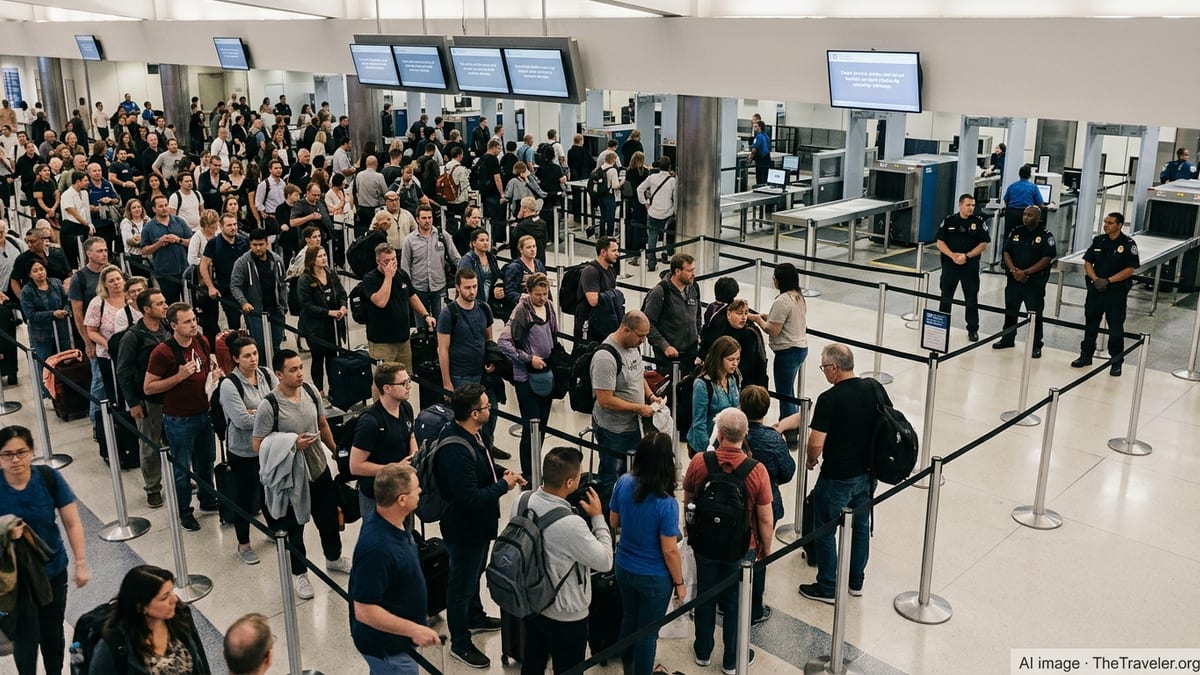
Reports indicate that some families travelling at peak times are facing queues that stretch across arrival halls and into check-in areas, with waiting times in certain cases rising to several hours. The combination of extra checks, summer holiday demand and staffing constraints is described as a key factor behind the delays now being flagged at 15 airports.
Ryanair’s warning focuses in particular on UK families heading to popular Mediterranean destinations during school holidays. Publicly available information shows that passengers have missed flights after being caught in bottlenecks at border control, even when they arrived at the airport well in advance of departure.
The airline has called for greater flexibility in the implementation of the border rules during the peak season, arguing that airports and government agencies need more time to adapt systems and staffing levels to the new requirements.
Fifteen airports under sustained pressure
While the full internal list published in airline communications is not being circulated in detail, multiple media outlets summarising Ryanair’s advisory state that 15 large European airports are experiencing particularly frequent disruption. These include a mix of major holiday gateways and big-city hubs where passenger volumes are highest and terminal layouts leave little room for overflow queues.
According to recent travel reports, airports serving leading Spanish beach destinations, key hubs in Italy, France and Portugal, and several large Northern European gateways feature among the locations singled out. Common characteristics include high proportions of non-EU passengers, constrained terminal space and complex transfer flows that funnel large numbers of travellers through the same control points.
Coverage in specialist aviation and travel outlets notes that congestion is affecting both arrivals and departures. Incoming passengers can face lengthy waits at immigration before reaching baggage reclaim, while departing travellers encounter queues at exit checks that stretch back towards security and check-in zones.
The pattern described across the 15 airports suggests that even modest disruptions, such as technical issues or a shortfall in border staff, can quickly cascade into multi-hour delays when combined with the additional time required for biometric registration.
Knock-on effects for schedules and connections
Industry analysis points out that extended processing times at border checkpoints can ripple through daily flight schedules. When aircraft arrive late due to congested arrival halls, turnarounds can lengthen, pushing departure times back and narrowing the margin for on-time operations during the rest of the day.
For point-to-point passengers, the main impact is longer waiting at the airport and a higher risk of missing flights if they arrive close to the minimum recommended time. For those making self-arranged connections between separate tickets, the risk is greater, as public guidance from travel media stresses that generous buffers are now needed when transiting through busy European hubs.
Ryanair’s communication, as reported in several news summaries, urges travelers not to rely on previously comfortable habits of arriving relatively late for short haul flights. Instead, passengers are being advised to plan for an airport experience that may involve extended queues at passport control in both directions, particularly at the 15 airports highlighted.
Aviation analysts quoted in public commentary add that the situation could also influence airline costs, as delays build and crews and aircraft fall out of position. This in turn can lead to last minute gate changes, rebookings and, in more severe cases, cancellations when aircraft or crew cannot reach their next scheduled flight in time.
What travelers can do before heading to the airport
Travel industry guidance responding to Ryanair’s warning emphasizes practical steps passengers can take to reduce the risk of disruption. First, travelers are being encouraged to check their airline’s latest advice in the days before departure, as some carriers may adjust check-in opening times or issue airport specific guidance if queues worsen.
Secondly, commentators suggest that passengers should complete as many formalities as possible online before travelling to the airport. Digital boarding passes, advance seat selection and pre-paid baggage can all help to shorten time spent at check-in desks, leaving a greater buffer for potential congestion at passport control.
Families and groups are also being advised to factor in the needs of children and older travelers who may find long periods of standing in line particularly challenging. Travel media recommend carrying water, snacks and essential medications in hand luggage and planning rest breaks before joining queues when possible.
Finally, consumer advocates note that passengers should familiarise themselves with their rights under European air passenger regulations, since extended delays or cancellations may entitle them to assistance or compensation in certain circumstances. Understanding these rules can help travelers respond quickly if airport disruption escalates.
Airports and policymakers under pressure
The focus on 15 particularly affected airports adds to broader scrutiny of whether Europe’s aviation system is ready for the combination of post-pandemic demand recovery and new border control technologies. Commentators in the aviation sector argue that infrastructure and staffing have not kept pace with passenger numbers in some locations.
Publicly available statements from airport industry groups have previously highlighted concerns about the pace of the Entry/Exit System rollout and the need for additional funding and space to accommodate biometric equipment. The current situation, as described in reports on Ryanair’s warning, will likely renew calls for targeted investments at the busiest hubs.
Policy debates are also intensifying over how to balance security and border management objectives with the need to keep passenger flows moving. Some experts are suggesting temporary flexibilities during peak holiday periods, while longer term proposals include redesigned terminals with more room for immigration facilities and better digital pre-clearance tools.
For now, Ryanair’s advisory serves as a signal that summer travel across parts of Europe may involve slower journeys through certain airports. With school holidays in full swing, millions of passengers are likely to feel the impact of these growing pains as the continent adapts to a more high-tech border regime.