


Relocating to Mexico requires more than logistical planning. Many expatriates report that their long-term satisfaction depends heavily on understanding and adapting to Mexico’s underlying cultural norms, which can differ markedly from those in North America, Western Europe, and parts of Asia. This briefing outlines the principal cultural differences expats notice in daily life and work, and how these may influence integration, expectations, and overall relocation success.
Collectivism, Family Orientation, and Social Networks
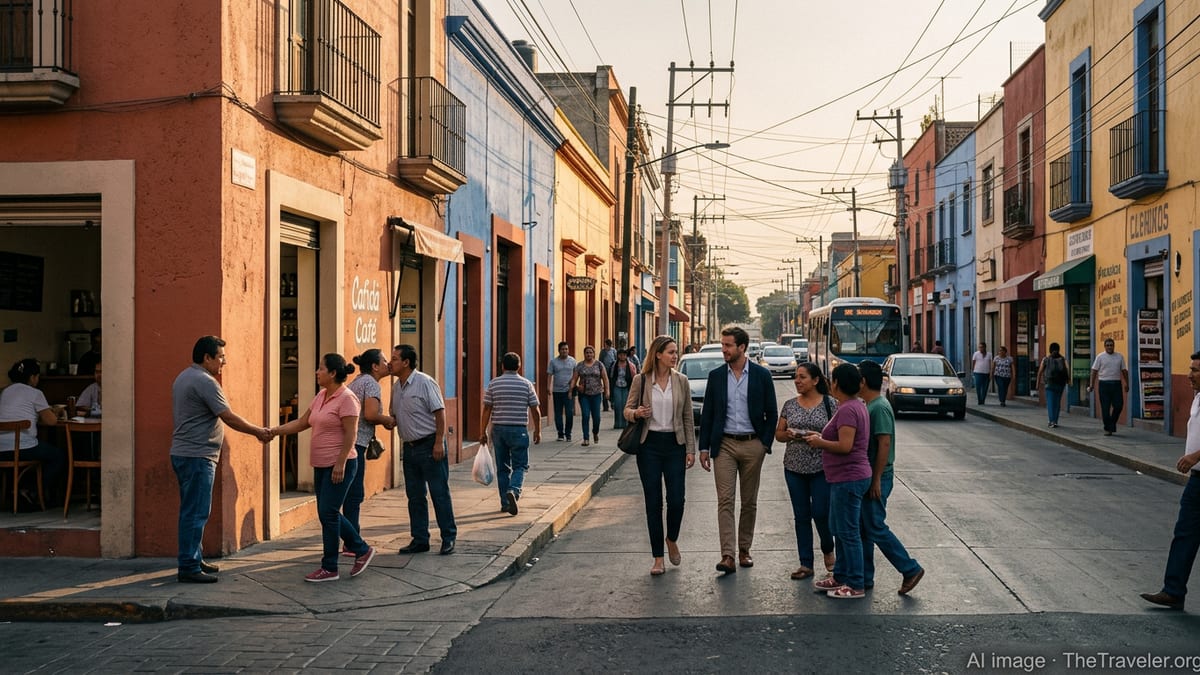
One of the most consistent cultural differences expats note in Mexico is the strong emphasis on family and group belonging. Mexican culture is generally more collectivist than that of many English-speaking and Northern European countries, where individual autonomy is often prioritized. Extended family involvement in decisions, frequent family gatherings, and strong obligations to relatives are common. For an incoming expat, this can mean that colleagues frequently reference family needs when planning schedules, holidays, or even career moves.
Friendship and social networks also play a central role in how things get done. Personal recommendations and introductions may weigh more than formal processes, particularly in smaller organizations or outside major corporate environments. Expats who come from highly systematized cultures often notice that access to services, professional opportunities, or rapid problem resolution improves once trusted relationships are built. This can be positive in terms of support and inclusion, but it may frustrate those who expect impersonal, rules-based systems to operate consistently regardless of personal ties.
For expat families, the communal orientation can provide a strong support structure. Neighbors may be more involved, school communities tightly knit, and children quickly integrated into peer groups. The trade-off is that privacy boundaries can feel looser than in more individualistic societies. Questions about personal life, relationship status, or family plans may be asked more openly and with benign intent, which some expats initially perceive as intrusive.
From a relocation planning perspective, this collectivist orientation implies that successful integration depends heavily on active social engagement. Expats who remain socially isolated or rely solely on formal channels may find adaptation slower and more challenging than those who invest time in building local relationships.
Hierarchy, Respect, and Communication Style
Mexico tends to have a more hierarchical social and organizational structure compared with many Western countries. Deference to seniority, age, and formal position is often visible in language, body language, and decision-making processes. In Spanish, the formal second-person pronoun is commonly used with superiors, older people, or new acquaintances, especially in professional contexts. Titles such as “Licenciado,” “Ingeniero,” or “Doctor” may be used frequently when addressing professionals, signaling respect for academic qualifications and status.
In the workplace, expats frequently notice that decisions are concentrated at the top and that subordinates may be less inclined to openly challenge or contradict a manager in public settings. Open disagreement in meetings can be perceived as disrespectful, even when presented constructively. As a result, true opinions may surface privately before or after meetings, or through intermediaries, rather than in direct confrontation. Expats from flatter, consensus-oriented cultures may misinterpret the apparent surface agreement as genuine alignment when there is in fact unspoken disagreement.
Communication style is generally more indirect and context-dependent than in low-context cultures such as the United States, Germany, or the Netherlands. Nonverbal cues, tone, and relationship history carry significant meaning. A direct “no” may be avoided to prevent embarrassment or conflict; instead, phrases that imply reluctance, delay, or alternative options are used. Many expats initially misread these as mere scheduling issues rather than substantive objections. Over time, foreign professionals often learn to interpret softer signals such as prolonged silence, vague responses, or repeated rescheduling as indications that enthusiasm or agreement is limited.
This combination of hierarchy and indirect communication affects how expats should structure meetings, request feedback, and interpret commitments. It usually requires more time invested in pre-meeting alignment, one-on-one follow-ups, and explicit invitations for candid input delivered in a face-saving way.
Time Orientation, Punctuality, and Flexibility
Another major adjustment reported by expats in Mexico concerns time management and punctuality. While large multinationals and some sectors in Mexico’s major cities align increasingly with global standards, everyday life and many local organizations still operate with a more flexible approach to time. Social events may regularly start 30 to 60 minutes later than scheduled, and even professional meetings can begin after the agreed time, especially if participants are traveling across congested urban areas.
The concept of time is often more relational than strictly clock-based. Maintaining good interaction and completing the conversation at hand can be prioritized over moving quickly to the next appointment. This can be perceived by incoming expats as inefficiency or unreliability, particularly if they are used to environments where “time is money” and punctuality is a core professional value. At the same time, expecting absolute punctuality from local counterparts can be seen as rigid or unsympathetic to contextual constraints such as traffic or simultaneous family obligations.
In practice, many experienced international professionals working in Mexico plan for variability. For internal or local meetings, it is common to anticipate a 15–30 minute delay, although external visitors are still advised to arrive on time to demonstrate professionalism and respect. Project timelines can require more buffer, with clear interim milestones and frequent check-ins rather than reliance on a single final deadline. Expats who adjust their expectations and build in contingencies generally report reduced stress and improved collaboration.
For social integration, understanding Mexico’s more relaxed time orientation is also crucial. Being significantly early to private gatherings or pressing for rapid turnaround on informal commitments can create subtle social friction. Over time, most expats learn to distinguish between contexts where strict punctuality is expected and those where flexibility is the norm.
Formality, Greetings, and Personal Space
New arrivals to Mexico typically notice a blend of warmth and formality in everyday interactions. Greetings are important social rituals, and failing to acknowledge people when entering or leaving a room can be perceived as rude. Handshakes are common in professional settings, often accompanied by direct eye contact and verbal greetings tailored to the time of day. Between acquaintances, especially among women or between men and women, cheek-to-cheek greetings are standard in social contexts, though less so in strictly formal business environments.
Levels of formality in language, dress, and behavior are often higher than in some Western workplaces. Conservative business attire remains prevalent in many sectors, and written communication may use polite formulas even in relatively informal exchanges. Expats from cultures that favor quick, casual email or messaging styles may be surprised by the expectation of courteous openings and closings and by the continued importance of in-person visits for building trust.
Personal space norms also differ. People commonly stand closer together during conversations than is typical in North America or Northern Europe, and light physical contact such as a touch on the arm or shoulder can be part of friendly interaction. Stepping back repeatedly can unintentionally signal discomfort or aloofness. Public spaces, including public transport and markets, are often more crowded and noisier, which can be challenging for individuals who value orderly queues and quiet environments.
Expats should also be aware that noise tolerance is generally higher. Social gatherings, music, and neighborhood celebrations can extend late into the night, sometimes on weekdays. While regulations exist, enforcement can be uneven, and appealing to authorities may not always produce quick results. This difference in expectations regarding noise and public space is a frequent and sometimes persistent point of cultural friction for long-term foreign residents.
Workplace Expectations, Relationships, and Decision-Making
Workplace culture in Mexico tends to place strong emphasis on loyalty, personal relationships, and stability. Long tenure with a single employer is still respected in many sectors, and frequent job changes may raise questions about commitment. Managers may view their role in partly paternalistic terms, taking interest in employees’ personal situations and expecting reciprocal loyalty.
For expats, this can mean that investing in rapport-building activities, such as shared meals, informal conversations, and modest personal self-disclosure, is an important part of professional success. Business discussions often begin with small talk that can occupy a meaningful portion of a meeting. Moving too quickly to transactional issues without this relational phase may be interpreted as cold or disrespectful. Trust is typically built over time and through repeated interactions rather than through contracts alone.
Decision-making processes may be slower and less transparent than in some Western organizations. Due to hierarchical structures, final decisions often rest with senior leaders who may not be present in early-stage meetings. Staff may avoid committing firmly until leadership has weighed in, which can puzzle expats accustomed to empowered middle management or consensus-based models. It is also common for instructions to be interpreted flexibly, with an emphasis on adapting to circumstances and maintaining harmony rather than rigidly following a plan.
In team dynamics, open criticism in group settings is usually avoided to prevent loss of face. Performance issues or disagreements are better addressed in private, with careful attention to tone. Expats who bring highly direct feedback styles or confrontational meeting techniques may experience resistance or disengagement from local staff. Adapting communication methods to prioritize respect, recognition, and gradual change often produces better outcomes.
Language, Indirectness, and Nuances of Politeness
Spanish is the dominant language in Mexico, and although English is widely used in international business, expats frequently report that even basic competence in Spanish significantly improves integration. Beyond vocabulary and grammar, cultural nuances are embedded in how language is used. Diminutives, for example, can soften requests or convey affection, and polite constructions are often preferred over blunt statements.
Politeness conventions influence how agreement and disagreement are expressed. Saying “yes” can sometimes mean “I understand” rather than “I fully agree” or “I will definitely do this.” Similarly, noncommittal responses may be intended to preserve harmony rather than deceive. Expats unaccustomed to this may overestimate the strength of commitments or misinterpret polite ambiguity as firm consent.
In social settings, humor, self-deprecation, and expressive storytelling are common. Direct criticism of Mexico, its institutions, or customs may be poorly received, especially from newcomers. Observing before judging and asking open, curious questions tends to generate more constructive dialogue. Language is also used to signal respect for social roles; addressing domestic workers, service staff, or security personnel with courtesy can influence the quality of interactions and demonstrates cultural sensitivity.
For families with school-age children, language differences shape peer integration and parent-school communication. Even in bilingual or international schools, informal interactions among parents and teachers often take place in Spanish. This can affect how quickly parents understand unwritten norms around homework, participation, and discipline, and it underscores the practical benefits of at least conversational language skills for long-term residents.
The Takeaway
For prospective expats, the key cultural differences in Mexico are not limited to surface-level customs but extend into deeper values regarding family, hierarchy, time, communication, and social interaction. These differences can create friction if approached with rigid expectations based on one’s home culture, yet they can also offer substantial benefits in the form of strong community ties, warm interpersonal relationships, and flexible approaches to daily life.
Relocation decisions should therefore factor in not only economic or professional considerations but also personal readiness to adapt to a more relationship-centered, hierarchical, and time-flexible environment. Individuals and families who are willing to invest in language learning, cultivate local relationships, and recalibrate expectations around punctuality, noise, and privacy are more likely to report positive long-term outcomes. Those who require high levels of predictability, strict time discipline, and clear separation of personal and professional spheres may find Mexico’s cultural environment more demanding.
Ultimately, successful relocation to Mexico will depend on viewing cultural differences not as obstacles to be managed temporarily but as enduring features of daily life to be understood, respected, and integrated into one’s own routines.
FAQ
Q1. How different is Mexican workplace culture from that of the United States or Canada?
Mexican workplaces are generally more hierarchical and relationship-oriented, with greater emphasis on loyalty, seniority, and formality, and a more flexible attitude toward time and deadlines.
Q2. Is punctuality taken seriously in Mexico?
Punctuality is valued in principle, but in practice many meetings and social events start later than scheduled. Large cities and multinational firms tend to be stricter about time than informal settings.
Q3. Will not speaking Spanish make cultural adaptation difficult?
Many professionals in major cities speak some English, but limited Spanish restricts social integration and can hinder understanding of nuanced communication and workplace expectations.
Q4. Are social relationships really necessary for getting things done?
Personal connections often facilitate faster problem-solving and access to opportunities. Formal processes exist, but trust built through relationships can be a decisive factor in many contexts.
Q5. How formal are greetings and forms of address?
Greetings are important and relatively formal, especially at first contact. Using titles and polite forms of address is common and signals respect in both social and professional settings.
Q6. What should expats know about personal space and physical contact?
People typically stand closer than in many Northern European or North American cultures, and light physical contact is common. Stepping back repeatedly can be interpreted as distance or discomfort.
Q7. Is open disagreement acceptable in Mexican workplaces?
Open, direct disagreement in group settings is often avoided to maintain harmony. Concerns are more commonly raised privately or expressed indirectly, especially when senior people are present.
Q8. How important is family in everyday life and decision-making?
Family plays a central role, influencing schedules, priorities, and sometimes career decisions. Expats often observe frequent family gatherings and strong expectations of mutual support among relatives.
Q9. Are noise levels and neighborhood activity really that different?
Yes, tolerance for noise is typically higher. Celebrations, music, and gatherings can continue late into the night, and enforcement of noise regulations can be inconsistent, especially in dense urban areas.
Q10. What can expats do to adapt more smoothly to Mexican cultural norms?
Learning basic Spanish, investing time in relationships, observing local etiquette in greetings and communication, and adjusting expectations around time and noise greatly improve adaptation prospects.