


More news on this day
Canadian wildfires are again casting a pall over North American summer travel, with thick smoke spreading across the border into major United States cities and prompting renewed health alerts for visitors from India, Australia and other long-haul markets.
Get the latest news straight to your inbox!
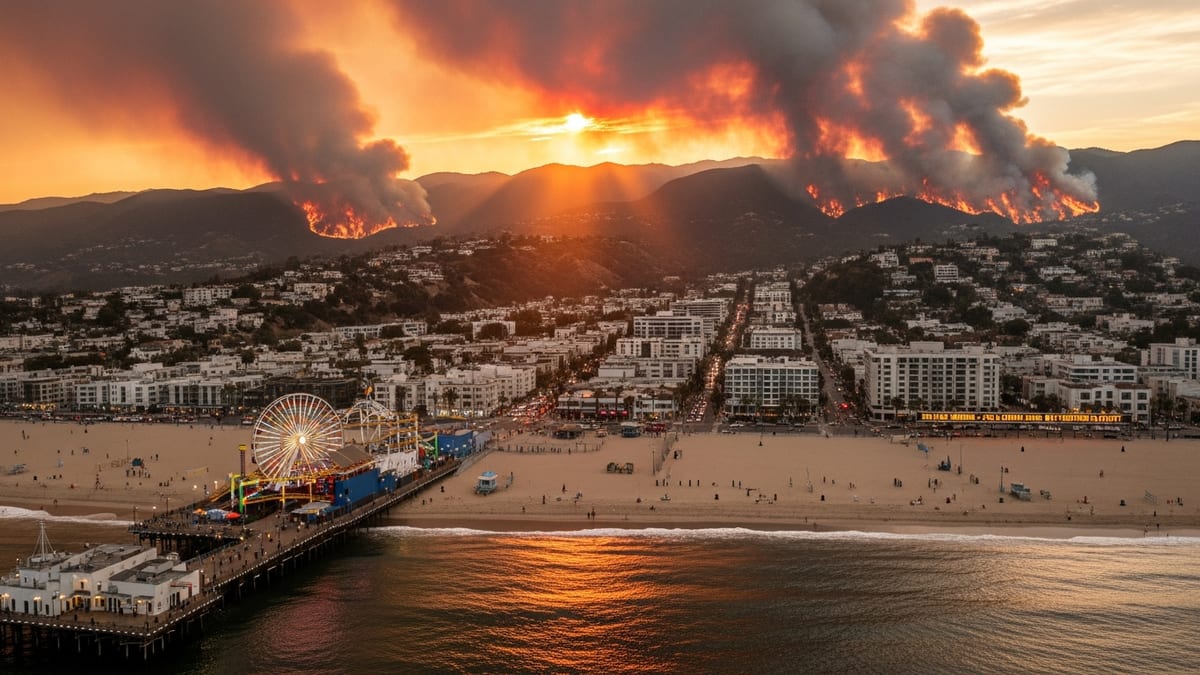
Smoke From Hundreds of Canadian Fires Spreads Across Borders
Intense wildfire activity in several Canadian provinces is driving a vast smoke plume across large parts of the continent, according to national meteorological and air quality bulletins. Environment Canada has active air quality advisories for regions of Ontario, Manitoba and around Toronto, citing very poor visibility and elevated fine-particulate pollution linked to wildfire smoke.
Publicly available information from U.S. and Canadian agencies indicates that more than 800 fires are burning across Canada this week, with northwestern Ontario and parts of the Prairies among the hardest-hit areas. Weather patterns are funneling the smoke south and east, repeatedly pushing it into the U.S. Midwest, Great Lakes and Northeast corridors at the height of the summer travel season.
Specialists note that this is the second time in three years that Canadian wildfires have severely degraded air quality across borders during peak vacation months. Scientific analyses released over the past year have highlighted how recent Canadian fire seasons rank among the worst on record in terms of area burned and smoke emissions, with impacts now felt far beyond traditional fire zones.
Travel advisories from several governments, including Canada and the United States, already flag wildfires as a recurring seasonal risk between May and September. The latest smoke episode is reinforcing that guidance just as millions of international tourists arrive for summer holidays, major sporting events and cruise departures.
Hazardous Air Shrouds Major U.S. Summer Destinations
From Chicago’s lakefront to New York City’s skyline, widely used air quality trackers show pollution levels swinging from unhealthy to hazardous as the latest smoke wave settles over population centers. Regional reporting in the Great Lakes region describes Chicago’s air quality index plunging into the worst categories, triggering beach closures, event cancellations and the postponement of at least one professional sports match.
Along the East Coast, forecasts for New York State and surrounding areas point to recurring bouts of dense smoke, with statewide air quality health advisories issued for fine-particulate pollution. Television and digital weather coverage in New York, New Jersey and Pennsylvania describe reduced visibility, an orange-tinged sun and hazy skylines reminiscent of previous smoke events that captured global attention.
Further south, local updates in central Virginia and parts of the Mid-Atlantic report code orange alerts driven by transported Canadian smoke. Similar conditions have been noted in sections of the U.S. upper Midwest, including Michigan and Ohio, where statewide alerts are in effect and air quality indices have briefly ranked among the worst globally.
The timing is particularly sensitive for tourism-dependent cities that are hosting summer festivals, outdoor concerts and international sports fixtures. Publicly available notices from event organizers and city agencies show schedule changes, earlier start times or contingency plans for outdoor gatherings when air quality crosses into more dangerous ranges.
International Travelers From India and Australia Face Evolving Risks
The smoke-laden conditions are emerging just as long-haul travelers from India and Australia converge on North America for peak-season trips, including multi-country itineraries that combine Canada and the United States. Government travel advice from both countries already highlights wildfire and smoke hazards in Canada, and current updates specifically reference air quality warnings in Ontario and other affected regions.
For visitors who may be less accustomed to wildfire-driven smog, public health guidance emphasizes that microscopic particulate matter can aggravate asthma, heart disease and other chronic conditions, and can also trigger symptoms in otherwise healthy people. Newly updated materials from North American health and environment agencies stress that people over 65, young children, pregnant travelers and those with respiratory or cardiac issues are particularly vulnerable.
Travel medicine specialists and environmental health agencies recommend that international visitors monitor real-time air quality indices for their destinations and consider packing high-filtration masks, especially if their routes include cities currently under alerts. People with pre-existing conditions are being urged through public advisories to travel with adequate medication, written action plans and a clear understanding of how to adapt plans when pollution spikes.
While commercial flights and cross-border land routes are operating largely as scheduled, previous smoke episodes have caused localized disruptions and visibility-related delays, particularly at smaller regional airports. Travelers from India, Australia and elsewhere making tight connections in North American hubs are being advised through public information channels to check airline notifications frequently during active smoke periods.
Health Guidance and Air Quality Indexes Shape Trip Decisions
Updated guidance documents from U.S. and Canadian environmental agencies outline how travelers can interpret the Air Quality Index, which rates conditions from good to hazardous based on fine-particulate concentrations. When values enter the unhealthy range, the general public is advised to limit prolonged outdoor exertion, while more vulnerable groups are encouraged to stay indoors and use cleaner air spaces wherever possible.
Travelers are being urged through official advisories and media coverage to factor air quality into daily plans just as they might consider heat, storms or winter weather. Recommendations include rescheduling strenuous outdoor activities, moving sightseeing indoors during peak smoke hours, and using air-conditioned spaces with filtered air where available.
Recent advisories in Ontario and the Canadian Prairies stress that smoke conditions can change rapidly over short distances and within hours, meaning that a city with clear skies in the morning can see visibility deteriorate by afternoon. This variability is also reflected in U.S. state-level bulletins, which highlight the potential for repeated smoke surges as long as large fires remain active in Canada and prevailing winds continue to transport plumes southward.
For operators in the travel industry, from tour companies to hotel chains, the changing conditions are prompting renewed attention to flexible booking policies and real-time communication. Industry reporting suggests that some operators are proactively informing guests about air quality advisories, adjusting outdoor programs and encouraging travelers to sign up for local alert systems that push notifications about worsening pollution.
What Travelers Can Expect in the Coming Weeks
Seasonal outlooks released by Canadian and U.S. agencies in recent weeks suggest that above-normal temperatures and ongoing drought in parts of Canada could sustain elevated wildfire risk into late summer. Analysts reviewing recent fire patterns note that smoke plumes have repeatedly reached as far as the U.S. East Coast and upper South in recent seasons, and that similar long-range transport is possible in the weeks ahead.
For Canada-bound visitors, especially those heading to Ontario, Quebec, British Columbia and the Prairie provinces, this means that itineraries may intersect with periods of degraded air quality even far from active fire fronts. Travel advisories from the United States highlight that the most active wildfire period in Canada typically runs from May through September, overlapping closely with school holidays and major international sporting events.
In the United States, large urban hubs that serve as gateways for Indian and Australian travelers, including New York, Chicago and Detroit, are likely to experience additional rounds of smoke if current fire activity persists. Local governments in these cities have already reactivated air quality plans used during previous smoke incursions, such as expanding access to cleaner-air cooling centers and distributing high-filtration masks during the worst episodes.
Publicly accessible expert commentary suggests that wildfire smoke is now a recurring seasonal factor for North American tourism, rather than an anomaly. Travelers planning summer trips in 2026 are being encouraged by official advisories and media coverage to build flexibility into their schedules, stay informed about regional air quality, and be prepared to adjust outdoor activities if the Canadian wildfire smoke once again pushes pollution into dangerous territory.