


More news on this day
Ryanair is warning that holidaymakers could face severe passport queues and missed flights across Europe this summer as the European Union’s new biometric border system struggles to cope with peak-season demand.
Get the latest news straight to your inbox!
New EU biometrics collide with peak holiday travel
The European Union’s Entry/Exit System, a long-planned digital replacement for manual passport stamping at the bloc’s external borders, is now being rolled out just as schools break up and millions of travelers head for summer holidays. The system records fingerprints and facial images of non-EU nationals entering and leaving the Schengen area, creating a centralized database designed to tighten security and track overstays.
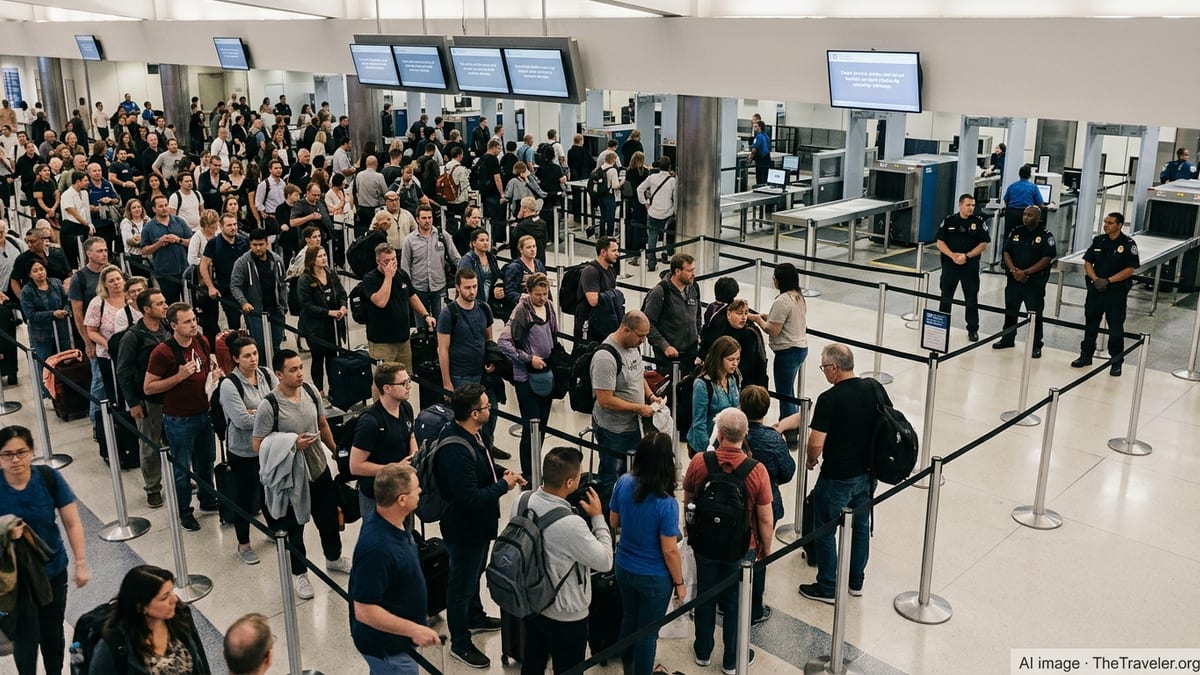
According to published coverage, the April switch-on of EES has already resulted in long queues at several airports, particularly at busy leisure gateways used by UK and other non-EU visitors. Reports from Spain, Portugal and Germany describe passengers waiting well over an hour at border control as officers capture biometric data for first-time entrants into the system.
Ryanair argues that launching the full biometric process in the middle of the peak travel season risks overwhelming passport control at major tourist hubs. The airline says the combination of unfamiliar technology, additional checks and surging passenger volumes is a recipe for what it calls “queue chaos” at border points this summer.
EU institutions and member-state governments maintain that EES is necessary to modernize the bloc’s borders and eventually streamline travel. Publicly available information indicates that officials expect initial congestion during the first wave of enrollments but insist that processing times will improve as more passengers’ details are stored in the system.
Pressure points at Spanish and other holiday hotspots
Ryanair’s most pointed warnings focus on Spanish airports such as Malaga and Alicante, where large numbers of British and Irish holidaymakers are now classed as non-EU travelers and must undergo the full biometric procedure. Regional media reports highlight recent bottlenecks at passport control, with some travelers describing narrowly missed departures after queuing for new fingerprint and photo checks.
Similar concerns are being reported from other high-volume leisure airports around the Mediterranean and on popular island routes. Industry commentary notes that border control areas at many terminals were designed around older, quicker stamp-and-wave procedures, leaving limited space for the slower, more complex kiosks and manual checks now required under EES.
Airport operators in several countries have publicly acknowledged the strain, with some warning that existing staffing levels and infrastructure may not be sufficient if passenger numbers continue to grow through July and August. Travel industry associations say they support the goals of EES but describe the current implementation phase as a critical test of whether airports and border agencies are adequately prepared.
Travel forums and social media posts are amplifying the issue, with recent travelers sharing images of long lines and advising others to arrive much earlier than usual for flights to and from the Schengen area. This growing body of anecdotal evidence is feeding worries that any further system glitches or staffing shortages could quickly cascade into widespread disruption at key holiday gateways.
Airlines and airports demand delays, staffing boosts
In a recent statement on its corporate site, Ryanair urged governments in the most affected EU states to delay full enforcement of EES until after the summer peak and to prioritize consumer protection in the interim. The carrier argues that families traveling during school holidays should not be the first mass test of a border system that, in its view, is still not fully ready for high-load operation.
Ryanair’s warning echoes earlier calls from European airline and airport groups, which have collectively described the rollout as being at a “critical point.” These associations have repeatedly asked national authorities to deploy more border officers, expand physical space at passport control and run large-scale live tests outside peak periods to minimize the risk of sustained disruption.
Publicly available comments from airport trade bodies indicate that operators have been urging EU institutions and member states to take a more phased approach, including extended use of transitional arrangements and targeted exemptions where infrastructure upgrades are still in progress. Some airports have also pushed for clearer communication to travelers about likely wait times and required documentation.
Border agencies in several countries, in turn, have suggested that EES teething problems stem partly from underinvestment in staffing and technology over many years. Analysts note that some of Europe’s busiest leisure airports were already under pressure during peak weekends before biometrics were added, leaving little margin for error as the new system beds in.
What travelers can expect at EU border control this summer
For passengers heading to the EU’s Schengen area from non-EU countries, the immediate impact of EES is most apparent at passport control. First-time registrants can expect to provide fingerprints and have a facial image captured, either via automated kiosks or at staffed booths, before their passports are stamped and entry granted.
Ryanair and other carriers have begun advising customers to allow significantly more time at departure airports, especially for flights during peak morning and evening waves. Some airlines have adjusted check-in cut-off times and boarding procedures to account for slower flows through border checks, warning that passengers who arrive late risk missing flights even if they are already checked in online.
Travel industry guidance now commonly recommends that non-EU travelers arrive at least three hours before departure for flights that involve crossing into or out of the Schengen zone, and to pay close attention to airport and airline alerts. Frequent travelers who have recently been enrolled into EES may find subsequent trips smoother, but reports suggest that queues remain unpredictable, varying widely by airport and time of day.
While EES is ultimately intended to speed up border crossings and enhance security across Europe’s external frontiers, most observers expect a prolonged adjustment period. Estimates cited in recent coverage suggest it could take one to two years before the system stabilizes fully and processing times fall consistently, particularly at the busiest holiday airports.
Longer-term questions for Europe’s digital borders
The turbulence surrounding the EES rollout is also posing broader questions about Europe’s strategy for digital borders. Supporters argue that once the initial wave of enrollments is completed and technical glitches resolved, the system will deliver faster, more predictable journeys for repeat visitors, while giving authorities better tools to manage migration and security risks.
Critics, however, warn that without sustained investment in staff, infrastructure and backup systems, the promise of seamless digital borders may remain elusive. Ryanair’s latest warning is being interpreted by some analysts as a sign that frontline operators fear being blamed by passengers for problems that originate at the interface between EU policy and national implementation.
For now, the emerging consensus across the travel sector is that the coming peak season will be a decisive test. If EES can be stabilized without widespread flight cancellations and missed connections, confidence in Europe’s digital border ambitions is likely to grow. If not, calls for redesign, further delays or more radical changes to the system may become harder for policymakers to ignore.