


For many travelers heading south from Ho Chi Minh City, the Mekong Delta is a must, but the question quickly becomes which riverside base to choose.
My Tho is the classic, easy day-trip stop that funnels thousands of visitors onto coconut candy islands and palm-lined canals. Sa Dec, farther inland on a quieter branch of the Mekong’s waterways, trades crowds for flower villages, colonial villas, and a more authentic feel of delta life.
Both towns offer evocative river scenes, markets, and simple Southern Vietnamese food, yet they deliver very different experiences. Deciding between them depends on how much time you have, how you like to travel, and what you want your Mekong memories to look and feel like.
Setting the Scene: Two Very Different Mekong Gateways
My Tho sits just about 70 kilometers southwest of Ho Chi Minh City, making it one of the most accessible spots in the entire Mekong Delta. The city hugs the Tien River, a major branch of the Mekong, and has long served as a commercial and strategic gateway linking Saigon to the delta’s interior. Today, that role is reflected in its busy traffic, river port, and the constant flow of tour buses bringing day-trippers to nearby islets and canals. For many visitors, it offers a fast snapshot of delta life without the need to spend the night.
Sa Dec, by contrast, lies deeper into the delta in Dong Thap Province, around 140 kilometers from Ho Chi Minh City. Historically a river trading town and regional center for horticulture, it feels low-rise and leafy, oriented around the Sa Dec River and a network of canals that cut through neighborhoods and flower farms. Tourism numbers have climbed sharply in recent years as the Mekong Delta overall has boomed, but Sa Dec remains far less visited than My Tho, especially by foreign travelers, and still revolves around its local markets and nursery businesses.
This difference in setting influences everything from the pace of life to the sorts of experiences on offer. My Tho feels like a frontier between big-city Vietnam and the delta, with infrastructure and services geared to short tours. Sa Dec feels like a town that the outside world is just catching up with, where you are more likely to share a ferry with market women and baskets of vegetables than with packed tour groups. Both are undeniably part of the Mekong story, but they sit on different chapters.
Access and Practicalities: How Easy Is It to Get There?
In terms of pure convenience, My Tho has the upper hand. The journey from Ho Chi Minh City typically takes around two hours by road, depending on traffic, and a well-established network of tour operators offers door-to-door day trips that include transport, boat rides, lunch, and guided stops. Many tours combine My Tho with neighboring Ben Tre, giving travelers a quick but broad introduction to canals and river islands. For independent travelers, public buses and minibuses run frequently from Ho Chi Minh City’s main bus stations, and road conditions along this corridor are relatively good.
Sa Dec requires a bit more commitment. Reaching the town usually involves a three to four hour drive from Ho Chi Minh City, sometimes with changes in provincial hubs such as Vinh Long or Can Tho if you are taking public transport. There are fewer packaged tours that feature Sa Dec as a standalone destination, so independent planning or private transfers are more common. This extra step filters out many casual day-trippers, but it also means that once you arrive, the town feels far less dominated by tourism.
The difference in accessibility carries over into accommodation. My Tho has a modest range of riverside hotels and guesthouses along with simple city stays, but many visitors still return to Ho Chi Minh City the same day. In Sa Dec, tourism growth and the success of regional festivals have encouraged family-run homestays, boutique guesthouses in traditional houses, and small hotels that cater to travelers staying at least a night or two. If your time is short, My Tho fits more easily into a packed itinerary. If you can spare longer, Sa Dec rewards those extra hours on the road.
River Life and Boat Experiences
River cruises are the headline attraction for both towns, but the style and atmosphere of those experiences are noticeably different. My Tho’s riverfront is the jumping-off point for classic Mekong day tours that shuttle visitors by motorboat across the Tien River to nearby islets known colloquially as Dragon, Unicorn, Turtle, and Phoenix islands. On these islands and in the surrounding canals, the focus is on curated stops: honey farms, coconut candy workshops, fruit orchards, and short sampan rides through palm-fringed waterways. For many first-time visitors, it is a pleasant introduction, complete with folk music performances and set-menu lunches.
However, the popularity of these tours means that, especially in peak season and on weekends, canals around Thoi Son Island and the other islets can be crowded with boats. Experiences often follow a scripted sequence of tastings, performances, and souvenir opportunities. If you enjoy guided encounters and do not mind sharing the river with many other visitors, this structure works well. If you are looking for silence and serendipity, you may find parts of it overly staged or busy.
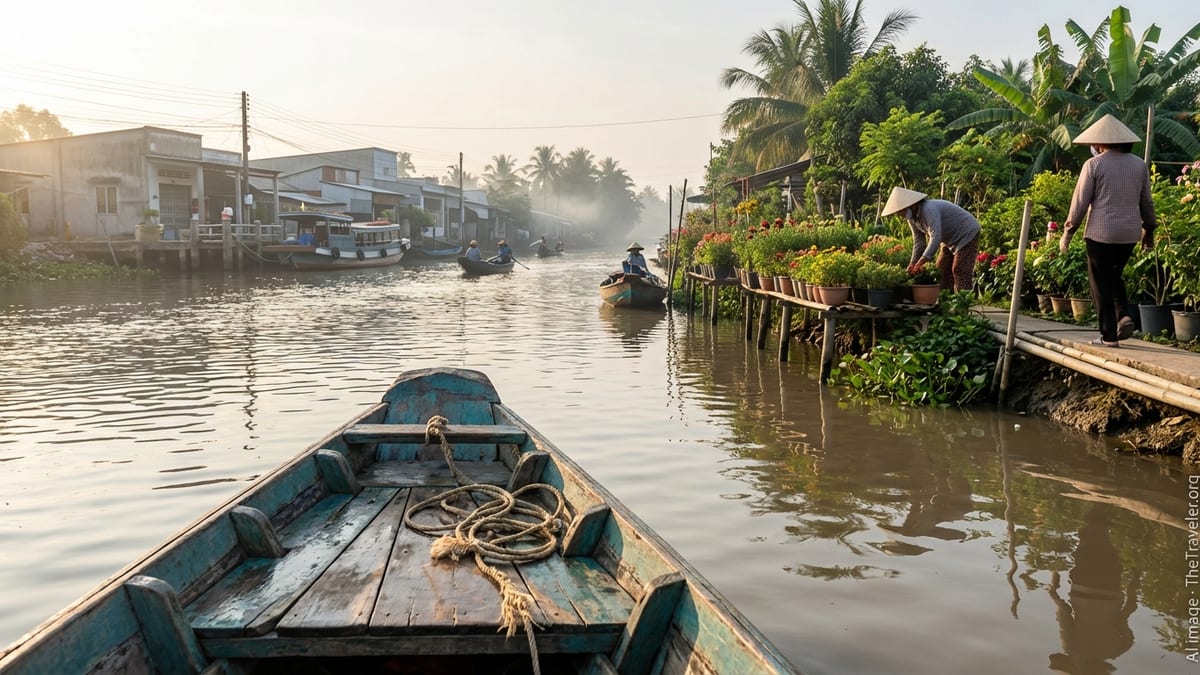
Sa Dec’s waterways feel more like working channels than tour circuits. Here, small boats ferry locals and goods; sand barges, wooden cargo boats, and family fishing craft share the river with only a handful of tourist sampans. Boat trips typically focus on everyday life along the riverbanks, visiting floating houses, crossing to quieter islands, or navigating narrow canals lined with vegetable plots and flower nurseries. Instead of set performances, the highlights are often informal: watching a net being cast, drifting past a riverside temple, or pulling up to a small riverside market.
This difference in style makes Sa Dec particularly appealing if you value atmosphere over activities. Boat trips tend to be shorter, more flexible, and less commercial, with scope to stop where something catches your eye. English-speaking guides may be fewer, but the trade-off is a sense that you are witnessing real Mekong Delta life rather than a route designed primarily for photos and shopping.
Culture, History, and Architecture
My Tho’s cultural calling card is Vinh Trang Pagoda, a 19th-century Buddhist temple a short distance from the city center. Set in leafy gardens dotted with statues, it blends Vietnamese, Chinese, Khmer, and European architectural influences in a distinctive way and features large standing, reclining, and seated Buddha images. The pagoda is one of the best-known religious sites in the lower Mekong and is included on almost every tour. In town, the central market, riverside promenade, and a scattering of churches and Chinese assembly halls offer a glimpse of My Tho’s trading past, but few sites demand more than a brief visit.
Sa Dec tells its story through both its architecture and its literary associations. The town was famously immortalized as the teenage backdrop to Marguerite Duras’s novel about her youthful affair with a wealthy Chinese-Vietnamese businessman. The real-life Huynh Thuy Le old house, once belonging to that family, still stands by the river and has been restored as a small museum, guesthouse, and architectural showpiece. Stepping inside reveals polished wooden beams, carved panels, and a fusion of French and Sino-Vietnamese design that echoes Sa Dec’s multicultural heritage.
Wandering Sa Dec’s older neighborhoods, you see a patchwork of colonial villas, French-era civic buildings, Chinese family homes, and temples, many of them weathered but still in use. The town’s main market, riverside streets, and small lanes leading to the waterfront retain a sense of continuity, as if the modern tourism wave has only lightly brushed their edges. For travelers interested in history, literature, and vernacular architecture, Sa Dec offers a deeper, more cohesive narrative than My Tho, which feels more functional than atmospheric once you leave the river’s edge.
Nature, Flowers, and Rural Landscapes
Beyond the boat docks and markets, both towns are gateways to a landscape of palms, fruit trees, and rice fields, yet each has carved out a different niche. My Tho sits close to islands that showcase orchard agriculture, with tours stopping at smallholdings where guests can see tropical fruits being grown and sample seasonal produce. Around the city, canals lead into low-lying countryside dotted with coconut palms, while road excursions often continue onward to neighboring Ben Tre, known for its coconut groves and more extensive canal networks.
Sa Dec distinguishes itself as a flower capital. The Sa Dec Flower Village, located just across the river from the town center, is one of the Mekong Delta’s largest ornamental plant hubs. Here, narrow paths and levees run between beds of blooms, bonsai trees, and potted ornamentals raised on wooden trestles above water channels. During peak growing periods and festivals, the village becomes a sea of color, with boats and trucks loading flowers bound for markets across southern Vietnam. Even outside festival dates, visiting the nurseries offers a vivid look at the region’s horticultural expertise.
In addition to flowers, Sa Dec’s rural hinterland features rice paddies, vegetable farms, and scattered orchards that lend themselves to gentle bicycle rides and slow boat outings. Because the town attracts fewer tour groups, it is common to have paths and small lanes almost to yourself, sharing space mainly with local cyclists and farmers. If you are drawn to quiet countryside, early-morning mists over fields, and the rhythm of agricultural life, Sa Dec’s surroundings tend to feel more immersive and less hurried than those around My Tho’s most popular circuits.
Food, Markets, and Local Life
Food is a highlight across the Mekong Delta, and both Sa Dec and My Tho give you easy access to simple, fresh, and inexpensive Southern Vietnamese cuisine. My Tho has long been known for its take on hu tieu, a clear pork-based noodle soup served with a variety of toppings. Street stalls and small eateries near the central market and main streets offer steaming bowls in the early morning, when commuters, vendors, and students crowd low plastic stools. The central market itself thrums with activity at dawn, selling river fish, tropical fruits, and household goods.
Because My Tho is such a common stop on organized day tours, many visitors end up eating set lunches at restaurants on the islands or along the riverfront. These meals typically include dishes like fried elephant ear fish, spring rolls, simple hotpots, and stir-fried vegetables. They are convenient introductions to Mekong flavors but often cater to large groups, so menus can feel standardized. With some extra time, independent travelers can seek out smaller, more local eateries in town, though language barriers may require a bit of patience and pointing at what looks good.
Sa Dec’s culinary scene feels more squarely aimed at local tastes. The main market spills over with fresh herbs, river fish, snails, and vegetables, with breakfast and lunch stalls tucked into corners and side streets. As in My Tho, noodle soups are a staple, but you also find variations of rice dishes, grilled meats, and snacks tied to the region’s Chinese-Vietnamese community. The absence of large tour groups means that most places operate at their own pace and for their regular clientele.
Eating in Sa Dec is as much about observing as about the dishes themselves. Sitting at a street stall near the water, you watch boats gliding past while vendors chat with regulars and kids cycle home from school. Evening is especially atmospheric, with local families heading out for ice cream, tea, or simple riverfront walks. It is a town that invites you to linger rather than rush through, making meals a centerpiece of the experience rather than a scheduled break in a day of attractions.
When to Visit and Seasonal Considerations
The Mekong Delta has a tropical monsoon climate with a marked dry season and a rainy season, and both Sa Dec and My Tho follow this pattern. In general, the period from about November to March is considered especially comfortable, with somewhat cooler temperatures, lower humidity compared with the peak rainy months, and clearer skies that favor river trips and cycling. This timing aligns well with the broader tourism high season across Vietnam, when international arrivals are typically strong and local operators run full schedules.
In My Tho, river levels and lush greenery can be particularly appealing in the months after the main rains, when canals are full and orchards abundant. Short tropical showers remain common in the wet season, but they are often intense and brief rather than all-day downpours, and tours tend to run year-round. Crowds are heaviest on weekends and holidays, when domestic visitors from Ho Chi Minh City join international travelers on the islands and canal circuits.
Sa Dec’s seasonality has an extra layer thanks to its flowers. Around the time of the Lunar New Year, nurseries gear up for peak sales, creating an extraordinary spectacle of blossoms and potted plants staged along canals and roads. The town has leveraged this into flower-themed festivals and events in recent years, drawing more visitors but also showcasing its core identity. Outside of festival dates, the nurseries still operate continuously, but the visual impact is less concentrated.
Because the Mekong Delta can experience localized flooding during the highest water levels, especially in the broader region’s floating season months, it is wise to check recent local conditions before traveling, particularly if you are planning independent road journeys or rural homestays. Infrastructure improvements over the past decade have made access more reliable, yet conditions can still vary from year to year depending on rainfall and upstream river flows.
Which Town Suits Which Traveler?
When weighing Sa Dec against My Tho, it helps to be honest about your travel style. If you have only one free day in Ho Chi Minh City and want a straightforward, easily bookable introduction to the Mekong, My Tho is the pragmatic choice. Its proximity, the sheer number of tours, and the familiarity of its routes make it simple to arrange even at short notice. You will see palm-lined canals, river islands, and a major pagoda, and you will return to the city in time for dinner without needing to worry about logistics.
If, however, you have the time and inclination to venture deeper and move at a slower pace, Sa Dec generally offers a more rewarding and distinctive experience. The town’s combination of literary history, colonial architecture, flower villages, and less touristed river scenes allows you to feel that you are stepping into a lived-in Mekong community rather than a circuit designed primarily for visitors. It is especially appealing to independent travelers, photographers, and anyone who values atmosphere and everyday detail over a checklist of stops.
For some itineraries, the choice is not strictly either-or. Travelers with several days in the delta might stop in My Tho as part of a broader route that also includes Ben Tre, Vinh Long, Can Tho, or Chau Doc, then loop through Sa Dec on the way north or west. Boat journeys along the rivers can sometimes link these places, but most visitors rely on road transfers between towns. In such cases, My Tho becomes an introduction, while Sa Dec serves as an immersion.
Ultimately, the decision comes down to priorities. Convenience, structure, and a classic first-timer’s sampling of the Mekong point to My Tho. Character, subtlety, and a slower, more locally focused stay favor Sa Dec. Neither town is objectively “better,” but each is better suited to certain kinds of travelers and certain amounts of time.
The Takeaway
Choosing between Sa Dec and My Tho is less about ranking them and more about aligning expectations. My Tho is the Mekong Delta’s front door from Ho Chi Minh City, an accessible hub whose well-worn circuits deliver river islands, canals, and a landmark pagoda within a single, manageable day. Its experiences are structured and often shared with many others, but they work well for those who want a snapshot of delta life without committing extra days or complex logistics.
Sa Dec, sitting deeper in the delta’s heart, demands more time and effort to reach but repays that investment with a richer sense of place. The town’s layered architecture, connection to literature, expansive flower village, and comparatively quiet waterways create an atmosphere that many travelers remember long after their trip. Days here are shaped less by fixed itineraries and more by markets, meals, and meandering walks or boat rides.
If you are planning a first visit to southern Vietnam with limited time, My Tho is likely to fit your schedule and provide a satisfying introduction to the Mekong Delta. If you have the flexibility to linger or are returning to the region seeking something less familiar, Sa Dec is more likely to surprise you and deepen your understanding of delta life. In the end, both towns contribute different notes to the Mekong’s broader symphony, and the best choice is the one that harmonizes with how you most enjoy traveling.
FAQ
Q1: Can I visit both Sa Dec and My Tho on the same day?
It is technically possible but not recommended. The distance and travel time between Ho Chi Minh City, My Tho, and Sa Dec make it difficult to appreciate both in a single day. For a more relaxed experience, dedicate at least one full day to My Tho and an overnight or longer stay for Sa Dec.
Q2: Which town is better for a one-day trip from Ho Chi Minh City?
My Tho is generally better for a one-day trip because it is closer to Ho Chi Minh City and has many established day tours. You can easily book a package that includes transport, boat rides, and lunch without needing to organize logistics yourself.
Q3: Is Sa Dec suitable for families with children?
Yes, Sa Dec can be enjoyable for families, especially children who like plants, open spaces, and boat rides. The flower village, calm riverfront, and quieter streets make it comfortable for walking and cycling, though you should still take standard precautions near water and busy roads.
Q4: Do I need to book tours in advance for Sa Dec and My Tho?
For My Tho, especially during peak travel seasons or weekends, it is wise to reserve day tours from Ho Chi Minh City in advance. In Sa Dec, where tourism is less structured, you can often arrange boat trips and local guides on arrival through your accommodation, but advance planning helps if you have specific activities in mind.
Q5: Which destination feels less touristy?
Sa Dec feels noticeably less touristy than My Tho. While tourism has grown, the town’s daily rhythm is still shaped mainly by its markets, flower nurseries, and local commerce. My Tho’s riverfront and nearby islands, by contrast, are heavily oriented toward organized tours.
Q6: Are there good accommodation options in both towns?
Both towns offer accommodation, but the character differs. My Tho has a handful of standard hotels and guesthouses and is often used as a daytime stop rather than an overnight base. Sa Dec offers small hotels, homestays, and some characterful guesthouses, which suit travelers planning to stay longer and explore the surroundings.
Q7: Is language a barrier in Sa Dec compared with My Tho?
In My Tho, especially on organized tours, guides commonly speak English and other languages, so communication is straightforward. In Sa Dec, English is less widely spoken outside accommodation providers and some guides, but basic interactions are usually manageable with patience, gestures, and translation apps.
Q8: Which town offers better photography opportunities?
Both towns are photogenic, but in different ways. My Tho provides classic images of river traffic, pagodas, and coconut-lined canals. Sa Dec adds intimate street scenes, colonial-era architecture, and colorful flower fields, along with quieter waterways that are often easier to photograph without crowds.
Q9: How many days should I spend in Sa Dec versus My Tho?
Many travelers find that one full day, often as a day trip, is enough for My Tho. Sa Dec benefits from at least one or two nights, giving you time to visit the flower village, explore the old town, take a boat trip, and soak up the local atmosphere at different times of day.
Q10: If I have to choose just one, which town is better overall?
If convenience and a quick introduction to the Mekong Delta are your priorities, My Tho is the better choice. If you prefer a more authentic, slower-paced town with distinctive character and are willing to spend longer on the journey, Sa Dec is likely to be more rewarding overall.