


If you are dreaming of Finnish Lapland and find yourself torn between Saariselkä and Levi, you are not alone. These two northern villages both promise snow-laden forests, reindeer, and the chance to see the northern lights, yet on the ground they feel very different. Choosing the right base can make the difference between a calm, wilderness retreat and a lively winter playground packed with ski runs and restaurants.
Get the latest updates straight to your inbox!
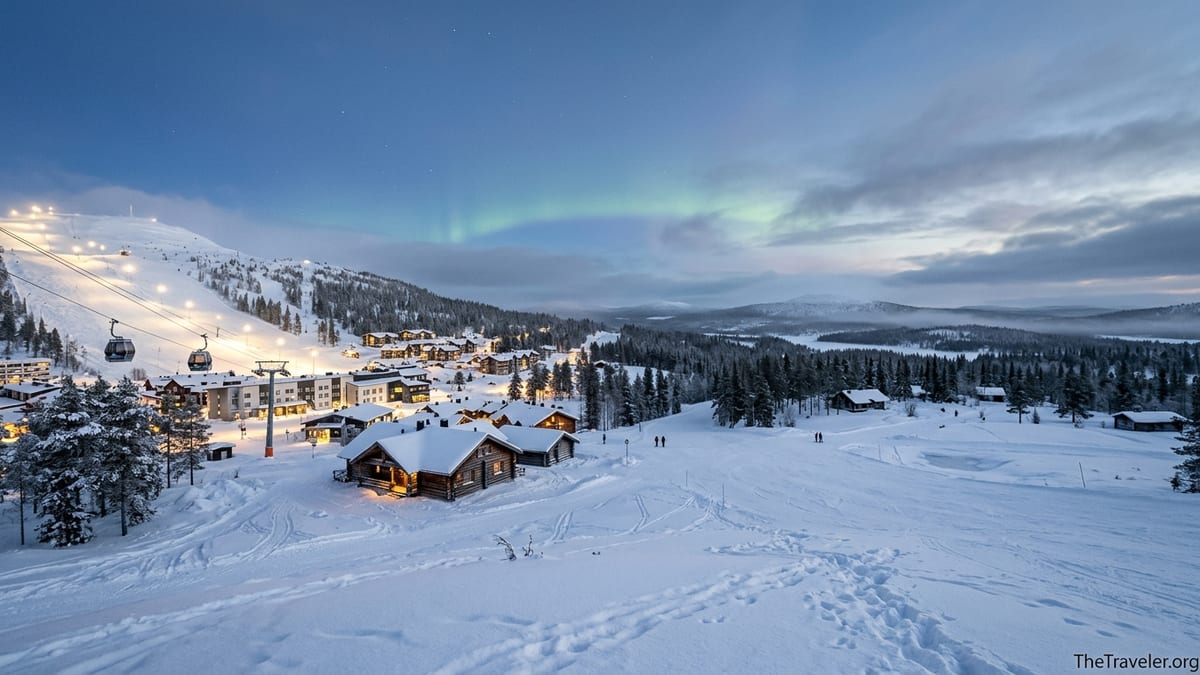
Big Picture: Two Very Different Lapland Vibes
Levi and Saariselkä sit several hours apart in northern Finland and appeal to slightly different travellers. Levi, in Kittilä municipality about 170 kilometres north of the Arctic Circle, is Finland’s largest and most popular ski resort with over 40 slopes and a compact but busy village at its base. It is the place people pick when they want lots of ski terrain, après-ski, and a wide choice of hotels, bars and guided activities packed into one hub.
Saariselkä lies further north in Inari municipality, on the edge of the vast Urho Kekkonen National Park. The downhill ski area here is modest, but the surrounding fells and forests feel wild and open, with a strong sense that the wilderness simply keeps going toward the Arctic Ocean. Many visitors come less for steep slopes and more for cross-country skiing, snowshoeing and quiet aurora nights where you might be standing almost alone on a fell top.
Both destinations are well developed by Lapland standards, with modern accommodation, English-speaking guides and easy connections from Helsinki. The right choice comes down to what kind of evenings you imagine: walking along a main street lined with neon-lit bars and gear shops, or crunching along a quieter road where you can hear the snow squeak under your boots.
As of the 2025–2026 winter seasons, both villages continue to invest in new restaurants, aurora tours and small-scale cabin developments. That means whichever you pick, you can expect up-to-date infrastructure, contactless payments almost everywhere, and tour operators geared to international visitors as well as Finns on their own winter breaks.
Getting There and Getting Around
Levi is usually the easier option logistically, which matters if you are on a short holiday or travelling with kids. Kittilä Airport sits roughly 15 kilometres from Levi village, with winter charter flights from many European cities and several daily connections via Helsinki in peak season. A taxi or pre-booked shuttle from the airport to your hotel often takes less than 20 minutes, so you can land in the afternoon and be on the slopes for an evening ski session if conditions allow.
Saariselkä uses Ivalo Airport, which is about 25–30 minutes away by road. There are regular Helsinki–Ivalo flights in winter and some seasonal charters, but overall the connection network is slightly thinner. For many international travellers, that simply means one extra hour of planning around flight times. Airport buses and pre-arranged transfers typically wait for the main arrivals, so it is straightforward but a touch more remote than Levi.
Once you are in Levi, most visitors get by on foot. The village centre wraps around the base of the fell, and it is possible to walk from a centrally-located hotel to lifts, supermarkets, restaurants and ski rental shops in under ten minutes. This compactness makes Levi feel almost like a small Alpine resort. Families can easily split up for a few hours and regroup without needing a car or long bus rides.
In Saariselkä, the scale is smaller and quieter, but distances can feel slightly more spread out, especially if you are staying in a cabin cluster on the edge of the village or tucked in forest near a glass-igloo resort. There is usually a local ski bus connecting accommodation areas with the ski slopes and some activity starting points. If you plan to explore nearby spots like the village of Inari or want flexibility for daytime sightseeing, renting a car at Ivalo Airport can be a smart choice.
Skiing and Snow Sports: How Serious Are You About the Slopes?
If downhill skiing or snowboarding is central to your trip, Levi clearly comes out ahead. The fell has more than 40 marked slopes and over 25 lifts, including chairlifts and gondolas, with terrain ranging from gentle beginner runs near the village to steeper pistes such as the Levi Black World Cup slalom course. The ski area wraps around the fell, so you can traverse from sector to sector and find long cruising runs, children’s areas with magic carpets, and terrain parks for freestyle riders.
For a concrete picture, a visiting intermediate skier could easily spend a week in Levi and ski different combinations of runs each day without getting bored, especially combined with night skiing under floodlights and occasional breaks for snowmobiling or husky tours. The resort also maintains extensive cross-country ski trails, with over 200 kilometres of groomed routes in the broader Levi area, so you can mix alpine and Nordic skiing in one holiday.
Saariselkä’s downhill offer is much more modest and tends to suit beginners, lower-intermediate skiers and families who like to ski a few relaxed hours rather than chase vertical all day. The local ski area on Kaunispää and Iisakkipää fells has a small set of pistes and lifts, with gentle slopes ideal for first turns and ski school. It is great if you want to try skiing for the first time or if the main focus of your trip is something else entirely, such as aurora watching or cross-country touring.
Where Saariselkä shines is its access to wilderness-style Nordic skiing. Trails lead straight into Urho Kekkonen National Park, where you can glide for kilometres through silence, stop at open huts to warm up, and share tracks mainly with Finns and a scattering of international visitors. If your dream Lapland day involves a thermos of hot berry juice and a slow journey through snow-laden pines, Saariselkä’s trail network and atmosphere can feel almost tailor-made.
Northern Lights and Arctic Nature
Both Levi and Saariselkä sit well within the aurora zone, and on clear, dark nights between roughly September and early April, either village can deliver spectacular northern lights. You do not need to chase the absolute highest “probability” by going a few dozen kilometres further north, but there are differences in how easy it is to get away from village lights.
Levi’s village is relatively bright, with ski slope floodlights on operating days, illuminated streets and hotel façades. Many visitors still glimpse the aurora from hotel balconies or the edge of the village, but serious aurora hunters often book guided tours that drive them 20–40 minutes into darker surroundings, or they rent a car and head toward quieter lakes and fells. Some hillside accommodations and glass-roof cabins on the outskirts are specifically positioned to reduce light pollution, but you still feel close to a resort environment.
Saariselkä, with its smaller size and location at the edge of national parkland, typically makes it easier to step into natural darkness. You can often walk or snowshoe just beyond the last cabins to reach an open fell or frozen marsh where the sky is wide and the village glow is minimal. Local operators run aurora car tours, reindeer sleigh rides and snowshoe hikes, but many guests simply check the forecast, bundle up and wander out on their own.
In both destinations you will find specialist aurora resorts with glass-roof suites. For example, companies operating in both Levi and Saariselkä sell two or three-night “Northern Lights” packages that include full board accommodation in a cabin with a transparent ceiling panel, plus activities like husky safaris and reindeer farm visits. Prices for such packages in the 2025–2026 season typically start in the low four figures per person for two or three nights, depending on inclusions, making them a memorable but premium upgrade compared with a standard hotel room.
Atmosphere, Nightlife and Dining
The feel of your evenings is one of the biggest differences between Levi and Saariselkä. Levi’s village can be busy and animated in peak weeks such as Christmas, New Year, and Finnish school holidays in February and March. There is a central strip of restaurants and bars, from burger joints and pizzerias to contemporary bistros and hotels with multi-course tasting menus. After skiing, you might join a live music night in a bar, sample local craft beer, or duck into a nightclub that stays open into the small hours.
For example, a typical day for a group of friends in Levi might involve skiing until late afternoon, soaking in a hotel spa, then heading out for a Lapland-style dinner of reindeer stew or Arctic char followed by drinks in a sports bar showing ice hockey. Walking through the village, you will see ski shops, rental outlets and activity kiosks still open in the early evening, and there is a sense of being in a self-contained holiday town designed to keep you busy.
Saariselkä feels more like a small, relaxed village with services dotted along the main road rather than a dense resort centre. There are several good restaurants, including places that focus on Sámi-inspired dishes and local ingredients, and a handful of cosy pubs and hotel lounges where you can have a drink. But nightlife here is low-key. Many guests spend the evening in their cabin, cooking a simple meal, maybe using a private sauna, and watching the sky to see if the aurora appears.
If you are travelling with young children or simply prefer quieter nights, Saariselkä’s pace can be a strong positive. You are less likely to encounter late-night noise outside your accommodation, and you can walk along snow-covered streets without much traffic. Couples on a romantic escape or solo travellers seeking reflection often highlight this gentle atmosphere as a reason they would return to Saariselkä.
Activities, Excursions and Real-World Costs
When it comes to classic Lapland activities like husky safaris, snowmobiling, reindeer visits and aurora tours, both Levi and Saariselkä offer similar menus. Dozens of local outfitters run 2–3 hour taster experiences as well as longer expeditions, and prices in winter 2025–2026 are broadly comparable. A short evening aurora chase by minibus or car, for example, might start from around 120–150 euros per adult, including warm drinks and guiding, whether you book in Levi or Saariselkä.
Where Levi has an edge is the sheer number and variety of activity operators. In the village you will see storefronts selling everything from beginner snowmobile tours to ice karting and fatbike excursions, as well as adventure parks and, in other seasons, bike parks and hiking packages. This density makes it easy to shop around or book something last minute. A family could, for instance, spend one day dog sledding in the morning and visiting an ice village in the afternoon, then book a reindeer sleigh ride for the next evening simply by walking into an in-resort office.
In Saariselkä, the selection is still wide but a bit more focused on nature and aurora experiences. Typical offerings include small-group aurora hunts by car, snowshoe walks into the nearby forests, gentle reindeer rides, and cross-country skiing lessons. Some operators emphasise photography support, helping guests adjust camera settings to capture the lights. Because the village is smaller, tours can feel more intimate; it is common to find yourself in a group of only a handful of people rather than a full bus.
On the spending side, food and drink costs are similar across both destinations, with standard restaurant main courses often in the 20–35 euro range and simple café lunches, such as soup and bread, a bit lower. Supermarkets in both villages help budget travellers keep costs down by self-catering. Accommodation spans basic apartments and cabins at the lower end of the market through mid-range hotels and high-end boutique chalets. In peak holiday weeks, centrally-located rooms in Levi may command a small premium compared with Saariselkä simply due to demand, whereas Saariselkä’s specialised aurora resorts can be among the priciest stays per night when you factor in full-board packages.
Who Should Choose Saariselkä?
Saariselkä tends to win the hearts of travellers who value space, silence and access to wild-feeling landscapes over a long list of bars or steep ski pistes. If you picture yourself stepping out of a cabin into a still forest, hearing only the wind and the creak of trees, this area delivers that feeling with relatively little effort. The nearby Urho Kekkonen National Park is one of Finland’s largest protected areas, and even a short half-day excursion can give a sense of being far from roads and crowds.
It is particularly well suited to cross-country skiers, snowshoers and winter hikers who want to cover distance on their own steam. Many trailheads are reachable on foot or via short transfers from village accommodations, and rental shops stock Nordic ski gear and snowshoes rather than focusing solely on downhill equipment. Photographers and nature lovers also appreciate that they can reach open viewpoints with relatively short walks, especially on clear moonlit nights when the snow glows and the sky may come alive with aurora.
For couples and small groups looking for a romantic or contemplative trip, Saariselkä’s lower-key evenings are an asset. You might spend a day on skis, cook a meal in your cabin, then soak in an outdoor hot tub or private sauna before bundling up to see whether the northern lights appear. The experience feels more like staying in a small village at the edge of the wilderness than in a purpose-built resort.
Families with younger children who do not need big ski areas might also favour Saariselkä. The small ski hill is less intimidating, lift queues are usually short, and it is easy to keep an eye on kids as they take their first lessons. If your children are more excited by meeting reindeer and playing in snow than perfecting parallel turns, the quieter setting can feel just right.
Who Should Choose Levi?
Levi is ideal for travellers who want an all-in-one resort feel with plenty of structure to each day. If you or your group care about having multiple ski runs to explore, terrain parks, ski school options in several languages and a lively après-ski scene, Levi ticks those boxes while still being recognisably Finnish and relatively small by Alpine standards. Skiers of differing abilities can all find something to do, from easy green runs near the village to more challenging slopes higher up.
For groups of friends or extended families where not everyone shares the same passion for skiing, Levi’s variety of non-ski activities is key. While some members of the group hit the slopes, others can wander the shops, visit a spa, book a snowmobile safari, or simply sit in a café watching the snow fall. In the evening, it is easy to choose a restaurant by mood and budget, then continue to a bar or simply stroll back to your accommodation along well-lit streets.
Levi also works well as an introduction to Lapland for travellers who may be anxious about remoteness. The short transfer from Kittilä Airport, the presence of several large hotels, and the concentration of services within walking distance all reduce logistical friction. If you want the magic of Lapland without feeling too far from modern conveniences, you are likely to feel comfortable in Levi from the first evening.
Finally, if you plan to split your time between winter sports and northern lights chasing but can only choose one base, Levi’s combination of ski area size and aurora tour infrastructure makes it a versatile choice. You can ski hard on good-weather days, then let a tour operator drive you to darker areas for aurora hunting on clear nights, all without renting a car or planning complex transfers.
The Takeaway
Choosing between Saariselkä and Levi is less about which destination is objectively better and more about what kind of Lapland story you want to tell when you return home. Both offer snowy forests, the possibility of northern lights and welcoming Finnish hospitality, but they frame these elements differently.
If you are drawn to wide, quiet landscapes, modest ski hills, and evenings spent in cabins or small village restaurants, with the national park almost at your doorstep, Saariselkä is likely your match. It offers a sense of wilderness that starts just beyond the last streetlight and is especially rewarding for cross-country skiers, nature photographers and travellers who savour calm.
If you prefer a compact, energetic resort atmosphere with plenty of slopes, activity operators lining the streets, and more nightlife choice, Levi will feel like a winter playground. It is accessible, sociable, and practical, particularly if downhill skiing and variety of activities are priorities or if you are travelling in a mixed group.
In practical terms, you cannot go badly wrong with either destination. The best approach is to be honest about your travel style: are you seeking a lively ski holiday that just happens to be in Lapland, or a Lapland wilderness experience that happens to include some skiing? Answer that, and Saariselkä or Levi will quickly stand out as the right northern home for your trip.
FAQ
Q1. Is Levi or Saariselkä better for first-time visitors to Lapland?
For many first-time visitors, Levi is slightly easier thanks to its short transfer from Kittilä Airport and dense village centre with everything within walking distance, while Saariselkä suits those who specifically want a quieter, more nature-focused introduction.
Q2. Which destination is better for serious downhill skiers and snowboarders?
Levi is better for downhill enthusiasts, with over 40 slopes, multiple lifts including gondolas and chairlifts, and varied terrain that can keep intermediate skiers and riders entertained for a full week.
Q3. Is Saariselkä too quiet for families with children?
Saariselkä is calm but not empty; it has a small ski area, tobogganing spots, reindeer and husky experiences, and family-friendly restaurants, making it suitable for families who do not need big nightlife or extensive shopping.
Q4. Where are you more likely to see the northern lights, Levi or Saariselkä?
Both lie in the aurora zone, so overall chances are similar, but Saariselkä’s easy access to dark, open areas just beyond the village can make independent aurora watching slightly more straightforward.
Q5. Do I need a rental car in Levi or Saariselkä?
In Levi most visitors manage on foot and shuttle buses thanks to the compact village, while in Saariselkä a rental car is helpful but not essential if you stick to guided tours and local transport.
Q6. How do prices compare between Levi and Saariselkä?
Activity and restaurant prices are broadly similar, though centrally located accommodation in Levi may cost a little more in peak weeks, while Saariselkä’s specialised aurora resorts can be pricier on a per-night basis.
Q7. Which is better for cross-country skiing?
Both have extensive trails, but Saariselkä stands out for its easy access to long, quiet routes leading toward Urho Kekkonen National Park, which appeals strongly to Nordic skiing enthusiasts.
Q8. Is one destination better for nightlife?
Levi clearly has more nightlife, with multiple bars, live music venues and even nightclubs, while Saariselkä offers just a few relaxed pubs and hotel bars that close earlier.
Q9. Can I visit both Levi and Saariselkä on the same trip?
Yes, many travellers combine them by using domestic flights and regional buses or rental cars, although you should allow at least a week if you want to experience both without rushing.
Q10. Which destination is more suitable for a romantic aurora getaway?
Both offer glass-roof cabins and cosy accommodations, but Saariselkä’s quieter village, dark surroundings and immediate access to wilderness often make it the favourite for couples seeking a more intimate atmosphere.