


The United Arab Emirates is widely perceived as one of the safest destinations globally for expatriates and their families. For relocation planning, however, safety needs to be evaluated in a structured way by city, distinguishing between crime, personal security, road safety, environmental risks and geopolitical exposure. This briefing reviews the safest cities in the UAE for expats and families using recent comparative rankings and available quantitative indicators, and highlights how risk profiles differ between major emirates.
How City Safety in the UAE Is Measured
Across the UAE, safety is primarily assessed using composite city indices and national-level security metrics rather than detailed public crime statistics. International benchmarks typically draw on reported crime, resident survey data on perceived safety, law and order indicators, and stability or terrorism risk scores. These external benchmarks are particularly important for expats because they provide comparative context against other global relocation hubs.
Numbeo’s global safety rankings consistently place UAE cities among the top tier worldwide. In the 2026 standings, Abu Dhabi was ranked the world’s safest city for the tenth consecutive year, ahead of roughly 400 cities. Dubai, Sharjah, Ajman and Ras Al Khaimah also appear near the top of the same index, indicating that low crime and strong public order are not limited to a single emirate but are characteristic of the federation more broadly.
Beyond city indices, the UAE features in global rule of law and law-and-order surveys. Recent international assessments place the UAE among the safest countries worldwide, with high scores for residents feeling safe walking alone at night and strong confidence in local police. These metrics align with the country’s heavily resourced internal security apparatus, extensive CCTV coverage, and rapid police response systems.
For families, safety is multi-dimensional. Core criteria for evaluating the safest cities in the UAE include: violent and property crime levels; personal security and social stability; road safety and traffic fatalities; environmental and climate-related risks; and regional geopolitical exposure. These dimensions can be weighed differently depending on each family’s risk tolerance and lifestyle expectations.
Abu Dhabi: Benchmark for Urban Safety
Abu Dhabi stands as the benchmark for urban safety in the UAE. The city has topped major global safety indices for ten consecutive years, most recently in 2026 according to widely cited city safety rankings. Safety index scores in these rankings are typically in the high 80s to low 90s on a 0 to 100 scale, signaling exceptionally low reported crime and very strong perceptions of safety among residents.
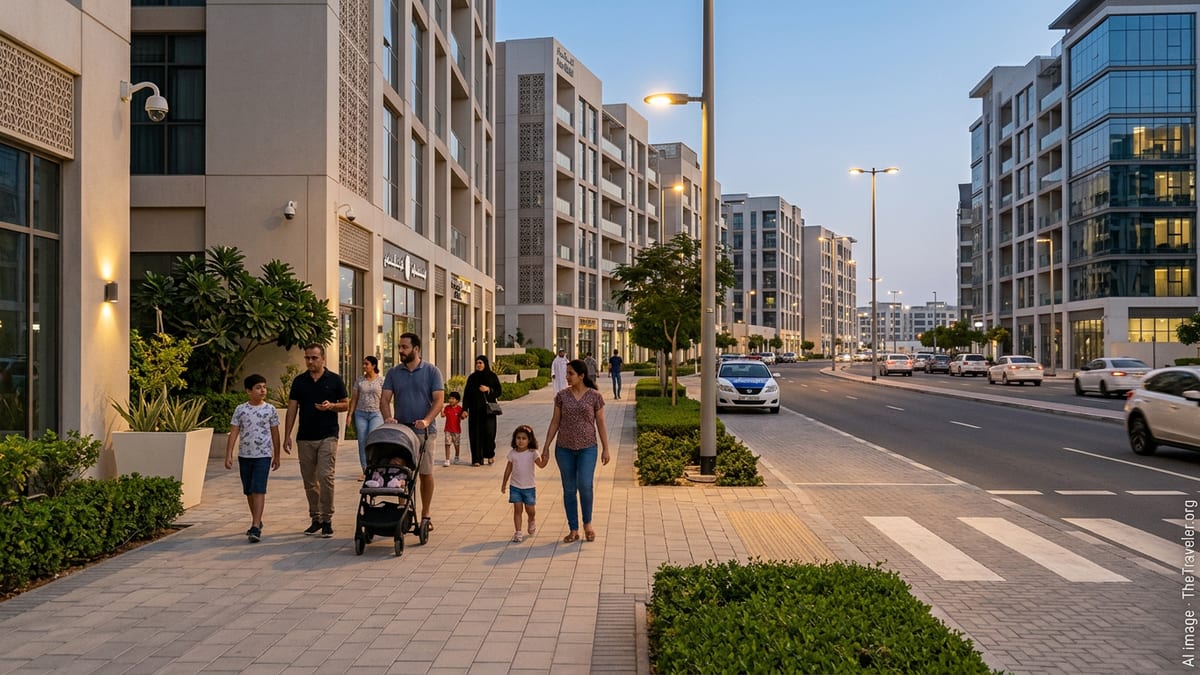
Low levels of street crime, rare incidents of serious violent crime, and visible but generally unobtrusive policing underpin Abu Dhabi’s position. Public areas are heavily monitored, and enforcement of laws against theft, assault and harassment is strict. This environment particularly benefits families, as both daytime and evening activities in residential districts and commercial areas are generally considered safe by residents, including when walking alone.
Road safety remains a relative weakness at the national level, but Abu Dhabi has made sustained progress. Nationally, road traffic death rates have fallen sharply over the past decade, from double-digit fatalities per 100,000 people in the early 2010s to single-digit levels in recent years. Abu Dhabi has invested in speed enforcement, intelligent transport systems and strict penalties for dangerous driving, which has helped reduce incidents even as vehicle numbers and population have grown.
From an environmental risk perspective, Abu Dhabi faces extreme heat for much of the year and occasional severe weather events. However, critical infrastructure, including drainage and emergency response, is comparatively robust, as seen in the city’s ability to restore operations relatively quickly after heavy rainfall events that have affected parts of the country. For expat families, the net result is a city that combines extremely low crime with improving transport safety and high institutional capacity to manage shocks.
Dubai: High Safety with Higher Density and Exposure
Dubai is the UAE’s largest expatriate hub and consistently ranks as one of the safest major cities globally, usually within the top ten of international safety indices. Recent city rankings often place Dubai in the global top five or top ten on safety measures, with safety index scores in the low to mid 80s, only slightly below Abu Dhabi. Residents report high confidence in police, low tolerance for petty crime, and strong perceptions of safety in most districts.
Crime against persons is relatively rare in Dubai, and strict legal frameworks for theft, assault and harassment, combined with extensive surveillance, create a deterrent effect. For families, this translates into a low risk of random street crime in the main residential and schooling districts. However, as a denser and more internationally exposed metropolis, Dubai experiences a broader range of security incidents than smaller emirates, including occasional high-profile fraud cases and, more recently, isolated regional security events that have affected public perception of safety.
Road safety is a more significant concern in Dubai compared with its crime profile. The UAE recorded roughly 380 to 390 road fatalities nationally in recent years, and local reports indicate that Dubai accounts for a material share of these deaths, with tens of fatalities annually. Authorities have responded by increasing speed enforcement, investing in smart radar systems, and tightening penalties for dangerous driving. Despite this, heavy traffic volumes, high average speeds on major roads, and varied driving styles mean that road risks remain a key consideration for families, especially those with teenage drivers.
Dubai also illustrated in 2024 how environmental events can disrupt safety and mobility. Exceptionally heavy rainfall in April 2024 led to widespread flooding, major transport disruption and infrastructure strain in parts of the city. While such events are still relatively rare, they highlighted drainage vulnerabilities and the importance of contingency planning for families, including school transport and commute resilience. Overall, Dubai remains a high-safety city by global standards, but families should factor in road risk and regional exposure when comparing it with quieter emirates.
Sharjah, Ajman and Ras Al Khaimah: High Safety in Smaller Emirates
Sharjah, Ajman and Ras Al Khaimah are increasingly visible in global safety rankings, often appearing in the global top ten or top twenty safest cities. In recent Numbeo-based tables, several of these emirates have reported safety index scores in the low to mid 80s, putting them close to Dubai and not far behind Abu Dhabi. This indicates similarly low levels of reported crime and high perceived safety among residents.
These smaller emirates generally experience less nightlife intensity and lower tourist density than Dubai, which can translate into calmer streets and fewer opportunity-driven offenses. Residential neighborhoods are strongly community-oriented, and enforcement of public order laws is comparable to the rest of the UAE. For families, this can offer a perception of a more contained, community-based environment with many of the same security benefits as the larger cities.
Road safety conditions vary by emirate, but several patterns are consistent. Inter-emirate highways linking Sharjah, Ajman and Ras Al Khaimah to Dubai and Abu Dhabi can be high-risk corridors, particularly during peak commuting hours. Congestion, lane changing at speed and tailgating are frequently cited issues. However, within city limits, traffic speeds tend to be lower than on highways, and local police forces have stepped up use of speed cameras and fines to manage accident rates.
Environmental risks are also differentiated. In the northern emirates, infrastructure has historically been more vulnerable to heavy rainfall than in Abu Dhabi, as seen during the April 2024 storms which significantly affected Sharjah and Ras Al Khaimah. Municipalities have since announced drainage upgrades and emergency planning improvements, but expat families should remain aware that localized flooding can disrupt schooling and commuting in extreme weather events. Even with these considerations, the overall risk profile in these cities remains low by international standards.
Other Emirates: Umm Al Quwain and Fujairah
Umm Al Quwain and Fujairah receive less international attention but share many of the same structural safety characteristics as the larger emirates. Available indices and anecdotal evidence indicate very low levels of conventional street crime, strong police presence relative to population, and high social control. For expats and families seeking quieter environments, these emirates can provide a sense of safety associated with small-city living combined with the UAE’s national security framework.
Fujairah, located on the eastern coast, is strategically important due to oil export infrastructure and shipping lanes, and therefore benefits from substantial security investment. This translates into a heavily monitored environment with low tolerance for disturbances in port and industrial areas. Residential zones are generally calm, and the expat population is smaller and more concentrated in specific districts compared with Dubai or Abu Dhabi.
Road safety in these emirates tends to be shaped by intercity driving conditions and mountainous or coastal routes rather than dense urban traffic. While traffic volumes are lower, risks can arise from high-speed driving on relatively open roads and from heavy truck traffic linked to ports and quarries, particularly in Fujairah. As elsewhere in the UAE, strict enforcement and a high density of speed cameras mitigate some of these risks, but accident severity on highways can be high when incidents occur.
For families, the key trade-off in these emirates is between lower density and calmer streets, on one hand, and more limited immediate access to high-capacity emergency services than in Abu Dhabi or Dubai on the other. That said, national standards for emergency response and policing remain high, and serious crime incidents are rare.
Comparative Risk Factors for Expats and Families
When comparing the safest cities in the UAE for relocation, expats and families should consider specific risk dimensions rather than focusing solely on overall safety rankings. The table below summarizes typical relative patterns based on recent indices and public information, using qualitative ratings rather than precise numerical values, which are not consistently published across all emirates.
Key comparative patterns include: Abu Dhabi consistently exhibits the lowest crime risk and high stability, making it the reference point. Dubai shows similarly low crime but higher exposure to road risk, regional events and infrastructure stress during rare extreme weather. Sharjah, Ajman and Ras Al Khaimah combine high safety with a more residential character, although commuting corridors to Dubai can be high-risk for road traffic. Smaller emirates such as Umm Al Quwain and Fujairah offer very low local crime and quieter streets but with the usual trade-offs inherent in smaller cities.
Families should also recognize that safety in the UAE is underpinned by strict law enforcement, including severe penalties for a range of offenses that might be treated more leniently in some Western countries. This legal environment contributes to low crime rates but also requires expats to be fully familiar with local laws and social norms to avoid inadvertent violations. From a day-to-day perspective, however, it supports an environment in which children can move around residential areas and public spaces with relatively low risk compared with many global urban centers.
Finally, traffic safety is likely to be the primary practical risk most expat families will manage. Even with significantly improved national fatality rates compared with a decade ago, per capita road deaths in the UAE remain higher than in the safest European countries. This makes internal family policies on seat belts, child seats, driving behavior and route selection a critical element of the household safety strategy, regardless of emirate.
The Takeaway
For expats and families, the UAE stands out globally as a high-safety destination, with several cities ranking among the safest in the world. Abu Dhabi represents the gold standard, combining very low crime rates, high institutional capacity and continued investment in policing and infrastructure. Dubai offers similarly high levels of personal security within a denser, more globally exposed environment, which introduces additional considerations around road safety and resilience during rare but disruptive events.
Sharjah, Ajman and Ras Al Khaimah provide a strong safety profile with a more residential orientation and generally quieter streets, though commuting routes and infrastructure resilience during severe weather warrant attention. Smaller emirates such as Umm Al Quwain and Fujairah extend the UAE’s safety advantages to more compact urban settings where serious crime is also rare.
Across all emirates, the predominant day-to-day safety risk for families is traffic, not crime. National authorities continue to tighten enforcement and invest in road safety, and expat households can further reduce risk through cautious driving practices and careful route planning. Regional geopolitical events, while significant at a strategic level, remain infrequent compared with the underlying stability and internal security capabilities of the country.
Overall, for relocation decision-making, the UAE’s major cities can all be considered high-safety options by international standards. Differences between emirates relate more to urban density, commuting patterns and environmental resilience than to fundamental variations in crime or policing quality. Families choosing between them can prioritize lifestyle and work location, confident that the baseline security environment across the country remains comparatively strong.
FAQ
Q1. Which UAE city is considered the safest overall for expat families?
Abu Dhabi is consistently ranked as the world’s safest city, offering exceptionally low crime, strong law enforcement and high institutional capacity, making it the top choice for many expat families.
Q2. How safe is Dubai compared with Abu Dhabi?
Dubai also ranks among the safest cities globally, with similarly low crime levels, but it has higher population density, more intensive traffic and slightly higher exposure to regional and environmental events than Abu Dhabi.
Q3. Are smaller emirates like Sharjah and Ajman safe for families?
Yes. Sharjah and Ajman typically appear in the global top tier of city safety rankings, with low reported crime and strong public order, though families should pay attention to road safety on busy commuting corridors.
Q4. What is the main day-to-day safety risk in UAE cities?
The primary practical risk for residents across UAE cities is road traffic, not crime. Despite long-term improvements, national road fatality rates remain higher than in the safest European countries.
Q5. How safe is public transport for children and teenagers?
Public and school transport systems in major emirates operate within a tightly regulated environment, and personal security on board is generally high. The main concern is road risk rather than crime or harassment.
Q6. Do recent regional security incidents change the safety outlook?
Isolated regional incidents have affected perceptions, particularly in high-profile cities like Dubai, but they have not altered the underlying pattern of very low everyday crime and strong internal security.
Q7. Are there significant differences in safety between residential districts?
Variation exists, but differences are narrower than in many countries. Most established residential areas in major emirates maintain high levels of safety, with serious crime remaining rare.
Q8. How vulnerable are UAE cities to flooding and extreme weather?
Exceptional rainfall in 2024 exposed drainage and infrastructure vulnerabilities in several emirates, especially Dubai and Sharjah, but authorities have since prioritized upgrades and emergency planning to reduce future disruption.
Q9. Is it safe to walk alone at night in UAE cities?
Survey data and resident reports indicate that a large majority of people feel safe walking alone at night in most UAE cities, reflecting low street crime and strong policing.
Q10. How should expat families factor safety into emirate selection?
Given that all major emirates are comparatively safe, families should focus on their tolerance for traffic risk, commuting needs and resilience to rare disruptive events rather than crime alone when choosing where to live.