


Across northern Norway, Sweden and Finland, Sámi communities are opening their reindeer corrals, craft workshops and cultural centers to travelers who want to learn, not just look. Done thoughtfully, a Sámi experience in Sápmi, the traditional Sámi homeland that spans the northern parts of all three countries, can be a highlight of an Arctic trip and a direct way to support Indigenous livelihoods. This guide focuses on concrete, real-world tours, museums and encounters that combine accessibility for visitors with an emphasis on Sámi ownership, context and respect.
Get the latest updates straight to your inbox!
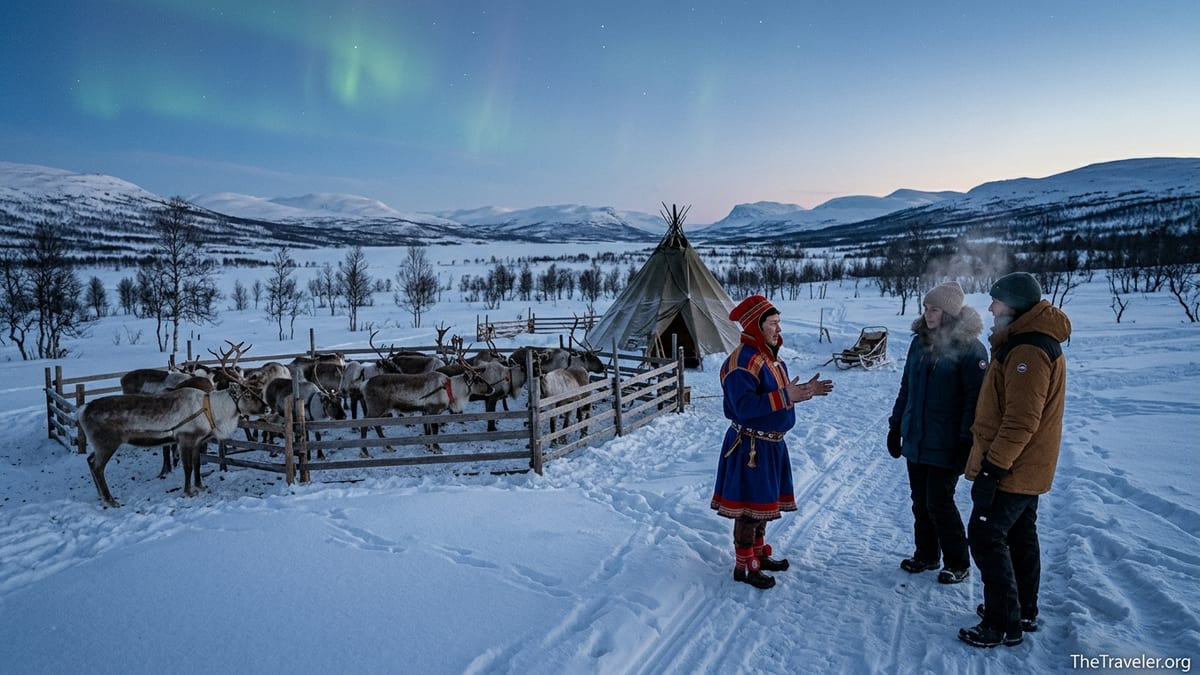
Understanding Sámi Tourism and How to Choose Responsibly
Before you book a reindeer sled ride or a “Sámi evening,” it helps to understand the broader picture. The Sámi are the Indigenous people of northern Fennoscandia, with distinct languages, traditional livelihoods such as reindeer herding, fishing and handicrafts, and a long history of discrimination and forced assimilation. Some Sámi families have turned to tourism as a way to control their own narrative and create income that fits around reindeer work or other local livelihoods. Others feel that the most visible products, like short reindeer sled loops for cruise groups, can flatten a complex culture into a photo-op. As a traveler, the goal is to favor experiences that are Sámi-run or clearly Sámi-led, that share lived experience and context, and that treat animals and nature with care.
On the ground, this means reading beyond glossy marketing language. In Tromsø or Rovaniemi, for example, you will see dozens of “Sámi” tours advertised in winter, from aurora dinners in a lavvu tent to quick reindeer-feeding stops bundled into Northern Lights safaris. Some of these are run by Sámi families who introduce you to their herd, joik traditional songs and everyday realities, while others are owned by non-Sámi operators who hire cultural performers by the hour or rely on generic storytelling. When in doubt, look for clear information about the family or person behind the experience, traditional Sámi names, and whether the tour description emphasizes learning and conversation rather than only selfies and sled distances.
Cost and group size are also clues. Intimate visits to a reindeer herding family in northern Norway or Inari, Finland, often cost more per person and cap groups at 8 to 15 guests, because they are literally bringing you into their workday and home environment. In contrast, mass-market excursions from big Arctic hubs commonly load 30 to 50 people into buses and corrals, charge around the same or even less per person, and focus on efficiency: short sled rides, buffet meals and a quick culture “show.” There is nothing inherently wrong with a short, entry-level experience, but if you care about depth, look for smaller-scale operators and be willing to pay a bit more.
Finally, ask yourself what you want to learn. If you are genuinely curious about topics like land rights, language revitalization or how reindeer herding works in the age of snowmobiles and GPS, choose tours that mention discussions, storytelling or Q&A. Some hosts explicitly invite questions about contemporary Sámi life, while others keep things lighter and focus on crafts, food and everyday stories. Both can be rewarding, as long as you go in with realistic expectations and remember that no single family can represent all of Sápmi.
Key Sámi Museums & Cultural Centers in Scandinavia
Museums and cultural centers are often the best starting point for travelers who want a structured, self-paced introduction to Sámi history and contemporary life. In Finland, the flagship institution is Sámi Museum and Nature Centre Siida in Inari, on the shores of Lake Inari. Widely recognized as a hub for Sámi culture and research, Siida combines exhibitions on Sámi history, languages and seasonal life with detailed displays on the fragile Arctic environment. You might see traditional goahti and turf-roofed buildings in the outdoor area in summer, and galleries that trace everything from drum confiscations during Christianization to modern land-rights activism inside.
In northern Norway, Sámiid Vuorká-Dávvirat, often referred to in Norwegian as De Samiske Samlinger, in Karasjok is the country’s largest Sámi museum and part of the RiddoDuottarMuseat foundation. Established in the early 1970s, it preserves extensive collections of traditional clothing, tools, sacred objects and contemporary Sámi art. Exhibits walk you through the development of reindeer herding, sea Sámi coastal life and how Sámi communities navigated Norwegianization policies. For many visitors, the combination of historic artifacts and newer installations about repatriation of Sámi objects from southern museums offers a powerful sense of continuity and resilience.
Elsewhere in Norway, the Museum for Northern Peoples in Manndalen, near the Lyngenfjord region, presents Sámi culture in dialogue with other Arctic Indigenous communities, including Inuit and Nenets. Its small but thoughtfully curated exhibitions are often bilingual or trilingual and may include temporary shows of Sámi duodji handicrafts, contemporary photography or yoik-inspired sound art. Depending on when you visit, you might also encounter events such as textiles workshops or lectures in cooperation with local schools and artists.
Sweden’s major institutions include Ájtte, the Swedish Mountain and Sámi Museum in Jokkmokk. Although not as large as Siida, Ájtte focuses strongly on Sámi life in what is now northern Sweden, particularly the shifting patterns of reindeer herding, the impact of hydropower dam projects on traditional lands, and festival culture. Exhibitions often integrate voices from Sámi communities, from recorded joik to video interviews about climate change on the tundra. Many travelers time their visit to coincide with the Jokkmokk Winter Market, which has run for centuries and transforms the town into a gathering place for Sámi families, craftspeople and visitors.
Norway: Reindeer Experiences & Cultural Tours in Sápmi
Norway offers some of the most accessible Sámi experiences, thanks to good transport links and established winter-tourism infrastructure. Around Tromsø, several Sámi reindeer experiences combine a short sled ride, feeding the herd and a warm lavvu dinner with storytelling. A typical four-hour program might include transfers from the city, an introduction to the family’s herd, a chance to hand-feed the animals, a 15 to 30 minute sled loop, and a hearty meal of reindeer stew or a vegetarian soup, followed by joik singing and questions around the fire. Prices often fall in the mid-range for Arctic activities, generally comparable to dog-sledding tours of similar length.
These Tromsø-area visits are popular, and reviews from recent seasons suggest that many guests appreciate the chance to hear personal stories about growing up in a herding family, seasonal migrations and the pressures of tourism and climate change. At the same time, it is important to recognize the limits: when dozens of people cycle through each day in peak months, hosts necessarily simplify the experience. If you want something quieter, consider traveling deeper into inland Finnmark, where reindeer herding remains a central part of local life and visitor numbers are lower.
Karasjok and Kautokeino, both close to the Finnish border, are excellent bases for more in-depth stays. Local Sámi-owned guesthouses and small tour companies may offer snowmobile-supported visits to reindeer corrals, overnight lavvu stays, and participation in seasonal tasks such as marking calves or moving animals between pastures. In these communities you are more likely to encounter Sámi as the everyday majority in shops, schools and municipal offices, which can make even ordinary errands feel like part of the cultural experience. Prices vary widely depending on whether you book a simple few-hour visit or a multi-day trip that includes accommodation and meals.
Summer in Norway also brings opportunities that look very different from the classic “reindeer and Northern Lights” image. In coastal Finnmark and Troms, sea Sámi communities host small-scale cultural walks, boat trips or storytelling evenings that focus on fishing traditions, place names and seasonal berry picking rather than herding. In Karasjok and the surrounding region, RiddoDuottarMuseat sometimes collaborates with artists and researchers on outdoor exhibitions, guided heritage walks or events connected to repatriated objects. These may appeal if you are more interested in history and contemporary issues than in snow-based activities.
Finland: Inari, Siida Museum & On-the-Land Encounters
For many travelers, Finland’s Inari region offers one of the richest combinations of structured learning and intimate encounters. The village of Inari is often described as a capital of Sámi culture in Finland, home not only to the Siida Museum and Nature Centre but also to Sajos, the Sámi Cultural Centre and parliamentary building. This concentration of institutions means you can spend a day moving from in-depth exhibitions to a guided tour of the parliament and then a crafts shop or café owned by local families, all within walking distance.
On the experiential side, several Sámi-owned companies based in or around Inari run small-group tours that emphasize being out on the land. Typical options include ice-fishing and storytelling days on frozen Lake Inari, smoke sauna evenings combined with traditional foods, and reindeer or snowmobile excursions where the focus is on explaining seasonal work and land-use challenges rather than offering the longest possible ride. Group sizes tend to be smaller than in the big Finnish Lapland hubs, often under 10 people, and hosts may switch between North Sámi, Inari Sámi and Finnish as they speak, giving you a sense of the region’s linguistic diversity.
Farther south, Rovaniemi and Levi are crowded with Lapland-themed activities, and while many are enjoyable winter fun, not all are rooted in Sámi ownership or storytelling. If you are staying in these areas and want a more culturally grounded experience, look for tours that explicitly state they are Sámi-run and mention the specific community, such as Inari, Utsjoki or Enontekiö, that the family comes from. Some hosts arrange transfers from resort areas to quieter villages for day trips, so you do not necessarily need your own car to reach more authentic encounters.
Finland is also an excellent place to explore Sámi handicrafts in context. In and around Inari, you can find small workshops producing traditional duodji items like knives, leather goods and woven bands. While mass-produced souvenirs are common in larger towns, authentic pieces are typically signed or stamped with the maker’s name and often cost significantly more, reflecting the time and skill involved. When you buy directly from an artisan or a shop that clearly explains each maker’s background, your purchase becomes part of a living craft economy rather than a generic memento.
Sweden: Jokkmokk, Ájtte & Life in the Lule Sámi Area
In Sweden, the town of Jokkmokk in Norrbotten County is a natural focal point for Sámi culture. Ájtte, the Swedish Mountain and Sámi Museum, anchors the town with exhibitions that range from traditional gákti clothing and silverwork to interactive displays about reindeer migration routes and climate pressures on grazing land. Text and audio often highlight Lule Sámi perspectives, but the museum also connects Jokkmokk to wider Sápmi through maps, archival film and contemporary art.
Each February, Jokkmokk’s Winter Market transforms the town into a busy meeting point. Reindeer races, craft stalls, concerts and seminars draw Sámi families, researchers and visitors from across the Nordic region. While the market is undeniably touristy in places, it remains an important arena for selling duodji, debating policy and celebrating cultural expression in public. If you plan to attend, book accommodation well ahead and consider adding quieter days before or after the peak, when you can visit Ájtte, walk around town and perhaps join a small-group tour with a local Sámi host without the festival crowds.
Beyond Jokkmokk, several Sámi-owned or Sámi-guided experiences operate in Swedish Lapland, especially in areas like Arvidsjaur, Kiruna and around Laponia’s national parks. Activities might include day visits to a reindeer herding family’s cabin, hikes that follow traditional travel routes, or evenings in a lávvu with stories about language, yoik and the complex history of grazing rights. Swedish regulations around reindeer herding differ from those in Norway and Finland, and hosts are often keen to explain how reindeer herding districts work and how large-scale mining or wind power projects interact with traditional land use.
Travelers interested in multi-day trekking can also weave Sámi perspectives into classic routes. For instance, along parts of the Kungsleden trail, local operators offer guided days with Sámi guides who focus on reading the landscape through Indigenous knowledge: pointing out traditional place names, explaining how certain valleys function as migration corridors, or discussing how snow conditions affect reindeer movement. While these add-ons are not always marketed foremost as “Sámi tours,” they can deepen your understanding of both culture and environment.
How to Tell if a Sámi Experience Is Authentic and Respectful
On paper, it can be difficult to differentiate between a carefully designed, Sámi-led visit and a generic “ethnic” add-on created for tourists. One practical approach is to look for names and relationships. Does the tour description mention the family name, the reindeer herding district or the specific village? Are there photos of real people doing everyday work, rather than only staged images of models in pristine gákti under the aurora? When you write to ask a question, do you get a reply that clearly comes from someone in the community rather than a large anonymous booking office?
Another indicator is how the tour frames reindeer and cultural elements. Authentic experiences tend to describe reindeer as working animals and central to a livelihood, not as props. Sled rides, if included, are usually short, with a clear emphasis on safety and the animals’ well-being. Likewise, joik performances or demonstrations of lasso throwing are typically positioned as part of a broader conversation about history and daily life, not as isolated “shows.” If an activity promises long, high-speed sled runs, costume rentals for guests or guaranteed photo opportunities without much mention of learning, it may be more entertainment than cultural exchange.
Reviews can be revealing, especially when you read beyond star ratings. Guests who mention honest discussions about difficult topics, space for questions and hosts who share both pride and frustration often signal a deeper engagement. You may also see Sámi travelers or local residents commenting online about which operators they feel comfortable with. At the same time, remember that some Sámi-run businesses intentionally keep a low digital profile, relying on word of mouth and local networks rather than aggressive marketing.
Finally, consider your own expectations. No single visit will give a comprehensive picture of Sámi history or contemporary politics, and it is unfair to expect your host to be a spokesperson for all of Sápmi. A respectful mindset means showing up on time, dressing appropriately for Arctic conditions so your host does not have to worry about your safety, listening more than you speak, and being ready to hear about both joyful traditions and ongoing challenges. If you treat the experience as a chance to learn and to support Indigenous entrepreneurship rather than a box to tick, you are more likely to come away with meaningful memories.
Practical Planning Tips: Seasons, Costs and Etiquette
Most Sámi-focused tours cluster in winter, roughly from December through March, when snow enables reindeer sledding, snowmobiling and Northern Lights viewing. In popular hubs like Tromsø, Rovaniemi and Kiruna, peak holiday weeks can book out months in advance, and prices rise accordingly. A typical half-day Sámi reindeer experience with transfers, a warm meal and cultural storytelling in these areas often sits in the mid-range of local tours, comparable to dog sledding or snowmobile safaris of similar length. Smaller, more remote experiences in places like Inari, Karasjok or Jokkmokk may be slightly pricier per person due to longer travel distances and tiny group sizes.
Shoulder seasons can be rewarding. In April and early May, you may still find snow-based activities under brighter days, and guides have more time to talk when they are not juggling multiple buses. Late August and September bring berry picking, autumn colors and preparations for the rut and migration, which some hosts are willing to share through hikes, photography outings or overnight stays. Summer also works well for museum visits, craft workshops and cultural festivals, with easier driving conditions and long days.
When it comes to etiquette, photography is the area that most often causes friction. Always ask before taking close-up photos of people, their homes, sacred objects or animals in enclosures. In some contexts, such as yoik performances or sensitive exhibits about religious persecution, photography may be discouraged or banned altogether. Likewise, be cautious about posting images of children or identifying details of reindeer herding locations on social media, as overexposure can bring unwanted attention or even disturbances to herds.
Basic courtesies go a long way. Dress as warmly as you can, even if outer garments are provided, so you are comfortable and able to focus on what you are hearing. Avoid showing up in imitation gákti costumes or “funny” hats with reindeer antlers, which many Sámi find disrespectful. If you are unsure how to pronounce names or words, ask and be willing to practice. And if a host explains that certain topics are painful or off-limits, take that boundary seriously. Your visit is a brief moment in what for them is an ongoing struggle to maintain language, land and culture.
The Takeaway
Sámi tourism in Scandinavia sits at a delicate junction of empowerment and exposure. On the one hand, thoughtfully designed tours, museums and cultural events can provide crucial income, create jobs close to home and give Sámi communities greater control over how their stories are told. On the other, the demand for easily packaged experiences risks reducing a complex, living culture to reindeer selfies and costume photo booths. As a traveler, you have real influence over which direction the industry moves.
By centering your plans on established Sámi museums like Siida in Inari, Sámiid Vuorká-Dávvirat in Karasjok, Ájtte in Jokkmokk and smaller institutions such as the Museum for Northern Peoples, you ground your trip in context and support research and education. Complementing these visits with smaller-scale tours run or clearly guided by Sámi hosts, especially in communities where Sámi life forms the everyday majority, deepens your understanding and directs your spending where it matters.
Ultimately, the “best” Sámi experiences are less about spectacular itineraries and more about the quality of encounter. A quiet evening in a lavvu sharing stories over simple food, a guide’s explanation of why a river’s traditional name matters, or a conversation with an artisan about how they learned duodji from their grandparents can linger far longer than any staged photo. If you travel with curiosity, humility and a willingness to listen, Sápmi will meet you more than halfway.
FAQ
Q1. Where is the best place to start learning about Sámi culture as a first-time visitor?
For most travelers, starting with a Sámi museum or cultural center works best. Siida in Inari, Sámiid Vuorká-Dávvirat in Karasjok, Ájtte in Jokkmokk and the Museum for Northern Peoples in Manndalen all offer curated introductions to Sámi history, language and contemporary life. After that, adding a small-group tour with a Sámi host helps connect what you saw in exhibitions to lived experience.
Q2. Are reindeer sled tours an authentic Sámi experience or just for tourists?
Reindeer sledding is rooted in Sámi history, but most short sled loops offered to visitors are adapted for tourism. When sled tours are run by Sámi families as part of a broader visit that includes conversation, storytelling and insight into reindeer herding, they can feel meaningful. If the focus is mainly on speed, distance and photos, with little cultural context, it is more of a generic winter activity.
Q3. How can I tell if a Sámi tour is Sámi-owned or Sámi-led?
Look for the family or guide’s name, references to a specific Sámi community or reindeer herding district, and photos of real hosts in everyday settings. Authentic operators often introduce themselves clearly, switch between Sámi and national languages, and highlight learning and dialogue. If marketing uses only generic labels and stock-style images, or avoids naming who is behind the experience, it is worth asking more questions.
Q4. Is it appropriate to wear Sámi-style clothing or buy replicas as souvenirs?
Traditional gákti and related items carry deep cultural meaning and are usually tailored for specific regions and families. Wearing imitation outfits or “costume” versions as a tourist is widely seen as disrespectful. It is generally fine to buy high-quality duodji such as jewelry, belts or textiles from Sámi artisans, and to wear or display these respectfully. When in doubt, ask the maker or shop how an item is intended to be used.
Q5. What time of year is best for experiencing Sámi culture in Scandinavia?
Winter from December to March offers classic snow-based activities and aurora-focused evenings, especially in Tromsø, Inari, Jokkmokk and Kiruna. Shoulder seasons like April and early May, or late August and September, can be calmer and better for deeper conversations and on-the-land visits. Museums and cultural centers are open in all seasons, and summer is excellent for combining them with hiking, festivals and road trips.
Q6. Do I need to speak a Sámi language to visit Sámi communities?
No, you do not. Guides and hosts typically speak very good Norwegian, Swedish or Finnish and often English as well. In many places you will hear North Sámi or other Sámi languages used between locals, which can be a valuable part of the experience. Learning a few greetings or place names is appreciated but not required.
Q7. How much should I expect to pay for a quality Sámi cultural experience?
Prices vary by location and length, but a half-day Sámi-led visit with transfers, a warm meal and cultural storytelling often sits in the same price bracket as dog-sledding or snowmobile tours in the region. Smaller group sizes and remote settings, such as in Inari or Karasjok, can mean slightly higher per-person costs. Multi-day stays that include accommodation, several activities and meals will naturally be more expensive.
Q8. Is it possible to visit Sámi communities independently without a tour?
Yes, many Sámi-majority towns such as Karasjok, Kautokeino, Inari or Jokkmokk are regular communities with shops, schools and public buildings, and you are free to visit like anywhere else. However, reindeer herding areas, private homes and sacred sites are not open for wandering. Organized visits and guided tours exist partly to provide safe, agreed ways for outsiders to learn without disrupting daily life or sensitive landscapes.
Q9. What should I avoid doing to be respectful during a Sámi visit?
Avoid photographing people or sacred objects without permission, wearing imitation gákti or joke costumes, or treating reindeer purely as props. Do not walk into corrals, tents or marked areas uninvited, and be cautious about sharing exact locations of herds online. Listening carefully, following safety instructions and taking hosts’ boundaries seriously are the most important forms of respect.
Q10. Can I combine Sámi cultural experiences across Norway, Sweden and Finland in one trip?
Yes, many travelers plan routes that cross northern Norway, Sweden and Finland in a single journey, for example Tromsø to Kiruna to Inari. Doing so lets you see how Sámi life varies between countries, from different policies on reindeer herding to changes in language use. Just remember that distances are large, winter driving can be challenging, and you should allow enough time in each place to go beyond a single quick activity.