


More news on this day
San Francisco International Airport is preparing for some of its busiest months on record while projecting that a series of operational changes and early completion of runway work will finally bring relief from the severe delays that have frustrated travelers since last year.
Get the latest news straight to your inbox!
Runway Works Wrap Up After Months of Disruption
San Francisco International Airport has spent much of the past year at the bottom of on time rankings as runway construction and traffic management restrictions combined to slow arrivals and departures. Publicly available performance data highlighted a sharp rise in late arrivals through the spring and early summer, with some days seeing well over a third of flights reaching the gate behind schedule.
Airport information and local coverage indicate that a key phase of runway rehabilitation has now finished ahead of schedule, a milestone that operators describe as critical to restoring more predictable movements. The works had limited runway availability and reduced the number of arrivals the airfield could safely handle in poor weather, triggering long holding patterns and ground delays across the network.
Industry analysis suggests that even incremental gains in hourly runway capacity can have an outsized impact on performance during peak periods. With the construction zone cleared and more flexible use of parallel runways returning, planners expect bottlenecks to ease, particularly during the morning and evening banks that feed domestic connections.
While the airfield is not governed by the formal slot system used at some East Coast hubs, schedules at San Francisco are closely managed because of the airport’s geography and frequent low cloud. The end of runway works removes one of the main structural constraints that had been depressing on time performance since early 2024.
New Traffic Procedures Aim to Boost On Time Performance
Relief at San Francisco is not limited to the physical runway upgrades. According to aviation industry reporting, airlines and federal air traffic managers have also been testing revised arrival procedures designed to increase the number of aircraft that can land in a given hour while maintaining safety margins.
The earlier combination of construction and added safety restrictions on simultaneous approaches had sharply curtailed capacity. Carriers serving the airport reported that holding stacks over Northern California became a regular feature of afternoon operations, with knock on effects for crews and aircraft utilization throughout their networks.
Recent guidance shared with airlines points to a gradual loosening of those constraints as the construction wraps up and new procedures prove reliable. That change is expected to cut the frequency and length of ground delay programs that had required flights to depart late from origin airports in order to meter traffic into San Francisco.
Industry observers note that the airport’s performance is still exposed to broader air traffic control staffing and weather challenges across the United States, but the local steps at San Francisco are viewed as an important foundation for more resilient schedules heading into late 2026.
Record Passenger Volumes Expected Through the Peak Season
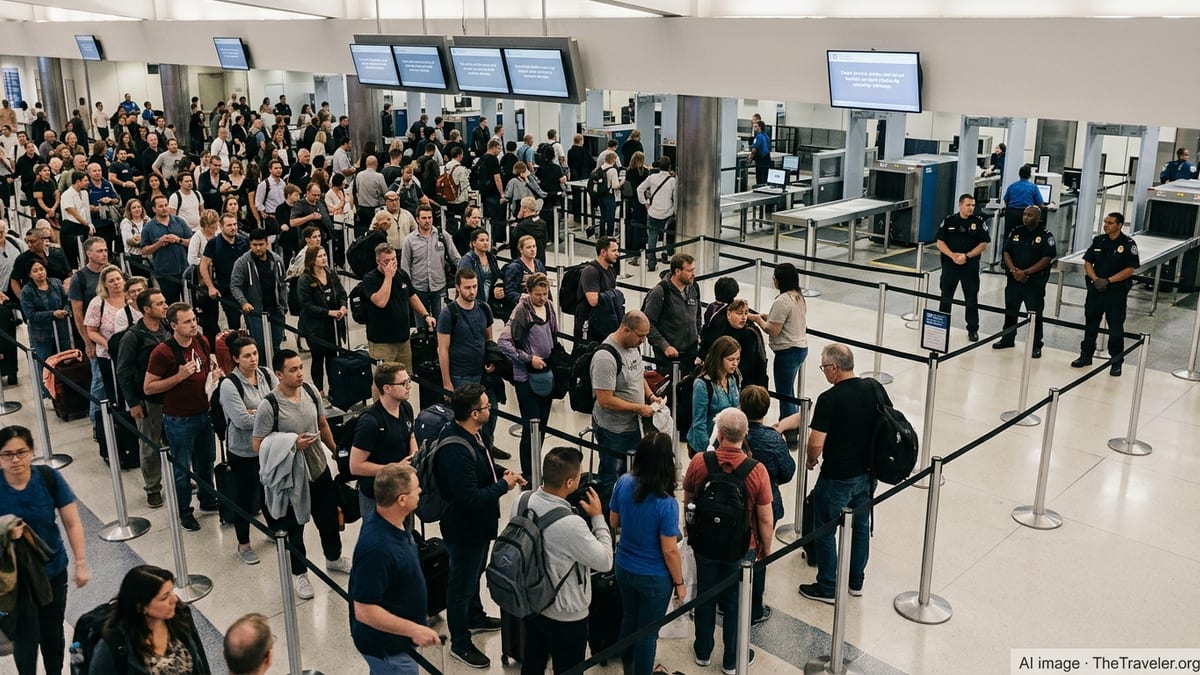
The timing of these improvements is significant. Forecasts from travel organizations and airline schedules show that U.S. air travel demand remains strong, with San Francisco positioned as a key West Coast gateway for both domestic and transpacific routes. Airport projections and booking trends point to record or near record passenger volumes over the late summer and end of year holiday periods.
Carriers have been rebuilding international capacity at the airport, adding frequencies on routes to Asia and Europe while maintaining a dense web of domestic connections. That growth, combined with resilient leisure demand and gradually recovering business travel, sets the stage for some of the highest sustained traffic levels the airport has handled.
Higher volumes typically test even robust operations, making the recent investments in infrastructure and procedures particularly critical. Travel industry commentary stresses that for many passengers the perception of improvement will hinge less on headline statistics and more on everyday experiences such as shorter taxi times, more reliable departure boards and fewer missed connections.
Airport facing businesses, including concessions and ground transport operators, are also preparing for the influx. Many expanded staffing and service hours during earlier surges in 2022 and 2023 and are now adjusting forecasts in line with expectations for another strong year.
Lessons From a Year of Disruption
The period of intense disruption at San Francisco has drawn attention to the fragility of busy hub operations when multiple constraints collide. Over the past year, national media coverage of flight delays has often cited a mix of local works, airspace congestion, staffing pressures and severe weather at key U.S. airports.
In the case of San Francisco, the combination of runway closures, limits on parallel approaches and persistent coastal weather created a particularly difficult environment. Airlines were forced to pad schedules, preemptively cut some frequencies and rely more heavily on rebooking tools and customer service teams to manage disrupted itineraries.
Aviation analysts argue that the experience underscores the value of early communication about major infrastructure projects and the need for coordinated planning between airports, regulators and carriers. By phasing works outside of the very busiest dates, adjusting timetables in advance and offering clear guidance to travelers, the worst impacts of such upgrades can be reduced even if they cannot be fully avoided.
For passengers, the episode has reinforced familiar advice: build extra time into connections at congestion prone hubs, monitor flight status closely and consider earlier departures on days that are forecast to be particularly busy. As San Francisco works to move past its delay reputation, many travelers will still take a cautious approach until they see several smooth travel seasons in a row.
What Travelers Can Expect Next
Looking ahead, publicly available statements from airport representatives and airline executives outline a cautiously optimistic outlook. The completion of runway works and refinement of arrival procedures are expected to show up gradually in improved on time metrics over the coming months, rather than as an overnight transformation.
Travel demand projections suggest that peak days will continue to push the airfield close to its practical limits, especially when layered with regional weather systems that can quickly reduce capacity. On those days, delays are still likely, but planners expect them to be shorter and less widespread than during the height of the construction period.
San Francisco is also advancing longer term modernization projects in its terminals and ground transport links, part of a broader push to strengthen its role as a primary West Coast hub. As those elements come online, the airport’s ability to handle record passenger numbers without repeating the worst operational stumbles of recent years will be closely watched by travelers and industry observers alike.
For now, the message from publicly available data and recent reporting is that the most acute phase of disruption appears to be easing just as the airport braces for unprecedented crowds. Whether those improvements are enough to convince wary travelers that the delay woes are truly over will become clear as the next peak travel periods unfold.