


More news on this day
Holidaymakers leaving the UK this year are facing sharply differing odds of leaving on time, as new data highlights which overseas destinations and routes are most prone to flight delays from British airports.
Get the latest news straight to your inbox!
Middle East and South Asia Routes Top Delay Tables
Recent analysis of Civil Aviation Authority data and airline punctuality reports indicates that some of the longest average delays are now concentrated on long-haul routes from the UK to the Middle East and South Asia. Services linking London Gatwick with Bengaluru in India, for example, have repeatedly featured near the top of delay rankings, with average pushback times running well over an hour behind schedule across dozens of departures in the latest annual figures.
Connections to major Gulf hubs such as Dubai and Doha are also highlighted as routes where disruption is common. A 2024 study of UK departures cited Birmingham to Dubai among the most delayed corridors, with typical arrival times running close to half an hour late. Travellers heading for onward connections in these hubs face particular exposure, as even modest repeated delays can cascade into missed links on busy transfer banks.
Industry-focused coverage suggests that a blend of air traffic congestion over Europe, tight aircraft utilisation on long-haul fleets and weather-related disruption is contributing to these patterns. High demand for flights to South Asian cities and Gulf stopover hubs has also encouraged dense scheduling, leaving limited slack in timetables when things go wrong.
Mediterranean Hotspots See Frequent Summer Disruption
Short-haul leisure destinations around the Mediterranean remain among the most delay-prone for UK travellers, especially during the peak summer season. Consumer research published in late 2024 reported that Corendon Airlines services from London Gatwick to Antalya in Turkey and Ryanair flights from Teesside to Palma de Mallorca were among the worst performers for long delays, with more than a third of departures on these routes leaving at least an hour late.
Turkey, Spain and Greece repeatedly feature in summer disruption studies, reflecting their status as high-volume package and low-cost markets from the UK. These routes are often operated by aircraft flying multiple legs per day, so an early delay on a morning departure can ripple through subsequent services to beach destinations well into the evening.
Data-driven reports from aviation compensation specialists and travel industry analysts suggest that weekend departures to coastal resorts are particularly vulnerable. High traffic density in southern European airspace, thunderstorms around the Alps and capacity constraints at popular holiday airports all combine to push up average delay times on these sun routes compared with quieter city pairs.
Gatwick, Bristol and Other Hubs Drive Delay Patterns
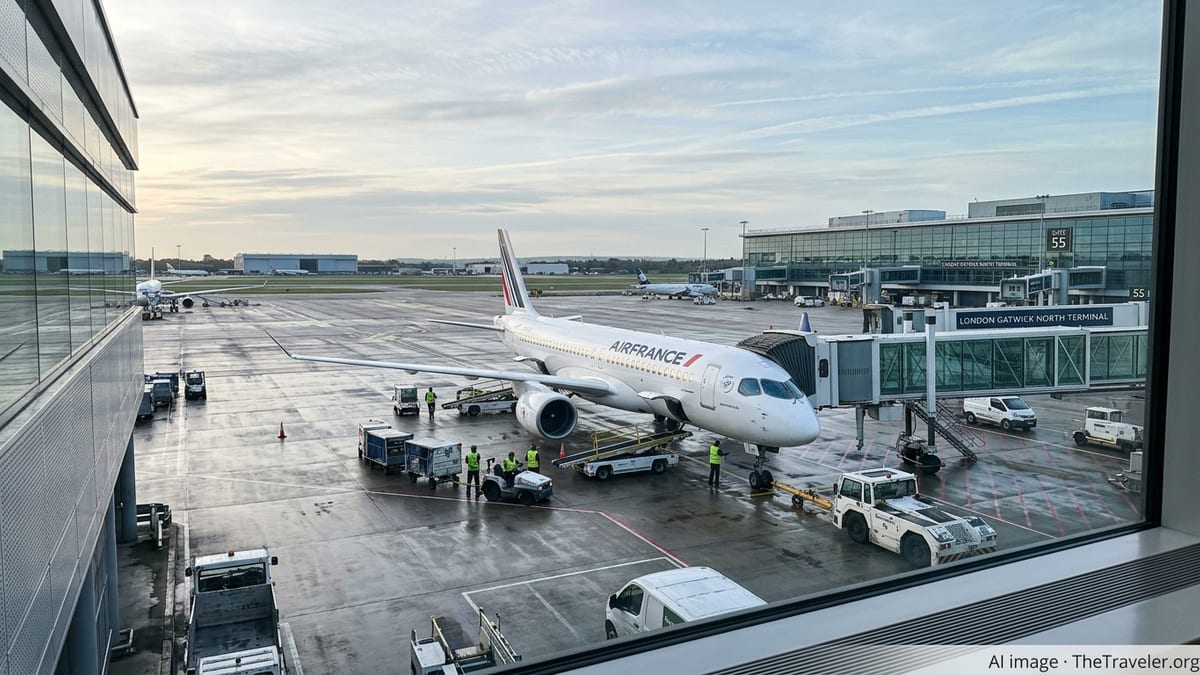
Where travellers fly from can be almost as important as where they are going. Government data summarised by several UK news outlets shows that London Gatwick has consistently recorded the longest average departure delays among major UK airports, with flights in 2024 leaving roughly 20 to 27 minutes late on average depending on the period measured. Reports attribute this to a mix of air traffic control restrictions, weather and the pressures of operating one of the world’s busiest single-runway hubs.
Other airports also play a role in the delay picture for specific destinations. Studies of route punctuality have highlighted Bristol as an origin that appears frequently in top-ten lists of late-running services, particularly to European leisure cities. East Midlands, Birmingham and Manchester have all been linked in separate analyses to heavily delayed individual routes to Paris, Spanish resorts and Middle Eastern hubs.
These findings reflect broader capacity and scheduling pressures across parts of the UK airport network. As passenger numbers have recovered to, and in some cases exceeded, pre-pandemic levels, several regional airports have experienced strains on stands, security queues and airfield movements, which can feed into departure delays on specific high-demand international routes.
Airline Performance Shapes Risk on Specific Destinations
The choice of airline can significantly influence delay risk to particular destinations. Civil Aviation Authority statistics reviewed by media and consumer groups have repeatedly ranked certain carriers at the bottom of UK punctuality tables. One long-haul operator serving India, for example, recorded average delays approaching 45 minutes across UK departures, driven in large part by heavily disrupted services to South Asian destinations.
On the short-haul side, earlier CAA-based investigations found that some low-cost carriers operating dense schedules from regional UK airports posted the longest average delays, while others, including Jet2.com and selected flag carriers, performed noticeably better. Because many of these airlines specialise in a narrow set of destinations, their punctuality records translate directly into higher or lower delay risk on specific routes such as Antalya, Palma or popular Greek islands.
Publicly available analyses also point out that airlines with limited spare aircraft and crew often struggle to recover when disruption hits a particular destination. A technical problem or weather diversion on an inbound leg to a Mediterranean airport can easily leave a return flight to the UK several hours late, especially in high season when spare capacity is scarce.
Rising Cancellations Add To Delay Pressure
Alongside outright delays, cancellations have become an increasing concern on some international routes from UK airports. Coverage of CAA figures for the first half of 2024 noted that more than 2 million passengers were affected by cancelled departures, almost three times the comparable figure for 2023, with industrial action and IT outages both cited as major triggers.
While many long-haul destinations continue to see relatively low cancellation rates, a number of busy European leisure and city routes have experienced clusters of scrubbed flights that compound existing delay issues. In practice, this means that a route already known for late departures can also present a higher risk of last-minute changes, forcing passengers to rebook or reroute through alternative hubs.
Travel industry analysts suggest that passengers concerned about delays on specific destinations consider factors such as time of day, day of week, operating airline and preferred airport, rather than focusing only on the city they are flying to. With disruption now concentrated on a distinctive set of routes linking the UK to the Middle East, South Asia and key Mediterranean holiday regions, those small choices can make a noticeable difference to the chances of an on-time arrival.