


More news on this day
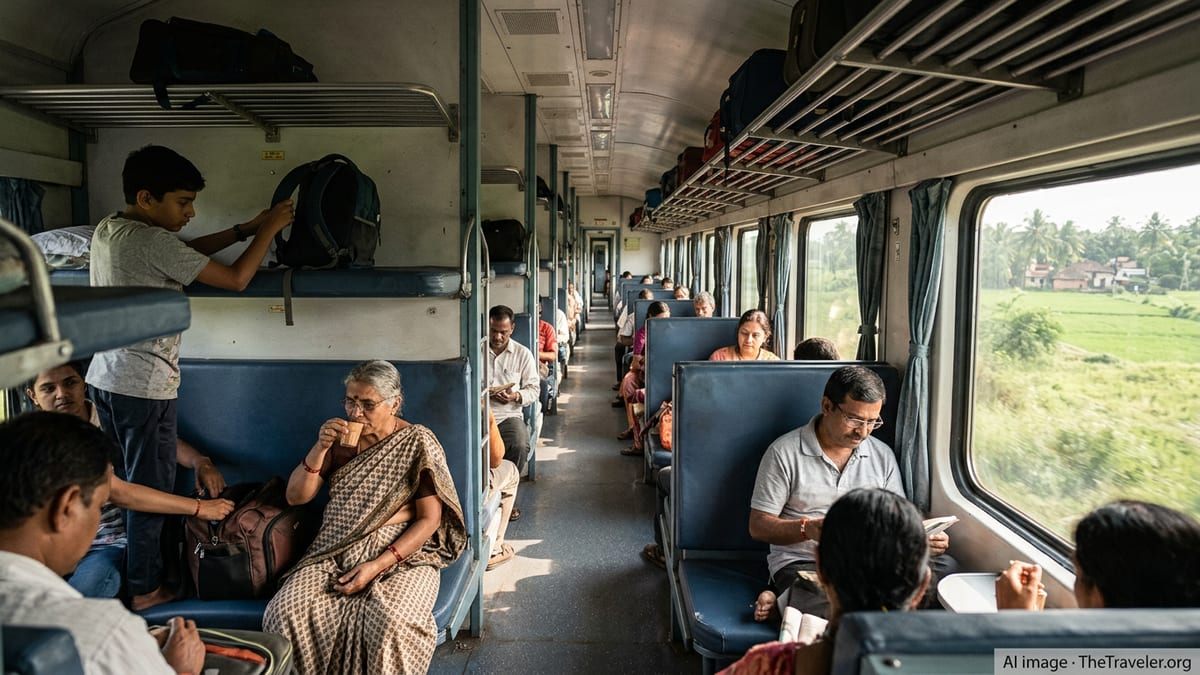
Indian Railways, through its tourism arm IRCTC, is spotlighting a special Bharat Gaurav tourist train for the Sapta Jyotirlinga Yatra, an 11-day itinerary designed to cover seven of India’s most revered Shiva temples in a single, all-inclusive rail journey.
Get the latest news straight to your inbox!
What the Sapta Jyotirlinga Yatra Covers
The Sapta Jyotirlinga Yatra is structured as an 11-night, 12-day circular journey that links key pilgrimage centers across central and western India. Recent tour documents describe a route focused on Ujjain, Dwarka, Somnath, Pune, Nashik and Aurangabad, with visits to Mahakaleshwar, Omkareshwar, Nageshwar, Somnath, Bhimashankar, Trimbakeshwar and Grishneshwar Jyotirlingas.
The train operates under the Bharat Gaurav tourist train scheme, which promotes theme-based rail tourism. Publicly available IRCTC brochures show that the Sapta Jyotirlinga package is offered with multiple boarding and deboarding points, typically in states such as Telangana and Maharashtra, allowing passengers from several cities to join the same train without separate connections.
Most iterations of the package are timed outside peak summer and monsoon periods, when temple towns face heavier crowds and travel disruption. The journeys are usually scheduled as fixed departures, with limited seat capacity divided among sleeper, three-tier AC and two-tier AC coaches.
While exact dates and train numbers vary by season and originating zone, the core concept remains constant: creating a point-to-point spiritual circuit that would be logistically demanding to replicate independently in the same timeframe.
Classes, Pricing and What Is Included
According to current IRCTC tour circulars, the Sapta Jyotirlinga Yatra is marketed as an all-inclusive package, with pricing differentiated by travel class. Economy options are typically in sleeper class, standard in three-tier AC and comfort in two-tier AC, with per person charges scaled accordingly and inclusive of GST.
Price bands published in recent brochures and discussed in consumer forums place the cost for the full 11-day circuit in the lower to mid five-figure range in Indian rupees, depending on class and occupancy. The package generally covers rail travel, onboard and offboard vegetarian meals, local transfers by bus for temple visits, non-AC or AC accommodation in hotels or dormitories, tour escorts, and basic travel insurance.
IRCTC material notes that the fare reflects a rail tourism concession under the Bharat Gaurav scheme, which reduces the base cost compared with a standard charter. However, travelers should check the latest package document for their specific departure, as inclusions can differ slightly between zones, particularly around hotel standards, sightseeing add-ons and room-sharing policies.
Items usually excluded are personal expenses, special puja fees, camera charges at monuments, porterage and optional excursions beyond the advertised itinerary. Single travelers are often allotted shared accommodation unless a single-occupancy supplement is specifically offered and paid for at the time of booking.
Itinerary Pace and On-the-Ground Experience
The Sapta Jyotirlinga Yatra is designed as a fast-paced circuit, covering seven major temples spread across several states in around 11 days. Recent circulation of itineraries and passenger discussions highlight early-morning and late-night temple visits, extended bus transfers from railway stations to temple towns and tight reporting times for reboarding the train.
In Ujjain, pilgrims are usually taken to Mahakaleshwar temple and then by road to Omkareshwar on the Narmada river. In Gujarat, the train halts are paired with bus journeys to Somnath and the Nageshwar Jyotirlinga near Dwarka. In Maharashtra, road legs from Pune and Nashik link Bhimashankar, Trimbakeshwar and, further east, Grishneshwar near Aurangabad, a temple often combined with a short stop at nearby heritage sites.
Accommodation on these tours is typically in budget to standard category hotels or dharmashalas, with multi-share options common in the economy segment. Pilgrims can expect basic facilities rather than luxury, and shared dining arrangements for group meals either at base kitchens, hotels or community halls arranged along the route.
Given the tempo of the schedule, reports suggest that the experience suits travelers comfortable with long days, simple lodging and regimented timings. Those seeking slow-paced stays in each temple town may find the fixed-group, fixed-boarding format relatively structured compared with independent travel.
Booking, Eligibility and Practical Requirements
Bookings for the Sapta Jyotirlinga Yatra are handled online and through authorized IRCTC tourism counters. Each departure is released as a distinct tour code, and seats are allocated on a first-come, first-served basis until the notified capacity, which can exceed 700 passengers on some trains, is filled.
Recent tour documents state that passengers are required to carry valid government-issued photo identification matching their booking details for both train travel and hotel check in. Age-related concessions standard on regular Indian Railways tickets typically do not apply, as the Bharat Gaurav tourist trains operate as special charter services with bundled pricing.
Travelers are advised in official materials to review fitness considerations before joining, as the package involves extensive walking at temple complexes, stair climbs and transfers in varying weather conditions. While broadly targeted at pilgrims of all ages, the pace and overnight rail segments may be demanding for those with significant mobility issues.
Some earlier packages referenced public health guidelines such as vaccination status and mask use during temple visits. Although many of those restrictions have eased, prospective passengers are encouraged to check the latest advisory on the IRCTC tourism portal and verify any local temple rules in force at the time of departure.
How the Yatra Fits Into India’s Rail Tourism Push
The Sapta Jyotirlinga Yatra is part of a broader set of Bharat Gaurav theme trains focused on religious and cultural circuits. Alongside routes centered on the Ramayana, Buddhist sites and other Jyotirlinga combinations, the seven-shrine itinerary illustrates how Indian Railways is using chartered rakes to package multi-state circuits for domestic pilgrims.
Government statements and tourism reports frame these trains as a way to diversify rail revenue, promote domestic tourism and encourage travelers from smaller cities to access distant pilgrimage sites without navigating complex, multi-leg bookings. The Sapta Jyotirlinga concept, in particular, aligns with long-standing devotional aspirations to visit multiple Jyotirlingas in a single journey.
The model also reflects a shift toward branded, curated rail products positioned between regular reserved trains and ultra-luxury tourist services. By combining relatively modest pricing with a pre-planned itinerary, these trains target middle-income households seeking convenience and spiritual focus rather than premium onboard amenities.
As more zonal railways and tourism offices adopt similar circuits, the Sapta Jyotirlinga Yatra is likely to remain a flagship example of how Indian Railways is experimenting with focused, thematically marketed rail pilgrimages built around iconic religious destinations.