


More news on this day
Storm Boelo has unleashed severe disruption across Britain’s railways, with London-bound commuters hit by widespread cancellations, reduced timetables and repeated “do not travel” alerts as high winds and flooding affect key routes into the capital.
Get the latest news straight to your inbox!
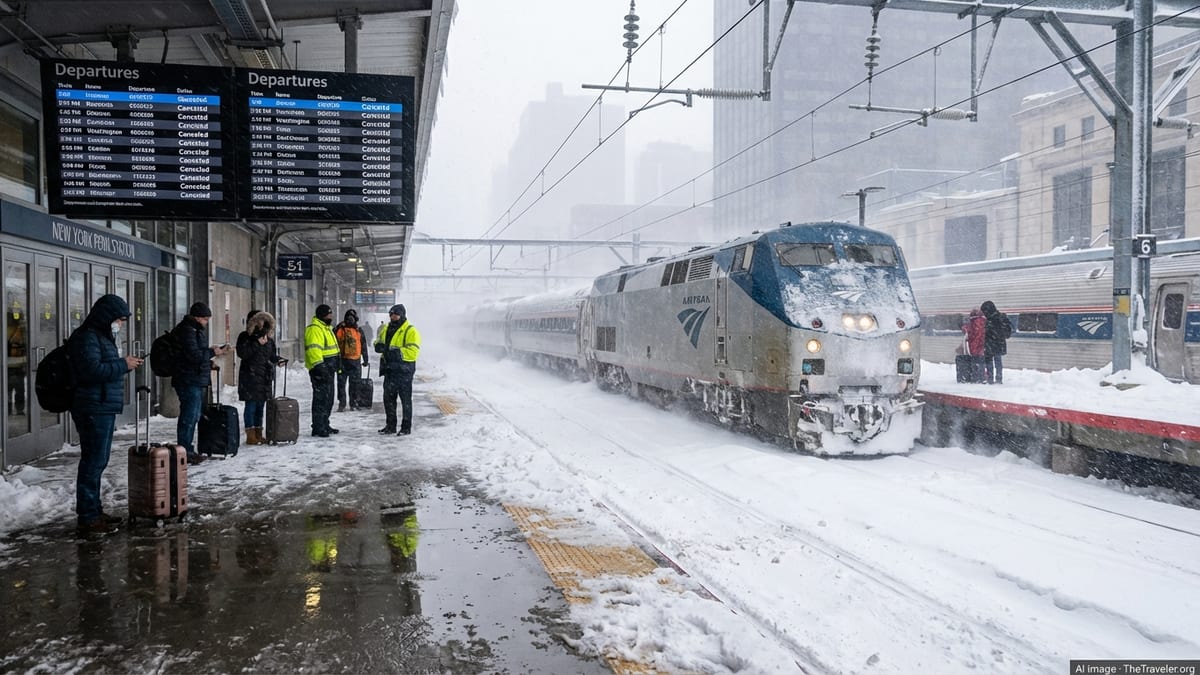
Storm Boelo batters UK transport networks
Storm Boelo, the second named storm of the 2026–27 UK and Ireland windstorm season, was officially named by the Met Office on 22 October following forecasts of damaging winds and heavy rain across large parts of the country. Amber and yellow weather warnings for wind and rain have been in force across northern England, Scotland, Northern Ireland and parts of Wales as the storm system tracks eastward.
Publicly available information from the Met Office shows gusts widely exceeding 60 mph in exposed areas, with some locations seeing winds of 70 to 80 mph and prolonged spells of heavy rain. These conditions have led to fallen trees, overhead line damage and localised flooding, a combination that has put sustained pressure on Britain’s mixed intercity and commuter rail infrastructure.
Travel tracking services and rail industry updates indicate that disruption is no longer confined to traditionally storm-exposed coastal or upland lines. Knock-on delays, train and crew displacement, and temporary speed restrictions have been cascading into the main commuter corridors funneling passengers into central London, especially during the morning and evening peaks.
The wider transport network has also been affected, with highway authorities reporting difficult driving conditions and aviation services warning of weather-related delays. For many travellers, however, the most immediate impact has been on day-to-day rail journeys into and out of the capital.
‘Do not travel’ messages for London-bound passengers
National Rail’s disruption pages list Storm Boelo among the leading causes of today’s travel problems, with multiple operators highlighting the risk of last-minute cancellations and significant delays. Service maps show widespread issues across northern England and Scotland, but the messaging is increasingly directed at those planning to travel to or through London on already crowded routes.
Several long-distance and regional operators, including Avanti West Coast, London North Eastern Railway and TransPennine Express, have issued strong guidance against travel on the most exposed parts of their networks. For some corridors, especially north of the Midlands and through the Pennines, passengers are being advised to travel only if essential, while London-bound customers are told that reliable onward connections cannot be guaranteed.
Real-time journey planners and operator statements show that morning peak services into major London termini such as Euston, King’s Cross and St Pancras have been subject to short-notice alterations. Cancellations on feeder routes into key interchanges have made it difficult for commuters from northern cities and the Home Counties to reach scheduled fast services into the capital, amplifying crowding and journey times.
Information from independent transport trackers indicates that some London commuters have faced journeys taking two to three times longer than usual, or have abandoned travel altogether in response to repeated “do not travel” alerts and reports of severe crowding on the limited services that are running.
Thameslink and Great Northern corridors heavily disrupted
National Rail’s incident summary for Storm Boelo highlights severe weather impacts on the Thameslink and Great Northern network, a major artery for commuters travelling from Hertfordshire, Bedfordshire, Cambridgeshire and parts of Sussex and Surrey into central London. The update states that multiple ongoing incidents related to high winds and debris on the line are causing widespread disruption across these routes.
According to the published guidance, passengers who have not yet started their trips are being strongly advised to delay travel until conditions improve, particularly this evening and into the late-night period. Those who do attempt to travel are warned to expect extended journey times, diversions and the possibility of being unable to complete journeys as trains are terminated short of their planned destinations.
Ticketing arrangements have been relaxed to give affected travellers greater flexibility. National Rail information confirms that customers with tickets for cancelled services can use them on alternative participating operators’ trains within a set time window around their original departure. Passengers who choose not to travel because of the disruption, or who cannot complete their journey, are entitled to claim a full refund from their original retailer.
Compensation schemes remain in place under existing delay and repay policies. Passengers are being urged through publicly available advice to keep tickets and record actual arrival times, as this evidence will be needed to support any claim once services stabilise.
Network Rail response and safety restrictions
Network Rail updates describe engineers working across the network to remove fallen trees, inspect structures and repair overhead power lines damaged by Storm Boelo’s winds. Visuals released by the infrastructure owner show vegetation leaning across tracks and waterlogged cutting sides, underlining the vulnerability of some routes to both wind throw and surface water.
As part of standard procedures during severe weather, precautionary speed restrictions have been imposed on some open stretches of line, particularly where crosswinds are strongest or where there is an elevated risk from trackside debris. These slower running speeds are designed to maintain safety but reduce the number of trains that can pass through a section each hour, contributing to extended journey times and tighter margins for connections into London.
Publicly available guidance from Network Rail and industry partners explains that strong winds can also affect signalling and electrical systems, as well as the points that enable trains to move between lines. Heavy rainfall associated with Boelo has added a further risk of flooding, which can damage embankments and leave track sections temporarily unusable until inspections are completed.
Rail operators are emphasising that while some routes may appear unaffected at a local level, the overall network remains under strain as train diagrams and crew rosters are adjusted in real time. For passengers into London, this means disruption can occur with little warning even after an apparently normal departure from an outer suburban station.
What rail passengers should do over the coming days
With Met Office warnings indicating that unsettled conditions linked to Storm Boelo will continue to affect parts of the UK into Sunday evening, transport agencies are urging passengers to treat provisional timetables as subject to change. Journey planners are being updated regularly as lines are inspected and services are either reinstated or further curtailed.
For London-bound commuters, publicly available advice from National Rail and individual operators stresses the importance of checking for updates immediately before setting out, and again just before boarding any connecting services. Where “do not travel” notices are in place for particular routes, travellers are being encouraged to consider postponing non-essential journeys rather than attempting multi-change itineraries that may be vulnerable to further disruption.
Those who must travel are being advised to allow significantly more time than usual, carry refreshments for potential delays and be prepared for crowding on any trains that do run. Passengers with mobility needs or complex itineraries involving multiple changes are encouraged by published guidance to seek the latest information from station staff and online channels to identify the least-disrupted options.
Looking ahead to the new working week, the scale of rail disruption on Monday will depend on the extent of overnight damage and the speed of repairs once winds ease. Until more detailed assessments are available, London commuters and other long-distance travellers are likely to continue facing a degree of uncertainty in planning journeys, with rail operators signalling that short-notice changes remain possible even after Storm Boelo’s strongest winds have passed.