


More news on this day
Rail passengers across North West England are being urged not to travel after train operator Northern issued a strong “do not travel” warning on Sunday as Storm Boelo brings severe winds, heavy rain and widespread disruption to the region’s network.
Get the latest news straight to your inbox!
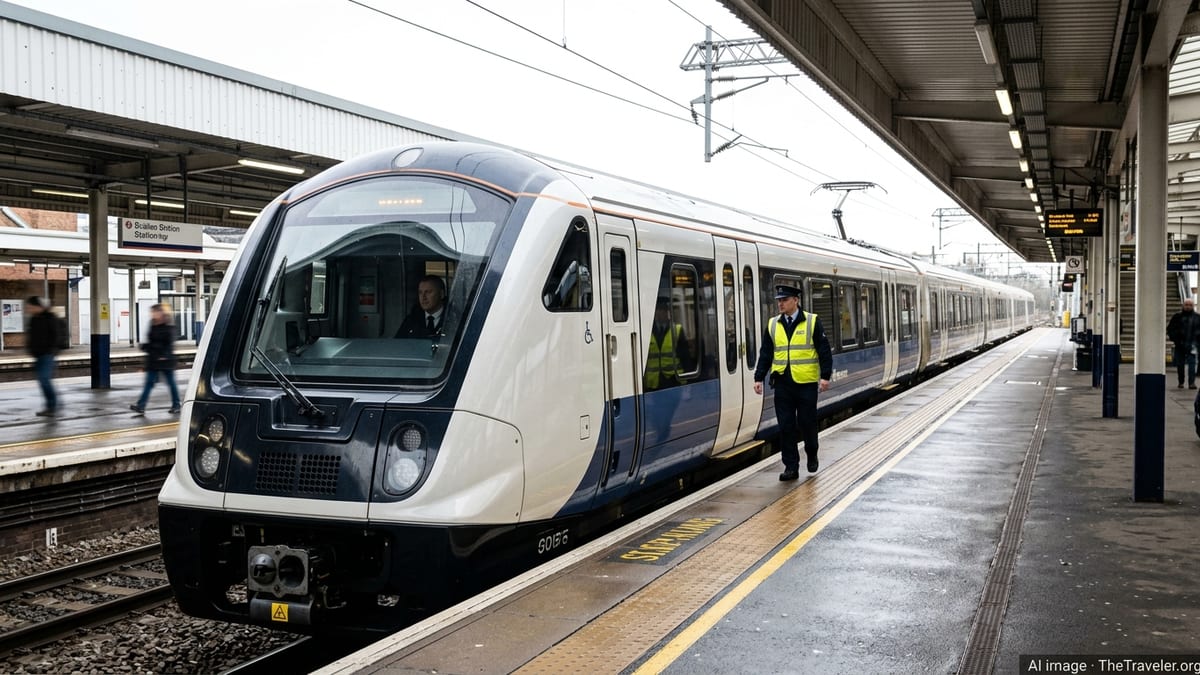
Severe weather grounds services across North West routes
Publicly available information from Northern and Network Rail indicates that Storm Boelo is causing major disruption on routes across North West England on Sunday, 25 October 2026, with the operator advising customers to avoid all but essential journeys and in many cases not to travel at all. The warning covers key commuter and intercity corridors linking Manchester, Liverpool, Wigan, Preston, Blackpool and Cumbria.
Weather forecasts from the Met Office show widespread gusts of 50 to 60 miles per hour across northern England, with higher speeds possible in exposed locations, alongside periods of intense rainfall. These conditions are contributing to fallen trees, debris on the lines and a heightened risk of flooding on low-lying track sections, prompting precautionary speed restrictions and short-notice service cancellations.
Network Rail’s regional updates describe engineers working along multiple stretches of the network to remove fallen branches, inspect overhead line equipment and assess embankments and cuttings for signs of waterlogging or instability. With disruption expected to continue through the day and into the evening, planners have warned that timetables will remain highly fluid, with some routes closed until safety checks are completed.
Local and national media coverage shows that the rail disruption forms part of a wider pattern of weather-related impacts from Storm Boelo, including road closures due to fallen trees, localised flooding and interruptions to power supplies in parts of the North West.
“Do not travel” message reflects lack of alternatives
The strength of Northern’s language reflects both the scale of the weather system and the lack of practical alternatives for keeping passengers moving. According to regional news reporting, the operator has made clear that rail replacement buses are not being provided on many affected routes in the North West, citing both the severity of the conditions and limited vehicle and driver availability.
Without substitute road transport, travellers who choose to set out face a significant risk of being stranded at intermediate stations as services are cancelled or curtailed without notice. Journey planners and departure boards are being updated throughout the day, but published coverage indicates that many trains are not running at all on some lines, while others are subject to severe delays.
Information carried by national rail updates shows that disruption is not limited to Northern. Other operators that share infrastructure in the region, including long distance and regional services north of Preston and across the Pennines, are also affected by high winds and heavy rain, contributing to crowded remaining services and complex diversion patterns where lines remain open.
Travel commentary notes that journey times for any trains still operating in the warning area are likely to be significantly extended by speed restrictions imposed to reduce the risk from fallen trees, airborne debris and potential track obstructions.
Met Office warnings and expected storm trajectory
According to the Met Office’s latest warning map, yellow weather alerts for wind and rain are in force across much of northern England on Sunday, with an amber warning for stronger winds focused further north. The accessible warning text highlights the likelihood of travel disruption, including longer journey times or cancellations on road, rail, air and ferry services, as well as a risk of power cuts and fallen trees.
Rainfall totals across parts of the warning area are forecast in the range of 25 to 30 millimetres widely, with 50 to 60 millimetres possible over higher ground within a relatively short period. This raises the risk of surface water flooding on railway cuttings, underpasses and rural sections where drainage systems may already be saturated following earlier unsettled weather.
Storm Boelo follows closely behind Storm Austen, which affected more southerly parts of the United Kingdom earlier in the weekend. Published summaries of the current European windstorm season indicate that advance warnings were issued several days ahead of Boelo’s arrival, allowing rail operators and infrastructure managers to plan preemptive line closures, implement network-wide speed restrictions and position response teams along vulnerable corridors.
Meteorological outlooks suggest that winds will gradually ease later on Sunday into Monday, but rail industry advisories warn that checks and repairs to infrastructure could mean continued disruption into the start of the working week on some routes, even after weather warnings expire.
Impact on travellers and options for rebooking
Passenger information shared by Northern indicates that customers with tickets dated for Sunday in the affected North West area are being offered flexibility to travel on alternative days when services are running more reliably. In line with standard disruption policies used during severe weather, advance tickets may be accepted on different trains, and some operators are relaxing time restrictions on off-peak tickets, although the exact arrangements vary by route and ticket type.
Publicly available guidance from National Rail suggests that travellers who decide not to travel because of the disruption may be able to claim a full refund on unused tickets from their original retailer, without the usual administration fee, where a “do not travel” message is in place. Passengers who attempt their journey but are delayed are generally advised to use the national Delay Repay schemes, which provide compensation based on the length of delay, subject to each operator’s specific thresholds.
Consumer advice services stress the importance of keeping any receipts for additional costs such as last-minute accommodation or alternative transport, although reimbursement for consequential losses is not guaranteed under standard rail conditions of carriage. Travellers are encouraged to check the latest terms offered by individual operators and, where applicable, by any separate travel insurance policies.
Travel writers note that those with time-sensitive connections, including flights or international rail services, face particular uncertainty when domestic feeder trains are disrupted by storms. In the case of Storm Boelo, published coverage shows that some airlines and airports are also experiencing weather-related delays and cancellations, further complicating contingency planning for passengers.
Advice for visitors and future journeys
For domestic and international visitors in the North West, the present disruption highlights the need to build flexibility into rail-based itineraries during the autumn and winter storm season. Travel planning resources point to the value of checking both rail service updates and national weather warnings on the morning of travel, rather than relying solely on tickets booked weeks in advance.
Tourism and accommodation providers across the region are monitoring the situation, with some publicly advising guests arriving by train to confirm their travel options before checking out of hotels or short term rentals. In destinations such as Manchester, Liverpool and the Lake District, local attractions and events may also be affected by high winds and heavy rain, increasing the benefit of holding cancellable reservations where possible.
Commentary from transport analysts suggests that operators and infrastructure managers are likely to review Storm Boelo’s impact as part of a broader effort to make the rail network more resilient to extreme weather. Recent storms in the UK have prompted investment in vegetation management, drainage improvements and updated wind monitoring on exposed structures such as viaducts and coastal sections of track.
In the meantime, publicly available statements from the rail industry consistently urge passengers in the North West to avoid non essential travel on Sunday and to expect residual disruption into Monday, reinforcing Northern’s central message that staying off the network during the height of Storm Boelo remains the safest and most reliable option.