


More news on this day
Hundreds of passengers faced long waits and missed connections at King Abdulaziz International Airport in Jeddah and King Fahd International Airport in Dammam after 189 flights were delayed and 6 were canceled, disrupting services on busy routes to Dubai, Cairo, Riyadh, Amman, and Abu Dhabi.
Get the latest news straight to your inbox!
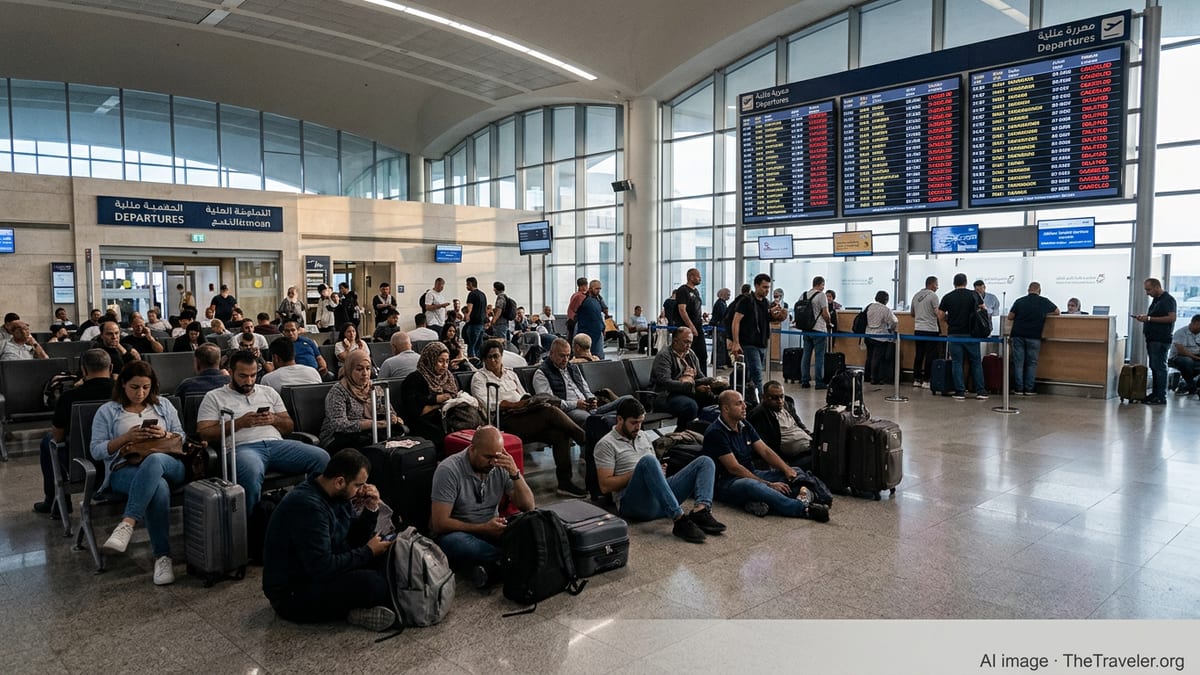
Delays Sweep Through Jeddah and Dammam Hubs
The disruption, reported in the early hours of the day, affected a mix of domestic and international services at Saudi Arabia’s key western and eastern gateways. Publicly available aviation data and regional travel coverage indicate that operations at both King Abdulaziz and King Fahd International remained technically open, yet heavily constrained by delays cascading across departure and arrival banks.
King Abdulaziz International in Jeddah, one of the kingdom’s busiest hubs, saw the largest concentration of late-running services. The backlog quickly translated into crowded departure halls, slower check in and security queues, and growing pressure on ground handling as delayed aircraft remained out of position for subsequent rotations.
King Fahd International in Dammam also registered a significant number of disruptions, with late departures and knock on schedule changes spreading through the day. Data from regional aviation trackers and travel industry outlets suggest that while only a handful of services were fully canceled at each airport, the far higher volume of delays created an uneven and unpredictable operating pattern for travelers.
The figures emerge against a wider backdrop of regional aviation strain. Recent travel advisories describe Saudi airports as operational but vulnerable to knock on effects from airspace constraints and schedule adjustments across the Middle East, underscoring how quickly conditions can shift for passengers transiting Gulf hubs.
Major Carriers Affected, From Saudia to Emirates and Qatar Airways
The latest disruption wave at Jeddah and Dammam did not center on a single airline. Reports indicate that national carrier Saudia, along with Emirates, Qatar Airways and other regional operators, all experienced schedule changes affecting connections to neighboring Gulf states and key North African and Levant destinations.
Saudia, which has been gradually rebuilding its regional network after earlier March suspensions, recently announced the resumption of daily flights from Jeddah to Dubai, Abu Dhabi and Amman. The new irregularities show how fragile that recovery remains, with published timetables still highly sensitive to external constraints and shifting traffic flows.
Emirates and Qatar Airways, both central to long haul connectivity for Saudi passengers, were also part of the affected roster. Publicly available information points to disrupted services on routes feeding into their respective hubs, which in turn complicated onward journeys to Europe, Asia and the Americas for those relying on tight transfer windows.
The situation follows a sequence of recent reports highlighting flight cancellations and delays across Gulf gateways involving FlyDubai, Air Arabia, Saudia, Gulf Air and others. Taken together, the incidents highlight a region wide operating environment in which even airports that remain open can experience severe day to day volatility in performance.
Key Routes to Dubai, Cairo, Riyadh, Amman and Abu Dhabi Hit
The impact for travelers was most visible on some of the Middle East’s busiest corridors. Aviation data and media coverage show that services linking Jeddah and Dammam with Dubai, Cairo, Riyadh, Amman and Abu Dhabi were all affected to varying degrees, disrupting a mix of business, leisure and pilgrimage journeys.
Flights to Dubai and Abu Dhabi are critical connectors for passengers heading on to long haul destinations, particularly as carriers in the United Arab Emirates operate large global networks. Delays on these sectors can trigger missed connections and forced rebookings, leaving passengers in holding areas for hours while airlines reconstruct itineraries around limited available seats.
Cairo and Amman, both significant origin and destination markets for Saudi residents and visitors, also saw interruptions. Travel industry reports in recent days have highlighted similar patterns of disruption at Cairo International Airport and Queen Alia International, meaning some passengers faced compounded challenges at both ends of their journey.
On domestic routes, flights between Jeddah, Riyadh and other Saudi cities have already been under pressure from earlier waves of cancellations and delays this month. The fresh disruptions at King Abdulaziz and King Fahd risk intensifying congestion on these internal links, particularly where aircraft and crew are required to operate tight turnarounds between domestic and international sectors.
Passengers Confront Long Queues, Missed Connections and Limited Options
For travelers on the ground, the statistics translated into long periods of uncertainty inside terminals. With 189 services running late, departure boards at both airports showed rolling revisions as estimated times were repeatedly pushed back while airlines adjusted aircraft routing, awaited updated clearances or coordinated with destination airports managing their own bottlenecks.
Travel coverage describes passengers stuck for extended stretches in waiting areas, with some attempting to rebook at crowded service desks as seats on alternative services quickly filled. Others faced the prospect of overnight stays when onward connections from Dubai, Abu Dhabi, Doha or Cairo could no longer be met, especially on long haul itineraries that operate once daily.
Standard advice from airlines and airports across the region in recent weeks has emphasized checking flight status before leaving for the terminal and relying on official communication channels for updates. The latest disruptions at Jeddah and Dammam suggest that even passengers who arrived with confirmed bookings could be subject to sudden changes as conditions evolved throughout the day.
The uneven pattern of delays and limited outright cancellations also created a complex picture for travel planners. While the majority of flights eventually departed, the knock on timing shifts raised issues around duty times for crew, gate availability and baggage handling, making it more challenging for airlines to restore normal operations in subsequent waves.
Ongoing Regional Strain Keeps Outlook Uncertain
The events at King Abdulaziz and King Fahd International Airports form part of a broader period of turbulence for Middle East aviation. Over recent days, aviation intelligence providers and travel media have tracked hundreds of delays and dozens of cancellations across Saudi Arabia, the United Arab Emirates, Egypt, Qatar and Bahrain, reflecting a tightly stretched operating environment.
Advisories compiled this week describe several carriers in the region as operating restricted or limited schedules on select routes, with many services still labeled as subject to change. Some airlines have temporarily suspended flights to specific Gulf and Levant destinations or capped capacity on certain corridors, intensifying pressure on the routes that remain open.
Saudi airports have continued to issue broad passenger guidance encouraging travelers to verify their itineraries directly with airlines and allow additional time at the airport, particularly when connecting via other regional hubs. Publicly available information indicates that, while core infrastructure at Jeddah and Dammam remains functional, operational resilience is being tested by the cumulative effect of rolling delays.
With airlines in Saudi Arabia and neighboring states still in the process of rebalancing schedules, the latest figures from King Abdulaziz and King Fahd highlight how quickly disruption on a single day can ripple through networks. For passengers planning upcoming trips through Jeddah or Dammam, industry observers note that flexibility, close monitoring of booking details and readiness for last minute changes remain essential as the regional aviation picture continues to evolve.