


More news on this day
International travel advisories have tightened sharply after a deadly strike on Riyadh’s King Khalid International Airport, prompting governments to warn against using the Saudi capital’s main gateway and urging travelers to reassess plans across the kingdom.
Get the latest news straight to your inbox!
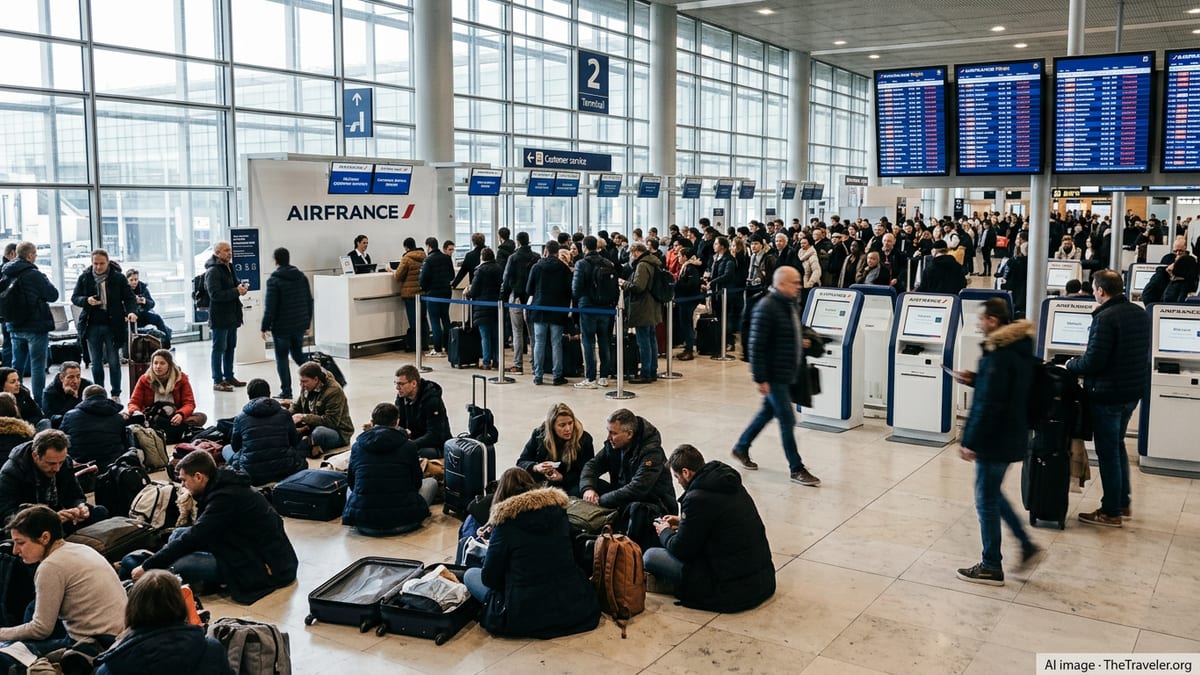
Deadly airport strike triggers wave of new alerts
Published coverage indicates that at least a dozen people were killed and more than 300 injured when a projectile struck King Khalid International Airport on October 10, 2026, causing extensive damage to passenger areas and forcing an immediate closure of the facility. The attack, described by regional media as the deadliest in Saudi Arabia in more than a decade, came amid a renewed campaign of missile and drone fire linked to Yemen’s Houthi movement against Saudi targets.
Reports from international outlets note that King Khalid International Airport, the country’s primary international hub serving the capital Riyadh, has been hit multiple times in recent days, with subsequent incidents adding to the casualty toll and disrupting operations across several terminals. Imagery shared by broadcasters shows smoke and flames rising from airport buildings, while airlines have diverted or cancelled flights as damage assessments continue.
The latest strike follows months of heightened regional tension and repeated warnings that airports, energy facilities and other infrastructure in Saudi Arabia could be targeted. Since mid-July 2026, open-source reporting has tracked a series of missile and drone launches toward Saudi territory, several of them directed at airfields including Riyadh, Abha and other regional gateways.
In the immediate aftermath of the weekend attack, Saudi aviation authorities announced an extension of the airport’s closure, with commercial traffic suspended or re-routed. Airlines serving Riyadh have been adjusting schedules, with some long haul services rerouted through Jeddah or international hubs outside the kingdom while security reviews and damage repairs are carried out.
Foreign ministries toughen travel advisories
Government travel portals in several countries moved quickly to update their guidance, reflecting the deteriorating security picture for air travel in and out of Saudi Arabia. An updated advisory issued by the United States on October 10 maintains a Level 3 “Reconsider travel” notice for Saudi Arabia, citing the risk of drone and missile attacks, armed conflict and terrorism. According to publicly available information, the advisory highlights that U.S. government employees now require special authorization to use King Khalid International Airport and recommends that private travelers take similar precautions.
The United Kingdom’s Foreign, Commonwealth and Development Office has also tightened its stance, noting a “serious incident” at King Khalid International Airport at around 15:00 local time on October 10. Revised guidance advises against all but essential travel to airports across Saudi Arabia, with a specific recommendation that British nationals avoid King Khalid International Airport until it is deemed secure. Earlier updates had already extended caution zones to several provinces and major cities due to missile and drone activity.
Australia’s Smartraveller service now advises travelers not to use King Khalid International Airport and to “reconsider” travel to other Saudi airports following what it describes as ongoing military strikes and reprisal attacks affecting transport hubs. Similar language appears on New Zealand’s SafeTravel platform, which warns that security incidents have been disrupting operations at Riyadh’s main airport and may continue to cause sudden airspace closures and cancellations.
These advisories do not amount to a blanket ban on travel to Saudi Arabia in many cases, but they do significantly raise the threshold for what is considered essential. Insurance coverage can also be affected when travelers enter areas or use facilities that their home governments explicitly advise against, a point that several foreign ministries underline in their warning pages.
What the warnings mean for current and future trips
The rapid escalation in official guidance has immediate practical consequences for travelers already in Saudi Arabia or holding tickets to, from or through Riyadh. Public advice from foreign ministries and consular services consistently stresses that passengers should check directly with airlines before leaving for any Saudi airport, as schedules may change at short notice and terminals could close temporarily during security alerts or further attacks.
Some governments, including the United Kingdom, suggest that travelers consider alternative routings that avoid Saudi airports altogether, for example by transiting through neighboring hubs in Bahrain, Qatar, Kuwait, the United Arab Emirates or Jordan. For those who must remain in or travel through Saudi Arabia, official guidance emphasizes minimizing time spent at airports, remaining alert to public announcements and being prepared to move quickly to designated shelters or interior areas in the event of incoming fire or intercept debris.
Travelers are also being reminded that restrictions on the movements of foreign government staff often serve as a benchmark for wider risk. The current U.S. advisory, for example, details specific limits on where U.S. government employees can go within Saudi Arabia, including requirements for special authorization when using Riyadh’s airport or visiting certain provinces near the Yemen border. While these rules apply only to official personnel, consular services recommend that private citizens weigh them carefully when making their own plans.
Flight disruption is expected to ripple beyond the immediate blast zone at Riyadh’s airport. Airlines that relied on the Saudi capital as a connecting point have been adjusting networks, and regional carriers are balancing safety concerns with the demand to repatriate citizens and residents who wish to leave. Travelers may face longer journeys involving overland segments or multi stop itineraries as the situation evolves.
Security outlook for air travel in Saudi Arabia
Publicly available analyses from security and aviation experts indicate that airports across Saudi Arabia remain potential targets as long as the regional conflict continues. Open source reporting from foreign ministries notes that the Houthi movement has explicitly threatened to hit Saudi airports and airspace, with some exceptions for religious hubs in Mecca and Medina. The pattern of strikes against both international and domestic terminals over recent months has reinforced those concerns.
Government advisories currently highlight a heightened threat environment not only around Riyadh but also in southern provinces bordering Yemen, as well as in cities such as Jeddah, Dammam and Taif. Some countries now advise against all travel within a certain distance of the Yemen frontier and against all but essential travel to several provinces where missile and drone activity has been most intense.
While many flights into Saudi Arabia are still operating, the risk profile is shifting rapidly and may change again if there are further attacks or new political developments. Authorities in multiple countries are reviewing their guidance frequently, sometimes updating advisory pages within hours of new incidents. Travelers planning trips months ahead are being urged to monitor these official channels regularly rather than relying on conditions at the time of booking.
Insurance and airline policies are also likely to adapt as the situation unfolds. Some insurers may decline cover for trips that contravene specific national travel warnings, while carriers may continue to adjust timetables, routings and aircraft deployments in response to security assessments. Passengers holding flexible tickets or comprehensive travel insurance with clear provisions for security related disruptions may be better placed to respond if circumstances deteriorate further.
Practical steps for travelers considering Saudi routes
For would be visitors, transit passengers and residents weighing whether to fly through Saudi Arabia in the coming weeks, the dominant message from official guidance is caution. Travelers are advised to check the latest advisories from their own governments, verify flight status with airlines close to departure and maintain alternative plans in case an airport closure or new attack makes a route unusable at short notice.
Those who decide to proceed with travel are encouraged to register their presence with their embassy or consulate where such services exist, to keep copies of key documents accessible and to ensure that friends or family know their itineraries. Simple measures such as carrying a small bag with essential items, portable power and any necessary medication can help if passengers are required to shelter for extended periods or are diverted to an unexpected destination.
For now, the deadly strike at Riyadh’s King Khalid International Airport has transformed a long recognized but often abstract risk into a stark reality for air travelers in and around Saudi Arabia. How quickly confidence returns to this major Gulf hub will depend not only on physical repairs to terminals and runways, but also on whether the broader security environment stabilizes enough for foreign ministries to scale back the warnings that have intensified in its wake.