


More news on this day
Operational restrictions at several Saudi Arabian airports have disrupted at least 180 flights involving Bangladesh routes, leaving 23,085 passengers facing cancellations, extended delays and uncertain travel plans, according to recent aviation data from Dhaka.
Get the latest news straight to your inbox!
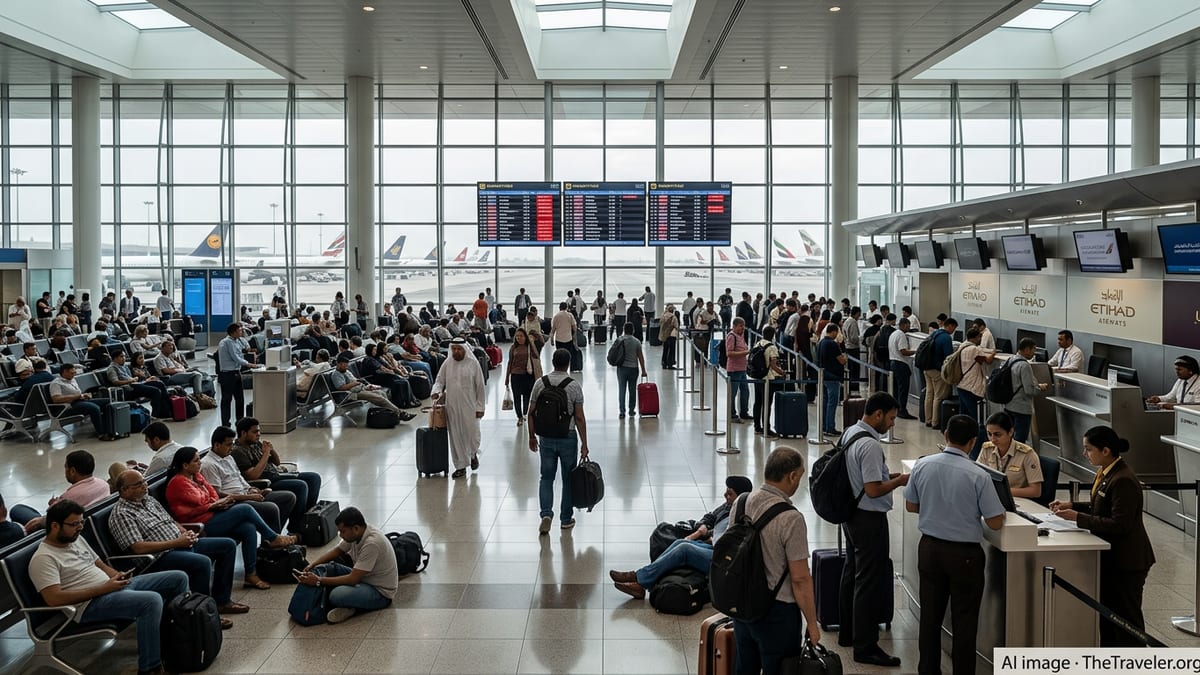
Saudi airport restrictions ripple across Bangladesh routes
Recent operational limits at airports in Saudi Arabia have significantly reduced available slots for carriers operating to and from the kingdom. Publicly available flight-management figures compiled by the Civil Aviation Authority of Bangladesh indicate that, as of this week, 180 direct and transit flights linked to Saudi Arabia have been disrupted, affecting 23,085 ticketed passengers on Bangladesh routes.
The bulk of the disruption has been recorded on high-demand corridors connecting Dhaka and Chattogram with Jeddah, Riyadh, Dammam and Madinah. These routes are heavily used by migrant workers, business travelers and religious visitors heading to Saudi Arabia for Umrah or for onward connections to other Gulf and European destinations.
Local media in Bangladesh report that cancellations accelerated after Saudi airports began tightening operating windows and limiting certain arrivals and departures. Airlines serving the market have had to trim schedules, consolidate services or temporarily suspend particular rotations as they compete for fewer available slots into key Saudi gateways.
While some services continue to operate, the overall reduction has been sharp enough that tens of thousands of passengers in Bangladesh, many of whom had booked months in advance, are now attempting to secure alternative flights at short notice.
Migrant workers and Umrah pilgrims hardest hit
The disruption has fallen disproportionately on Bangladeshi migrant workers who were scheduled to depart for jobs in Saudi Arabia. Travel industry representatives in Dhaka describe crowded airline desks and recruitment offices where workers are seeking new itineraries before their visas or reporting dates expire.
Many of these travelers had financed their tickets and placement costs through loans or family savings. With flights cancelled or postponed, they face the risk of delayed employment start dates and additional accommodation and living expenses while they wait for new seats to become available.
Umrah pilgrims have also been heavily affected. October and November traditionally see strong religious travel flows between Bangladesh and Saudi Arabia, and reports from Dhaka’s Hazrat Shahjalal International Airport highlight groups of pilgrims waiting for updates after overnight cancellations to Jeddah and Madinah. Some tour operators are working to reroute clients through alternative Gulf hubs where connections into Saudi Arabia remain available, but capacity is limited and fares have risen compared with earlier in the season.
Passengers who had planned to combine religious travel with visits to relatives in the kingdom report last-minute changes in their itineraries, including shortened stays or deferred trips. For families who travel only once every few years, the loss of a long-anticipated journey has added a personal dimension to what began as an operational issue.
Airlines reshuffle schedules and add limited extra services
Several carriers serving Bangladesh–Saudi Arabia routes have responded by adjusting timetables, swapping aircraft types and, in some cases, operating additional flights where permissions are granted. Publicly available schedules show that some Dhaka–Jeddah frequencies have been consolidated onto widebody aircraft to accommodate more disrupted passengers on fewer departures.
Local coverage indicates that selected extra services have been mounted from Dhaka to Jeddah to ease the backlog, while other city pairs remain suspended or reduced. Airlines are prioritizing travelers with imminent visa or work-reporting deadlines, as well as those who have already experienced multiple cancellations.
Despite these efforts, the total number of affected passengers still far exceeds the seats that can be made available in the short term. Travel agents in Dhaka report that rebooking windows can stretch several days, particularly for those insisting on nonstop options into Riyadh or Dammam. Some travelers are accepting itineraries that route them via secondary airports or involve overnight layovers at third-country hubs to reach their final destinations in Saudi Arabia.
Industry analysts note that the situation underlines how quickly regional capacity can tighten when a major aviation market adjusts its operating conditions. With Saudi Arabia serving as both a destination and a transit point for South Asian travelers, changes at a handful of airports can quickly cascade across schedules in neighboring countries.
Passenger rights, refunds and practical options
With thousands stranded or facing long waits, questions over refunds and rebooking rules have come to the forefront. Airlines operating between Bangladesh and Saudi Arabia are applying a mix of policies, often shaped by the reason for the disruption and the type of ticket purchased. Publicly available notices from multiple carriers on affected routes refer to options such as free date changes within a set validity period, the possibility of rerouting to alternate Saudi cities and, in certain cases, full refunds.
Passengers holding nonrefundable tickets have been advised in local media reports to check whether their journeys qualify for travel waivers linked specifically to the Saudi airport restrictions. When disruptions are categorized as operational or safety-related, some airlines offer more flexible change terms than would normally apply, particularly on routes with large numbers of migrant workers and group bookings.
Consumer advocates in the region point out that travelers’ legal protections vary depending on the operating airline and the jurisdictions involved. For itineraries that include European carriers or segments departing from the European Union, additional compensation rules may apply, while flights operated solely between Bangladesh and Saudi Arabia are governed by different frameworks and bilateral agreements.
Industry commentary also highlights the importance for travelers of monitoring airline announcements closely, keeping contact details up to date in booking records and confirming flight status before traveling to the airport. With schedules continuing to change at short notice, many carriers are emphasizing digital notifications through apps, text messages and email as primary channels for updates.
Outlook for Saudi-bound travel from Bangladesh
Aviation data and regional news coverage suggest that disruptions linked to Saudi airport restrictions remain fluid, with no clear public timeline for a full return to normal traffic patterns on Bangladesh routes. Airlines are reviewing schedules on a rolling basis as they receive updates on available slots and operating hours at Saudi airports.
Travel specialists in Dhaka expect that demand will stay strong for seats to Jeddah, Riyadh, Dammam and Madinah due to ongoing labor contracts and religious travel. As a result, even incremental relaxations in airport restrictions are likely to be absorbed quickly by backlogged passengers, keeping load factors high for weeks after any improvement in operating conditions.
For now, publicly available information indicates that affected travelers are being re-accommodated in phases, with priority given to those whose original departure dates have already passed. Some recruitment agencies and large corporate employers are coordinating directly with airlines to manage group bookings and align travel dates with work-reporting obligations in Saudi Arabia.
Until clearer guidance emerges on the duration of the current operating limits, prospective travelers from Bangladesh are being encouraged by local industry voices to build additional flexibility into their plans, consider a wider range of routing options and prepare for the possibility of last-minute schedule adjustments when flying to or through Saudi Arabia.