


More news on this day
Saudi Arabia has stepped up a new round of regional diplomacy alongside Egypt, Qatar, the United Arab Emirates, Turkey, Pakistan, Russia and others, seeking to halt a feared second wave of open conflict between Israel and Iran and protect fragile tourism recoveries across the Middle East.
Get the latest news straight to your inbox!
Regional Powers Rally To Contain Renewed Tensions
Publicly available information shows that governments across the Middle East are working to prevent the latest flare-up in the wider war involving Iran, Israel and the United States from sliding back into direct confrontation. Saudi statements in early June 2026 have emphasized the need to avoid further escalation after fresh Iranian attacks on regional targets and to return to diplomacy as the primary channel for resolving disputes.
Coverage in regional outlets indicates that this diplomatic push is not occurring in isolation. Analysts describe a loose but increasingly coordinated front involving Saudi Arabia, Egypt, Qatar, the UAE, Turkey and Pakistan, with Russia positioning itself as an additional international backer for negotiations. Their shared objective is to lock in talks before ceasefire violations and cross-border strikes evolve into a decisive new round of hostilities.
Think tank analysis notes that the 2026 phase of the Iran war, triggered by renewed US-Israeli strikes and Iranian responses across the Gulf, has already reshaped security alignments. In this environment, regional governments are seeking greater agency, pressing for dialogue that reduces the likelihood that decisions taken in Washington, Tehran or Tel Aviv will again spill over into their airspace, ports and tourism economies.
Pakistan-Backed Negotiations Gain Saudi and Qatari Support
According to recent reporting, Pakistan has emerged as an important diplomatic venue, hosting senior envoys from Saudi Arabia, Egypt and Turkey for consultations on a framework to move the warring parties toward structured talks. Islamabad has also signaled its willingness to host direct discussions aimed at ending the US-Israel war on Iran, positioning itself as a bridge between Gulf partners and Tehran.
Saudi Arabia has publicly aligned itself with these efforts, with recent statements highlighting the importance of continuing what are described as constructive negotiations sponsored from Pakistan. Saudi officials have framed this track as essential to sparing the region from a renewed slide into war and to restoring a basic level of security and stability that can underpin economic recovery.
Qatar and the UAE are playing complementary roles. International coverage notes that Qatar has dispatched mediators to Tehran in recent weeks in support of broader efforts to reopen vital sea lanes and reduce the risk of miscalculation around the Strait of Hormuz. Diplomats from the UAE have echoed calls for restraint while also warning that Iran’s calculus must take into account the region-wide consequences of further escalation.
Russia’s involvement is primarily focused on the nuclear and security dimensions, with Moscow presenting itself as a possible facilitator for technical arrangements, such as handling enriched uranium stocks. While its interests extend beyond tourism, any successful de-escalation brokered with Russian participation would help stabilize flight paths, cruise itineraries and energy-linked business travel that pass through the wider region.
Tourism Recovery Under Threat From New Escalation
Tourism boards and industry groups across the Middle East have been attempting to rebuild after successive shocks, including the pandemic, the Gaza conflict, and the first Twelve-Day War between Israel and Iran in 2025. The ceasefire that followed allowed for a measured rebound, with destinations such as Saudi Arabia, the UAE, Egypt and Qatar investing heavily in new visitor infrastructure and marketing campaigns aimed at diversifying their economies.
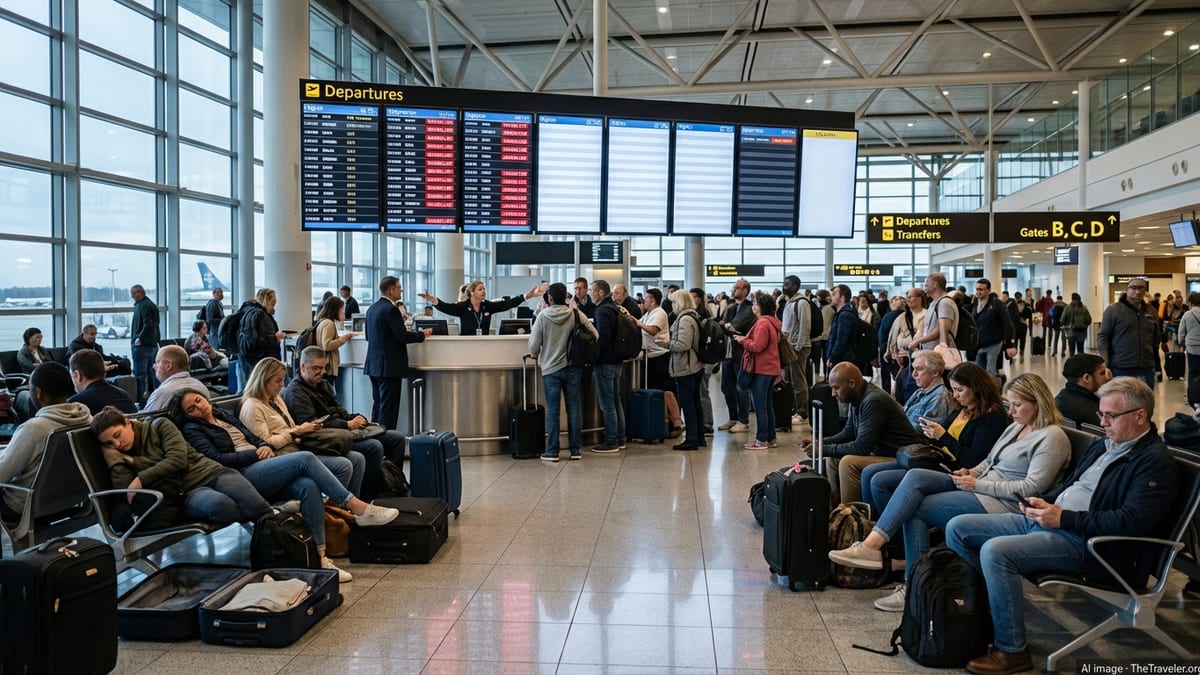
The renewed fighting that erupted in early 2026 has already disrupted those plans. Reports on the economic fallout describe airlines rerouting or cutting services, cruise operators adjusting itineraries away from sensitive waters, and travelers postponing or cancelling trips amid images of missile strikes and refinery fires. Rising insurance premiums and volatility in fuel prices have added additional pressure to carriers and tour operators.
Travel analysts warn that a second, more protracted phase of open conflict between Israel and Iran would likely depress arrivals across the region, not only to countries directly involved in the fighting. Previous crises have shown that many international visitors view the Middle East as a single travel geography, meaning that tensions in one corridor can quickly lower demand in destinations hundreds or even thousands of kilometers away.
For governments pursuing ambitious visitor targets, this risk is acute. Saudi Arabia’s drive to attract tens of millions of tourists by the end of the decade, Egypt’s efforts to revive Red Sea and Nile tourism, and Qatar and the UAE’s push to consolidate their roles as global aviation hubs all rely on perceptions of relative stability. Preventing a second round of large-scale conflict is therefore framed not just as a security imperative but as an economic one.
Air Routes, Pilgrimage, and Cross-Border Travel in the Balance
One of the most immediate concerns for the travel sector is the reliability of air corridors that crisscross the Gulf, Levant and Red Sea. During recent escalations, airlines temporarily avoided certain flight paths and, in some cases, suspended services altogether on routes seen as particularly exposed to missile or drone activity. Each disruption echoes across booking systems, tour packages and corporate travel plans.
The stakes are especially high for religious travel. Saudi Arabia hosts millions of pilgrims each year for Hajj and Umrah, with many arriving via connecting flights from hubs in the UAE, Qatar and Turkey. Any intensification of the conflict that leads to airspace closures or heightened security restrictions along these corridors could sharply complicate travel planning for pilgrims and travel agencies alike.
Cross-border land travel has also been affected. Overland routes that link Gulf states with the Levant and Turkey, and ferry lines across the Red Sea, are sensitive to perceptions of risk around ports, pipelines and maritime chokepoints. Regional governments are therefore keen to insulate these vital arteries from the wider confrontation, both to protect trade and to sustain the growing niche markets of road trips, overland tours and religious tourism by bus.
By lending political weight to de-escalation initiatives, Saudi Arabia, Egypt, Qatar, the UAE, Turkey and Pakistan are effectively seeking to reassure carriers, investors and travelers that they can plan ahead without fearing sudden, severe disruption. Even incremental progress in talks can translate into fewer route suspensions and more confidence in future bookings.
Prospects for a Diplomatic Outcome and Travel Revival
Specialist commentary suggests that the current diplomatic push differs from earlier crises in one important respect: regional states are acting less as bystanders and more as agenda setters. Meetings among the foreign ministers of Saudi Arabia, Egypt, Turkey and Pakistan in recent months have underscored a shared preference for dialogue, even as each country maintains distinct relationships with Washington, Tehran and Tel Aviv.
The road ahead remains uncertain. Deep mistrust between Iran and Israel, the involvement of major powers, and the legacy of previous clashes all complicate the search for a durable settlement. However, the convergence of interests around protecting trade routes, energy exports and tourism income provides a strong incentive for regional actors to keep pressing for talks and to resist steps that could trigger a wider war.
For the travel industry, any reduction in tensions would be a tangible win. More predictable airspace conditions, fewer maritime disruptions and clearer diplomatic frameworks would all support efforts to relaunch marketing campaigns, reopen suspended routes and revive investment in hotels, resorts and tourism infrastructure. Destinations that have worked for years to reposition themselves as cultural and leisure hubs are watching the negotiations closely.
If current mediation efforts succeed in preventing a second large-scale Israel-Iran clash, the result would not only be a strategic shift in how security is managed in the Middle East. It would also offer a much-needed foundation for rebuilding visitor confidence, allowing the region’s tourism economies to move from crisis management toward sustained growth.