


More news on this day
Air travel across Saudi Arabia has been hit by a fresh wave of disruption as more than 20 flights are cancelled across Riyadh, Jeddah, Dammam and other airports, affecting Saudia and several foreign carriers on key routes to Cairo, Hong Kong, Liege, Damascus and other destinations.
Get the latest news straight to your inbox!
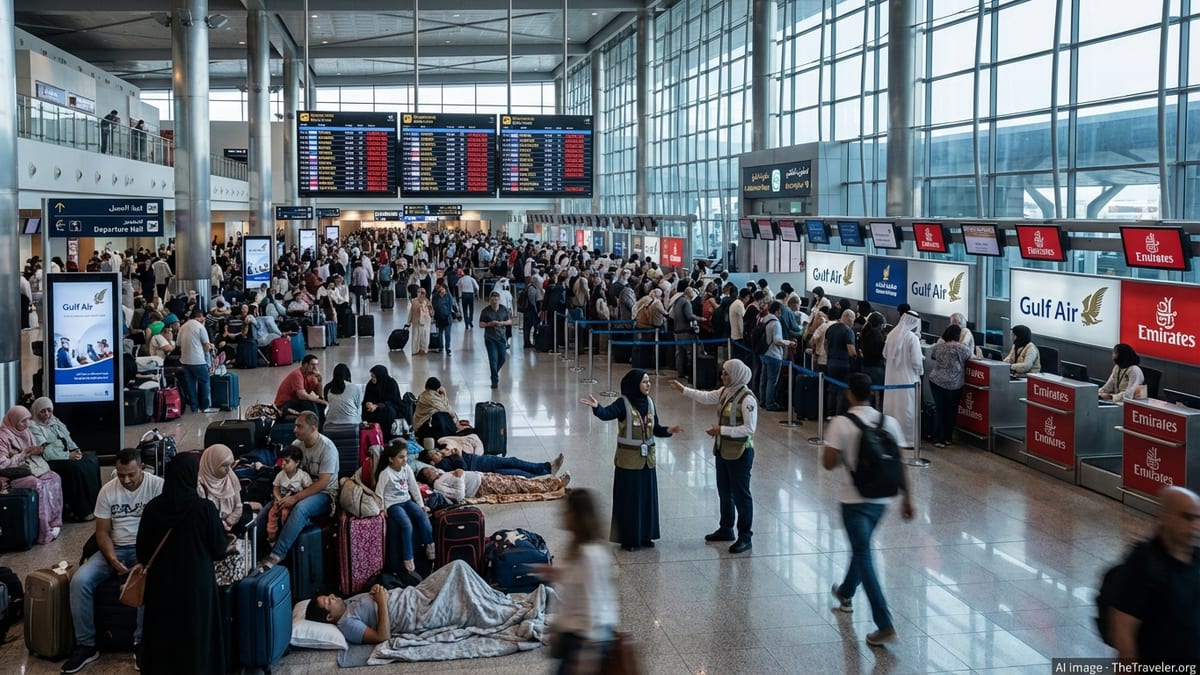
Fresh Cancellations Across Riyadh, Jeddah and Dammam
Publicly available flight-tracking boards for Saudi Arabia’s main hubs on 26 May 2026 show a cluster of cancellations and rolling delays that have intensified the country’s ongoing air travel problems. Live departure and arrival data at King Khalid International Airport in Riyadh, King Abdulaziz International Airport in Jeddah and King Fahd International Airport in Dammam indicate that at least two dozen services have been scrubbed or heavily rescheduled within a single operating window.
The latest disruptions build on weeks of unstable schedules linked to regional security tensions and operational constraints. Flight listings at Jeddah, the country’s largest international gateway and main hub for Saudia, display cancellations on both domestic and international sectors, including services to other Saudi cities and to nearby regional destinations. Similar patterns appear in Riyadh and Dammam, where a mix of national and foreign airlines have removed frequencies or consolidated flights at short notice.
While not every airline has released a detailed explanation for today’s individual cancellations, the pattern fits with broader schedule thinning and sporadic shutdowns that have been visible across Saudi airports through March, April and May. Travel forums and passenger reports describe repeated last-minute changes, particularly on flights serving the Eastern Province and routes feeding into major Gulf and Middle Eastern hubs.
Saudia and Partner Airlines Hit on Strategic Routes
Saudia, the Saudi flag carrier and the dominant operator at Jeddah, is once again at the center of the disruption. Recent timetables and live status feeds show cancellations or significant retimings on several domestic trunk routes linking Jeddah, Riyadh and Dammam, alongside irregularities on long-haul and regional services. The carrier has also been operating certain codeshare and wet-lease services on behalf of partner airlines, meaning a single cancellation can appear under multiple flight numbers and affect a wider pool of passengers.
The current wave of adjustments is impacting high-demand international links, including flights from Saudi Arabia to Cairo, a core market used by labor travelers, religious visitors and leisure passengers. Data from Jeddah’s arrivals and departures screens on Tuesday list a mix of on-time, delayed and cancelled services on the Saudi Arabia–Egypt corridor, with Saudia, Flynas, Flyadeal and foreign airlines all adjusting capacity as conditions evolve.
Farther afield, schedule data for Saudia and its partners show changes on long-haul sectors that connect the kingdom to Asia and Europe, including services associated with Hong Kong and Liege. These flights play a critical role in both passenger itineraries and cargo flows, carrying everything from e-commerce parcels to industrial components. Reductions or day-of-operational cancellations on these routes can ripple through airline networks, causing missed connections and repositioning challenges for aircraft and crews.
Regional routes such as those to Damascus have also seen intermittent disruption. Although frequencies on these corridors are typically lower than to Cairo, they are heavily relied upon by diaspora communities and business travelers. When even a single rotation is cancelled, passengers can face multi-day rebooking delays or costly detours via third-country hubs.
Security Tensions and Operational Strain Behind the Turbulence
The latest cancellations are unfolding against a backdrop of heightened regional instability. In recent months, international coverage has documented missile and drone incidents affecting infrastructure in and around Saudi Arabia and neighboring states, prompting temporary airspace restrictions, rerouted flights and a more cautious operational posture by airlines.
This security environment has coincided with a period of sustained demand for travel to and from the kingdom. Saudi Arabia’s large expatriate population, religious tourism flows and expanding business links have kept pressure on key routes even as carriers attempt to navigate evolving risk assessments. When combined with crew duty-time limits and aircraft positioning constraints, even short-lived airspace disruptions can cascade into a larger wave of cancellations and delays.
Low-cost and full-service airlines alike are feeling the strain. Budget operators using Jeddah and Dammam as gateways have already trimmed frequencies or suspended certain routes earlier in the spring, while legacy carriers have quietly altered schedules and downgauged aircraft where demand and risk calculations no longer align. The result for passengers is a less predictable timetable, where flights that appear bookable weeks in advance may not operate as planned by the time of departure.
Industry observers note that Saudi aviation authorities have been rolling out technology upgrades and procedural changes aimed at improving traffic management and communications between airlines and air navigation services. However, these measures are being tested in real time by the current security situation and by the rapid growth of the country’s air travel market.
How Travelers to Cairo, Hong Kong, Liege and Damascus Are Affected
For travelers, the most immediate impact of today’s cancellations is uncertainty. Passengers booked from Saudi cities to Cairo are reporting rebookings onto later departures or being moved between carriers where interline agreements allow. Those traveling onward from Cairo to African or European cities can face missed connections and forced overnight stays if their first leg from Saudi Arabia does not depart on time.
On longer-haul journeys, such as those involving Hong Kong or Liege, the disruption can be even more pronounced. These routes often form part of multi-stop itineraries that connect Asia, the Middle East and Europe. When a Riyadh or Jeddah sector is cancelled, passengers may need complete itinerary redesigns, sometimes routing via alternative hubs like Dubai, Doha or Istanbul. This adds travel time and complexity and can lead to additional costs for last-minute hotel stays and visa issues.
Travelers heading to or from Damascus face a more limited set of options, since there are fewer direct services and alternative routings typically involve multiple carriers and transit points. Any cancellation on these links can strand passengers for days, especially during peak travel periods when remaining flights are already full.
Families, religious pilgrims and migrant workers are among those most affected by these disruptions. Many have tightly scheduled trips around school calendars, work contracts or fixed religious dates, leaving little flexibility to absorb last-minute changes. The cumulative effect of repeated cancellations, even when spread across multiple airlines, is a sharp reduction in the reliability of air travel in and out of Saudi Arabia for ordinary passengers.
What Passengers Should Do As Disruptions Continue
With flight schedules in flux, the most important step for travelers is to monitor their bookings closely in the 48 hours before departure. Airline apps, airport flight-status boards and third-party tracking platforms can all provide early visibility on whether a flight is operating, delayed or cancelled. In the current environment, relying solely on the original booking confirmation is increasingly risky.
Passengers whose flights are cancelled are generally entitled to a choice between a rebooked itinerary or a refund, with the specific options depending on the ticket type and the airline’s own policies. Given the level of congestion on remaining services, many travelers are choosing to accept substantial layovers or detours simply to maintain their travel dates, particularly on constrained routes to Cairo, Damascus and other regional capitals.
Those planning new trips in the coming weeks may wish to build in additional buffer time at hubs, especially when connecting from domestic Saudi flights to long-haul departures. Allowing longer layovers in Riyadh, Jeddah or Dammam can reduce the risk that a short delay or retiming will result in a missed onward connection. Some travelers are also considering alternate airports or carriers where schedules appear more stable.
While there is no clear indication that the disruption will ease immediately, the pattern of cancellations and rolling schedule changes suggests that Saudi Arabia’s air travel network is likely to remain fragile in the near term. Anyone planning journeys to or from Riyadh, Jeddah, Dammam or other Saudi gateways, particularly on routes to Cairo, Hong Kong, Liege and Damascus, should prepare for the possibility of last-minute changes and stay alert to new updates as airlines continue to adjust operations.