


More news on this day
Air travelers across Saudi Arabia awoke to fresh disruption as Saudia passengers reported a wave of cancellations and schedule changes affecting services from Jeddah, Riyadh and Dammam to major regional hubs including Dubai, Karachi, Islamabad and Hong Kong.
Get the latest news straight to your inbox!
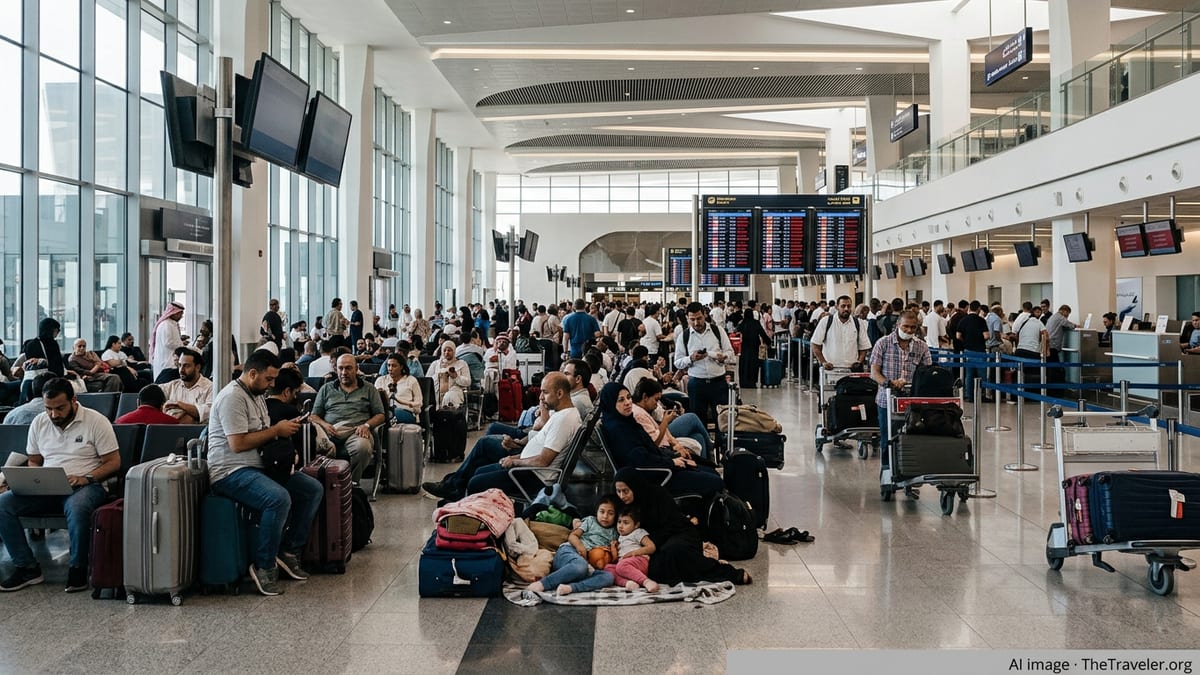
Wave of Disruptions Hits Jeddah, Riyadh and Dammam
Publicly available flight-tracking data and passenger reports indicate that Saudia has cancelled or heavily adjusted more than a dozen services in recent days, concentrating around its main hub in Jeddah and key secondary airports in Riyadh and Dammam. The changes have affected both domestic connections and international links to high-demand markets in the Gulf and South Asia.
Schedules between Jeddah and major cities such as Dubai, Karachi and Islamabad appear particularly volatile, with some rotations removed from timetables at short notice and others operating on altered timings. Travelers using Riyadh and Dammam as domestic connectors into Jeddah are also reporting missed onward connections as knock-on delays ripple through the network.
While individual flight statuses vary by day and route, the pattern points to sustained operational stress across several Saudi gateways rather than isolated technical issues. The disruption comes as the carrier is attempting to rebuild capacity on popular regional sectors while managing a fragile operating environment.
Airports in Jeddah, Riyadh and Dammam are central pillars of the kingdom’s aviation system, handling millions of passengers each month for business, religious travel and tourism. Widespread cancellations at these hubs therefore have an outsized impact on travelers trying to reach or transit through Saudi Arabia.
Regional Tensions and Airspace Constraints Weigh on Operations
Recent months have seen repeated airspace restrictions and route suspensions across the Gulf following heightened regional tensions, creating a challenging backdrop for airlines planning reliable schedules. Public advisories and industry updates have highlighted intermittent constraints affecting corridors over parts of Saudi Arabia and neighboring states, forcing carriers to reroute, reduce frequencies or temporarily halt services.
Saudia has already had to adjust its operations on key routes such as Jeddah and Riyadh to Dubai, after earlier suspensions and phased resumptions that left schedules thinner and more vulnerable to disruption. In this context, any additional operational or safety-related limitation can quickly translate into cascading cancellations when spare capacity is limited.
Other international airlines flying into Riyadh, Dammam and Dubai have also cut or suspended services in recent weeks, underlining that the difficulty is not confined to one carrier. This broader pattern suggests that regional instability and shifting airspace availability continue to exert pressure on Gulf aviation, even as demand for travel shows little sign of easing.
For passengers, the result is a travel environment where flights that appear confirmed weeks in advance can still be removed or retimed at short notice, especially on routes crossing sensitive air corridors or relying on tight domestic connections within Saudi Arabia.
Impact on Key Markets: Dubai, Karachi, Islamabad and Hong Kong
The latest round of Saudia disruptions is being felt most acutely on routes that traditionally carry heavy volumes of business travelers, expatriate workers and visiting families. Services between Saudi airports and Dubai remain under close scrutiny from travelers, after repeated suspensions and limited resumptions left capacity well below pre-crisis norms.
Similarly, flights linking Jeddah with Karachi and Islamabad are crucial for Pakistan’s large diaspora in the kingdom and for pilgrims connecting home after performing Umrah. Reports of cancellations and limited alternative options have pushed some travelers to seek costly last-minute seats on other airlines or to reconfigure journeys via intermediate hubs.
Connections to and from Hong Kong have also been indirectly affected, as some Asian and European carriers maintain suspensions or reduced operations to Riyadh and Dubai, squeezing onward options for passengers who would usually combine Saudia segments with partner airlines. With multiple Gulf and Asian hubs still operating on non-standard schedules, passengers are often facing longer routings and extended layovers.
Travel agents and online booking platforms show a patchwork of availability on these sectors, with some days offering only a fraction of the usual choice of departure times. This limited capacity amplifies the impact of each cancellation, since displaced passengers may struggle to find same-day alternatives at comparable prices.
Passengers Scramble for Rebookings, Refunds and Alternative Routes
In response to the instability, passengers are increasingly turning to rebooking, refund and rerouting options wherever possible. Accounts shared publicly describe travelers being moved to later Saudia departures, switched to different Gulf hubs, or in some cases rebooked on partner or competing airlines when seats are available.
However, with certain routes already operating reduced frequencies, same-day rebookings are often difficult to secure, especially for large families or groups. Travelers connecting from South Asia or Europe through Jeddah or Riyadh report that missed onward legs can mean waits of 24 hours or more before another suitable departure appears.
Consumer guidance circulating online is urging passengers to monitor their flight status repeatedly in the 24 to 48 hours before departure, to ensure contact details are updated in airline bookings, and to consider flexible tickets that allow date changes without high penalties. Some travelers are also opting for routings that include alternative Gulf gateways perceived as less affected, even when travel times are longer.
For those already in Saudi Arabia, domestic rail or road options between Dammam, Riyadh and Jeddah are becoming part of backup plans, particularly when short-haul domestic flights are canceled but long-haul international segments remain intact from a different city.
What Travelers Should Watch in the Coming Days
As of late May 2026, the situation around Saudi airspace and regional connectivity remains fluid, and further timetable changes by Saudia and other carriers cannot be ruled out. Industry observers note that any fresh security flare-up or additional airspace closure could quickly translate into another round of cancellations across multiple hubs.
Travelers planning journeys that involve Jeddah, Riyadh or Dammam in the coming weeks are being encouraged, through publicly available advisories, to build additional time into itineraries and to avoid extremely tight connections, particularly when transiting onward to destinations such as Dubai, Karachi, Islamabad or Hong Kong.
Flexible booking conditions, comprehensive travel insurance and careful selection of routings with multiple daily frequencies are emerging as key tools for mitigating the risk of disruption. Passengers are also paying closer attention to the recent reliability record of specific routes and carriers when choosing between competing options.
While airlines continue adjusting schedules in an effort to balance safety considerations with passenger demand, the current round of Saudia cancellations underlines how sensitive Gulf and South Asian air links remain to regional developments. For now, travelers using Saudi Arabia’s major airports should be prepared for a less predictable experience than they might have expected in more stable times.