


More news on this day
Travel across East and Southeast Asia faced fresh turbulence this weekend as operational data showed at least 65 flights cancelled and 117 delayed on routes touching China, Japan, Indonesia, Singapore, Malaysia and other regional markets, with services operated by Chengdu Airlines, Juneyao, Japan Air Commuter, Batik Air and Garuda Indonesia among those affected and Shanghai emerging as one of the hardest hit hubs.
Get the latest news straight to your inbox!
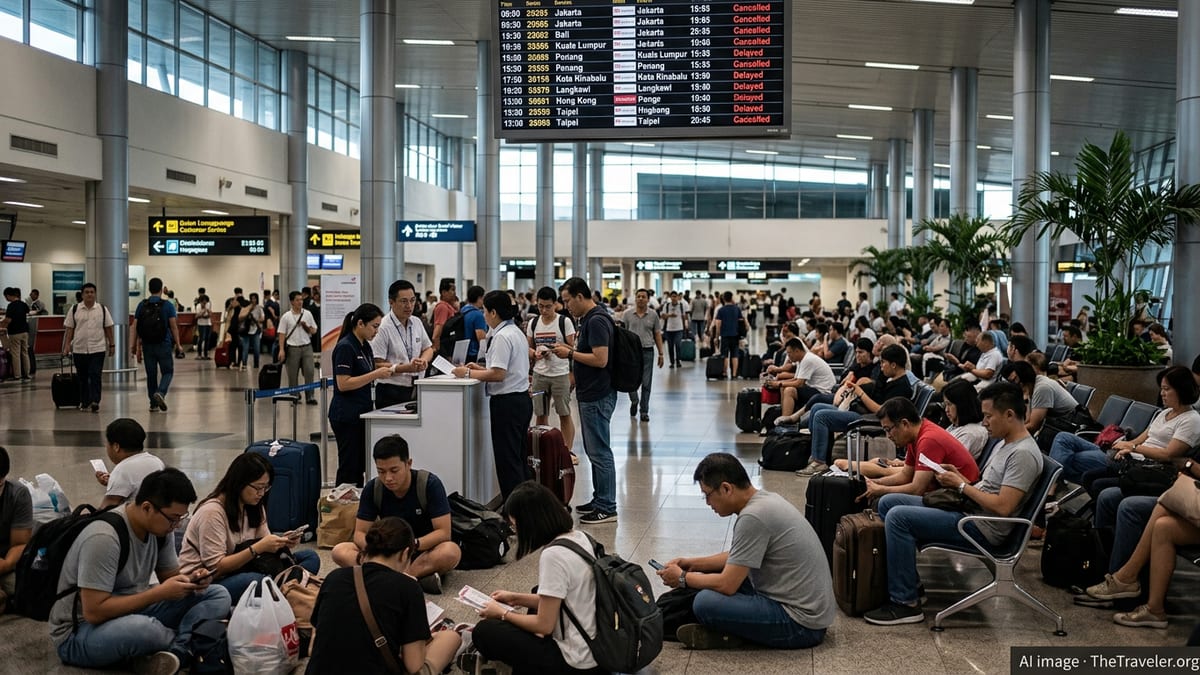
Shanghai Emerges as a Key Disruption Hotspot
Published tracking data and aviation analytics point to Shanghai’s dual airports as central nodes in the latest wave of schedule upheavals. Delays and cancellations affecting short haul routes to Japan, Southeast Asia and domestic Chinese cities have produced long queues at check in counters, missed connections and rolling gate changes throughout the day.
Reports indicate that Shanghai Pudong and Hongqiao are once again bearing the brunt of irregular operations after a month marked by weather related slowdowns and traffic flow restrictions across China’s busiest aviation corridors. The latest figures for this weekend highlight dozens of affected departures and arrivals clustered around peak morning and evening banks.
Publicly available airport boards and flight tracking feeds show that disrupted services span both full service and hybrid carriers, including regional specialists like Chengdu Airlines and Juneyao on domestic and near regional runs, as well as international operators linking Shanghai with hubs in Japan, Indonesia, Singapore and Malaysia. Travellers connecting onward to secondary cities across Asia are among those facing the greatest uncertainty.
The knock on effect is being felt across terminal operations, with airlines reassigning aircraft, consolidating lightly booked flights and attempting to recover schedules before the start of the working week. For many passengers, however, same day rebooking has proved difficult where alternative frequencies are already heavily loaded.
Regional Ripple Effects Across China, Japan and Southeast Asia
The disruption radiating out of Shanghai is unfolding against a broader backdrop of fragile schedules on China Japan and Southeast Asia routes. In recent weeks, industry data and media coverage have documented elevated cancellation rates between Chinese cities and Japanese destinations, with some routes temporarily suspended and capacity scaled back.
Analysts note that this structural thinning of China Japan connectivity has left less slack in the system when day of operation disturbances occur. When a rotation operated by a carrier such as Japan Air Commuter or a codeshare partner is cancelled or heavily delayed, there are fewer alternative flights within the same day to absorb stranded passengers.
In Southeast Asia, services operated by Batik Air and Garuda Indonesia connecting Indonesia and Malaysia with Chinese and Singaporean hubs have also encountered periodic disruption in recent months, ranging from weather related slowdowns to aircraft availability constraints. The current tally of 65 cancellations and 117 delays across multiple airlines appears to reflect a convergence of these pre existing pressures with short term operational challenges.
Travel corridors linking China with Singapore and Malaysia have been particularly busy as tourism and business traffic continue to rebound. When flights are withdrawn or rescheduled at short notice, capacity on remaining services often tightens quickly, leaving limited options for same day recovery and pushing some travellers onto overnight or next day departures.
Factors Behind the Latest Wave of Cancellations and Delays
A combination of meteorological, operational and demand side factors appears to be driving the latest setbacks. Recent aviation disruption reports for China have highlighted thunderstorms and low visibility around key hubs, which can trigger air traffic control flow restrictions, holding patterns and ground stops that cascade across airline networks.
Operationally, carriers such as Chengdu Airlines and Juneyao tend to run dense domestic and regional schedules, especially into Shanghai, Chengdu and other trunk markets. When one leg in a rotation is delayed or cancelled, subsequent sectors often depart late or are consolidated, spreading disruption to additional airports including secondary Japanese, Indonesian and Malaysian cities.
Industry commentary further points to ongoing constraints around aircraft and crew positioning. Airlines that expanded quickly during the recovery period now face tighter maintenance windows and higher utilisation of narrowbody fleets. This leaves less flexibility to deploy spare aircraft when an unscheduled technical inspection or weather diversion removes a jet from the rotation.
At the same time, uneven demand patterns on certain international routes have led to last minute schedule adjustments. Where bookings fall short of expectations, some airlines opt to cancel lightly loaded flights and reaccommodate ticketed passengers on alternative services, a practice that can contribute to the aggregate counts of cancellations even on days without severe weather.
Impact on Passengers From China, Japan, Indonesia, Singapore and Malaysia
The immediate impact for travellers has been a rise in missed connections, extended layovers and disrupted itineraries across multiple countries. Passengers originating in China and transiting Shanghai to reach Japan, Indonesia, Singapore or Malaysia have faced some of the longest rebooking queues, particularly where they are travelling on separate tickets or with complex multi stop routings.
Reports from airport terminals describe passengers camping near departure gates or customer service desks while waiting for updated departure times or alternative options. Families and business travellers with fixed commitments at their destinations are among those most affected when overnight stays or extended delays become unavoidable.
Inbound visitors heading to China from Japan and Southeast Asia have also been caught in the disruption. Tight onward connections to domestic Chinese cities operated by regional airlines such as Chengdu Airlines can be especially vulnerable when a first leg from Tokyo, Jakarta, Kuala Lumpur or Singapore is delayed beyond its scheduled arrival window.
Travel industry observers note that disruption costs extend beyond missed flights, often forcing last minute changes to hotel bookings, ground transport and event schedules. In some cases, passengers may become eligible for refunds, vouchers or care provisions under airline policies, but the process of securing these benefits can take time and may vary by carrier and jurisdiction.
What Travellers Should Do Now
With flight operations still unsettled across several key Asian hubs, travel advisers recommend that passengers with imminent departures to or through Shanghai, Japan, Indonesia, Singapore or Malaysia closely monitor their bookings. Checking airline apps and airport information displays before leaving for the airport can provide early warning of schedule changes.
Where possible, travellers are encouraged to allow longer connection times on itineraries involving multiple carriers or tight international to domestic transfers, particularly through Shanghai and other congestion prone airports. Booking through tickets on a single airline or alliance can simplify rebooking options when irregular operations occur.
For those already affected by cancellations or long delays, publicly available guidance suggests keeping all documentation, including boarding passes, receipts for meals and accommodation, and written notices of disruption. These records may be required when pursuing refunds, rebooking assistance or post travel claims with airlines or travel insurance providers.
Industry analysts expect that airlines operating in and out of Shanghai and other regional hubs will continue working to stabilise rotations over the coming days. However, with weather and air traffic conditions remaining variable as the peak summer travel season approaches, passengers on routes linking China, Japan, Indonesia, Singapore and Malaysia are being advised to stay prepared for further short notice changes.