


More news on this day
Saudi flag carrier Saudia has resumed daily services from Jeddah to Dubai, Abu Dhabi and Amman from April 11, restoring key air links between Saudi Arabia, the United Arab Emirates and Jordan after a six-week suspension triggered by regional tensions.
Get the latest news straight to your inbox!
Daily Jeddah Services to Dubai, Abu Dhabi and Amman Return
According to published schedules and regional media coverage, Saudia has reinstated a core set of regional routes centred on its Jeddah hub, with daily rotations to Dubai International, Abu Dhabi’s Zayed International Airport and Amman’s Queen Alia International Airport. The move follows a period in late February and March when the carrier halted most operations on these corridors amid heightened security concerns and widespread airspace restrictions.
Reports indicate that the initial programme focuses on Jeddah as the primary gateway, with flights operating once daily in each direction on the three city pairs. Industry trackers describe the services as “selected” or “limited,” reflecting a measured approach as airlines across the region assess demand, slot availability and evolving operating clearances.
Publicly available information shows that the restored flights form part of a broader, phased restart of Middle East operations by multiple carriers. Saudia’s decision to re-establish the Jeddah links to the United Arab Emirates and Jordan is being viewed by travel analysts as an important signal that conditions are stabilising sufficiently to support regular commercial services, even if schedules remain more constrained than before the recent disruption.
Airline advisories continue to urge passengers to monitor their bookings closely, as timings and frequencies may be adjusted at short notice. Travel platforms tracking real-time operations describe the situation as fluid but improving, with capacity gradually returning on key regional routes.
Strategic Importance of the Saudi Arabia, UAE and Jordan Corridor
The Jeddah connections to Dubai, Abu Dhabi and Amman are regarded as among the most strategically significant short-haul routes in the region, supporting both point-to-point travel and onward global connectivity. Dubai and Abu Dhabi function as major long-haul hubs, feeding traffic to Europe, North America and Asia, while Amman provides an important link to the Levant and beyond.
Before the recent suspension, these city pairs supported dense flows of business travellers, religious visitors, medical tourists and migrant workers. Travel industry commentary notes that the Jeddah gateway in particular plays a dual role as a commercial centre and the principal aviation entry point for pilgrims accessing the holy cities of Makkah and Madinah.
By restoring daily services, Saudia is reactivating a key component of Saudi Arabia’s broader connectivity strategy under its national aviation plan. Policy documents and previous network announcements have highlighted the importance of strengthening regional links to complement long-haul growth out of both Jeddah and Riyadh, positioning the kingdom as a hub for traffic moving between Asia, Africa and Europe.
Analysts also point out that the resumption of these flights helps to relieve pressure on alternative routings that had become congested when direct services were suspended. During the disruption, travellers were often rerouted via Bahrain, Kuwait or other Gulf points, adding cost and journey time for both leisure and corporate customers.
Travel Conditions Remain Dynamic Despite Reopening
While Saudia’s return to Dubai, Abu Dhabi and Amman marks a positive step for regional mobility, aviation updates from the wider Middle East indicate that the operating environment remains sensitive. Several international carriers are still running reduced schedules or rerouting flights to avoid certain airspace, and some temporary suspensions remain in effect on selected city pairs.
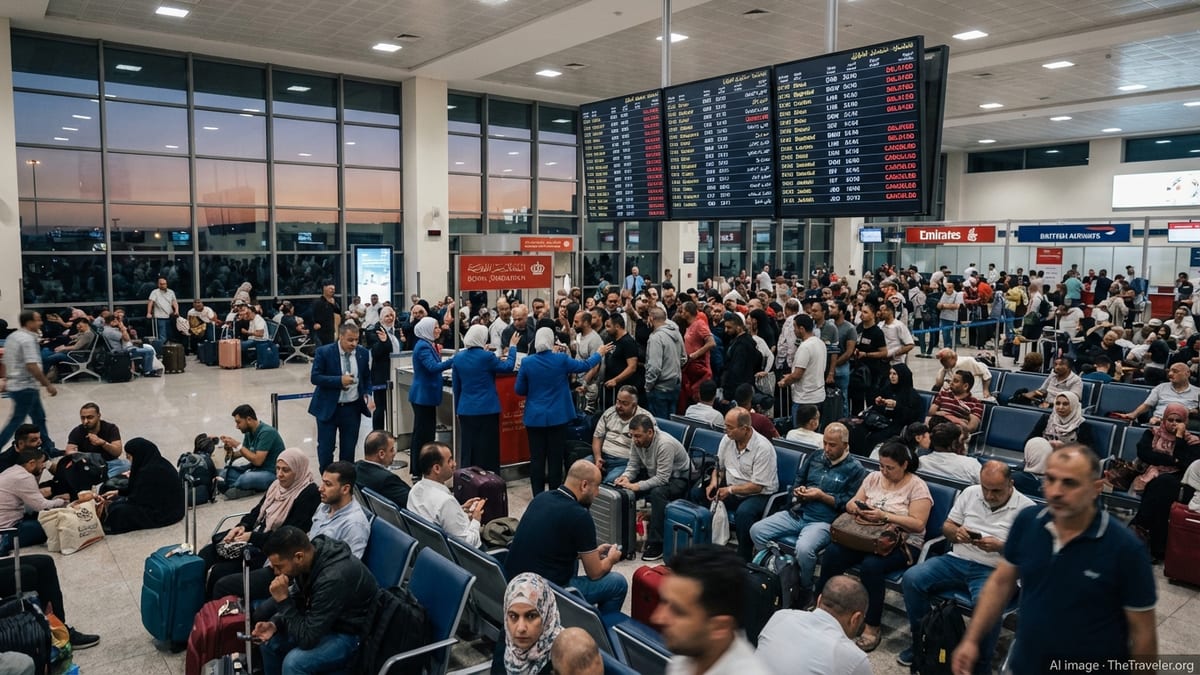
Dubai International and Abu Dhabi’s Zayed International Airport continue to publish travel advisories, and airport operators have encouraged passengers to arrive only with confirmed departure times. According to coverage in regional news outlets, live departure boards in the days leading up to April 11 showed an uneven mix of restored services, delayed flights and residual cancellations as airlines rebuilt rotations.
For travellers using Saudia’s restarted routes, industry guidance consistently stresses the importance of checking booking references and airline notifications in the 24 hours before departure. Travel agencies and booking platforms suggest that passengers remain prepared for schedule changes, including retimings or aircraft swaps, as carriers fine-tune capacity in response to demand and operational constraints.
Insurance specialists and risk consultants commenting on the broader situation recommend that passengers review policy coverage for disruption, particularly if travel plans involve multiple carriers or complex itineraries that rely on tight connections in regional hubs such as Jeddah or Dubai.
Impact on Passengers, Trade and Tourism Flows
The restoration of Jeddah links to Dubai, Abu Dhabi and Amman is expected to provide a near-term boost to passenger movements and trade flows between Saudi Arabia, the United Arab Emirates and Jordan. Tourism boards and industry associations in the three countries have long highlighted the importance of short regional hops in sustaining hotel occupancy, retail activity and meetings and events traffic.
For Saudi-based travellers, the daily flights once again offer relatively straightforward access to the leisure and business offerings of Dubai and Abu Dhabi, including major exhibitions and conferences that anchor the Gulf’s events calendar. At the same time, inbound demand into Jeddah is likely to benefit from travellers combining city visits with religious tourism or onward exploration of the kingdom’s Red Sea coast.
On the Jordanian side, Amman’s renewed link with Jeddah reconnects a well-established corridor used by families, students and medical travellers moving between the two countries. Logistics operators note that even passenger flights carry a meaningful share of time-sensitive cargo, so the additional belly-hold capacity is expected to support higher-value trade in pharmaceuticals, perishables and e-commerce goods.
Travel-sector commentary suggests that corporate travel managers across the three markets are beginning to reinstate regional itineraries that were put on hold during the suspension. However, many are doing so cautiously, with contingency plans in place should security assessments or airspace conditions change once again.
Gradual Normalisation in a Competitive Regional Market
Saudia’s move to revive the Jeddah to Dubai, Abu Dhabi and Amman services comes amid a gradual normalisation of flying across the Gulf and the wider Middle East. Coverage in regional aviation and travel outlets notes that other carriers are also rebuilding networks, although at varying speeds and with differing capacity strategies.
The resumption adds competitive tension on high-demand routes historically shared with UAE carriers and other regional operators. Market observers highlight that fare levels and booking patterns over the coming weeks will offer an early indication of how quickly confidence is returning and how effectively airlines are matching supply with demand.
At the same time, the restart underscores Jeddah’s continued importance in Saudia’s network design, even as longer-term plans call for expanded activity from Riyadh and the development of new aviation infrastructure in the kingdom. Industry analysts suggest that the ability to pivot capacity rapidly between major Saudi gateways will remain a central advantage for the flag carrier in managing future disruptions.
For now, the return of daily Jeddah flights to Dubai, Abu Dhabi and Amman provides travellers with renewed options on some of the region’s most vital short-haul corridors, while underlining that conditions, though improved, still call for close attention to schedules and advisories.