


More news on this day
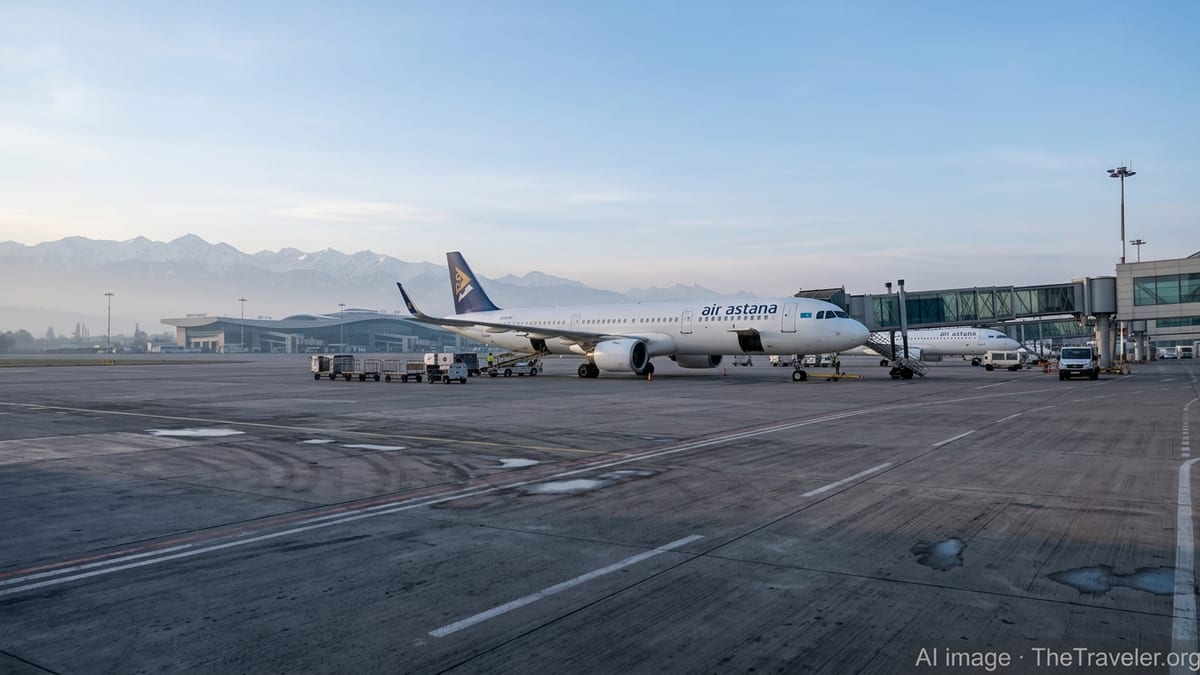
Almaty International Airport is set to broaden its global footprint in 2026, with new and planned connections to Tokyo, Warsaw, Shenzhen and neighboring regional destinations strengthening Kazakhstan’s role as a bridge between Europe and Asia.
Get the latest news straight to your inbox!
New Long-Haul Links Anchor 2026 Expansion
Almaty’s latest route announcements build on several years of investment in infrastructure and fleet renewal across Kazakhstan’s aviation sector. Publicly available information from airline schedules and government notices shows that Air Astana plans to introduce a direct Almaty to Tokyo service in March 2026, giving Kazakhstan a regular passenger link to Japan for the first time in several years. Industry reports indicate that the route will connect Almaty with Tokyo Narita, positioning the city as a practical transfer point between Northeast Asia, Central Asia and parts of Europe.
Almaty is also poised to deepen its ties with Europe through a growing Warsaw connection. According to published coverage of schedule filings, LOT Polish Airlines has been preparing an expansion of services linking Poland and Kazakhstan via its Warsaw hub, with additional capacity targeting the 2025 to 2026 travel seasons. The enhanced Warsaw link is expected to improve one-stop access between Almaty and major European and North American cities that are already served from Poland.
Toward East Asia, network planners are incorporating southern China more tightly into Almaty’s route map. Aviation data and Chinese carrier announcements point to a stepped-up focus on Kazakhstan, including flights from Guangzhou and other coastal cities, while planning documents for 2026 reference Almaty as a gateway for future services to technology centers such as Shenzhen. These developments reinforce Almaty’s role in cargo and business travel flows between Central Asia and the Pearl River Delta.
The 2026 timetable coincides with broader ambitions outlined by Kazakhstan’s Civil Aviation Committee and airport operators to attract more long-haul services. Strategy papers and recent briefings highlight goals to add connections to North America and additional Asian capitals in the late 2020s, with Almaty positioned as one of the primary platforms for that growth.
Regional Connectivity Deepens Across Central Asia and Beyond
While new intercontinental links attract much of the attention, Almaty’s 2026 plans also emphasize regional connectivity. Flight announcements over the past year show new and revived routes to neighboring Central Asian destinations, including services to Tashkent, Bishkek and Issyk Kul, some of them seasonal. Low-cost and full-service carriers alike are using Almaty as a convenient interchange point for travelers moving within the region.
These regional additions include links to leisure destinations on the Black Sea and Mediterranean coasts, as airlines expand summer programs from Almaty to airports in Georgia and southern Turkey. Public information from carriers indicates that routes to coastal gateways such as Batumi and Gazipasa are being restored or introduced for the 2026 summer season, giving Kazakh travelers more direct options for beach holidays without backtracking through larger European hubs.
New services to secondary cities in neighboring countries are also shaping Almaty’s role as a regional hub. Airline announcements from Kyrgyzstan and Kazakhstan show that routes between Almaty and airports close to Lake Issyk Kul have resumed in recent seasons, improving access to mountain and lake resorts that appeal to domestic and international tourists. Additional flights to cities such as Samarkand and other historic centers further knit together regional tourism circuits.
Industry observers note that this pattern of growth supports Kazakhstan’s stated objective of developing multimodal transport corridors across Central Asia. By making it easier to move between regional capitals and emerging resort areas, Almaty’s flight network complements investments in highways and rail, encouraging more cross-border travel and trade.
Infrastructure Upgrades Underpin Growth Strategy
Almaty’s expanding route map is underpinned by substantial investment in airport infrastructure. The airport’s majority owner, TAV Airports, has detailed multi-year spending plans aimed at modernizing the airfield, terminal facilities and supporting systems. Company reports indicate that a new international terminal, opened in 2024, lifted annual capacity into the mid-teens of millions of passengers, giving the airport headroom to absorb new long-haul and regional flights through 2030.
Modernization efforts include upgraded security screening areas, expanded check-in and baggage systems, and redesigned passenger flows intended to shorten connection times. Publicly available project descriptions emphasize improvements in accessibility and energy efficiency, with design features that can accommodate future expansions of the building if traffic grows faster than forecast.
On the airside, investments in aprons, taxiways and de-icing infrastructure aim to make Almaty more resilient to the region’s winter weather and more attractive for widebody operations. Aviation planning documents from Kazakhstan highlight the importance of meeting international standards for runway safety and navigation systems so that airlines can deploy newer, larger aircraft on routes such as Almaty to Tokyo, Warsaw and potential future services to North America.
These infrastructure upgrades align with Kazakhstan’s broader goal of positioning Almaty alongside Astana as a primary aviation node within the country. While Astana has seen rapid growth in recent years, aviation analysts point out that Almaty remains a critical gateway thanks to its larger metropolitan population, established business base and appeal as a leisure destination in its own right.
Airlines Position Almaty as a Competitive Transit Hub
Air Astana and its low-cost sister brand FlyArystan continue to play central roles in building Almaty’s traffic base. Timetable data and financial disclosures show that the group has been adding capacity on routes linking Almaty to major cities in Europe, the Middle East, South Asia and Southeast Asia, while also increasing frequencies on key domestic sectors. The planned Tokyo service fits within this broader long-term strategy of cultivating transfer traffic between Europe and Asia over Kazakhstan.
Other foreign carriers are adjusting their networks to tap growing demand through Almaty. Gulf-based airlines have announced plans to either launch or increase flights to the city in 2026, positioning their hubs as alternative one-stop options for travelers heading from Kazakhstan to Africa, the Americas or South Asia. At the same time, Chinese and Southeast Asian airlines are exploring or expanding links that could feed business and leisure travelers into Almaty’s network.
Industry commentary suggests that the emerging Warsaw connection could become particularly important for Almaty’s competitive positioning. With Poland acting as a bridge between Central and Western Europe, additional Almaty to Warsaw frequencies may allow itineraries that combine LOT’s transatlantic network with Air Astana’s Central and East Asian services, creating new one-stop routings for passengers traveling between North America and Central Asia.
As more airlines factor Almaty into their network planning, competitive dynamics are likely to intensify. Capacity adjustments by European carriers in 2025 and early 2026, including temporary suspensions and seasonal shifts on some routes, illustrate how quickly the landscape can change as fuel prices, demand patterns and geopolitical conditions evolve.
Tourism and Trade Expected to Benefit
The expansion of Almaty’s international and regional routes in 2026 is expected to bring broader economic benefits for Kazakhstan. Government strategy papers and tourism board materials highlight the role of improved air connectivity in attracting foreign visitors, facilitating business travel and supporting exports of goods and services. Direct links to key markets such as Japan, Poland and southern China are likely to make it easier for investors and companies to operate in and out of Almaty.
For the tourism sector, more nonstop flights from major Asian and European cities reduce travel times and simplify trip planning for visitors interested in Kazakhstan’s ski resorts, hiking trails and cultural attractions. Travel industry analysts note that better air access typically encourages the development of new hotels, tour products and conference facilities, reinforcing a virtuous cycle of investment and demand.
Local businesses also stand to gain from improved cargo flows. Although most of the 2026 announcements focus on passenger services, widebody aircraft operating on routes to Tokyo, Warsaw and Chinese hubs can offer additional belly-hold capacity for freight. This is particularly relevant for time-sensitive exports such as pharmaceuticals, fresh food products and high-value manufactured goods.
As 2026 approaches, the combination of new intercontinental links, denser regional networks and ongoing infrastructure upgrades suggests that Almaty International Airport is entering a new phase in its development. The outcome will depend on how quickly airlines can ramp up demand and how effectively the airport and city leverage their strengthened position at the crossroads of Eurasia.