


More news on this day
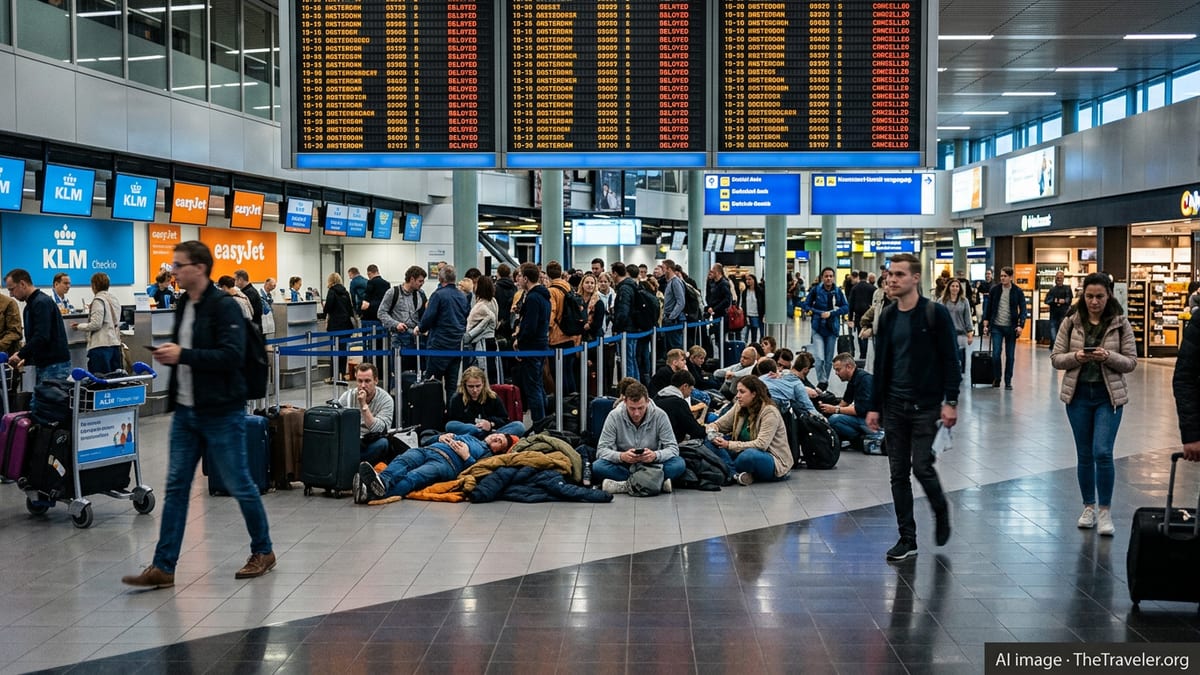
Amsterdam’s Schiphol Airport is facing another day of travel turmoil as thousands of passengers remain stranded after KLM, Air France, Delta, easyJet and other carriers canceled more than 30 key flights, disrupting links to major cities including London, Paris, Madrid, Barcelona, Los Angeles, Houston and Washington.
Get the latest news straight to your inbox!
Wave of Cancellations Hits One of Europe’s Busiest Hubs
Published coverage and live flight data point to a fresh wave of disruption sweeping through Amsterdam Schiphol at the height of the summer travel season. Dozens of departures and arrivals operated by members of the Air France–KLM group and transatlantic partners have been withdrawn from schedules within a short window, forcing sudden changes to travel plans for leisure and business passengers alike.
The latest disruption follows several weeks of intermittent operational strain at Schiphol, where previous incidents have seen hundreds of delays and dozens of cancellations packed into single days across KLM, Delta Air Lines, British Airways, easyJet and other carriers. Recent reporting describes a pattern in which a relatively small number of outright cancellations combine with a much larger pool of late-running flights, quickly overwhelming terminal capacity and customer-service channels.
Flight tracking information and aviation analytics consulted on Sunday indicate that the newest round of cancellations is concentrated on high-demand European and North Atlantic routes. Services linking Amsterdam with London, Paris, Madrid and Barcelona have been particularly affected, with additional cancellations reported on long-haul connections to Los Angeles, Houston and Washington in the United States.
While exact passenger numbers are still being compiled, reports from recent comparable events at Schiphol and other major hubs suggest that even a few dozen cancellations at peak times can strand several thousand travelers when services are already running close to capacity.
European and US Corridors Disrupted in Both Directions
The impact of the cancellations is being felt well beyond the Netherlands as aircraft and crews are taken out of position. Publicly available data and media coverage of the disruptions show that flights in both directions on key corridors have been affected, complicating travel not only for passengers departing Amsterdam but also for those attempting to reach the hub from overseas.
Short-haul services to London and Paris are central to the Air France–KLM and SkyTeam alliance networks, feeding long-haul departures from Amsterdam and French hubs. When Amsterdam flights are removed from the schedule, passengers booked onward to cities such as Madrid, Barcelona, Los Angeles, Houston and Washington often face missed connections or last-minute re-routings through alternative airports.
In recent weeks, analysts tracking European air travel have highlighted the sensitivity of the continent’s network to disruptions at a handful of major hubs, including Schiphol. When cancellations or heavy delays occur at one of these airports, knock-on effects can spread quickly to secondary destinations as aircraft arrive late, crews exceed duty limits and turnaround times lengthen.
Reports from other European airports in late June and early July, including major Spanish and British hubs, underline how delays and cancellations at one node can cascade across the wider system. In several instances, airports such as Madrid, Barcelona and London have reported congestion linked partly to earlier disruptions at partner hubs like Amsterdam.
Passengers Face Long Queues, Rebooking Challenges and Limited Alternatives
For travelers caught in the latest Schiphol disruption, the immediate reality has been long lines at customer-service desks, limited availability on alternative flights and, in some cases, unplanned overnight stays. Publicly shared passenger accounts from earlier episodes this summer describe hours spent waiting in queues or on hold with call centers as thousands of people try to rebook at the same time.
Industry observers note that major airlines typically prioritize reallocating seats on the next available services and, where possible, rerouting stranded travelers through partner hubs. For passengers originally due to travel from Amsterdam to London or Paris before continuing on to long-haul destinations such as Los Angeles or Houston, this can mean being rebooked via other European gateways or shifted onto later transatlantic departures.
However, high seasonal demand means that spare capacity is often limited. Seats on remaining flights to popular summer destinations can sell out quickly once cancellations are announced, leaving some travelers with little choice but to accept arrival a day or more later than planned. Publicly available booking data from recent disruptions show that hotel capacity around Schiphol can also tighten rapidly when large numbers of passengers are stranded.
Travel analysts warn that the complexity of modern airline partnerships can add an additional layer of difficulty. When itineraries involve multiple carriers from different countries, responsibility for rebooking, providing accommodation or handling baggage issues may not always be immediately clear to passengers, particularly when disruptions begin at a shared hub like Amsterdam.
Operational Strains, Weather and Air Traffic Limits Under Scrutiny
Aviation experts following developments at Schiphol point to a familiar set of factors behind the latest cancellations and delays. Recent operational analyses emphasize that staffing constraints, tight turnaround schedules, and air traffic control restrictions can all combine to push a busy hub into disruption, especially during peak summer periods.
Earlier events this year at Schiphol and other major European airports have been linked to capacity caps, security bottlenecks, weather-related de-icing and wider regional airspace constraints. Public reporting on those incidents indicates that airlines sometimes opt to preemptively cut a block of flights in order to protect the remainder of the schedule, a strategy intended to reduce the risk of rolling delays but one that inevitably leaves some passengers grounded.
At the same time, there is growing scrutiny of how European hubs manage surging post-pandemic demand. Industry reports for 2026 describe a travel market in which passenger numbers are pushing close to or beyond pre-2020 levels in key regions, while some ground and air traffic resources remain under pressure. Schiphol, one of Europe’s busiest long-haul gateways, sits at the center of this debate.
Observers also note that disruptions are increasingly interconnected across continents. Recent coverage of flight delays at major US airports has highlighted scattered impacts on inbound and outbound transatlantic routes operated by European carriers and their North American partners, illustrating how strains on one side of the ocean can affect schedules on the other.
What Stranded Travelers Can Do Next
With thousands of passengers affected by the latest Schiphol cancellations, attention is once again turning to what travelers can realistically do when their trips are thrown into disarray. Public guidance from consumer organizations and airline help pages emphasizes the importance of acting quickly but methodically when a flight is canceled or heavily delayed.
Passengers are generally advised to use airline apps and official websites as a first port of call to check updated departure information, accept proposed rebookings or search for alternative options. Experience from recent disruption events suggests that self-service tools can sometimes secure earlier replacement flights than would be available through crowded airport desks.
For those who have no choice but to wait at the airport, travel rights organizations stress the value of keeping records of boarding passes, booking confirmations and receipts for meals, accommodation and transport. Under European passenger-protection rules, travelers on flights departing from or arriving at Amsterdam may be entitled to assistance or compensation depending on the cause and length of the disruption, although eligibility varies by case.
With high summer traffic expected to continue in the weeks ahead, aviation analysts suggest that passengers traveling through Schiphol build extra flexibility into itineraries where possible, particularly when planning tight same-day connections to long-haul flights. Monitoring flight status closely in the 24 hours before departure and considering alternative routing options via other European hubs can help reduce the risk of becoming stranded if further cancellations strike.