


More news on this day
Passengers at Amsterdam Schiphol Airport faced another day of disrupted travel on June 14 as live tracking data showed seven flight cancellations and more than 240 delays, with services operated by KLM, Transavia Airlines and easyJet among those affected on some of Europe’s busiest city pairs.
Get the latest news straight to your inbox!
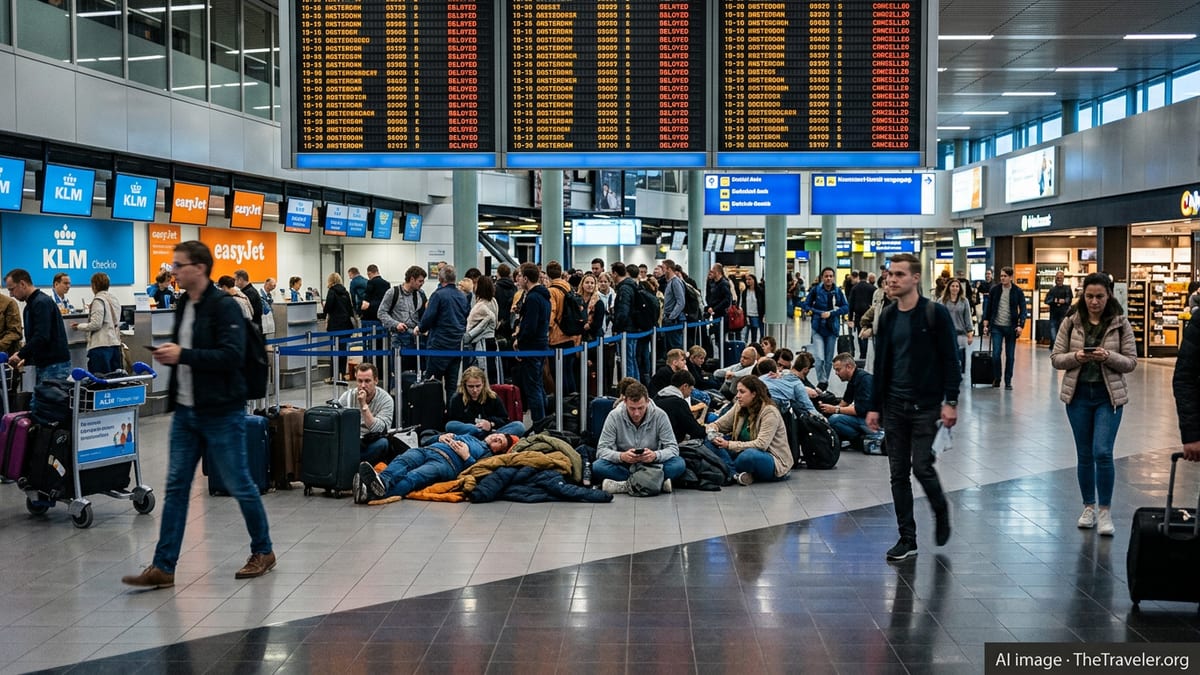
Operational Strain at a Key European Hub
Amsterdam Schiphol, one of Europe's main transfer hubs, has been experiencing mounting operational pressure as the summer travel season ramps up. Publicly available flight-tracking figures for Saturday indicate seven cancellations and around 242 delayed movements linked to the airport, highlighting fresh strain on schedules at the start of the peak holiday period.
The disruption is concentrated on short and medium-haul services within Europe, particularly on high-frequency business and leisure routes. While the majority of flights are still departing, the cumulative effect of rolling delays is leading to missed connections, extended time on the ground and growing queues at check-in and security as passengers attempt to rebook itineraries.
Reports indicate that the delays span a broad range of carriers using Schiphol as either a base or a major destination. Among them are Dutch flag carrier KLM, low-cost subsidiary Transavia Airlines and pan-European budget operator easyJet, all of which have a substantial presence at the airport and operate multiple daily services to major capitals across the continent.
Airport information pages describe today as a busy day, with travellers advised to prepare for longer waiting times at security and passport control. This elevated traffic is adding to the ripple effects when even a small number of flights are cancelled or significantly delayed.
Major Routes to London, Paris and Frankfurt Affected
Key trunk routes between Amsterdam and London, Paris and Frankfurt have been among those most exposed to disruption. These short sectors typically see high daily frequencies operated by KLM and its partners, easyJet and other European carriers, serving a mix of business travellers, transfer passengers and leisure visitors.
On Saturday, live flight-status boards showed a pattern of late departures and arrivals on services between Schiphol and London’s main airports, including Heathrow and Gatwick, as well as to Paris Charles de Gaulle and Frankfurt. Even when individual flights continued to operate, delays of 30 minutes to more than an hour created congestion in narrow scheduling windows and raised the risk of missed onward connections for long-haul passengers.
Travel industry coverage has already warned that coordination challenges at major hubs, coupled with elevated traffic levels, are likely to test airline punctuality indicators across northwestern Europe in June. Amsterdam, London and Paris were all highlighted in recent analyses as particularly sensitive to knock-on delays once peak-hour operations are heavily loaded.
For travellers booked on these high-demand routes, the practical implications include longer days in transit, more frequent gate changes and the need to monitor flight information closely. Passengers connecting via Schiphol to intercontinental flights are especially vulnerable when short-haul feeder services depart late from London, Paris or Frankfurt.
Southern Europe Destinations Face Knock-On Delays
Routes linking Schiphol with Barcelona, Rome and other southern European destinations have also been caught up in the latest wave of disruption. These flights serve a large share of leisure traffic, including weekend city-break travellers and holidaymakers heading to Mediterranean gateways at the start of the summer season.
Data from flight-status platforms on June 14 showed delays on multiple services between Amsterdam and major Spanish and Italian cities, with some departures to Barcelona and Rome pushed back well beyond their scheduled times. In a number of cases, late-arriving aircraft and tight turnaround times appeared to play a role, as inbound delays cascaded into subsequent rotations.
Transavia, which has previously announced broader schedule adjustments in May and June in response to high fuel prices, operates a significant leisure network from Schiphol to southern Europe. According to recent Dutch media coverage, the carrier has already trimmed a proportion of its planned flights for the early summer period, leaving less slack in the system when irregular operations occur.
For passengers, this combination of structurally reduced capacity and day-of-operation delays can translate into fewer alternative options if a flight is cancelled or significantly late. Seats on remaining departures to popular destinations such as Barcelona or Rome may already be heavily booked, particularly on weekends.
Limited Cancellations but Significant Passenger Impact
Although the reported number of outright cancellations at Schiphol on Saturday remains relatively low at seven flights, the scale of delays is having an outsized impact on travellers. More than 240 delayed departures and arrivals in a single day at a tightly scheduled hub can quickly translate into missed meetings, disrupted holidays and unexpected overnight stays.
Recent aviation analyses have underscored that even modest levels of cancellation, when combined with high delay rates, can strain airline customer-service systems and airport infrastructure. Passengers attempting to rebook through call centres, airline apps or airport service desks frequently encounter long wait times, particularly when weather patterns, airspace restrictions or other external constraints limit the immediate availability of replacement flights.
Commentary in consumer forums has also highlighted growing frustration among travellers who experience multiple rolling delays rather than a clear cancellation. While flights that eventually depart may spare passengers from overnight disruption, extended waits at the gate and repeated schedule changes can be highly disruptive, especially for families and those with tight onward connections.
Travel rights information shared by watchdog groups and passenger-advocacy organisations indicates that compensation and care entitlements vary depending on the cause of the disruption, route and operating airline. Many advisories are urging passengers affected by long delays or cancellations at Schiphol to keep documentation, receipts and screenshots of updated departure times in case they need to submit claims later.
What Travellers Can Do as Summer Pressures Build
With the European summer season only just beginning, the situation at Schiphol on June 14 is being viewed by travel analysts as a possible early warning of wider operational challenges ahead. Airlines including KLM, Transavia and easyJet have all been adjusting capacities and schedules in recent months in response to higher fuel prices, staffing constraints and changing demand patterns, leaving less margin to absorb day-to-day disruptions.
Publicly available guidance from airlines and the airport stresses the importance of checking flight status frequently on the day of travel and allowing extra time at Schiphol for security and boarding. Many carriers encourage passengers to use mobile apps or online tools for rebooking in the event of a delay or cancellation, which can sometimes be faster than queuing at service desks when terminals are crowded.
Travel experts also recommend building additional buffer time into itineraries that involve connections at Amsterdam, particularly for long-haul flights that depend on timely feeder services from London, Paris, Frankfurt, Barcelona, Rome or Dublin. When possible, selecting earlier departures in the day, travelling with carry-on luggage only and ensuring contact details are up to date in airline bookings can help reduce the stress of last-minute changes.
For now, Schiphol remains fully open, and most scheduled flights continue to operate, albeit with a higher-than-normal risk of delay. However, the combination of seven cancellations, 242 delays and growing passenger numbers on Saturday underscores how quickly operations at a major European hub can come under pressure as summer peaks approach.