


More news on this day
Spain’s peak summer tourism season is facing fresh turbulence after more than 1,200 flight delays were recorded across major European hubs, disrupting routes into and out of the country just as holiday traffic accelerates.
Get the latest news straight to your inbox!
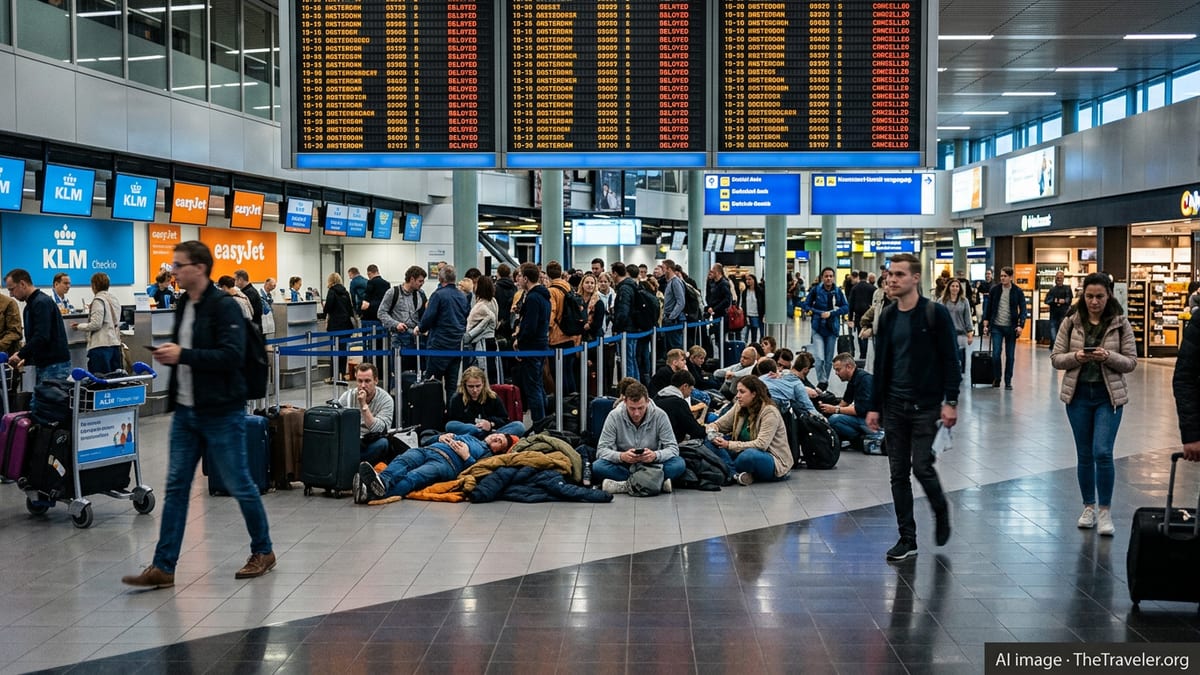
Delays Surge at Key Gateways Into Spain
Recent data from flight tracking and industry monitoring services show that more than 1,200 flights were delayed on Friday 12 June across Europe’s busiest hubs, including airports that serve as primary gateways for travel to Spain. Reports indicate that the disruption affected services linking Spain with the United Kingdom, Ireland, Italy and Germany, compounding earlier weeks of irregular operations.
According to published coverage, hubs such as London, Paris, Amsterdam and Frankfurt recorded heavy knock-on delays after pockets of congestion and technical issues rippled through the network. Because many Spanish destinations depend on these airports for connecting traffic, late inbound aircraft quickly turned into late departures from Madrid, Barcelona, Palma de Mallorca, Málaga and other Spanish airports.
Industry analyses describe a tightly interlinked system in which a delayed aircraft on one short European sector can cause a cascade of missed departure slots later in the day. With June schedules already close to pre‑pandemic volumes, even relatively small disturbances have translated into widespread punctuality problems for passengers heading to Spanish beaches and cities.
Staffing Strains and Air Traffic Capacity Pressures
Operational data from European aviation bodies show that Spain has become one of the main hotspots for air traffic flow management delays this year. Network overviews indicate that Spain accounts for nearly a quarter of all en‑route delay minutes in Europe so far in the 2026 summer build‑up, largely due to capacity constraints, staffing challenges and strong traffic growth.
Publicly available briefings point to air traffic control capacity and staffing as the leading causes of en‑route holdups, outpacing weather and technical faults in many weeks. As more flights crowd into limited sectors of Spanish and French airspace, controllers are being forced to meter departures and impose speed restrictions, which lengthen flight times and push aircraft off their planned rotations.
Spanish aviation navigation provider reports from previous summer seasons had highlighted progress in cutting controller‑related delays, but the latest network snapshots suggest that this year’s rapid traffic rebound and rerouted flows from the Middle East are again testing the system. The result is an increase in average delay minutes per flight, particularly on busy days when traffic peaks coincide with thunderstorms or temporary staff shortages.
New Border Checks and Airport Strikes Add to the Chaos
The flight delays are intersecting with other pressure points that specifically affect travelers to Spain. The rollout of the European Union’s Entry/Exit System, which requires biometric checks and additional screening for many non‑EU arrivals, has already been associated with reports of queues lasting several hours at some Mediterranean airports. Coverage focusing on British travelers warns that holidaymakers arriving in Spain and other Schengen countries this summer may encounter notably longer waits at passport control.
At the same time, separate reports on labor relations in Spain describe a patchwork of strike actions and work‑to‑rule campaigns among air traffic controllers, ground‑handling crews and baggage staff. Unions have announced rolling stoppages at various points in the summer calendar, particularly through June, raising the risk of further last‑minute schedule changes and airport congestion.
The combination of operational bottlenecks, industrial disputes and new border procedures is amplifying the impact of each delayed or cancelled flight. Even when aircraft eventually depart, passengers may miss onward connections or arrive at Spanish holiday destinations in the middle of the night, placing additional strain on local transport and accommodation providers.
Economic Consequences for Spain’s Tourism Powerhouse
Tourism is a central pillar of Spain’s economy, with domestic and international travel accounting for more than 12 percent of national output in recent years. Publicly available economic data underline how heavily coastal regions, island territories and major cities such as Barcelona, Madrid and Seville rely on steady flows of foreign visitors arriving by air during the peak summer months.
Recent travel disruption across the wider European network has therefore raised concern among hoteliers, tour operators and local businesses that depend on predictable arrival patterns. When large numbers of passengers are delayed, even by a few hours, coach transfers, cruise departures and group excursions can be thrown off schedule, prompting additional costs and operational headaches for Spanish tourism providers.
Analysts note that repeated episodes of disruption also risk damaging traveler confidence in Spain’s accessibility, particularly among visitors with limited vacation time who are sensitive to uncertainty. Some travel industry commentary suggests that persistent flight chaos, together with rising prices and overcrowding in certain destinations, could nudge a proportion of tourists toward alternative locations viewed as more reliable, at least in the short term.
What Travelers to Spain Can Do Right Now
Consumer guidance based on European and UK passenger rights frameworks highlights that many travelers affected by significant delays or cancellations may qualify for assistance, rebooking, refunds and, in some cases, financial compensation. The exact entitlements depend on factors such as flight distance, length of delay, cause of the disruption and whether the airline is based in the European Union or the United Kingdom.
Travel experts advise that passengers heading to Spain in the coming weeks monitor flight status closely using airline apps and airport information boards, especially on peak travel days. Recommended strategies include building in longer connection times when itineraries involve transfers through congested hubs, arriving at the airport earlier than usual to clear potential border or security queues, and keeping essential items and medications in carry‑on baggage in case of extended delays.
For those yet to book, some industry observers suggest considering early‑morning departures, which are statistically less exposed to knock‑on disruptions from earlier delays in the network, and checking whether flexible fare options or comprehensive travel insurance could offset the financial risk of cancellations. With the summer season only beginning, operational data and recent events indicate that Spain‑bound travelers should prepare for a season of heightened unpredictability across European skies.