


Landing at Bogotá’s El Dorado International Airport can feel hectic, especially if you are new to the city or arriving late at night. Taxis remain the most practical way to reach most neighborhoods, but only if you know how to find the authorized services, what to pay and how to avoid the informal drivers who target newly arrived travelers. This guide focuses on simple, safety‑first steps so you can leave the terminal confidently and get to your hotel without stress.
Get the latest updates straight to your inbox!
How Airport Taxis Work at El Dorado
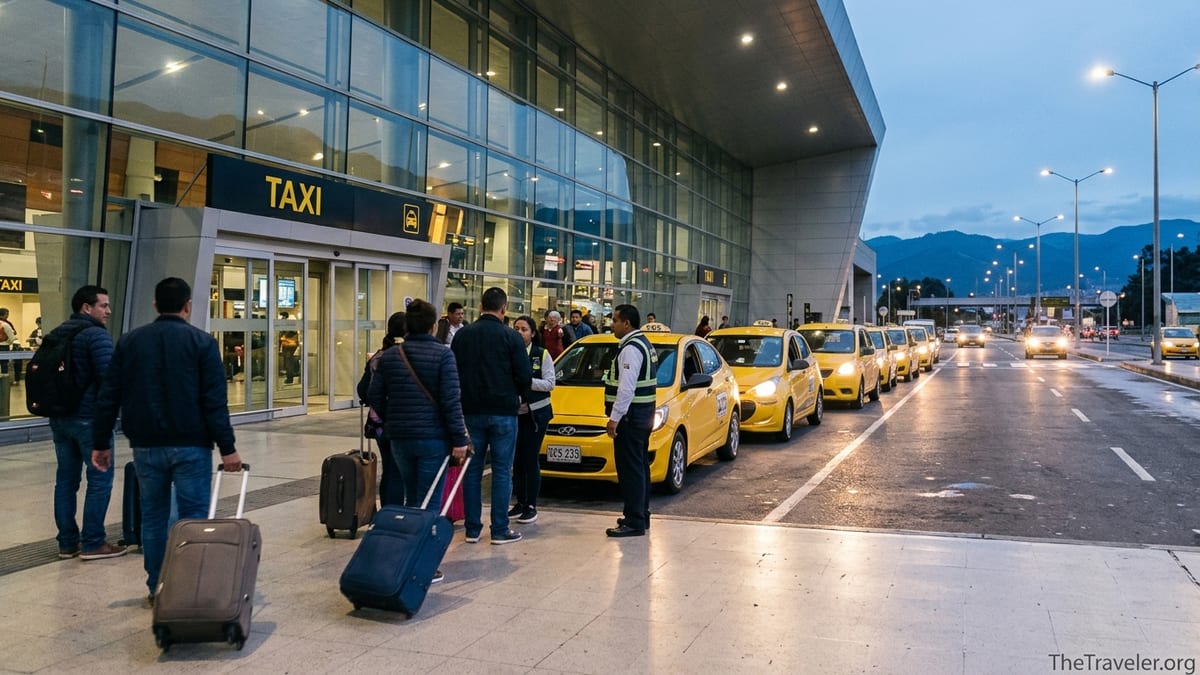
El Dorado International Airport is Colombia’s busiest hub and has an organized system for authorized taxis that operate from clearly signed areas outside the terminal. The airport authority works with approved companies, notably Taxi Imperial as the official operator for in‑terminal bookings, and regulates how vehicles access the forecourt and taxi parking areas. You will see yellow sedans and some larger vehicles in a designated taxi lot just outside arrivals, with lanes controlled by airport staff and security cameras monitoring the area.
Unlike some airports where drivers approach you inside the building, the official process at El Dorado is centered on fixed service points. In the international and domestic arrivals halls you will find an authorized taxi desk or electronic kiosks where you provide your destination and receive a printed or digital ticket showing the approximate fare. This system is designed to reduce haggling and gives you a written reference in case of any dispute during the journey.
Taxi regulation in Bogotá is handled by the city’s mobility authority, which updates tariffs periodically through formal decrees and sets specific airport surcharges that must be visible on rate charts inside every licensed taxi. Recent fare adjustments for 2026 confirm that taxis serving the airport must use official tariffs and apply the standard “airport or Puente Aéreo” surcharge rather than improvising their own price. This means that if you board a properly licensed vehicle and the driver follows the meter, your fare should fall into a predictable range for most central destinations.
Authorities and Bogotá’s tourism office have also launched information campaigns focused on safe arrivals, including printed cards and QR codes placed in authorized airport taxis that link to official safety tips and emergency contacts. Travelers who use the authorized system benefit from this extra layer of oversight, which does not exist with informal drivers who operate outside the official queues.
Finding Authorized Taxis and Pickup Points
After you collect your luggage and exit customs, the safest route is to follow the official “Taxis” signs inside the terminal. In both the international and domestic arrivals halls, these signs lead you past the crowds of people waiting for arriving passengers and toward clearly marked doors that open onto the ground transportation area. Staff in airport vests can confirm the correct direction if you are unsure, and there is no need to accept assistance from anyone who is not wearing airport or airline identification.
Just before you step outside, look for the official taxi desk or kiosk. At El Dorado, the standard procedure is to either speak with the attendant or use a touch screen where you select your neighborhood, for example “Chapinero,” “La Candelaria” or “Zona Rosa.” The system will calculate an estimated fare based on the current tariff table and airport surcharge and then issue a printed slip. You keep this slip and show it to the taxi marshal at the curb, who will direct you to the next available authorized taxi in line.
Outside, you will see an organized queue of yellow taxis and sometimes a separate area for pre‑booked or app‑based services that have permits to enter the airport. The vehicles used by authorized operators typically display company branding, a clearly visible taxi registration number, and a roof sign indicating they are public service taxis. Inside the car, you should see the meter on the dashboard and an official rate card, often laminated, listing the cost per unit and surcharges such as the airport fee and night or holiday supplements.
If someone inside the terminal approaches you with offers like “cheap taxi,” “special service” or “premium car” and asks you to follow them to the parking lot without going through the desk or taxi line, that is a strong indication they are operating informally. The safest response is to decline politely and continue to the official taxi desk or the marked pick‑up doors. The airport’s own passenger guides warn that many vehicles outside the controlled areas may not meet safety or insurance requirements, which is why staying within the official lanes is so important, especially if you are alone or traveling at night.
Typical Taxi Fares and How to Pay
While exact prices change when the city updates tariffs, recent data and traveler reports suggest that a typical daytime taxi ride from El Dorado Airport to central Bogotá neighborhoods usually falls somewhere in the range of about 35,000 to 60,000 Colombian pesos, depending on distance and traffic. For example, a ride to Chapinero or Zona Rosa in moderate traffic often lands around the middle of that range, whereas going to the historic center of La Candelaria at rush hour may reach the upper end due to slower speeds and more time on the meter.
The airport taxi fare is calculated by combining several components. There is a starting charge when the meter is activated, a cost per distance or time unit, and an airport surcharge that applies to trips leaving or arriving at El Dorado. Some recent fare breakdowns show an airport fee that is added as a fixed amount on top of the metered total, while the rest of the price reflects the time and distance traveled. Although the exact numbers can change with each annual adjustment, the structure remains consistent, which helps you judge whether a quoted fare seems reasonable.
To reduce surprises, the printed slip from the taxi kiosk will display an estimated fare based on your destination. It is normal for the final meter reading to be slightly higher or lower depending on traffic, but large differences should raise questions. For instance, if your slip shows an estimate around 40,000 pesos for a trip to a mid‑range hotel in Chapinero and the meter at the end of the ride shows more than 80,000 pesos without heavy traffic or unusual detours, you would be justified in asking the driver to explain the amount and, if necessary, requesting a receipt with the taxi’s plate number.
You pay the driver directly in cash at the end of the journey, and Bogotá taxis generally expect Colombian pesos. A growing number of drivers have card terminals or can accept digital payments, but you should not rely on this unless you ask before starting the ride. Some app‑linked taxis connected to services like Cabify or Taxis Libres may allow in‑app payment as well, which can be more transparent. It is customary to round up to the nearest thousand pesos or add a small tip if the service was good and the driver handled your luggage carefully, but tipping is not mandatory or expected at the levels seen in some other countries.
Safety Tips: Avoiding Scams and Informal Drivers
Security concerns around taxis at El Dorado are usually not about violent crime but about overcharging, aggressive solicitation, or being lured into informal vehicles that lack proper oversight. Common complaints from travelers include drivers quoting inflated flat fares that are far above the normal meter price, adding invented “premium” surcharges, or using devices that make meters jump faster than they should. A few visitors have reported paying nearly double the app price for a journey of about 30 minutes because they accepted a taxi outside the official channel, only realizing later that the fare was excessive.
To protect yourself, the first rule is to stay inside the official system as much as possible. Use the taxi desk or kiosk, hold onto the printed fare estimate, and join the supervised queue. Before the car moves, check that the meter is turned on and starts from the basic initial charge rather than an already elevated value. If the driver suggests turning off the meter and offering a “special price,” you can simply decline and request that the meter remain on, or get out and choose another taxi from the queue if you feel uncomfortable.
Another protection is to have a general idea of what your trip should cost. For instance, if ride‑hailing apps on your phone indicate that a ride from El Dorado to your hotel in the Zona G area would be around 45,000 pesos in current conditions, then a taxi quote of 110,000 pesos for the same route without clear justification is a red flag. In practice, many locals advise checking an app estimate before heading to the taxi line so you have a benchmark in mind. Even if you prefer to use the authorized taxi for regulatory reasons, that comparison figure can help you spot unreasonable charges.
Be cautious with anyone who offers to walk you to a car in the parking lot while avoiding the visible taxi line. These informal drivers sometimes promise a faster or more “exclusive” ride, which may simply mean bypassing the official controls and charging whatever they can negotiate. If you are approached in this way, it is safer to say that you have already arranged a ride, continue toward the marked taxi area and, if the person persists, move closer to uniformed airport staff or police officers who patrol the arrivals curb.
Late‑Night Arrivals, Luggage and Special Situations
Many international flights into Bogotá arrive late at night or in the early hours of the morning, when public transport options are limited and the streets are quieter. At those times, the authorized taxi system is designed to keep functioning, with vehicles queued at the terminal 24 hours a day. The main difference you will notice is that night‑time or holiday surcharges may apply according to city regulations, so a trip that costs around 40,000 pesos during the daytime could rise modestly after midnight or on major public holidays.
For travelers with large suitcases or sports equipment, standard sedans are often sufficient, but it is a good idea to mention your luggage at the taxi desk so they can assign an appropriate vehicle. If you are carrying bulky items such as surfboards or multiple large cases, ask whether there are larger cars available or consider pre‑booking a private transfer through a reputable company, especially if you are arriving very late. Most authorized taxis will help you load bags into the trunk and do not charge extra for normal luggage, although exceptionally heavy or oversized items may require a slightly higher fare.
Families traveling with young children should note that Colombian taxis generally do not provide child seats as standard. If you require a car seat, look into private transfer services or ride‑hailing options that allow you to request one in advance, and confirm that they are legally allowed to pick up at El Dorado or will meet you just outside airport property. For passengers with reduced mobility, the airport publishes accessibility information and indicates the presence of adapted vehicles in its taxi fleet, but availability can vary, so arranging an accessible transfer ahead of time is sensible if you use a wheelchair or need extra assistance.
In case your flight is severely delayed and you arrive in the middle of the night, the same safety principles apply: stay inside the terminal until you are ready to leave, ignore unsolicited offers for rides, and head straight to the official taxi desk and queue. Keep your luggage close to you, avoid displaying large amounts of cash and, once you are in the taxi, share your route or live location with someone you trust using your phone, which is a common practice among locals and offers extra peace of mind on a quiet night.
Taxi Apps, Ride‑hailing and When to Use Them
Bogotá has a strong culture of app‑based transportation, and many residents prefer ride‑hailing services for clarity of pricing and the ability to share trip details. Apps like Uber, Didi and Cabify operate in the city, along with local taxi apps that connect to licensed yellow cabs. At El Dorado, however, the situation is more nuanced. While the airport prioritizes authorized taxis in the immediate arrivals area, some travelers report successfully requesting ride‑hailing vehicles that pick them up in nearby streets or designated drop‑off lanes outside the strictest security perimeter.
From a safety perspective, ride‑hailing apps offer the advantage of pre‑calculated fares and digital trip records that include the driver’s name and vehicle details. For example, if your app shows that a ride from the airport to a hotel in Usaquén should cost roughly 50,000 pesos, that price is locked in before you get into the car, which limits the possibility of sudden increases. On the other hand, arranging an app pick‑up may require walking with your luggage to a meeting point that is less controlled than the official taxi queue, and in some cases drivers may be cautious about approaching the terminal if enforcement officers are visible.
A practical compromise that many frequent travelers use is to take an authorized taxi from the airport to a busy, well‑lit hub such as a major hotel, shopping center or TransMilenio station and then use apps for the rest of their stay in the city. This approach is particularly useful if you arrive late, are unfamiliar with the area or are traveling with children or heavy luggage. Once you are settled in your accommodation and have local Wi‑Fi, you can rely more freely on ride‑hailing, using the first airport journey as a secure bridge.
If you choose to use a ride‑hailing app directly from the airport, arrange to meet your driver at a clear landmark like a nearby hotel entrance or gas station on the main road, and send a brief message through the app confirming the car’s plate number before getting in. As with taxis, avoid accepting rides from anyone who approaches you unsolicited, even if they mention an app by name, and always verify that the license plate and driver details match what you see on your screen.
What To Do If Something Goes Wrong
Most taxi trips from El Dorado end without incident, but it is useful to know what to do if you feel overcharged or unsafe. At a minimum, try to note the taxi’s license plate number, which is typically printed on the doors, roof sign and inside the vehicle. You can also take a quick photo of the plate or the driver’s identification card, which is usually displayed on the dashboard or back of the front seat. This information is essential if you want to file a complaint with the company, the airport or the city’s mobility authority.
If a dispute arises over the fare at your destination, remain calm and ask the driver to provide a printed receipt or write down the fare with their plate number. Compare the amount to your original estimate from the airport kiosk or your app’s expected price. In many cases, simply stating that you will report the incident to the company or tourism information line is enough to bring the fare back into a reasonable range. Avoid confronting the driver aggressively on a dark street; if you feel uncomfortable, move into a hotel lobby, shop or other public space while you resolve the issue.
For serious concerns, including threats, attempted scams involving card payments or behavior that makes you feel unsafe, use Colombia’s national emergency number 123 to request assistance, or ask hotel staff to help you contact local police. Bogotá’s tourism authorities encourage visitors to report problematic experiences so that patterns of misconduct can be identified and addressed. When reporting, provide as many details as possible: date and time, route taken, estimated distance, fare amount and any screenshots if you used a taxi or mapping app.
Finally, consider sharing your experience, positive or negative, with your accommodation or trusted local contacts. Hotels that regularly send guests to and from El Dorado develop a clear sense of which companies and practices are reliable. Their feedback can guide your choice of transport when you return to the airport for your departure or if you plan additional trips across the city using taxis.
The Takeaway
Using taxis at El Dorado International Airport does not have to be stressful if you understand the basic rules of the system and take a few simple precautions. The combination of an official taxi desk, supervised queues and regulated tariffs is designed to give travelers a predictable and reasonably priced way to reach Bogotá’s main neighborhoods at any time of day.
The most important steps are to ignore unsolicited offers, use the authorized taxi points, check that the meter is running and keep a general idea of the expected fare in mind before you leave the terminal. For added security, share your route with someone you trust and keep records like the plate number and receipt, especially on late‑night journeys.
Whether you stick to authorized taxis, use a mix of taxis and ride‑hailing apps, or arrange a private transfer, staying informed and cautious will greatly reduce the risk of overcharging or unpleasant surprises. With a bit of preparation, your first ride from El Dorado can be a smooth introduction to Bogotá rather than a source of anxiety, freeing you to focus on the city’s museums, food and mountain views instead of worrying about your airport transfer.
FAQ
Q1. Where do I find authorized taxis at El Dorado Airport?
Authorized taxis wait in a supervised queue outside the arrivals level, reached by following the official “Taxis” signs to the taxi desk and marked exit doors.
Q2. How much does a taxi from El Dorado to central Bogotá usually cost?
Typical fares to central areas like Chapinero, Zona Rosa or La Candelaria often fall roughly between 35,000 and 60,000 pesos, depending on traffic and time of day.
Q3. Do airport taxis use a meter or fixed prices?
Authorized taxis use a meter plus an airport surcharge. The taxi desk or kiosk gives you an estimated price in advance so you can compare with the final meter reading.
Q4. Is it safe to arrive late at night and take a taxi from El Dorado?
Yes, as long as you use the official taxi desk and queue, keep your luggage with you and share your route or location with someone you trust while you travel.
Q5. Can I pay by card in Bogotá airport taxis?
Some taxis accept card or digital payments, but cash in Colombian pesos is still most reliable. Ask the driver about card payment before starting the ride if you need it.
Q6. Are ride‑hailing apps like Uber allowed to pick up at El Dorado?
Ride‑hailing does operate in Bogotá, but airport rules favor authorized taxis at the terminal. Many travelers meet app drivers on nearby streets or use apps only after reaching their hotel.
Q7. How can I avoid being overcharged by a taxi driver?
Use the official taxi desk, ensure the meter is on, keep the printed fare estimate, and compare prices with ride‑hailing apps to spot unusually high charges.
Q8. Do I need to tip taxi drivers from the airport?
Tipping is optional. Many passengers round up the fare or add a small amount for helpful service, but large tips are not expected or required in Bogotá.
Q9. What should I do if I feel unsafe during a taxi ride?
Ask the driver to stop in a busy, well‑lit place such as a hotel, call the national emergency number 123 if necessary, and note the taxi’s plate number for any report.
Q10. Is it better to book a private transfer instead of taking a taxi?
If you arrive very late, travel with children, have heavy luggage or want a guaranteed fixed price, a reputable private transfer can offer extra comfort and predictability.