


More news on this day
The United States Embassy in Addis Ababa has issued a new security alert warning of possible long-range attacks targeting Ethiopian military installations in October, prompting renewed concern for travelers and foreign residents in the country’s north.
Get the latest news straight to your inbox!
New Security Alert Highlights Evolving Risk Landscape
According to publicly available information from multiple news outlets and official advisories, the latest alert was issued on October 7, 2026, and states that the embassy is aware of reports of possible long-range attacks directed at Ethiopian military installations on several occasions this month. The message underscores that the reports relate specifically to military sites but stresses that any such activity could have wider implications for nearby civilian areas.
Coverage in regional and international media indicates that the alert does not specify who might be responsible for any potential attacks, what weapons could be involved, or which specific bases could be at risk. The absence of this detail reflects the limited, early-stage nature of the reporting, but the embassy’s decision to publicize the concern underlines the seriousness with which the information is being treated.
Reports also note that this is one of the most pointed recent warnings involving the possibility of long-range strikes in Ethiopia, coming amid an already fragile security climate in parts of the country. While Addis Ababa is generally described as stable in recent advisories, the alert has drawn attention because it raises the prospect of attacks that could reach beyond existing front lines.
Travelers Urged To Avoid Three Northern Regions
The security alert reiterates earlier U.S. guidance instructing American citizens not to travel to the Amhara Region, including the UNESCO-listed town of Lalibela, the Tigray Region, or the Afar Region for any reason. News reports indicate that the message advises those already present in these areas to leave if it is safe to do so, or otherwise to shelter in place until conditions improve.
The updated warning aligns with the U.S. State Department’s broader Ethiopia travel advisory, which since late August 2026 has classified the country at Level 3, Reconsider Travel, with a higher Do Not Travel level applied to Tigray and specific parts of Afar. That advisory cites unrest, crime, kidnapping, terrorism, landmines, communications disruptions, and exit bans as key risks for foreign visitors and residents.
For travelers planning itineraries that previously included northern cultural and historical sites, such as rock‑hewn churches in Amhara or desert landscapes in Afar, this guidance effectively places those destinations off the table for the time being. Airlines and tour operators monitoring the situation are expected to adjust schedules and routing, and publicly available reports encourage travelers to stay in close contact with carriers in case of sudden changes to domestic or regional flights.
Impact On Addis Ababa And Aviation Routes
Published coverage of the alert notes that while Addis Ababa is still described by U.S. government information as having a broadly stable security environment, the possibility of long-range attacks on military facilities has raised questions about risks around the capital’s wider metropolitan area. Some analyses point out that military and security installations may be located on urban fringes or near key transport corridors, complicating risk assessments for travelers who transit or stay in the city.
At the same time, current U.S. government travel guidance continues to treat air travel as preferable to long overland journeys in many parts of Ethiopia, citing the potential for roadblocks, sudden closures, and sporadic clashes along highways. This reinforces Addis Ababa’s role as a primary aviation hub for those entering and leaving the country, even as travelers are advised to remain alert and avoid sensitive sites.
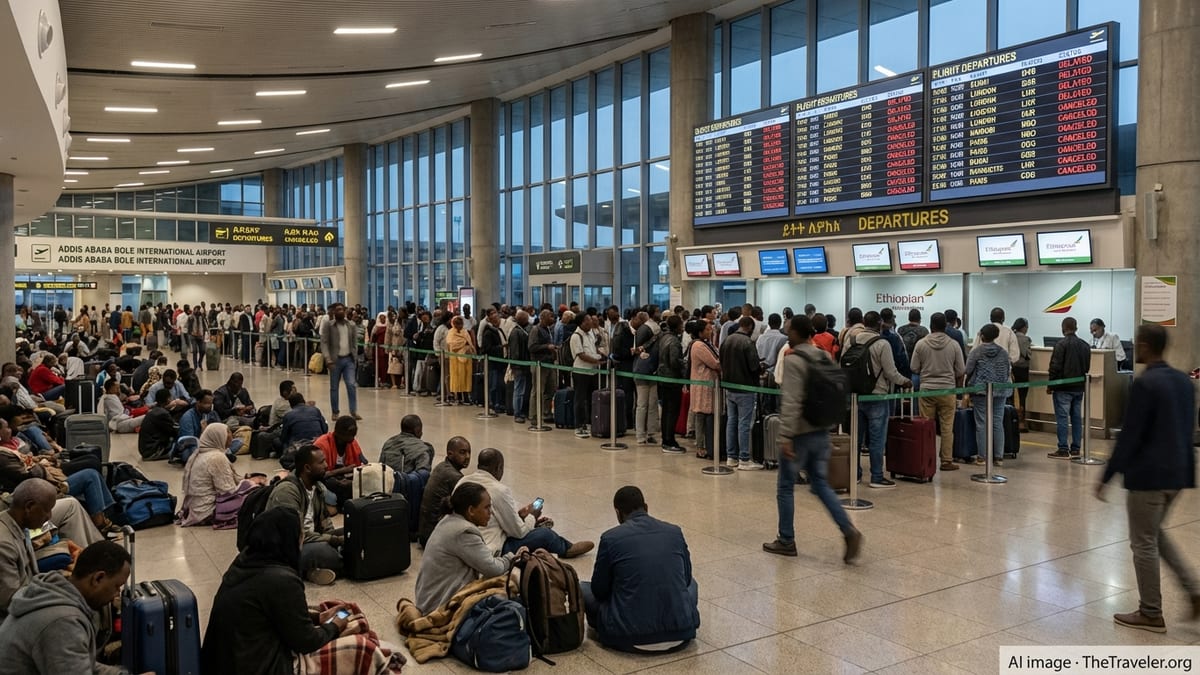
Travel-focused reporting indicates that airlines operating in and out of Bole International Airport have not publicly announced major schedule suspensions specifically in response to the long-range attack warning. However, security alerts urge passengers to monitor flight information closely and to be prepared for route changes or delays should the situation shift.
Communications Disruptions And Practical Safety Steps
Recent State Department information on Ethiopia highlights the recurring risk of internet and phone service disruptions, especially in areas experiencing unrest. The latest embassy alert echoes this concern by advising U.S. citizens to anticipate possible outages that could affect their ability to receive updates or call for assistance at short notice.
Public guidance for travelers emphasizes several practical steps: avoiding Ethiopian military installations and other sensitive government or security sites; reviewing personal security plans, including where to shelter within accommodations; and relying on reputable news outlets rather than unverified social media posts when tracking developments. Observers note that such precautions are designed to help visitors make rapid decisions if the security environment changes.
Travel advisories also remind foreign nationals that local regulations may restrict photography of government buildings, military facilities, and security personnel. Violations of these rules can lead to arrest or detention, adding a legal dimension to the existing physical security concerns for visitors moving around urban centers or transport hubs.
What The Warning Means For Future Trips To Ethiopia
For travelers considering future journeys to Ethiopia, the October 2026 alert points to a period of heightened uncertainty, particularly in the country’s north. Travel-news outlets describe a landscape in which world‑class cultural sites and natural attractions coexist with localized conflict, political tension, and evolving military activity, making careful advance planning essential.
Industry analysts following the Horn of Africa note that security assessments can change quickly, with some regions reopening to tourism while others become newly restricted. As a result, prospective visitors are encouraged to track official travel advisories up to their date of departure, factor flexible booking policies into their plans, and consult their travel insurance providers about coverage related to conflict and security incidents.
For now, the latest U.S. Embassy alert underscores that anyone currently in Ethiopia, or considering travel there in the coming weeks, should pay particular attention to official security messages, stay clear of military infrastructure, and keep contingency plans ready in case of further developments linked to the reported risk of long-range attacks.