


For years I mentally filed Hostelworld under “websites for gap‑year backpackers.” In my head it belonged to sticky-floored party hostels, 18-year-olds on their first big trip, and communal kitchens that never quite recovered from last night’s pasta experiment. Then I actually started using it in my thirties and forties. What I found was not just a booking site for the young and restless, but a surprisingly flexible tool for all kinds of travelers: remote workers, couples, midlife first-timers and even retired solo explorers stretching their budgets.
Get the latest updates straight to your inbox!
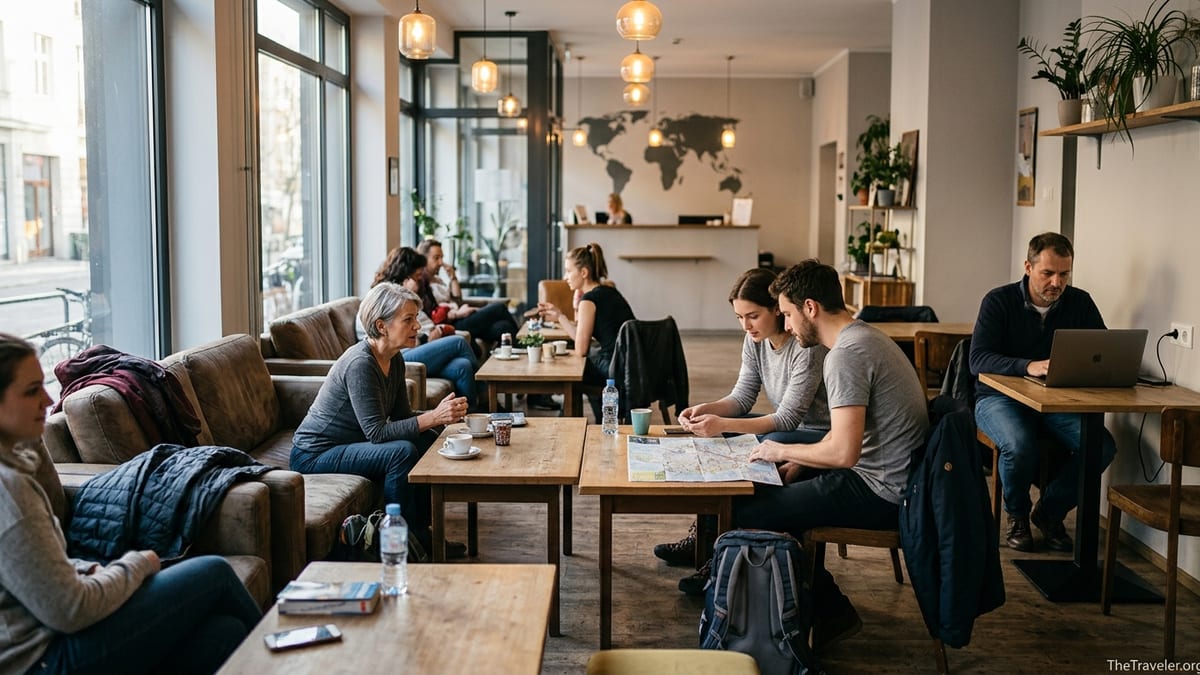
How Hostelworld Quietly Grew Up
Hostelworld launched in 1999 and spent its first decade associated almost entirely with youth hostels and backpacking culture. That reputation stuck even as the platform evolved. Today the company describes itself as a social network powered online travel agent helping travelers “find people to hang out with,” and lists accommodation partners in more than 180 countries. The core remains budget stays, but the spectrum now ranges from classic dorms to boutique hostels with private suites that rival mid-range hotels in comfort and design.
Booking data from Hostelworld and the broader hostel industry shows that solo travelers still dominate, but they are not all students on a shoestring. Many are young professionals, freelancers and digital nomads treating hostels as a base for multi-week stays rather than chaotic weekend blowouts. Industry analysis also notes steady growth in bookings across Asia and Latin America, where new properties are purpose-built with coworking spaces, rooftop bars and a mix of dorms and well-finished doubles.
In parallel, a quieter shift has been happening in who actually checks in. Online communities for solo travel are full of posts from people in their thirties, forties and fifties who are testing hostels for the first time in decades, often after a divorce, a career break or children leaving home. Many of them start on Hostelworld simply because it remains the most recognizable platform to compare hostels and read detailed reviews, even if they have not worn a backpack since the early 2000s.
That combination of a broader property mix and a more diverse guest profile means that the stereotype of Hostelworld as a 20-year-old’s playground is now badly outdated. Yes, you can still find beer-pong hostels, but they appear alongside quiet, design-focused spots and hybrid hostel-hotels where an older solo traveler fits in as naturally as a gap-year student.
Beyond Party Dorms: What You Actually Find on Hostelworld Now
Open Hostelworld today and filter by almost any major city and you will see a much richer range of options than the old image of stacked metal bunk beds suggests. In Lisbon, for example, the “for couples” filter returns places such as The Independente Hostel & Suites and Living Lounge Hostel, where private rooms feel closer to boutique hotel standards. Prices for privates on a typical spring weeknight often sit in the range of what you would pay for a basic budget hotel on the city outskirts, but you are sleeping in the lively center instead.
In Mexico’s Tulum, Mayan Monkey regularly appears in digital nomad roundups because of its poolside coworking areas and laptop-friendly common spaces. In Bali, hostels like Tribal are designed from the ground up for people who need to open their laptops in the morning and close them just in time for sunset drinks. On Hostelworld these properties list specifics like Wi-Fi strength, dedicated work zones and weekly community events. Those details matter far more to a remote worker in their mid-thirties than whether a bar crawl runs seven nights a week.
In the United States, Denver’s Hostel Fish includes a reading lounge that doubles as a quiet work area, and offers dorms with privacy curtains as well as private rooms. Across Europe, you can now search filters on Hostelworld for key amenities like female-only dorms, wheelchair access or “family friendly,” all of which signal that the guest mix extends well beyond fresh-out-of-high-school backpackers.
Crucially, the review culture on Hostelworld has matured along with the properties. Many recent reviews explicitly mention the age range of guests, the overall vibe and whether a place felt welcoming to solo travelers who were not there to party. A typical review might note that there were “plenty of people in their thirties and forties” or that the hostel was “more relaxed than a classic party spot, with quiet hours respected.” Reading between those lines can be the difference between a restorative base and a sleepless night.
Older Than 30 and Curious? Real Experiences From the Road
Spend a few minutes scrolling through solo travel forums and you will find countless variations on one question: “Am I too old for hostels?” Replies often come from travelers who have actually used Hostelworld to book in midlife and beyond. One woman in her early fifties, for instance, described staying in mixed-age dorms across Costa Rica and Chile after booking everything through Hostelworld. She reported sharing dorms with people in their twenties, thirties and sixties, and noted that outside a few explicitly party-focused places, nobody batted an eyelid at her age.
Another widely shared story comes from a woman in her sixties who booked female-only dorms in places such as Mérida, Mexico using Hostelworld. She pointed out that by traveling in shoulder season and choosing smaller, well-reviewed hostels with strict quiet hours, she frequently ended up with a dorm to herself or with one or two other guests of mixed ages. Her main takeaway was not that hostels were suddenly aimed at retirees, but that the platform made it easy to identify calm, well-run properties where her age was neither a novelty nor a problem.
Male travelers approaching or past forty often report a similar pattern. Many choose private rooms in hostels rather than dorms, partly for comfort and partly to avoid making younger guests uncomfortable in a shared space. A common strategy is to look for hostels that emphasize social spaces like communal dinners, walking tours or board-game nights, then pay for a private room that costs roughly what a mid-range hotel would, but comes with a built-in social network.
These anecdotes highlight an important shift in perspective. When older travelers do run into friction, it is rarely because Hostelworld “isn’t for them,” and more often because they have accidentally picked a property designed to cater to an all-night-party crowd. Once they start filtering for the right kind of hostel, age fades into the background and practical questions like storage, security and sleep quality move to the foreground where they belong.
Using Hostelworld as a Tool, Not a Typecast
The biggest mental shift I made was treating Hostelworld as a search engine and review platform rather than a label for a particular lifestyle. Instead of asking, “Am I the kind of person who stays at a Hostelworld hostel?” I began asking, “Can I use this site to find the kind of place that suits how I travel now?” That question changes the way you interact with the filters, photos and reviews in front of you.
For example, if you are a 38-year-old solo traveler heading to Lisbon, you might start by filtering for “hostels for couples” or “quiet” even if you are not part of a couple. Properties in those lists often lean toward better soundproofing, more private bathrooms and calmer social spaces. You might then focus on hostels that offer private rooms, even if you are open to a small dorm, simply because those properties usually attract a slightly older mix who are willing to pay a bit more for comfort.
Next, the review section becomes your primary guide. Search for recent comments that mention age range, noise levels and staff attitude toward solo travelers. Reviews that highlight organized dinners, small group tours or language-exchange nights usually indicate a friendly, mixed-age environment, while repeated references to bar crawls and drinking games suggest a younger, more intense scene.
Even basic details like check-in photos and common-area images can be revealing. A clean, well-lit kitchen, multiple seating areas and clear communication about quiet hours are signs of a hostel that expects guests to cook, work and rest, not just sleep off last night’s party. Hostelworld’s interface allows you to compare all of this across properties in the same way you might compare hotel amenities on a mainstream booking site.
Solo Women, Digital Nomads and Couples: Who Else Uses Hostelworld Now?
Hostelworld’s own key facts highlight that a strong majority of its customers travel solo, and that a significant share of these are women. For many solo female travelers, especially first-timers, the platform’s filters for female-only dorms and its detailed user reviews are a deciding factor. Whether booking a women’s dorm in Berlin, a surf hostel in Portugal or a bed in Bangkok, solo women routinely use Hostelworld comments to gauge how comfortable they felt walking back at night, whether lockers were secure and how staff handled inappropriate behavior.
Digital nomads are another growing group. Articles on Hostelworld’s own blog now spotlight “digital nomad friendly” hostels, such as Oasis Backpackers’ Lisbon with dedicated coworking areas, JOY Setas Coworking in Seville, or Tribal in Bali, all of which combine fast Wi-Fi with structured work zones and community events. These places commonly attract travelers in their late twenties through forties who are balancing client calls with evening meetups, not racing through a checklist of nightclubs.
Couples increasingly turn to Hostelworld for city breaks and long weekends, particularly in Europe. Take Lisbon again: properties like LX Hostel, set within the creative hub of LX Factory, are marketed as social yet comfortable bases where couples can book a double room, enjoy rooftop sunsets and still dip into occasional hostel events. For a weekend in the Portuguese capital, a private room booked through Hostelworld might cost roughly the same or slightly less than a compact hotel room, with the bonus of a built-in community.
Families and older pairs are slowly joining the picture too. Some hostels explicitly mark themselves as “family friendly,” with private family rooms and quiet hours, effectively functioning as simple guesthouses that happen to be listed on Hostelworld. Their guests might never step into a sprawling 12-bed dorm, yet they use the same booking engine and review ecosystem that backpackers rely on.
Practical Tips for Older or First-Time Hostelworld Users
If you are over thirty, returning to hostels after a long break or dipping your toe in for the first time, a few practical tactics can make Hostelworld feel like a tailored tool rather than a gamble. First, do not be afraid to pay for a private room in a hostel. It often costs less than a comparable hotel in the same neighborhood and buys you both privacy and access to social spaces. In many cities, you can expect a clean, simple double room in a central hostel to sit somewhere between budget and mid-range hotel pricing.
Second, read the “house rules” section carefully. Some hostels do set maximum ages for dorm beds, often around 35 or 40, usually to preserve a particular type of backpacker atmosphere. Those policies are clearly disclosed on Hostelworld, so you can avoid awkward surprises by checking before booking. If you do not see any age limits, assume the hostel is open to a broad guest mix and focus instead on reviewing comments about noise, cleanliness and security.
Third, leverage the power of recent reviews. Look for observations from travelers whose style mirrors your own: solo women, older backpackers, remote workers or couples on short breaks. Many reviewers now explicitly mention whether they were working remotely, what the Wi-Fi was like for video calls or whether staff stepped in when guests broke quiet hours. These details are more helpful than any glossy marketing description.
Finally, be honest with yourself about the vibe you want. If you are traveling for cultural experiences, early-morning hikes or language classes, book hostels that emphasize walking tours, communal dinners or cultural events rather than club promotions. If sleep matters more than socializing, choose smaller dorms, female-only rooms or privates, and look out for words like “calm,” “chill” or “quiet” in the latest reviews.
The Takeaway
The idea that Hostelworld is only for young backpackers belongs to an earlier era of travel. While the platform still serves that audience well, it has quietly expanded into a versatile tool for a much wider range of travelers. From digital nomads in their thirties to couples planning city breaks and older solo women reclaiming their independence, countless people now use Hostelworld for reasons that have nothing to do with all-night parties.
What matters is not whether you fit an imagined demographic, but whether you use the platform deliberately. Filters, photos, house rules and above all recent reviews give you enough information to choose places that match your travel style and life stage. Once you do, age becomes just another detail in a dorm full of strangers who, for a few nights, share the same kitchen, stories and city streets.
If you have been avoiding Hostelworld because you assumed it was only for youth hostels and gap-year crowds, consider giving it another look. With a bit of careful reading and honest self-assessment, you may find that the right hostel in the right city at the right time feels less like a throwback to your twenties and more like a modern, flexible way to keep exploring the world.
FAQ
Q1. Am I too old for Hostelworld if I am over 40?
There is no universal age limit for using Hostelworld. Many travelers in their forties, fifties and beyond book hostels through the platform, often choosing private rooms or smaller, quieter dorms. The key is selecting the right property for your comfort level rather than assuming the site is only for people in their twenties.
Q2. How can I tell if a hostel listed on Hostelworld is a party hostel?
Look closely at recent reviews and the property description. Frequent mentions of bar crawls, loud music until late, cheap drink promotions and rooftop parties indicate a party-focused hostel. If reviews emphasize quiet hours, cleanliness and relaxed social events like dinners or walking tours, the vibe is usually calmer.
Q3. Are there age limits for hostel dorms on Hostelworld?
Some hostels do set age limits for dorm rooms, often capping guest age around 35 or 40 to maintain a specific atmosphere. These rules are typically listed in the “house rules” section on Hostelworld. If age is not mentioned, the dorms are generally open to adults of all ages.
Q4. Is Hostelworld safe for solo female travelers?
Many solo women use Hostelworld to book female-only dorms and carefully chosen mixed dorms around the world. Safety depends on the individual property, so it is important to read reviews that mention security, staff responsiveness and how comfortable solo women felt on-site and walking back at night.
Q5. Why would I book a private room in a hostel instead of a hotel?
A private room in a hostel often combines hotel-like privacy with hostel-style social spaces, such as shared kitchens and lounges. Prices are frequently comparable to budget hotels, but you gain easier opportunities to meet other travelers through organized events, common areas and tours.
Q6. Can digital nomads use Hostelworld to find work-friendly places?
Yes. Many hostels now highlight Wi-Fi speed, coworking spaces and laptop-friendly areas on their Hostelworld listings. Digital nomads often filter for properties that mention coworking, quiet lounges and reliable internet, then confirm suitability by reading the most recent reviews from remote workers.
Q7. How do I avoid feeling out of place as an older guest in a hostel?
Choose properties that attract a wider age mix by focusing on quieter hostels, private rooms and those promoting cultural or outdoor activities rather than heavy nightlife. Once there, engage naturally: join dinners, tours or conversations in common areas without forcing interaction, and respect shared-space etiquette just as you would expect others to respect it.
Q8. Are there family-friendly hostels on Hostelworld?
Yes. Some hostels describe themselves as family-friendly and offer private family rooms, early quiet hours and calmer social spaces. These properties function almost like simple guesthouses, but are listed on Hostelworld so families can benefit from transparent pricing and detailed guest reviews.
Q9. What should I look for in Hostelworld reviews before booking?
Pay close attention to recent comments about cleanliness, security, noise levels, staff attitude, Wi-Fi quality and the general age range of guests. Reviews that mention whether quiet hours were respected, how issues were handled and whether solo travelers felt welcome are especially useful.
Q10. Is Hostelworld only for booking dorm beds?
No. While dorm beds are a major part of its inventory, Hostelworld also lists a wide range of private rooms and hybrid hostel-hotel properties. Many travelers who never set foot in a dorm still use Hostelworld to book affordable, social accommodation with the privacy and comfort they prefer.