


More news on this day
Severe thunderstorms over Atlanta on June 13, 2026, have unleashed major disruption at Hartsfield-Jackson International Airport, with widespread cancellations and delays rippling across Delta Air Lines and Southwest’s domestic networks.
Get the latest news straight to your inbox!
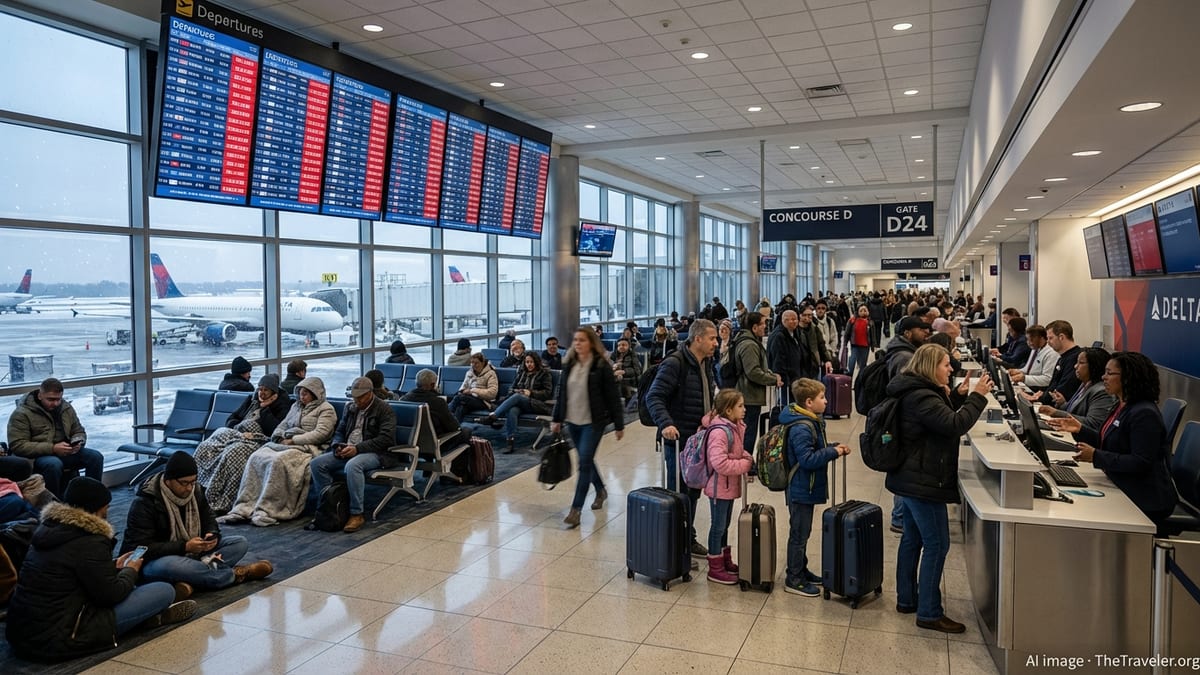
Weather Chaos at the World’s Busiest Hub
Hartsfield-Jackson Atlanta International Airport, the world’s busiest passenger hub, entered another day of weather-driven turmoil on Saturday as powerful thunderstorms moved through north Georgia. Publicly available aviation tracking data and local broadcast reports indicate that repeated storm cells brought lightning, low visibility, and ground stops that slowed or temporarily halted operations.
The Federal Aviation Administration’s real-time status dashboard showed departure and arrival programs fluctuating through the day, with flights into Atlanta periodically held at origin airports while storm intensity peaked over the airfield. That traffic-management pattern, familiar to frequent Atlanta travelers, translated into rolling delays that often extended well beyond the duration of the heaviest rain over the airport itself.
Previous episodes this spring, including a ground stop tied to thunderstorms in late April, had already highlighted how quickly convective weather can overwhelm the airport’s tightly timed operation. The latest system arrived as summer travel demand builds, magnifying the impact on passengers who depend on Atlanta as a primary connecting point across the Southeast and beyond.
Operational data compiled from flight-status services on June 13 pointed to a mix of outright cancellations and extended delays, with dozens of departures pushed back and a smaller but still significant number of services scrubbed altogether as airlines worked within weather and crew-duty constraints.
Delta’s Hub Operation Faces Rolling Disruptions
As Atlanta’s dominant carrier, Delta Air Lines absorbed the brunt of the thunderstorm-related disruption. Real-time schedules showed a succession of delayed departures from the airline’s Atlanta hub, including short-haul routes to regional cities and longer domestic services that feed Delta’s national network.
Publicly accessible flight-status boards indicated that some Delta departures from Atlanta to key regional destinations, such as Texas and the Gulf Coast, were canceled outright on Saturday afternoon, while many others operated with extended delays. Arrivals into Atlanta from cities including Washington and Salt Lake City were also subject to shifting departure times and airborne holding, adding further strain to carefully choreographed connection banks.
Because Atlanta functions as Delta’s primary transfer hub, even a modest number of cancellations can cascade quickly, severing onward connections and leaving travelers scrambling for alternatives. Social media posts from passengers throughout the day described missed connections, rebookings onto later flights, and overnight stays in Atlanta as available seats elsewhere in the network tightened.
Historical patterns from earlier storm events in 2025 and early 2026 show that Delta typically responds to sustained severe weather by pruning schedules in advance when possible, then dynamically adjusting remaining flights as conditions evolve. The June 13 thunderstorms followed a similar pattern, with the airline focusing on safety and regulatory limits around crew duty time while attempting to preserve as much of the hub operation as the weather would allow.
Southwest Operations Hit on Atlanta Point-to-Point Routes
Southwest Airlines, which runs a smaller but strategically important operation at Atlanta, also experienced significant disruption as the storms moved through the region. Flight-tracking data for the carrier’s point-to-point routes from Hartsfield-Jackson to cities such as Houston and Pittsburgh showed schedule changes and day-of-operation volatility around the same weather windows affecting Delta.
For a carrier like Southwest, which typically relies less on a single megahub and more on a distributed network, concentrated weather impacts in Atlanta can still have outsized effects. Aircraft and crews turning through the city may arrive late from prior segments, compounding delays on subsequent legs even after the worst of the weather has passed.
Reports circulating on travel forums and consumer advisory sites in recent days have described a broader pattern of Southwest disruptions tied to thunderstorms across several U.S. airports, with Atlanta featuring prominently among locations experiencing repeated summer weather challenges. On June 13, those broader operational pressures intersected with the local storm environment at Hartsfield-Jackson, increasing the risk that even minor schedule changes would snowball into missed connections and tight turnarounds.
While the scale of Southwest’s Atlanta operation is smaller than Delta’s, the impact on individual travelers is no less acute. Passengers relying on single daily frequencies to certain cities have fewer same-day alternatives when a flight is delayed or canceled, leaving rebooking and overnight accommodations as the only viable options.
Network Ripple Effects Across the United States
The disruption in Atlanta did not remain a local problem. Because Hartsfield-Jackson is both Delta’s principal hub and a major destination for Southwest among other carriers, severe thunderstorms over the airport quickly produced knock-on effects across the national air system.
Data from national flight-tracking platforms on Saturday showed elevated delay and cancellation rates on routes that either originated from or were scheduled to connect through Atlanta. Services from major East Coast and Midwest airports into Atlanta, including Washington-area fields and key southeastern gateways, appeared particularly vulnerable whenever the FAA imposed flow controls or short-term ground stops.
Earlier in the year, a separate storm system affecting the eastern United States produced hundreds of cancellations at Atlanta alone, illustrating how repeated weather events can intersect with still-fragile airline staffing and infrastructure. The June 13 storms arrived against that backdrop, further testing airlines’ ability to reposition aircraft and crews after each wave of disruption.
Travel industry analysts note that such events increasingly expose the structural reality of hub-and-spoke networks. When a single concentration point like Atlanta falters, the effects radiate outward to cities that may be experiencing clear skies, as aircraft and crews remain out of position and travelers wait for the system to reset.
What Travelers Can Expect in the Hours Ahead
For passengers with upcoming trips that touch Atlanta, publicly available airline and FAA information suggests that conditions may remain unstable in the near term, even if the most intense thunderstorms have passed. Residual delays often persist for hours as airlines work through backlogs of diverted or late-arriving aircraft, and as crews approach duty limits that can force additional cancellations late in the day.
Consumer travel guidance from aviation agencies and airline customer-service channels consistently emphasizes the value of monitoring flight status in real time, using mobile apps and text alerts rather than relying solely on airport departure boards. Same-day rebooking tools, where available, can sometimes allow travelers to shift to earlier or later departures that avoid the highest-impact storm windows.
Travel advisories published after prior weather disruptions in Atlanta also highlight the importance of leaving extra time for connections, building in longer layovers when booking itineraries through Hartsfield-Jackson during the peak thunderstorm season. For travelers already en route, airport lounges, customer-service desks, and digital chat channels remain the primary pathways for securing hotel vouchers or alternative routings when flights are canceled.
As airlines continue to adjust Saturday’s schedules, the situation at Atlanta underscores once again how tightly coupled modern air travel is to local weather. For Delta, Southwest, and their passengers, a single thunderstorm cluster over Georgia has been enough to turn routine summer journeys into long, uncertain travel days.