


More news on this day
Hundreds of travelers across the United States are facing last-minute itinerary changes as powerful storm systems trigger widespread flight delays and cancellations at major airports.
Get the latest news straight to your inbox!
Storm Systems Stretch From Gulf Coast To Northeast
Publicly available weather data shows that a series of strong systems are moving across large sections of the country, combining the remnants of a tropical storm along the Gulf Coast with severe thunderstorms marching through the Midwest and toward New England. Heavy rain, strong winds and the potential for tornadoes have created hazardous conditions around key aviation hubs.
Reports from national outlets indicate that the slow-moving tropical system that affected coastal Texas and Louisiana has continued inland, spreading bands of heavy rain across parts of Louisiana, Mississippi, Alabama and Georgia. Farther north, a separate line of intense thunderstorms has swept through the Ohio Valley and into the central Appalachians, prompting severe weather alerts and complicating flight operations along some of the busiest domestic corridors.
As the storms track east, forecasters expect the risk of damaging winds and additional downpours to extend into the Mid-Atlantic and New England. That west-to-east progression is often mirrored in airline disruptions, with delays and cancellations initially concentrated in central hubs before rippling toward major East Coast destinations later in the day.
The overlapping systems have created a challenging environment for airlines that typically rely on tightly timed schedules. When multiple storm zones develop at once, carriers have fewer options for rerouting aircraft around troubled areas, increasing the likelihood that disruptions will accumulate quickly.
Major Hubs See Ripple Effects Across Networks
Flight-tracking data and airline status boards on Friday show that the most acute impacts are being felt at large connecting hubs in the Midwest and Southeast, where strong thunderstorms and low cloud ceilings have led to ground stops and reduced arrival rates. Even short-lived restrictions can trigger extended backups when they occur during peak travel periods.
According to published coverage, hundreds of departures and arrivals have already been delayed at airports serving Chicago, Atlanta and Houston as storm cells pass through or nearby. In several cases, departures have been held at gates for extended periods while air traffic managers slow the flow of planes into congested airspace or wait for lightning to clear ramp areas.
Once a hub airport begins accumulating delays, the disruption quickly spreads outward across the airline’s network. Aircraft scheduled to operate multiple legs during the day can fall behind by hours, leaving travelers in smaller and midsize cities to face rolling delays or outright cancellations as carriers work to rebalance aircraft and crew assignments.
Even airports that are not directly under severe weather can experience significant knock-on effects. Flights inbound from storm-affected hubs may arrive late or be scrubbed altogether, leading to cancellations on subsequent outbound segments. This pattern is especially visible on popular business and leisure routes that depend on tight connections through one or two large nodes.
Airlines Turn To Preemptive Cancellations And Flexible Policies
In response to the evolving conditions, airlines have increasingly relied on preemptive schedule cuts to reduce the number of aircraft and passengers exposed to the worst of the storms. Industry analyses show that canceling a portion of the schedule in advance is often less disruptive than attempting to operate every flight and then reacting once weather deteriorates.
Carriers are also promoting flexible rebooking policies for travelers scheduled to pass through the hardest-hit airports. In many cases, passengers are being allowed to change to earlier or later flights within a defined travel window without additional change fees, provided they keep the same origin and destination. Such waivers are designed to encourage fliers to spread demand away from peak hours when severe weather is most likely.
Airlines are simultaneously working to reposition aircraft and crews to locations where they can restart operations quickly once conditions improve. Publicly available operational updates show that carriers often prioritize long-haul and high-demand routes when rebuilding their schedules, while some shorter regional segments may be consolidated or temporarily suspended.
These strategies have become increasingly common in recent years as airline networks grow more complex and weather patterns produce more frequent episodes of disruptive storms. By planning around severe conditions, carriers aim to keep at least part of their schedules moving instead of allowing the entire network to seize up.
Travelers Face Crowded Terminals And Limited Options
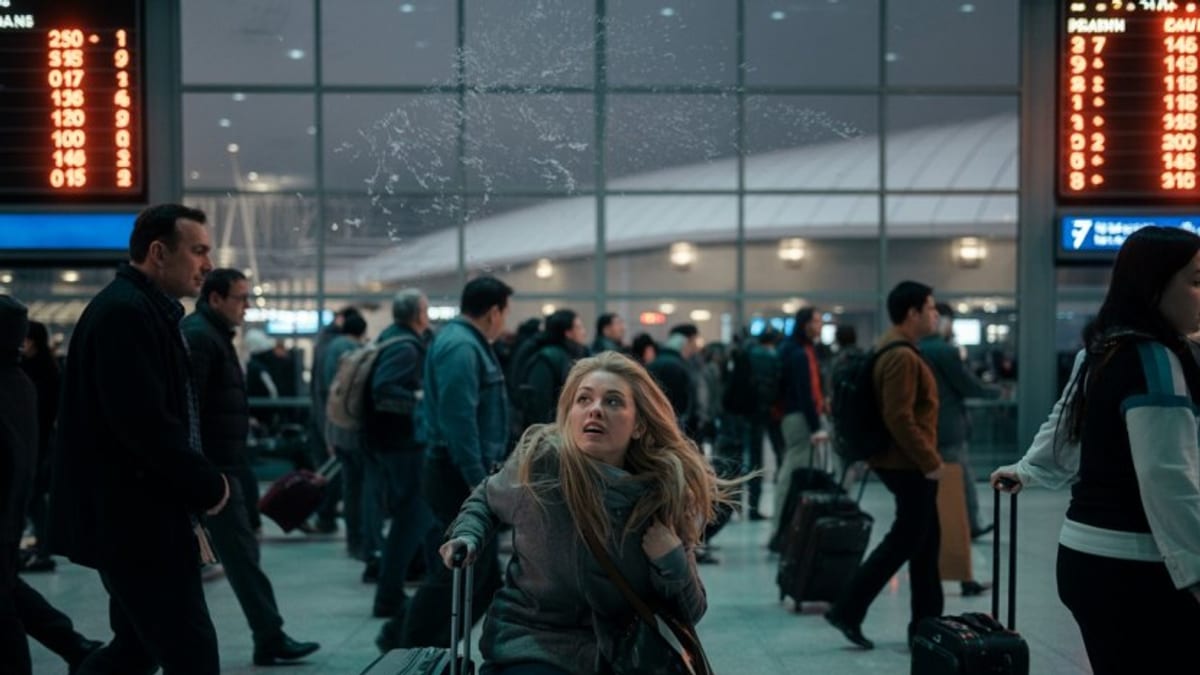
For individual passengers, the immediate impact of the latest disruptions is most visible in crowded terminals, long lines at customer service desks and busy airline apps as travelers search for alternative options. When storms affect several hubs simultaneously, the number of available seats on later flights can shrink quickly, particularly for travelers hoping to rebook on the same day.
Airport operations teams are shifting staff to assist with rebooking and wayfinding as delays accumulate. Public updates from several airports highlight the use of digital displays and push notifications to keep travelers informed about gate changes, departure times and the availability of amenities such as food, water and charging stations during extended waits.
Travel experts generally recommend that passengers confronted with weather-related cancellations act quickly to secure alternate flights, including considering surrounding airports or connections at less affected hubs. At the same time, travelers are encouraged to build extra time into their itineraries, particularly when connecting to cruises, tours or international departures that may be more difficult to rebook.
With forecasts indicating that bands of heavy rain and strong storms will continue moving east through the end of the day, additional disruptions are possible as the system intersects with evening departure banks. Travelers planning to fly through impacted regions are being advised, through airline and airport communications, to monitor their flight status closely and arrive at the airport earlier than usual.
What The Disruptions Signal For Summer Travel
The latest round of weather-related chaos arrives as airlines head into one of the busiest stretches of the summer travel season, when planes are already operating close to full and crews are tightly scheduled. Industry observers note that episodes like this serve as an early stress test for systems that will face sustained pressure through the July and August peak.
Recent seasons have shown how quickly storms can overwhelm even robust contingency plans, particularly when they linger over key hubs or recur over several consecutive days. When aircraft and crews are out of position for long periods, the resulting backlog may take multiple days to clear, and some travelers can find themselves stranded overnight or rerouted through distant cities.
At the same time, airlines and airports have invested heavily in new weather monitoring tools, improved schedule planning and enhanced communication platforms intended to minimize confusion during events like this. Publicly shared case studies from previous severe weather episodes suggest that clear, frequent communication and proactive rebooking options can significantly reduce traveler frustration even when delays are unavoidable.
With forecasters warning that strong convective storms and tropical systems are likely to remain a feature of the coming months, the disruptions caused by the latest severe weather serve as a reminder that flexibility is increasingly an essential part of air travel. For those flying in the days ahead, staying informed and preparing for potential changes may be the most effective way to navigate an unsettled sky.