


Landing at San Francisco International Airport after a long flight, many travelers simply want a straightforward ride into the city. Taxis remain one of the most convenient options from SFO to central San Francisco, especially if you are arriving late at night, carrying heavy luggage, or heading straight to a hotel. This guide walks you through how taxis work at SFO today, what you can expect to pay, where to find official ranks, and when a cab is easier than taking BART or other transit.
Get the latest updates straight to your inbox!
How Taxis Work at SFO Today
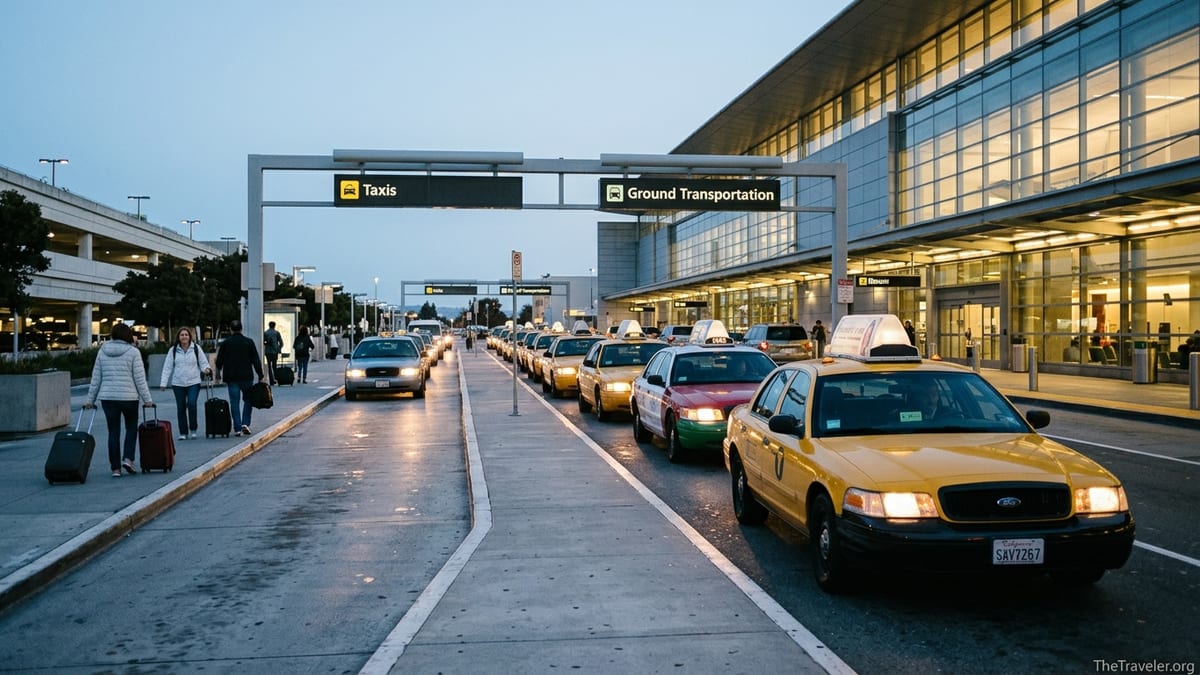
San Francisco International Airport is laid out as a ring of four terminals, all connected by the free AirTrain people mover. Regardless of whether you land at Terminal 1, 2, 3, or the International Terminal, official taxis depart from the same type of area: the center roadway islands on the arrivals and baggage claim level. Signs for "Ground Transportation" and "Taxis" guide you from the baggage carousels straight out to these islands.
The airport operates designated taxi zones at each terminal, and only licensed cabs with airport permits are allowed to pick up there. You will see standard San Francisco yellow cabs as well as other liveries that still display a roof light, company name, and a visible taximeter inside. Avoid anyone approaching you inside the terminal offering a "taxi" ride; legitimate taxis do not solicit inside the building and must wait in the official queue.
Uniformed taxi coordinators usually staff each taxi zone from early morning into the late night. They help manage the line of cabs, direct passengers to the next vehicle, answer questions about estimated fares to neighborhoods like Union Square or Fisherman’s Wharf, and can call for a wheelchair accessible taxi if you need one. During slower overnight hours there may be fewer staff, but the official taxis still use the same curbside islands.
All SFO taxi trips operate on a meter rather than a flat fare. However, both the city and airport publish rough fare estimate tables for popular destinations, which many coordinators keep at the stand. These estimates assume normal traffic; if you land on a Friday at 5 p.m. or when a major event is ending at Oracle Park or Chase Center, expect the meter to run higher as you sit in congestion.
Understanding SFO Taxi Fares and Surcharges
San Francisco taxi fares are regulated by the city. As of mid 2026, the standard meter starts with a flag drop for the first small portion of the ride, then charges per mile as you travel and per minute when the vehicle is moving slowly or stopped in traffic. From SFO there is also an airport exit surcharge added to the meter at the start of the trip. This combination explains why many travelers see an initial amount a bit above ten dollars on the meter before they have even left the terminal curb.
One common recent example reported by passengers is a starting meter of about 10 dollars for a trip beginning at SFO, which reflects the base city flag drop plus the airport’s roughly six dollar taxi fee bundled into the fare. From there, the meter climbs with distance and time. On a typical late evening with light traffic, a ride from SFO to a hotel near Union Square or Powell Street might total in the range of 50 to 70 dollars including tip, depending on route, traffic, and your exact address.
Trips that go well beyond central San Francisco can cost significantly more. Once a taxi takes you more than 15 miles past the city limits or 15 miles beyond the airport itself, the meter rate increases to a higher percentage of the standard rate, so long suburban or out-of-town journeys will reflect that. For example, a cab to Silicon Valley cities such as Palo Alto or Mountain View, or north across the Golden Gate Bridge to Sausalito, can easily exceed 100 dollars when traffic is heavy.
Sharing a taxi can be a cost saver for small groups. Up to five passengers are generally allowed in a standard cab for the same metered fare, as long as everyone is going to the same destination or close by. That means a 60 dollar ride to a downtown hotel split among three friends works out to about 20 dollars each plus tip, which is often competitive with app-based rides when surge pricing is active.
Where to Find Official Taxi Ranks at Each Terminal
All taxi ranks at SFO are located on the arrivals and baggage claim level, not on the departures level. Once you collect your bags, follow the overhead signs marked for "Ground Transportation" and then for "Taxis." These lead you through sliding doors to the curb, and then across to the center island where the official taxi queues form. The layout is similar at Terminal 1, Terminal 2, Terminal 3, and both sides of the International Terminal.
At Terminal 1, which handles many domestic carriers, taxis wait along the center island in front of the numbered doors near baggage claim. Terminal 2 and Terminal 3 have nearly identical setups, with clearly marked poles indicating zones for taxis and separate zones for hotel shuttles and shared vans. The International Terminal has multiple taxi loading areas depending on whether you exit on the A side or G side, but in both cases the same rule applies: walk to the center island and look for the taxi signs and the line of cabs.
If you arrive at a different terminal than your traveling companions, the free AirTrain is the simplest way to meet up and take a taxi together. Ride the Red Line to the International Terminal or any domestic terminal stop, then regroup in the arrivals hall and walk out together to one taxi rank. AirTrain stations are well signed inside the airport and run 24 hours a day, so even late-night arrivals can move between terminals without stepping outside.
During peak arrival times, such as weekday evenings or after big conventions, you may find a noticeable line of passengers at the taxi island. In those cases, airport coordinators usually keep the queue moving by calling taxis from the holding lot located in the domestic garage area. If you are unsure which line is for taxis versus app-based rides or shuttles, simply ask the nearest coordinator or look for cabs with roof lights and meters waiting at the curb.
Luggage, Groups, and Late-Night Arrivals
Taxis are often the most straightforward option at SFO if you are carrying multiple suitcases, traveling with small children, or arriving late at night when train and bus options are less frequent. You can load standard checked bags into the trunk without special fees, although a driver may add reasonable charges or ask for a modest tip if your luggage is unusually bulky or heavy, such as ski gear or large musical instruments.
Families with strollers and car seats generally find taxis easier than navigating crowded transit platforms. While some travelers bring their own child seats, local rules do not require taxis to provide them, and they are not commonly available. If you are concerned about this, it is best to carry a travel-friendly car seat or use a rideshare service that allows you to request one in advance, then compare that option against the simplicity of walking straight to the taxi rank.
Late-night arrivals between roughly midnight and 4 a.m. are where taxis really stand out. BART, the regional rail system, does not operate 24 hours a day, and the last trains from SFO toward downtown usually depart around midnight. After this, options like airport buses to the city or late-night rideshare can involve longer waits. By contrast, SFO keeps taxis circulating through the ranks overnight, even if the number of vehicles is lower than during the day. Travelers arriving on delayed transpacific flights often report that a taxi is the quickest way to reach central hotels at 1 or 2 a.m.
Groups also benefit from taxis when they want to stay together door to door. For example, a family of four landing from New York and booked into a hotel near Fisherman’s Wharf might choose a single taxi, stacking suitcases in the trunk and holding carry-ons on their laps, instead of juggling four separate train tickets and walking uphill with luggage from the nearest BART station.
Hotel Zones in San Francisco and Typical Taxi Costs
San Francisco’s main visitor hotel areas cluster in a few distinct neighborhoods, and taxi fares from SFO vary accordingly. The most central zone is Union Square and the surrounding blocks around Powell, Market, and Geary Streets, where many chains like Hilton, Marriott, and boutique hotels are located. From SFO to this core downtown area, a typical taxi journey in moderate traffic often falls in the ballpark of 50 to 70 dollars including a normal tip of 15 to 20 percent.
Just northeast of Union Square, the Embarcadero and Ferry Building area features upscale waterfront hotels and business properties favored by conference travelers. A taxi from SFO to this zone can be similar in price to Union Square, although taking the wider route along the Embarcadero can add a few extra minutes. Expect your fare to land around the same range, with some variation for rush hour delays approaching the Bay Bridge ramps.
North of downtown, Fisherman’s Wharf and North Beach form another major hotel corridor. Rides here are slightly longer, with the cab continuing through downtown streets and often contending with tourist traffic on Columbus Avenue or near Pier 39. Under light conditions, the meter might total somewhere in the 60 to 80 dollar range including tip, but if you arrive during a busy weekend afternoon it can climb higher as the taxi crawls through waterfront congestion.
On the western side of the city, around the Sunset and Richmond districts near Golden Gate Park, hotels are fewer but short-term rentals and guesthouses are common. A taxi from SFO to these neighborhoods typically costs similar to or a bit more than central downtown since the driver must cross the city from east to west. If you are staying near Ocean Beach or the outer Avenues, ask the taxi coordinator for a rough estimate so you can compare against the idea of taking BART into downtown and transferring to Muni or a second cab for the last leg.
Taxi vs BART: When a Cab Is Easier
BART connects SFO directly with downtown San Francisco via the airport station attached to the International Terminal. Using the AirTrain Red Line, you can reach the BART station from any terminal without going outside. For solo travelers with light luggage arriving in daytime or early evening, BART can be a cost-effective option compared with a taxi, with a typical one-way fare from SFO to central city stations such as Powell Street sitting around the low-to-mid teens in dollars as of 2026.
However, there are several scenarios where a taxi is clearly easier than BART. The first is late-night arrivals after the last BART train has departed, when even a higher taxi fare is preferable to waiting in the terminal for a rare night bus or paying for a complex rideshare pick-up. The second is if you have heavy luggage, young children, or mobility challenges. BART stations in downtown San Francisco involve escalators, elevators that can be crowded, and sometimes multiple blocks of walking at street level to reach hotels.
Another factor is door-to-door time. While the BART ride itself from SFO to downtown may only take about half an hour, you need to add time for walking to the station, waiting for the next train, purchasing or tapping a fare card, and then walking again to your hotel at the other end. For travelers landing in the evening who are tired and jet-lagged, a 30 to 45 minute taxi ride that drops you directly at the hotel entrance may feel far less stressful even if the price is higher.
Finally, taxis can make more sense for groups. Consider three colleagues arriving together for a conference at a hotel near Moscone Center. If each pays an individual BART fare from SFO and then walks 10 to 15 minutes with rolling suitcases, the savings over sharing one taxi shrink considerably. In many such cases, splitting a metered cab fare offers a good balance of cost and convenience, while still keeping everyone together from the arrival hall to the hotel lobby.
Payment, Tipping, and Safety Tips
Almost all licensed San Francisco taxis accept credit and debit cards, as well as cash. Before the driver pulls away from the curb at SFO, it is reasonable to confirm that card payment is available if you are not carrying much cash. Many cabs also support contactless payment through tap-to-pay cards or mobile wallets, but this can vary by vehicle and company. Receipts can usually be printed or sent by text or email, which is handy if you need documentation for expense reports.
Tipping practices in San Francisco are similar to the rest of the United States. A gratuity of about 15 to 20 percent of the fare is customary, with extra for outstanding service, help with heavy bags, or unusually late-night travel. For example, on a 60 dollar meter from SFO to Union Square, many travelers simply round up to around 70 dollars. If you are dissatisfied with the ride due to unsafe driving or unprofessional behavior, you can lower the tip and note your concerns when you later contact the taxi company.
For safety, stick to the official taxi ranks and avoid accepting rides from unmarked cars or individuals approaching you in the terminal. Licensed SFO taxis display a medallion number, company information, and a visible meter. If you have any doubts, ask the airport taxi coordinator to direct you to an approved cab. Late at night, it is perfectly acceptable to wait for the next taxi if the one at the front of the line does not feel comfortable to you.
If you leave an item in the taxi, such as a phone or small bag, immediately contact the taxi company listed on your receipt or note the medallion number and report it to airport information. While not every item finds its way back to the owner, San Francisco’s regulated taxi industry gives you a much better chance of tracking down a lost belonging than an unlicensed driver would.
The Takeaway
For many visitors, a taxi from San Francisco International Airport into the city is the most straightforward way to start a trip. Official taxi ranks are easy to find at every terminal on the arrivals level, and airport staff help organize the queues so passengers can quickly step into the next available cab. Licensed taxis are regulated, metered, and required to accept fares to destinations across the Bay Area.
While a taxi is more expensive than BART, particularly for solo travelers, it offers notable advantages when you have heavy luggage, arrive late at night, or are heading to hotel zones not immediately served by rail. Splitting the fare among several passengers often narrows the cost gap, and the simplicity of a door-to-door ride is hard to beat after a long flight. With realistic expectations about fares, awareness of the airport surcharge, and a sense of typical prices to key neighborhoods, you can make an informed choice that matches your budget and comfort level.
Whether you are heading to a conference hotel near Moscone Center, a family stay at Fisherman’s Wharf, or a guesthouse near Golden Gate Park, understanding how taxis work at SFO helps you move from baggage claim to bed with minimal stress. Combined with an awareness of when BART or other transit options may be better fits, this knowledge lets you treat your arrival not as a hassle but as a smooth first step into San Francisco.
FAQ
Q1. Where exactly do I catch a taxi at SFO?
Taxi ranks are on the arrivals and baggage claim level at every terminal, on the center roadway islands marked with "Taxi" signs. Follow "Ground Transportation" signs from baggage claim.
Q2. How much does a taxi from SFO to downtown San Francisco usually cost?
In typical traffic, many travelers pay somewhere around 50 to 70 dollars including tip for a metered ride to central downtown areas like Union Square.
Q3. Is there a flat rate from SFO to the city?
No. Official taxis use the city-regulated meter plus an airport surcharge. However, the airport and taxi stands often post approximate guide prices to common neighborhoods.
Q4. Do SFO taxis take credit cards?
Yes. Most licensed taxis accept major credit and debit cards as well as cash, but it is wise to confirm card acceptance with the driver before you leave the curb.
Q5. Is a taxi or BART better from SFO?
BART is usually cheaper for solo travelers with light luggage arriving during operating hours. Taxis are easier late at night, with heavy bags, limited mobility, or when going directly to a hotel.
Q6. Can I share a taxi from SFO with friends to save money?
Yes. Up to about five passengers can generally share a standard taxi to the same destination for one metered fare, making it more economical for small groups.
Q7. Are there accessible taxis at SFO?
Wheelchair accessible taxis are available. Ask the taxi coordinator at the rank to request one, and be prepared for a short additional wait while an accessible vehicle arrives.
Q8. What if my flight arrives after midnight?
Taxis continue to serve SFO overnight, although with fewer vehicles in circulation. If BART is no longer running, a taxi is often the fastest practical way into the city.
Q9. How long does a taxi ride from SFO to downtown take?
In light traffic, the drive is often around 25 to 35 minutes. During rush hour or major events, it can stretch past 45 minutes as you approach central city streets.
Q10. Is it safe to take a taxi from SFO?
Yes, licensed taxis at the official ranks are regulated and generally considered safe. Avoid rides from unmarked cars or anyone soliciting you inside the terminal.