


Landing at San Francisco International Airport and wondering how to reach downtown without overpaying or wrestling your suitcase across the Bay? From fast rail to door to door cars and everything in between, there are several realistic ways to get from SFO to San Francisco’s city center, each with its own balance of cost, time and comfort. This guide walks through the main options with up to date details and concrete examples so you can pick what actually works for your flight time, budget and luggage.
Get the latest updates straight to your inbox!
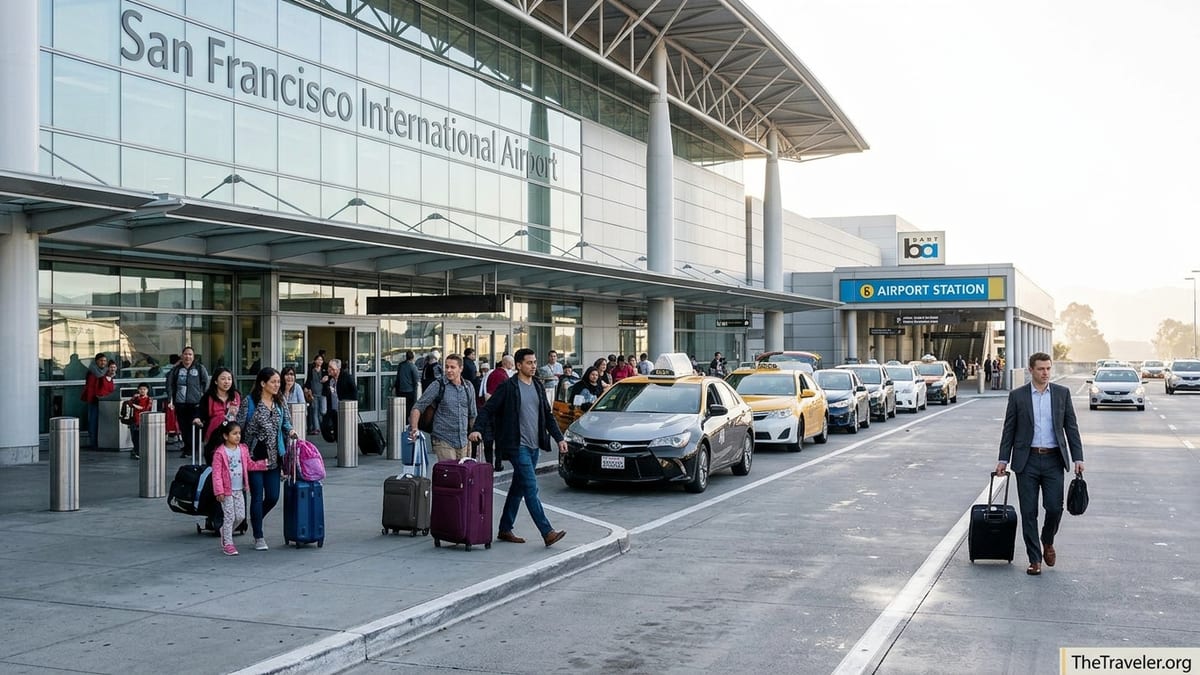
Understanding Your Route From SFO to the City Centre
San Francisco International Airport sits roughly 13 miles south of downtown San Francisco along Highway 101. In normal traffic that drive can be 20 to 30 minutes, but in rush hour it can easily stretch past 45 minutes. By contrast, the BART rapid transit line connects the airport directly to central stations like Powell Street and Embarcadero in around 30 minutes of in train time, regardless of traffic. That basic geography explains why visitors quickly end up weighing public transit against a car.
Most travelers who say they are going “downtown” are headed to areas close to the Market Street spine. The four BART stations that matter most are Civic Center, Powell Street, Montgomery Street and Embarcadero, each within walking or short rideshare distance of major hotels and offices. If you are staying at a Union Square hotel such as the Westin St. Francis or Hilton San Francisco Union Square, Powell Street station is usually your best target. For the Financial District or the Ferry Building area, Montgomery Street or Embarcadero typically make more sense.
The airport itself has a simple layout in terms of ground transport. The BART station is attached to the International Terminal. Free AirTrain people movers connect Terminals 1, 2 and 3 to that station and to the Rental Car Center. Taxis, rideshares and hotel shuttles pick up from clearly signed curbs outside each terminal. The good news is that you will not need to leave the airport complex or cross any busy roads to find your onward transport.
Before you choose an option, think about three key factors: your arrival time, how much luggage you have and whether you are comfortable handling payment apps or transit cards right after a flight. A solo traveler landing at 2 p.m. with one carry on will almost always make a different choice than a family of four arriving at 11:30 p.m. with three checked bags and two exhausted children.
BART: Fast Rail Into the Heart of Downtown
For many visitors, BART is the best value option between SFO and downtown. Trains run directly from the airport station into central San Francisco with no transfers, and the trip to Powell Street or Montgomery Street generally takes around 30 minutes once you are on board. Service typically runs from early morning until just before midnight. During the day trains are reasonably frequent, and in the evening you may wait a bit longer but can still rely on regular departures.
As of mid 2026, a one way BART fare from SFO to a downtown station usually comes out just above 10 dollars when paid with a Clipper transit card or contactless bank card. The airport station includes a small surcharge built into the fare, but even with that, you are still paying a fraction of what a taxi or rideshare will cost in most circumstances. A realistic example: a solo traveler landing from Los Angeles at 3 p.m. taps a contactless credit card at the BART gate at SFO, rides to Powell Street and exits near Union Square for a bit over 10 dollars total.
BART is especially attractive if you are traveling fairly light. The trains have level boarding and wide doors, and there is space by the doors for suitcases, so one roll aboard and a backpack is easy to manage. Even with one checked bag, most people are comfortable rolling directly onto the train at SFO and then wheeling along the flat concourse at Powell Street or Montgomery. All downtown stations have elevators for travelers who cannot manage stairs or escalators with luggage.
There are some situations where BART is not ideal. If your hotel is not close to a BART station, such as properties in Fisherman’s Wharf, Pacific Heights or the Marina District, you will still need an extra leg by Muni bus, F line streetcar or rideshare. That can add both time and hassle. Very late arrivals are another gray area. If your international flight is scheduled to land near the end of BART’s operating hours and you face possible delays at immigration, you may want the certainty of a car even if BART would technically be cheaper.
Taxis: Simple and Predictable for Door to Door Travel
San Francisco taxis remain a straightforward option from SFO, especially if your hotel is downtown and you have multiple bags or companions. Official airport taxis queue on the center islands of the arrivals level, and uniformed curbside staff coordinate boarding. Fares are metered and include a fixed airport pickup surcharge added automatically when the meter starts. Drivers are required to accept credit cards, so you do not need cash unless you prefer to tip that way.
In practice, a taxi from SFO to a typical downtown hotel near Union Square, SoMa or the Financial District will often fall in the 45 to 70 dollar range including the airport surcharge but excluding tip, depending on traffic. For example, a couple arriving from New York at 8 p.m. on a weekday might see a meter total around the high 50s for a ride from Terminal 3 to a hotel on Market Street near Montgomery. After adding a customary tip, the final cost might land near 70 dollars.
The advantages are comfort and simplicity. Your driver handles your luggage into the trunk, you sit back in a standard sedan or minivan, and you are delivered directly to the hotel entrance with no changes or stairs. If you are traveling with two or three people and sharing the fare, the per person cost starts to feel more reasonable. A family of four going from SFO to a Union Square hotel might spend around 70 dollars including tip in a taxi. Split four ways, that is not far from what you would have paid for four separate BART fares, especially once you factor in the convenience of door to door service after a long flight.
On the downside, taxis are vulnerable to traffic. During the morning and late afternoon peaks, or when there is a major event in SoMa or at the ballpark, the same ride can take much longer and push the meter higher. If your priority is a predictable arrival time, BART’s dedicated right of way will usually beat a taxi stuck in congestion on Highway 101 or city streets.
Uber, Lyft and Other Rideshares: Flexible but Variable Pricing
Rideshare services such as Uber and Lyft are widely used between SFO and downtown San Francisco. Pickups take place at signed rideshare zones, which can vary by terminal, but are generally within a short walk from baggage claim via elevators or escalators. Using rideshare means requesting your car in the app once you have your baggage and tracking the driver as they approach.
Typical base prices from SFO to central San Francisco often hover in a similar range to taxis, roughly 40 to 70 dollars for a standard ride at non peak times, though this can shift up or down. For instance, a solo traveler arriving on a Tuesday at 11 a.m. might open the app and see an estimate of around 45 dollars for an UberX to a hotel near Civic Center, while a Saturday night arrival during a major conference could see surge pricing push that same route closer to or even above 80 dollars.
The biggest advantage of rideshare is control. You see the price estimate before you commit, can choose between categories like standard, comfort or XL depending on luggage and group size, and can often add short stops if needed. Sharing an UberX between three colleagues heading to the same Financial District hotel can be efficient, especially when work is paying the fare and speed from baggage claim to check in matters more than shaving a few dollars.
The drawbacks are price volatility and occasional waits. After large flight banks arrive simultaneously or during late night hours when fewer drivers are active, you might face longer pickup times or steep surge multipliers. Some experienced travelers hedge this by checking the price of both Uber and Lyft plus the cost of BART. If BART is running and they have light luggage, they sometimes opt for the train downtown and only use rideshare for the final short hop to the hotel.
Private Transfers, Hotel Shuttles and Shared Vans
For travelers who value certainty and a smoother arrival, pre booked private transfers and hotel shuttles are worth considering. Several companies operate pre arranged sedan and SUV services that meet you in the arrivals hall with a sign and include help with luggage. Pricing typically starts above standard rideshare, reflecting the meet and greet service and fixed rates. A realistic example would be a pre booked sedan for two adults from SFO to a Financial District hotel costing in the region of 90 to 120 dollars all in, with no surge pricing to worry about.
Private transfers are particularly attractive for long haul arrivals, families nervous about managing apps and tickets after a 10 hour flight, or business travelers who need an invoice and prefer to avoid queuing. If you are arriving late at night from Europe or Asia with two large checked bags each, paying more for someone waiting at arrivals with your name and a vehicle sized correctly for your luggage can feel well worth it.
Hotel operated shuttles from SFO into downtown are far less common than at some other airports, because the distance is relatively short and city hotels rarely run their own buses. However, a few large conference hotels and airport area hotels do operate shuttles between the terminals and their properties near the airport itself. If you are staying at a hotel signed as being at SFO or in nearby Burlingame rather than in downtown San Francisco, check whether they offer a complimentary or low cost shuttle. In that case, your journey to the city center would simply be delayed until a later transfer by BART or car.
Shared shuttle vans that once dominated the market between SFO and downtown have become less common in recent years, squeezed between public transit and flexible rideshare options. Where they still operate, they typically charge a per person rate that might look attractive for solo travelers on paper, but travel times can be longer due to multiple stops at hotels along the way. For example, a shared van advertising rides in the 20 to 30 dollar per person range might still take nearly an hour if you are the last drop off after several Union Square and SoMa hotels.
Rental Cars: When Driving Yourself Actually Makes Sense
Renting a car at SFO to reach a downtown hotel is not usually the most practical or economical choice. The Rental Car Center is connected to the terminals by the free AirTrain, and all the major brands have desks there, but once you reach the city, parking becomes a major cost and headache. Downtown hotels often charge nightly parking fees that can easily exceed 60 dollars, on top of the daily rental rate, fuel and any tolls.
That said, there are situations where picking up a rental car immediately does make sense. If you plan to leave San Francisco for Napa, Sonoma, Monterey or Yosemite the next morning and want to avoid backtracking to the airport or a neighborhood rental location, it can be simpler to collect the car on arrival. A family flying in from Chicago on a Saturday afternoon with plans to drive to Napa on Sunday might pick up an SUV at SFO, spend one night at a hotel with parking near the Embarcadero, then depart early the next day before city traffic builds.
Driving from SFO into downtown follows a straightforward route along Highway 101 north, then onto city streets. In light traffic, the journey can be 20 to 25 minutes. In heavy rush hour conditions or on game days, expect longer. Visitors should also be aware of San Francisco’s dense street grid, one way streets and bike lanes. If you are not comfortable driving in urban environments after a long flight, letting someone else handle the wheel is often wiser.
In short, consider renting a car from SFO mainly if San Francisco is just a brief stop on a road focused itinerary and your hotel or accommodation clearly supports parking. If you plan to spend several days mostly on foot, using BART, Muni and the occasional rideshare, postponing any rental until after your city stay will usually save both money and stress.
Cost, Time and Luggage: Matching Options to Real Situations
Choosing the best way from SFO to the city center is easiest when you compare options against your specific circumstances instead of in the abstract. Consider first the balance between cost and total door to door time. BART is typically the cheapest reliable option that still moves quickly, especially for solo travelers or couples. If your hotel is a short walk from a downtown station, such as properties directly on Market Street, you can often be in your room for just over 10 dollars per person within an hour of landing.
When traveling in small groups, the math shifts. Two friends sharing an Uber or taxi that costs 60 dollars from SFO to a SoMa hotel are effectively paying 30 dollars each. Compared with both of them buying individual BART fares and potentially another short transit ride to reach the hotel, the time saved by door to door service can be worth that extra spend, particularly late at night or in bad weather. Families with children often find that avoiding crowded trains and multiple changes is worth a higher fare.
Luggage is the next major filter. One roll aboard and a personal item is ideal for BART or buses. Once you add two large checked bags per person, narrow train aisles, escalators and station exits become more challenging. In real terms, a couple arriving from a long international flight with three heavy suitcases and a stroller will likely feel more comfortable in a taxi, rideshare or private transfer. By contrast, a solo business traveler with a laptop bag heading to an office near Embarcadero station almost always does best hopping on the train.
Finally, think about your arrival time. If your flight lands during BART’s operating hours and you feel alert enough to follow station signs and use a contactless card, rail is a strong option. Late arrivals near or after midnight, very early morning departures to the airport, or trips scheduled on major holiday evenings may push you toward a taxi or rideshare simply because the trains and many shuttles are not running or are operating with limited schedules.
The Takeaway
If your priority is saving money and you are comfortable rolling a suitcase through stations, BART is usually the best way to get from SFO to the heart of San Francisco. It offers predictable travel times and a very competitive fare, particularly for solo travelers and couples staying near Market Street. A typical ride from the airport to Powell Street or Montgomery Street is straightforward and keeps you clear of highway traffic.
Travelers who value door to door convenience, especially those carrying lots of luggage or traveling with young children, often gravitate toward taxis, rideshares or pre booked private transfers. While more expensive, these options let you step straight from baggage claim into a car and arrive directly at your hotel lobby without dealing with tickets, fare gates or additional transfers. Splitting the cost across two or more people can make the price difference easier to justify.
Rental cars and the remaining shared shuttles fill narrower niches, worthwhile mainly for very specific itineraries or budget situations. Most visitors spending a few days in central San Francisco rely more on walking, BART, Muni and the occasional rideshare once they are in the city, and do not benefit from having a car parked downstairs. Matching your mode to your schedule, group size and luggage will almost always matter more than chasing the absolute cheapest or theoretically fastest option.
Whichever way you choose, a small amount of planning before you land at SFO pays off. Checking the current BART schedule for your arrival time, looking at live taxi and rideshare price estimates or confirming any hotel shuttle details in advance will help you move from plane seat to city street with far less stress and a far clearer sense of what you are paying for.
FAQ
Q1. What is the cheapest way to get from SFO to downtown San Francisco?
The cheapest regularly available options are public transit. BART from the airport to downtown costs a bit over 10 dollars per person, while local SamTrans buses serving the city can be a few dollars per ride but take significantly longer and involve more stops.
Q2. How long does BART take from SFO to central San Francisco?
Once you are on board, BART usually takes around 30 minutes from SFO to downtown stations like Powell Street or Montgomery Street. You should add extra time for walking from your gate to the station and any wait for the next train.
Q3. Is it safe to take BART from the airport with luggage?
Most travelers use BART safely with luggage during normal daytime and early evening hours. Trains and stations are busy and patrolled, and there is space near doors for suitcases. As in any big city, it is wise to keep bags close, avoid displaying valuables and stay aware of your surroundings, especially late at night.
Q4. How much does a taxi from SFO to downtown usually cost?
Official taxis from SFO to central neighborhoods such as Union Square, SoMa or the Financial District often end up in the 45 to 70 dollar range before tip, depending on traffic and exact destination. The meter includes a fixed airport pickup surcharge that is automatically added at the start of the ride.
Q5. Are Uber and Lyft cheaper than taxis from SFO?
Sometimes rideshares are slightly cheaper, and sometimes they are similar or more expensive. At quiet times you might see quotes in the 40 to 60 dollar range for a standard ride from SFO to downtown, but surge pricing during busy periods, late nights or major events can push prices much higher. Checking both a rideshare app and estimating a taxi fare just before you travel can help you decide.
Q6. Which BART station should I use for popular hotel areas downtown?
For Union Square hotels, Powell Street station is usually the best choice. For the Financial District and the Ferry Building area, Montgomery Street or Embarcadero are convenient. If you are staying near Civic Center or the performing arts district, Civic Center station is closest.
Q7. What is the best option if my flight arrives very late at night?
If your flight lands close to or after the time BART service ends for the night, taxis and rideshares are usually the most practical choices. They operate around the clock and pick up directly outside the terminals, though late night demand can mean slightly higher prices or longer waits.
Q8. Should I rent a car at SFO if I am staying in downtown San Francisco?
In most cases it is not necessary and can be expensive. Parking fees at downtown hotels are high, and the city is compact with extensive public transit and rideshare coverage. Renting a car makes more sense if you plan to leave the city soon after arrival for destinations like Napa, Sonoma or Monterey and have a clear plan for parking.
Q9. Are there hotel shuttles from SFO directly to downtown hotels?
Most downtown San Francisco hotels do not operate their own airport shuttles. You may find shuttles serving airport area hotels or nearby towns, but to reach the city center you will generally rely on BART, taxi, rideshare, a private transfer or in some cases a shared shuttle van service booked in advance.
Q10. What is the most convenient option for a family with small children and lots of luggage?
For families with young kids, strollers and multiple bags, a taxi, Uber, Lyft or pre booked private transfer is usually the most convenient. These options provide car seats if arranged in advance in some cases, handle luggage easily and take you directly from the terminal curb to your hotel without navigating stations, stairs or crowded trains.