


San Francisco International Airport (SFO) is one of the easiest major U.S. airports for renting a car, but the Bay Area’s tolls, parking rules, and traffic can surprise first-time visitors. This guide walks you through the Rental Car Center, free AirTrain access, how tolls and insurance work with major rental brands, where to park around San Francisco, and whether a car actually makes sense for your trip.
Get the latest updates straight to your inbox!
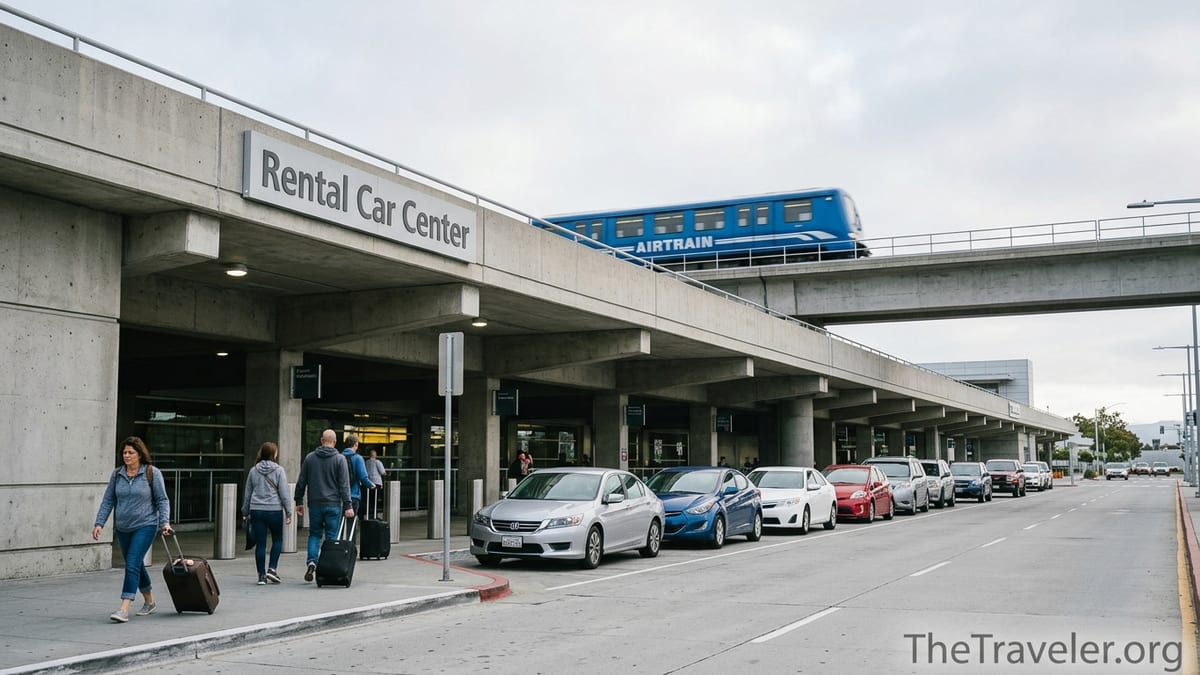
Getting to SFO’s Rental Car Center via AirTrain
SFO’s Rental Car Center is a dedicated complex that brings most major brands under one roof at the north end of the airport property. You will find counters for companies such as Alamo, Avis, Budget, Dollar, Enterprise, Hertz, National, Sixt and Thrifty in the same building, so you do not need to hunt around separate lots. The address is on North McDonnell Road, but most travelers never need to know it because access is built directly into the airport’s people mover system.
To reach the Rental Car Center from any terminal, follow signs for “AirTrain” and “Rental Car Center.” AirTrain is SFO’s free automated people mover that connects all terminals, garages, the BART station, the Grand Hyatt at SFO and the Rental Car Center. The Blue Line serves the Rental Car Center; from the terminal, you ride up to the AirTrain platform, board a Blue Line train and ride a loop that stops at all terminals and then continues out to the Rental Car Center. Trains typically run every few minutes, 24 hours a day, with a complete loop taking under half an hour, so waits are usually short.
In practice, you can expect the ride from a terminal station to the Rental Car Center to take roughly 5 to 10 minutes, depending on where you board along the loop. For example, if you arrive on a domestic flight at Terminal 2, you would take an elevator or escalator to the AirTrain platform, board the Blue Line, pass the other terminals and then continue out to the Rental Car Center without any additional fare gates or tickets. Luggage carts are allowed on board, and the trains are level with the platform, which helps if you are managing large suitcases or traveling with kids.
Returning your car is similarly straightforward. As you approach the airport by road, signs for “Rental Car Return” guide you onto a dedicated access road to the facility. After you drop the vehicle, you simply walk back into the building, take the elevator or escalator to the AirTrain platform, and ride the Blue Line back to your departure terminal. This return process usually takes less than 20 minutes from parking the car to standing at your airline’s check-in area if there are no lines at security.
What to Expect Inside the Rental Car Center
Most rental counters at SFO are grouped on an upper level of the Rental Car Center, with signage directing you to each brand. If you are a member of a loyalty program such as Hertz Gold Plus Rewards, National Emerald Club or Avis Preferred, look for the dedicated lanes or self-service kiosks, which can significantly speed up the process during busy periods. For standard bookings, you will line up at the main counter, present your driver’s license and credit card, and sign the rental agreement that outlines base rates, insurance choices, fuel policies, toll programs and any extra fees.
Vehicle pick-up areas are located on the lower levels of the same building. Once your contract is processed, an agent will direct you to the appropriate floor and stall row. Here you will find everything from compact cars suitable for navigating San Francisco’s hills to larger SUVs popular with families heading to places like Napa, Lake Tahoe or Yosemite. Before you drive off, it is worth taking a few minutes to walk around the car and photograph any pre-existing damage, including curb rash on wheels, small bumper scrapes or windshield chips. Having time-stamped photos on your phone can prevent disputes when you return the vehicle.
Some discount or off-airport brands may operate via a shuttle rather than being physically inside the Rental Car Center. If you booked with a smaller company and do not see its logo listed when you arrive, check your confirmation voucher. These operators typically pick up at a designated curb area outside the terminals and drive you to a separate lot nearby. Using the on-site brands is usually faster, but off-airport companies can sometimes offer lower rates, especially on longer rentals.
If you are arriving late at night or during a busy convention week, be prepared for lines. SFO handles heavy traffic from tech business travel and tourism, so inventories can tighten during big events. In those situations, having a confirmed reservation with a well-known brand and enrolling in the company’s loyalty program before you travel can make a noticeable difference in how long you wait for keys.
Tolls in the Bay Area: FasTrak, Bridges and Rental Car Fees
The Bay Area uses all-electronic tolling on its major bridges, and traditional cash toll booths have been phased out. Instead, tolls are collected through FasTrak, California’s electronic toll system, or via license plate images that generate a bill in the mail. For visitors in rental cars, this is where unexpected charges can appear, because rental companies often add their own toll processing fees on top of the actual bridge tolls.
Most state-owned bridges in the region, including the Richmond San Rafael, Benicia Martinez, Carquinez, Antioch, Dumbarton, San Mateo Hayward and San Francisco Oakland Bay Bridge, accept FasTrak or a pay-by-plate billing system. The Golden Gate Bridge, which connects Marin County to San Francisco, also uses electronic tolling and does not accept cash. Toll rates vary and have seen periodic increases, with standard passenger vehicles paying a base toll that can be roughly in the high single-digit to low double-digit dollar range per crossing, depending on the bridge and payment method. Exact amounts change periodically, so it is best to check current tolls shortly before driving.
Rental car companies typically offer toll programs under names like PlatePass, TollPass or e-Toll. These may charge a daily convenience fee in the ballpark of 4 to 10 dollars for each day you incur a toll, plus the actual toll itself. For instance, if you drive across the Bay Bridge and Golden Gate Bridge on the same day using a rental company’s program, you might see one day of toll service fees plus two bridge tolls added to your final bill. If you only plan one or two crossings during a week-long trip, these daily service fees can quickly exceed the tolls themselves.
To avoid high rental car surcharges, some travelers arrange to pay tolls directly through the regional toll system. The Bay Area FasTrak program allows you to set up a temporary license plate account or a short-term payment where you register your rental’s plate and add a balance for the period you will be driving. In practice, that might look like picking up your car at SFO, noting the license plate number, and then using a FasTrak website or phone system the same day to register the plate and fund it with enough money to cover anticipated crossings. When the toll system records your car on a bridge, it deducts the charge from your balance rather than sending it to the rental company first.
Managing Toll Costs Smartly in a Rental Car
Whether you should enroll in the rental company’s toll program depends on your itinerary. If you plan to base yourself in San Francisco and only drive out to the East Bay once for a day trip, it may be cheaper to set up a direct payment for that single crossing. On the other hand, if you are staying in the East Bay and will be commuting into San Francisco every morning for a week, paying the rental agency’s daily convenience fee might be simpler, even if it adds up, because it removes the risk of missed payments or penalties.
As an example, imagine you are renting a car at SFO for four days and your only toll use will be driving from the airport to a hotel in downtown San Francisco via the San Mateo Hayward Bridge and then back to the airport without crossing any other toll facility. In that scenario, asking at the counter how their toll system works is crucial. If they charge a daily enrollment fee for each day a toll is incurred, you may decide it is more economical to plan a route that avoids tolled bridges altogether, such as using non-toll freeways south of the bay or coordinating with public transit for the city portion of your trip.
It is also important to know that some express lanes on Bay Area freeways require a FasTrak tag to legally use the lane and receive any carpool discounts. Standard lanes remain free to use without a toll tag, so most visitors can simply stay out of lanes marked “Express” or “FasTrak only” unless they are certain their car is equipped and their rental contract covers tolls. If you accidentally enter a tolled express lane or cross a bridge without arranging payment, the toll authority will typically send an invoice to the car’s registered owner, which is the rental company. The company will then charge your credit card for the toll plus its stated administrative fee per incident or per day.
Because policies vary between brands and are updated from time to time, the safest approach is to ask very specific questions at the rental counter: how much is the daily toll convenience fee, does it apply only on days you actually incur tolls, and what happens if you pay tolls yourself through the regional system. Some companies treat any toll appearing through their account as triggering their fee, even if you later try to pay separately, so clarity up front can prevent surprises when your final invoice arrives weeks after the trip.
Insurance, Deposits and Credit Cards at SFO Rental Desks
Like most U.S. airports, SFO rental counters will try to sell you several layers of optional insurance. Common add-ons include collision damage waivers (CDW or LDW), liability supplements, personal accident coverage and roadside assistance plans. Daily prices can range from modest to quite high, sometimes nearly doubling the base rental rate if you accept everything. Before you travel, it helps to check whether your own auto insurance policy from home covers rental cars in the United States and whether your credit card provides secondary or primary rental coverage.
Many major credit cards issued in the U.S. offer some form of collision damage coverage when you pay for the rental with that card and decline the rental company’s CDW. This typically covers damage to the rental vehicle itself, not liability to other drivers or property. For example, a premium travel card might cover you for theft or collision damage up to a certain limit if you rent a standard car class for less than a defined number of days. However, liability coverage, which protects you if you injure someone or damage another car, may still need to come from either your personal auto policy or the supplemental liability insurance offered at the counter.
Deposits are another area where visitors can be caught off guard. Rental companies at SFO usually place a hold on your credit card that includes the estimated rental charges plus an additional security deposit. This hold might be in the low hundreds of dollars for a basic rental and higher for luxury classes. If you use a debit card, the company may place a similar hold that temporarily reduces your available balance. Some brands also restrict rentals with debit cards, especially for premium vehicles, or require proof of onward travel and additional identification. Checking your chosen company’s debit and deposit policy on its official site before arrival can prevent uncomfortable conversations at the counter.
Foreigner travelers should also ensure they bring the credit card used to make the reservation and that the primary driver’s name matches the card. Some SFO locations are strict about this, and adding additional drivers can come with extra daily fees unless they are a spouse or domestic partner covered by state law or by a promotion in your rental agreement. If you foresee multiple people driving, it is usually cheaper to add them at booking rather than at the last minute at the counter.
Driving and Parking in San Francisco and Around the Bay
Once you leave SFO, the decision to keep a rental car in San Francisco itself is often less about the driving and more about parking. Street parking in the city is a patchwork of meters, permit zones and time limits that can be hard to decode when you are jet-lagged. Most metered spaces in central neighborhoods require payment well into the evening, and meter rates vary by area and time of day. Some meters stop charging in the late evening, while others remain active. Residential side streets are frequently limited to a couple of hours for non-permit holders during daytime on weekdays, making them impractical for all-day parking.
In practical terms, if you are staying in a hotel near Union Square, Fisherman’s Wharf or SoMa, you are likely to pay for garage parking. Daily hotel parking can range from moderate to expensive, often in the high tens of dollars per night, with additional fees for oversized vehicles. Independent garages might offer slightly lower rates, but you may need to walk a few blocks back to your accommodation. Neighborhoods like the Mission District or Hayes Valley have a mix of street parking and smaller garages, yet competition for spaces can be intense, especially on evenings and weekends.
Outside San Francisco, parking tends to be easier but still regulated. In nearby cities such as South San Francisco or Daly City, you will encounter standard on-street time limits and downtown meters, with some rules prohibiting leaving a vehicle parked in one place for more than a set number of hours or days. If you are using the car mainly to visit suburban attractions, wineries or coastal areas and returning to a hotel with its own parking lot, the experience is more straightforward than trying to park in dense city neighborhoods every night.
Because street cleaning schedules and special event restrictions are strictly enforced in San Francisco, always read curbside signs carefully before leaving the car. It is not uncommon for visitors to return from dinner to find a ticket for parking in a commute lane during restricted hours or for overstaying a two-hour limit in a residential zone. Keeping a small buffer of time on meters and choosing off-street garages when in doubt can be cheaper than risking towing or multiple tickets during a short trip.
Do You Really Need a Rental Car in San Francisco?
Whether a rental car is worth it for a trip to SFO depends heavily on your plans. If your itinerary is primarily urban sightseeing within San Francisco, you may do better without a car. From the airport, you can reach the city on BART rail, ride-share or taxi and then rely on Muni buses and light rail, cable cars, walking and app-based ride services to get around. In dense neighborhoods like downtown, North Beach and Chinatown, driving can be slower than public transit, and parking costs can quickly exceed the price of transit passes.
A rental car becomes more useful if your plans include destinations that are awkward by transit or would take several transfers. For example, a family staying in San Francisco but planning day trips to Muir Woods, Sonoma wineries or Point Reyes might find a two- or three-day rental from SFO or a city location worthwhile. You could pick up the car the morning you leave for those areas, keep it overnight at a hotel with parking, and return it immediately after your last day trip. This hybrid approach can reduce both parking and rental costs while giving you flexibility when you actually need it.
If you are attending meetings at tech campuses in Silicon Valley or staying in suburban areas like Palo Alto, Mountain View or Walnut Creek, a car is often more efficient than relying on a combination of Caltrain, buses and ride-shares. Similarly, travelers heading to Lake Tahoe, Yosemite or Big Sur from SFO will almost certainly want their own vehicle. In those cases, the main question is not whether to rent, but what size and type of car makes sense for your group, luggage and any potential mountain or coastal driving conditions.
One more consideration is trip length and travel style. For a short three-day city break focused on downtown museums, Alcatraz, and the waterfront, managing without a car can be both cheaper and less stressful. For a ten-day California road trip that begins and ends at SFO and includes multiple regions, starting with a rental car at the airport and using the AirTrain only to reach the Rental Car Center is usually the most practical choice. Thinking through your likely daily movements before you book can help you decide whether the convenience of a car outweighs the costs and parking complexity.
The Takeaway
Renting a car at San Francisco International Airport is logistically simple thanks to the unified Rental Car Center and the 24/7 AirTrain Blue Line, but the rest of the Bay Area driving experience requires a bit more planning. All-electronic tolling on bridges, rental company toll programs, intricate parking rules and variable insurance and deposit policies can all affect the real cost of your vehicle beyond the headline daily rate.
By learning how to reach the Rental Car Center, asking specific questions about toll fees and deposits at the counter, understanding where parking will be straightforward versus expensive, and honestly assessing whether you need a car for your particular itinerary, you can turn what might be a confusing aspect of Bay Area travel into a predictable part of your trip. For some visitors, that might mean skipping a car altogether and navigating San Francisco on foot and by transit. For others, it could mean timing a rental to match a string of day trips or a longer California road journey. Either way, going in informed will help you make the most of your time at and beyond SFO.
FAQ
Q1. How do I get from my SFO arrival gate to the Rental Car Center?
After you collect your luggage, follow signs for AirTrain. Take the Blue Line from the terminal station to the Rental Car Center; the ride usually takes around 5 to 10 minutes.
Q2. Is the AirTrain to the Rental Car Center free?
Yes. AirTrain is a free automated people mover that runs 24 hours a day between the terminals, garages, BART station, Grand Hyatt at SFO and the Rental Car Center.
Q3. Do I need a car in San Francisco if I am only staying in the city?
Often you do not. For trips focused on central neighborhoods and typical sights like Fisherman’s Wharf and Union Square, transit, walking and ride-shares are usually easier and cheaper than driving and parking.
Q4. How are tolls handled when driving a rental car across Bay Area bridges?
Tolls are collected electronically through FasTrak or license plate billing. If you do nothing, the toll agency bills the rental company, which then charges your card with added service fees according to its policy.
Q5. Can I avoid rental car toll program fees at SFO?
Sometimes. If your rental agreement allows it, you can set up a temporary license plate or short-term account directly with the regional toll system and pay bridge tolls yourself, avoiding some rental company surcharges.
Q6. Is parking difficult in San Francisco?
In busy neighborhoods, yes. Many streets have meters, time limits or residential permit rules, and hotel garages can be costly. Using paid garages and carefully reading signs reduces the risk of tickets or towing.
Q7. What kind of deposit should I expect when renting a car at SFO?
Most companies place a hold that covers the estimated rental charges plus a security buffer, often in the low hundreds of dollars for standard cars, with higher holds for premium vehicles.
Q8. Does my credit card insurance cover rental cars in San Francisco?
Many major credit cards offer collision coverage when you pay with that card and decline the rental company’s damage waiver, but coverage details vary. Confirm terms with your card issuer before travel.
Q9. Are there alternatives to renting a car for reaching downtown San Francisco from SFO?
Yes. BART trains, ride-shares, taxis and shared shuttles all connect SFO to downtown. For many travelers staying in central areas, this is more straightforward than driving from the airport.
Q10. When does it make sense to rent a car from SFO instead of relying on transit?
A car is most useful if you are visiting destinations outside the city such as Napa and Sonoma, Muir Woods, Silicon Valley offices, Lake Tahoe or Yosemite, or if you are on a multi-region California road trip.