


For Australian families planning an overseas trip, travel insurance can be the line between an expensive disaster and a manageable hiccup. Tick Travel Insurance has built a reputation as a budget-friendly option that often appears at the top of comparison sites. But when you are traveling with children, price is only one part of the story. How does Tick actually perform for families heading overseas, and when is it a smart choice versus when you might want to look elsewhere?
Get the latest updates straight to your inbox!
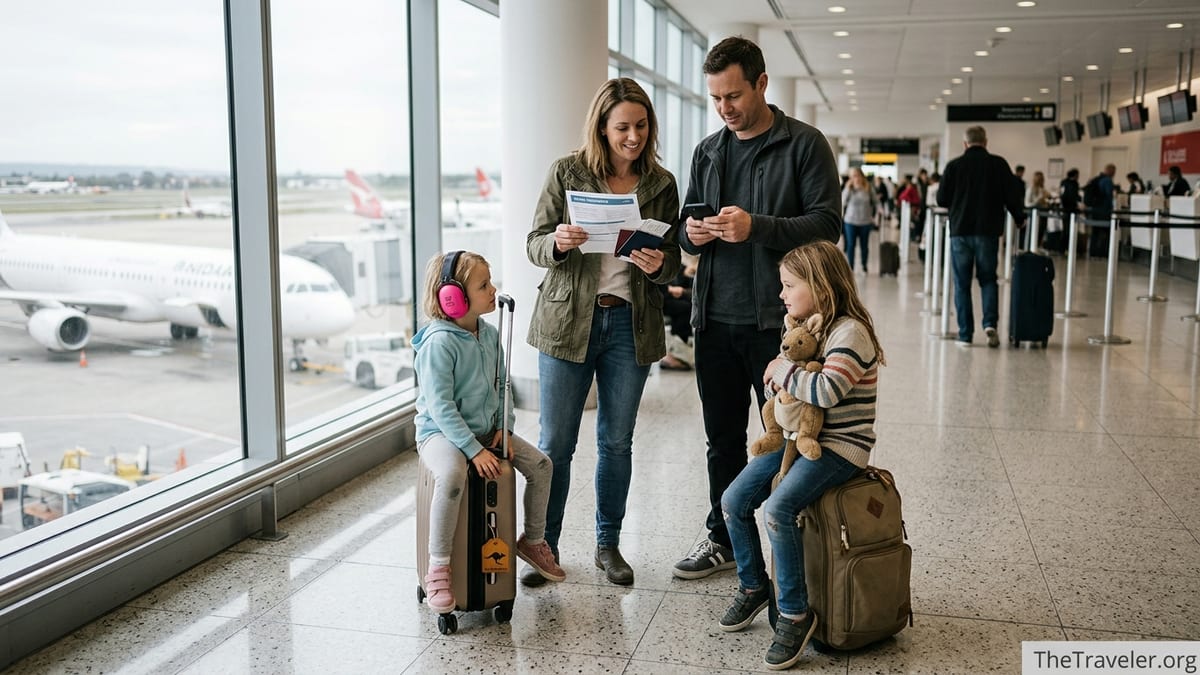
Who Is Tick Travel Insurance and What Do They Cover?
Tick Travel Insurance is an Australian brand that focuses on relatively low-cost travel policies, sold primarily online. The policies are underwritten by Europ Assistance Australia, which means this regulated insurer is ultimately responsible for paying valid claims and providing 24-hour emergency assistance. Tick offers several international policy tiers, typically named Basic, Budget, Standard, and Top, each with different limits and inclusions tailored to different budgets and risk levels.
For families heading overseas from Australia, all international tiers offer some level of core protection: overseas medical expenses, emergency evacuation and repatriation, cancellation cover on most non-basic plans, and cover for lost or stolen luggage and travel documents. For instance, a family flying from Sydney to Tokyo on a Standard or Top policy might be covered if a child breaks an arm at a Tokyo playground and requires hospital care, or if a parent is hospitalized and the family needs to cut the trip short.
Tick promotes its policies as suitable for a wide age range, with some cover available up to very high ages on certain tiers. The Product Disclosure Statement (PDS) also highlights that policies can be tailored to regions such as Pacific, Asia, or worldwide, which can make cover more affordable if your family is only visiting, say, Bali or Fiji rather than multiple continents. However, cover limits and trip duration caps vary significantly by tier and destination, so parents need to pay close attention to the destination definitions and maximum trip lengths before assuming they are covered for a long school-holiday adventure.
As with all Australian travel insurers, Tick’s wording stresses that the information on its website is general and that the PDS and Target Market Determination should drive your decision. For families, that means checking that your typical holiday risks – like skiing, cruises, or hiring a car with children’s seats – fit the profile Tick is aiming to cover.
How Family Cover Works: Children, Ages and Trip Types
Many Australian travel insurers allow dependent children to be covered under a parent’s policy at no extra premium, and Tick follows a similar model. On typical international policies, dependent children or grandchildren traveling with you can often be covered when they are listed on the policy, up to certain age limits. For example, a couple taking their 10-year-old and 14-year-old on a three-week trip to Thailand can often cover all four travellers under a single Tick policy if the children meet the dependence criteria and live with the insured adults.
The PDS for Tick explains that there are age thresholds affecting the maximum trip length and eligibility on different tiers. On some current wordings, travellers under a certain age can take longer trips, while those older than that face shorter maximum trip durations. This matters for families planning extended sabbaticals or world-schooling trips. A family planning a 120-day round-the-world journey would likely need to choose a tier and destination combination that explicitly allows up to 365 days, whereas grandparents joining part of the trip might find their maximum permitted trip length is much shorter.
Another practical point for families is single-trip versus multiple trips. Tick largely markets single-trip policies, which can work well for a family taking one big overseas holiday a year. For instance, a Brisbane family flying to Los Angeles for four weeks in December might simply buy a single-trip Top policy for all four travellers. However, if your family makes several international trips each year, you might need to compare Tick’s pricing against annual-multi-trip policies from other brands, because the cumulative cost of buying several budget single-trip policies may exceed one comprehensive annual plan elsewhere.
Parents should also note that not every family configuration fits neatly into standard definitions. If you are a blended family, or your children sometimes travel separately to meet one parent overseas, you will need to check carefully who is considered an insured person on the policy schedule, and in what circumstances they are covered when traveling alone or with other adults such as grandparents or school groups.
Strengths of Tick for Families: Cost and Core Protection
Tick’s strongest drawcard is price. On Australian comparison sites and in independent reviews, Tick often comes out cheaper than better-known brands for similar headline limits on medical and cancellation cover. For a concrete example, a family of four from Melbourne traveling to Bali for 10 days might find quotes where a Tick Budget or Standard policy costs significantly less than a comparable plan from a big-bank-branded insurer, sometimes saving over a hundred dollars for the family group, depending on ages and dates.
Tick’s policies typically include unlimited overseas medical cover on international plans, subject to conditions and exclusions. That unlimited label can give parents some peace of mind if a child ends up in a private hospital in the United States or Singapore, where a single night in hospital can cost thousands of dollars. Reviewers on Australian consumer sites often praise Tick for delivering competitive value for money on this core medical cover, especially for healthy travellers without complex pre-existing conditions.
Families also benefit from cancellation and delay cover on many tiers. For instance, if a parent is hospitalized in Australia the week before departure and the family has to cancel flights to London, a Tick Budget, Standard or Top policy may cover non-refundable airfares and prepaid accommodation, within the policy’s limits and subject to documentation. Likewise, if an airline cancels a connecting flight and strands the family in Kuala Lumpur overnight, the policy may help cover additional hotel and meal costs if the event falls within the definitions of an insured disruption.
Online purchase and documentation are another area where Tick often receives positive feedback. Busy parents can generate a quote, declare pre-existing conditions where relevant, and receive policy documents by email within minutes, without needing to visit a branch or wait on hold. This streamlined digital approach appeals to families booking last-minute holiday deals or needing proof of insurance quickly for a visa or school exchange program.
Key Trade-Offs: Excesses, Exclusions and Claim Experiences
Tick’s lower premiums come with trade-offs that families must understand. One of the most significant is the standard excess, often around 200 Australian dollars per insured event. This means that if your seven-year-old loses a $300 tablet on a train in Paris, and the claim is otherwise valid, the first $200 is your responsibility and the insurer might only pay the remaining $100. For low-value items or minor medical bills, that excess can make claiming pointless, so families should think of Tick as protection against medium to large expenses rather than every small mishap.
Independent reviews and third-party analyses note that some of Tick’s cheaper policy levels, like Basic and in some cases Budget, have more limited coverage for issues such as Covid-related cancellations or changes. For example, a family on a Basic plan may have emergency medical cover overseas but no cover if their trip needs to be cancelled because a child tests positive for Covid before departure. Parents considering the lowest tier because it is inexpensive should be realistic about these gaps and weigh whether stepping up to Standard or Top is worth the extra premium.
Customer reviews of Tick are mixed when it comes to claims and communication. On some major review platforms, Tick holds a solid overall rating with many customers praising good value and simple claims when documentation is clear. At the same time, long-form reviews and independent guides highlight cases where travellers reported slow claim processing, difficulty contacting the company, or claims being declined after weeks of back-and-forth. One detailed analysis even noted stories of claims taking more than a month to be rejected and customers complaining about the volume of paperwork required.
For a family, this means that while many travellers never need to claim and describe a smooth experience, you should be prepared for the process to be documentation-heavy if something goes wrong. Keeping original receipts, medical reports, and airline communications becomes vital. If you would strongly prefer a brand with a reputation for more responsive telephone support, especially for complex family medical emergencies, it may be worth comparing Tick to higher-priced alternatives with a stronger service focus, accepting that those policies may cost more.
Real-World Family Scenarios: When Tick Works and When It Might Not
Consider a practical scenario: a family of five from Perth, including three children aged 5, 9 and 12, books a two-week winter holiday in Japan to ski in Hakuba. They choose a Tick Top policy that includes winter sports cover, make sure all dependants are listed, and declare that Dad has mild, well-controlled asthma if required by the PDS. Halfway through the trip, the 9-year-old fractures a wrist on the beginner slope. Local clinic bills reach the equivalent of several thousand Australian dollars, and the family must rearrange flights so that the injured child can travel with an arm brace. In this kind of case, where an accidental injury clearly falls within the policy’s definitions and documentation from the clinic and airline is strong, Tick’s unlimited medical cover and trip disruption benefits are designed to perform exactly as intended.
Now consider a different case: a single parent from Brisbane takes two teenagers on a budget month-long backpacking trip through Southeast Asia. To keep costs low, they select a Tick Basic policy. Partway through the trip, one teen catches Covid in Vietnam and the family must quarantine and then change several onward flights. When they later lodge a claim for extra accommodation and flight-change fees, they may discover that their chosen tier did not include Covid-related cancellation or disruption benefits beyond emergency medical treatment. The result: large out-of-pocket costs despite having “travel insurance.” For this style of trip, a higher tier or a different insurer with more extensive pandemic cover might have been a better fit.
Another real-world example is a family visiting the United States for a theme-park holiday. A Gold Coast couple and their 8-year-old fly to Los Angeles for 10 days of parks and sightseeing and choose Tick Standard after comparing prices with a bank-branded policy. During the trip, the child develops appendicitis and requires surgery in a California hospital. Without insurance, the bill could easily run into tens of thousands of dollars. With an international policy providing unlimited medical cover, and assuming the condition was not pre-existing under the PDS definitions, Tick would typically be expected to arrange payment or reimbursement for eligible expenses. Here, the cost savings on premium compared with some rivals does not necessarily equate to reduced protection for major medical events.
By contrast, families with complex pre-existing conditions or special travel plans may find Tick less suitable. For example, a child with a congenital heart condition traveling for experimental treatment overseas, or a multi-generational family undertaking a months-long cruise visiting ports with government travel warnings, may struggle to obtain adequate cover under standard Tick wordings. These families are often better served by specialist providers or brokers who can help tailor cover or direct them to underwriters comfortable with higher medical risk or unusual itineraries.
Using Tick as an Australian Family: Practical Buying Tips
For Australian-based families weighing up Tick for international travel, the first practical step is to download and read the current PDS for your chosen policy type and travel dates. Tick periodically updates its wording, including Covid provisions, destination lists, sanctions clauses, and maximum trip lengths. A PDS valid from early 2026 may differ in important respects from one issued in 2022, so relying on old blog posts or friends’ experiences can be risky. Always cross-check any advice you read against the most recent PDS on Tick’s own site at the time you buy.
Next, run real quotes and compare them against a few alternatives, not just on price but on features. For instance, if you are planning a three-week family trip to Italy from Sydney in September, obtain quotes from Tick for Budget, Standard and Top tiers, then place them alongside quotes from at least two other Australian brands. Pay attention to cancellation limits, family inclusions, excess amounts, and the maximum per-item limit for valuables such as smartphones and cameras that teenagers will inevitably carry.
Pay careful attention to pre-existing medical conditions. If a parent has high blood pressure, a child uses an asthma preventer, or a grandparent with diabetes is joining part of the trip, clarify whether these are automatically covered or require assessment or extra premium. Tick’s wording spells out situations where cover is excluded, such as traveling against medical advice or awaiting test results. For families, overlooking a “minor” condition during purchase can lead to disputes later if a related complication arises overseas.
Finally, plan for documentation before you leave. Take photos of passports, bookings, and expensive items that your children will carry, such as tablets or gaming devices. If a bag is stolen in Barcelona or a phone is damaged at a water park in Phuket, having serial numbers and purchase receipts already saved in cloud storage can make a Tick claim smoother. Let older children know that if something goes wrong, they must report losses promptly to local police, airlines, or hotels, and get written reports, because insurers generally require these documents.
Alternatives and When Another Insurer May Be Better
Even if Tick looks appealing, it is worth considering when another insurer might be a better choice for your family. If you are taking multiple international trips in one year, some providers offer annual multi-trip family policies that include unlimited domestic trips and a generous number of short international journeys for a single premium. A family that frequently flies between Sydney, Auckland and Fiji for sport competitions, for example, may find that an annual policy with another brand is more economical and convenient than buying several single-trip Tick policies.
Families that rely heavily on cruises, adventure sports, or specific destinations may also benefit from specialist cover. Some competitors have cruise-specific policies that include cover for missed ports, shipboard medical costs, and cabin confinement. If you are taking children on a 10-day Pacific cruise over the school holidays, a cruise-focused insurer might offer clearer, more extensive benefits than a general international policy that excludes certain types of cruising or treats them as an optional add-on.
There are also families for whom claims servicing and reputation around complex medical cases matter more than saving on premiums. Parents of children with disabilities, autism, or chronic conditions might prioritize insurers known for strong customer service, 24-hour nurse hotlines, or case managers who coordinate care and repatriation. In these situations, a more expensive comprehensive policy from an established global assistance brand could be more reassuring than a lower-cost provider, particularly if grandparents or carers traveling with the child need extra support.
That said, many Australian families with straightforward itineraries and generally good health do use budget-friendly brands like Tick successfully every year, especially for common routes such as Bali, Thailand, New Zealand, Japan and Europe. The key is matching the policy to the complexity of your trip and your risk tolerance, rather than assuming that one provider is “best” for all circumstances.
The Takeaway
Tick Travel Insurance can be a sensible option for Australian families planning international trips, particularly those with simple itineraries and no major pre-existing medical conditions. Its main strengths are competitive pricing and strong headline limits for overseas medical cover and cancellation on higher-tier policies. Many families appreciate the straightforward online purchase process and the ability to cover dependent children on the same policy as the adults.
However, Tick is not a one-size-fits-all solution. The relatively high standard excess, more limited benefits on lower tiers, and mixed feedback on claims handling and communication are important considerations when children are involved. For some families, especially those with complex health needs, cruise-heavy plans, or long multi-destination sabbaticals, a more comprehensive or specialist insurer may offer better peace of mind, even at a higher premium.
In practice, the decision for families comes down to reading the most recent PDS in full, mapping the policy against your specific trip, and deciding how much uncertainty you are willing to accept to save on premium. If you do choose Tick, treat it as protection for significant financial shocks rather than minor inconveniences, keep meticulous documentation, and make sure every traveller understands what is and is not covered before you leave home. With that groundwork, Tick can be part of a sensible risk-management plan for your next overseas family adventure.
FAQ
Q1. Is Tick Travel Insurance suitable for families with young children?
Tick can work for many families with young children, particularly on straightforward holidays such as Bali, New Zealand or Japan, where you mainly need strong medical and basic cancellation cover. Parents should carefully check age limits, how dependent children are defined, and whether any child’s medical conditions are covered before buying.
Q2. Are dependent children automatically covered on a Tick policy?
On many Tick international policies, dependent children or grandchildren traveling with you can be covered at no extra premium when listed on the policy, up to certain ages and subject to the definitions in the PDS. You must add each child’s details during purchase and confirm that they meet the criteria for “dependent” status.
Q3. Does Tick Travel Insurance cover Covid-related cancellations for families?
Covid-related benefits depend on the specific Tick policy tier and the PDS in force at the time of purchase. Some lower-tier options may only cover Covid for emergency medical treatment, not for cancelling or shortening your trip, while higher tiers may offer broader protection. Always check the Covid sections of the latest PDS before relying on this cover.
Q4. How does the excess work on Tick policies for family claims?
Most Tick policies include a standard excess, often around 200 Australian dollars, which is deducted from each payable claim. For example, if your family has a valid luggage claim for 600 dollars, the insurer may only pay 400 after the excess. This makes Tick more useful for larger expenses than for small, low-value items.
Q5. Are pre-existing medical conditions in children covered by Tick?
Tick’s treatment of pre-existing conditions is detailed and depends on the condition and the policy wording. Some stable, well-controlled conditions may be automatically covered, while others require assessment or are excluded. Parents should review the medical sections of the PDS and contact Tick if unsure, especially where children have chronic illnesses, recent hospitalizations or are awaiting tests.
Q6. Does Tick cover family cruise holidays overseas?
Tick offers cover for some cruise travel, but certain itineraries and events at sea may be restricted or treated as optional extras, and some high-risk regions can be excluded. If your main holiday is a cruise, review Tick’s cruise wording closely and compare it with cruise-specific policies from other insurers to ensure your family is adequately covered.
Q7. How do Tick’s prices compare with other Australian travel insurers for families?
For many common routes, such as a two-week family trip to Asia or Europe, Tick often appears among the cheaper options on comparison sites. However, a low premium does not automatically mean better value. Families should compare not only price but also medical limits, cancellation cover, Covid inclusions, excess amounts and family benefits against at least two or three alternative insurers.
Q8. What documents should a family keep for a Tick insurance claim?
For a smoother claim, families should keep original receipts for flights, accommodation and valuables, medical reports for any treatment, police or airline reports for theft or loss, and any written confirmation from airlines or tour operators about delays or cancellations. Storing digital copies in secure cloud storage before departure can help if documents are lost during the trip.
Q9. Can grandparents be covered on the same Tick family policy?
Grandparents can often be insured on the same policy as the rest of the family, but they are usually treated as separate adults rather than dependent children. Their ages may affect maximum trip duration and premium. When booking, list each grandparent as an insured traveller, check the age-related conditions, and confirm that any of their pre-existing conditions are disclosed and accepted.
Q10. How can a family decide if Tick is the right insurer for their next trip?
A practical approach is to outline your itinerary, health profile and budget, then compare Tick’s latest PDS and quote with at least a couple of competitors. If your family is healthy, your trip is relatively simple and Tick’s cover matches your key risks at a lower price, it can be a reasonable choice. If you have complex medical needs, cruise-heavy plans or want more responsive claim support, it may be worth paying more for a different insurer.