


More news on this day
Thousands of travellers have been left stranded for hours in a sprawling gridlock on the Lokoja–Abuja highway, as a combination of ongoing construction, broken-down trucks and ad hoc road blockades once again crippled movement along one of Nigeria’s most important transport corridors.
Get the latest news straight to your inbox!
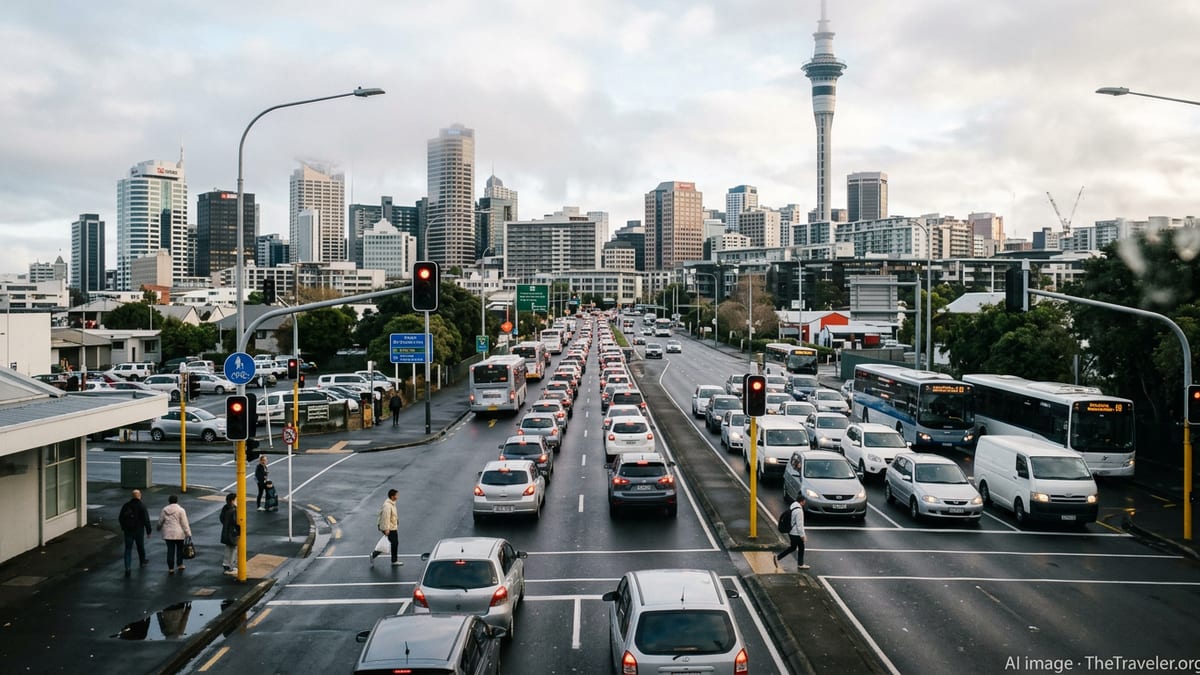
Hours in Standstill Traffic on a Strategic Route
Recent reports from local and national Nigerian media describe an extended traffic shutdown on sections of the Lokoja–Abuja highway, with long queues of vehicles stretching for many kilometres and travellers forced to wait in place for much of the day and, in some cases, overnight. Coverage indicates that motorists were caught in a near standstill between Lokoja and key choke points such as Banda, Natako and the Jamata Bridge, turning routine intercity journeys into ordeals lasting well beyond their scheduled time.
Accounts from passengers and commercial drivers in this and earlier incidents on the same route suggest that many travellers resorted to leaving their vehicles to search for water, food or alternative transport. Commercial motorcycle operators reportedly seized on the situation to ferry stranded passengers across the worst-affected stretches for steep fees, underscoring how repeated gridlock has created an informal economy around congestion.
The Lokoja–Abuja highway forms a vital link between the Federal Capital Territory and much of southern Nigeria, carrying a heavy mix of long-distance buses, private cars, fuel tankers and articulated trucks. When a single incident obstructs traffic on this corridor, the effect is quickly amplified, leaving thousands of people stuck in the open with limited access to basic services.
Construction Works and Heavy Trucks Blamed for Bottlenecks
Publicly available reports indicate that ongoing road repairs and reconstruction works are a central factor in the latest round of gridlock. Sections around Lokoja and towards the Banda axis have been narrowed by construction activities, creating temporary bottlenecks where traffic must merge into fewer lanes. When traffic volumes peak, even minor obstructions in these narrowed sections can cascade into severe congestion.
Media coverage further points to a pattern of broken-down articulated vehicles and tankers along the route, particularly around hills, bridges and narrow curves. When such heavy trucks stall within already constricted work zones, it can take considerable time before they are towed away, during which traffic in both directions builds rapidly.
In several widely reported incidents over the past year, protests or standoffs involving truck drivers on the Lokoja–Abuja axis have also contributed to road blockages. In one case highlighted in national press reports, a dispute between security personnel and drivers escalated after damage to a truck, prompting multiple vehicles to stop across the carriageway and bringing movement to a halt until the situation was resolved. These episodes have reinforced concerns that individual disputes can quickly trigger large-scale disruption on a route with few viable detours.
Human and Economic Toll on Stranded Travellers
The repeated shutdowns on the Lokoja–Abuja highway have direct human consequences for those caught in the gridlock. Passengers travelling with children, older relatives or people with health conditions face particular difficulties when stationary for hours under intense heat, often with limited shade or sanitation facilities. Reports from recent episodes describe travellers rationing drinking water, sleeping in stationary vehicles and expressing concern about personal safety during extended night-time delays.
For commercial transport operators, such as intercity bus companies and haulage firms, prolonged gridlock translates into higher operating costs, missed connections and disrupted delivery schedules. Perishable goods can be spoiled by the delay, while fuel consumption climbs as drivers keep engines running intermittently for air conditioning or to maintain engine function during stop-start movement.
The economic impact extends beyond those physically trapped in the traffic. The Lokoja–Abuja corridor is a key artery for goods moving between northern agricultural hubs and southern markets and ports. When traffic is immobilised, deliveries are postponed, inventories are affected and small traders who depend on timely arrivals may lose income. Analysts have repeatedly described the Abuja–Lokoja–Okene route as a critical lifeline whose fragility has broader implications for trade and food supply chains.
Government Responses and Ongoing Safety Concerns
Statements issued by federal and Kogi State authorities in recent months reflect growing official attention to disruptions on the Lokoja–Abuja highway. Public information released by the Federal Ministry of Works has highlighted efforts to accelerate reconstruction on key segments and to open completed portions of the carriageway more quickly whenever serious gridlock occurs, in order to restore partial flow while work continues elsewhere.
The Kogi State government has separately publicised measures aimed at deterring deliberate road blockages by truck drivers and enforcing penalties on operators whose actions obstruct traffic. Past advisories have warned that blocking major highways is considered an infringement on the free movement of people and goods, and that security and transport agencies have been instructed to clear obstructions and apply existing laws where necessary.
Despite these initiatives, the Abuja–Lokoja highway remains associated not only with congestion but also with broader safety and security concerns reported in regional and international assessments. Transport unions and civil society groups have periodically called for more consistent patrols, improved lighting at key junctions, and better incident management capacity, arguing that traffic jams on isolated stretches heighten the vulnerability of stranded travellers.
Calls for Long-Term Fixes on a Perennially Congested Corridor
The latest gridlock has renewed debate about how to make the Lokoja–Abuja corridor more resilient. Commentators in Nigerian media have argued that periodic emergency responses cannot by themselves address chronic congestion on a road that carries such a high volume of heavy trucks and long-distance passenger traffic. Proposals in public discourse range from adding auxiliary lanes at known choke points to creating dedicated truck bays and enforcement zones to prevent breakdowns and informal parking on the main carriageway.
Some analysts also point to the need for more reliable alternatives to the Lokoja route, including upgraded east–west highways and improved rail capacity, so that a single disruption does not paralyse movement between the capital and the south. Investment advocates contend that the economic benefits of smoother traffic flow on this axis, from reduced travel times to lower logistics costs, would outweigh the significant upfront expenditure on infrastructure.
For now, motorists and passengers continue to approach the Lokoja–Abuja highway with caution, particularly during peak travel periods and major holidays, when traffic is heaviest and the risk of prolonged standstill is greatest. As road works progress and enforcement measures are tested, observers are watching to see whether the recurring scenes of stranded travellers will begin to recede or remain a defining feature of journeys along this vital Nigerian route.