


For years, families loyal to Southwest Airlines could count on two free checked bags per person as a cornerstone of affordable domestic travel. That world has changed. Since 2025, Southwest has begun charging many passengers for checked luggage, with bag costs now varying based on fare type, status and whether you hold a Rapid Rewards credit card. At the same time, Southwest and Chase continue to promote the Southwest Rapid Rewards Priority Credit Card as a top-tier option for frequent flyers. For parents planning theme park vacations, cross-country family visits or college drop-offs, the key question is whether this card genuinely helps control costs in today’s fee-heavy environment, or if it simply adds complexity.
Get the latest updates straight to your inbox!
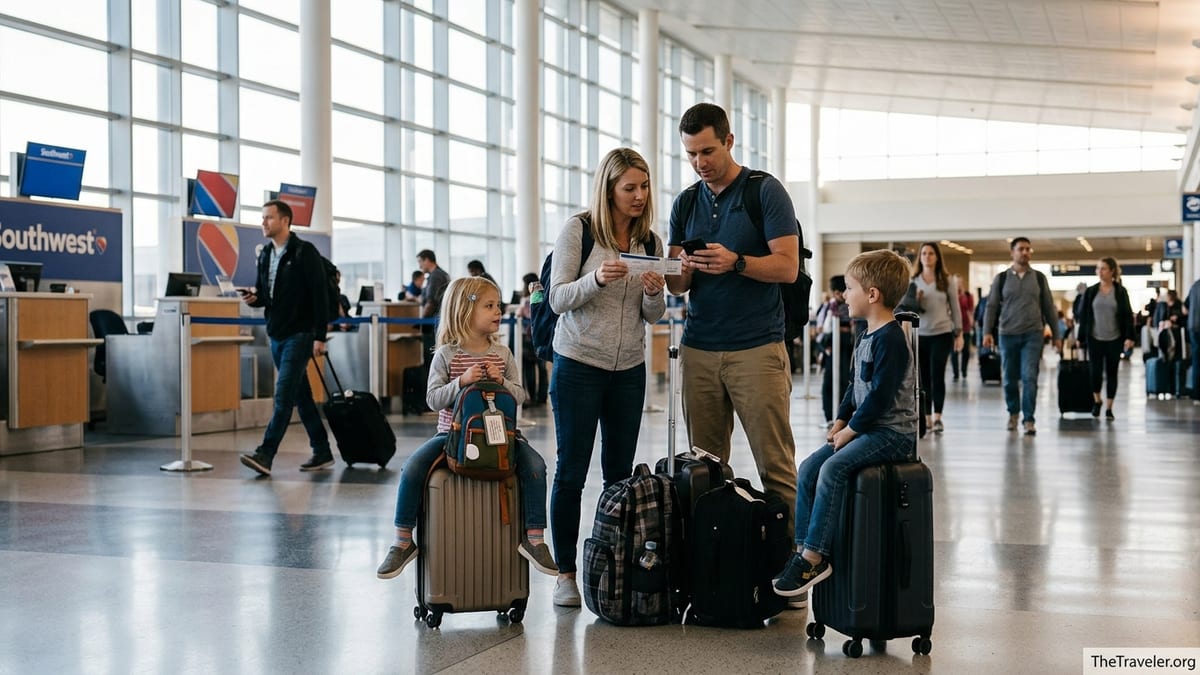
How the Southwest Rapid Rewards Priority Card Works in 2026
The Southwest Rapid Rewards Priority Credit Card is the premium personal card in the Southwest lineup issued by Chase. It carries a relatively high annual fee of about 149 dollars, but it is also packed with Southwest-specific perks. Recent issuer and comparison-site reviews list a recurring 75 dollar annual Southwest travel credit that automatically offsets eligible Southwest purchases, 7,500 anniversary Rapid Rewards points each year, and several priority-style benefits such as credits toward upgraded boarding positions and EarlyBird-style automatic check-in options. Together, these benefits often represent several hundred dollars in potential value for travelers who fly the airline more than once or twice per year.
Rewards on everyday spending are focused on Southwest purchases and broad family categories. Cardholders typically earn higher points on Southwest tickets and in-flight purchases and then a solid, but not industry-leading, return on broad categories like transit, local commuting, select streaming services or dining. General purchases earn the base rate of Rapid Rewards points. Unlike some general travel cards, points here are best seen as Southwest currency. Their highest value is usually when redeemed directly for Southwest flights rather than for hotels, gift cards or statement credits.
For parents, the most important structural feature is that Rapid Rewards points are fully transferrable within your household in practice, because you can book flights for any family member from one account. The card’s perks, like the annual travel credit and upgraded boardings, also apply to trips for your spouse or children as long as the ticket is purchased with the cardholder’s account. That makes it a logical “family bank” for Southwest travel, where one adult manages the points and benefits for everyone.
Because this is a co-branded airline card, it is not meant to be a one-size-fits-all solution the way a premium general travel card might be. It is built specifically around Southwest’s current ecosystem, including the airline’s newer baggage-fee structure and the long-standing Rapid Rewards Companion Pass program. Whether it makes sense for your family depends less on generic cashback comparisons and more on how often you realistically fly Southwest and how many trips per year you check bags.
Southwest’s New Baggage Reality and Why It Matters for Families
For decades, Southwest marketed “Bags Fly Free” with two complimentary checked bags for every passenger, something that made a huge difference for parents packing strollers, car seats, Pack ’n Plays and sports gear. In 2025 the airline began phasing in checked-bag fees for many fares, bringing its policy closer to competitors. Industry reports and traveler accounts now describe a structure where the first checked bag on many domestic itineraries is roughly in the 35 to 45 dollar range and the second bag slightly higher, though legacy free-bag entitlements still apply to some customers and older bookings made before the change took effect.
The result is that in 2026 baggage costs for a family are far more variable than before. A couple flying from Chicago to Orlando with two kids for a 7 day vacation might previously have checked four suitcases at no charge. Under the newer fee patterns, if each person brings one checked bag and their fares do not include free luggage, they could face around 35 to 45 dollars per bag each way. That quickly turns into somewhere in the range of 280 to 360 dollars in extra costs on a simple roundtrip for four travelers, and more if they need extra bags for gear or if some bags are overweight.
Southwest still offers a generous carve-out for families traveling with young children: strollers and car seats can usually be checked free of charge, separate from the standard baggage allowance. This helps when traveling with infants or toddlers, since you can gate-check a stroller and check a rear-facing car seat without immediately hitting fee territory. However, bulky items like folding cribs, travel bassinets or wagon-style strollers generally count as regular checked bags and are subject to the same size and weight limits as suitcases, so they can still incur fees if you are already using your included allowance or your fare does not include checked bags.
This evolving baggage landscape is the main reason a Southwest-branded credit card now matters much more. Instead of being a pleasant side perk, card-linked bag benefits can spell the difference between a trip going over budget or staying manageable. Families who fly with multiple checked bags several times a year are the most affected and should pay close attention to how credit card status and Rapid Rewards tiers interact with the new fee chart before assuming that “Bags Fly Free” still applies to them.
Key Priority Card Benefits That Directly Affect Family Travel
The Rapid Rewards Priority card’s headline perk for many families is the annual 75 dollar Southwest travel credit. In practical terms, this credit can reimburse eligible Southwest purchases such as flight reservations or certain taxes and fees charged by the airline. A parent planning a summer trip from Dallas to Denver for a family of five, for instance, might spend about 1,000 to 1,200 dollars total on Wanna Get Away style fares. The first 75 dollars of that can be wiped out by the card’s annual credit, effectively shrinking the net cost of the annual fee.
The 7,500 anniversary points that post each cardmember year are another steady source of value. On many domestic routes, one-way Southwest redemptions can fall roughly in the 6,000 to 9,000 point range per person for off-peak flights, sometimes higher for popular school-holiday dates. That means the anniversary deposit alone can easily cover a one-way ticket for a child on a route like Phoenix to Oakland or Nashville to Orlando if you pick less in-demand times, or it can meaningfully offset the points required for a peak summer family itinerary.
The card is also well known for including about four complimentary upgraded boardings per year, which can be used at the gate on eligible flights when premium boarding positions in the A1 to A15 range are available. In Southwest’s open-seating culture, this used to be critical to snagging seats together. Now that the airline has rolled out assigned seats across the fleet, priority-style boarding perks function more as a comfort enhancement than a seat-selection necessity. They can still be handy for families that want to board early to settle small children, stow carry-ons near their row and avoid the stress of crowded overhead bins on busy routes like Houston to Las Vegas.
A more subtle but important benefit is how the card accelerates progress toward the coveted Companion Pass. Points earned from Southwest credit card spending count toward the annual qualifying threshold. For a family where one adult travels to visit grandparents or for work several times a year, concentrating airfare spending and some household expenses on the Priority card can help unlock a Companion Pass. Once earned, that pass allows you to designate a companion who flies for only the cost of taxes and fees on both paid and award tickets you book, which can be enormously valuable for a spouse or child’s seat on multiple trips.
How the Card Interacts With Southwest’s Baggage Fees
One of the biggest practical changes since Southwest began charging many passengers for checked bags is the growing role of Rapid Rewards status and co-branded credit cards in determining who still gets free luggage. Current Southwest fee schedules and airline communications indicate that Rapid Rewards credit cardmembers can qualify for a free first checked bag for themselves and, in many cases, for up to eight additional passengers on the same reservation when traveling on eligible fares. This is a critical shift for families who routinely check multiple bags.
Consider a family of four flying from St. Louis to San Diego for a week-long beach vacation. Without any status or card benefits, checking one standard bag each at around 40 dollars per bag each way could total roughly 320 dollars in baggage fees on a roundtrip. If one parent holds the Rapid Rewards Priority card and all four tickets are on the same reservation tied to that account, the current structure suggests that each traveler could still receive a first checked bag at no charge on most domestic routes that honor the cardmember baggage benefit. That single perk can completely eliminate those 320 dollars in fees for this particular trip.
On the other hand, if the same family tends to fly light, using only roller carry-ons and small backpacks that fit under the seat, the bag benefit is worth much less. A college-bound teenager flying home from Boston to Dallas with only a carry-on and one checked duffel a couple of times a year will still appreciate a free bag, but the savings over the course of a year might amount to under 100 dollars, which by itself does not justify the annual fee. In that case, the card’s value would need to come from points earning, the anniversary bonus and the annual credit rather than any baggage avoidance.
Families also need to pay attention to the fine print around which flights and fare types qualify for the free-bag benefit. Deep-discount basic-style fares or certain promotional tickets may not include the same eligibility, and partner itineraries with international segments can have different rules. Parents booking spring break travel to Cancun or Los Cabos out of cities like Houston or Phoenix, for example, should check whether the free first checked bag tied to the card applies the same way on cross-border flights as it does on U.S. mainland routes. Assuming universal free bags based solely on old advertising slogans is a good way to end up paying unexpected counter fees at the airport.
Real-World Scenarios: When Families Win and When They Do Not
To see how the Rapid Rewards Priority card plays out for real families, it is useful to compare a few typical domestic travel patterns. Imagine first a family of five based in Kansas City that visits relatives in Los Angeles twice a year and takes one big Florida theme park trip most summers. They almost always check at least one full-size suitcase per person, plus a shared sports gear bag filled with beach toys or winter coats, depending on the trip. At a blended baggage fee of around 40 dollars per checked bag each way, this family could easily rack up 600 to 800 dollars in luggage costs per year if none of their fares included free bags.
For this heavy-baggage family, the Priority card can almost operate as a shield. If the free first checked bag benefit applies on all three trips for all five travelers, they could save several hundred dollars in fees, even after accounting for the card’s annual fee. Layer on the 75 dollar annual travel credit and the 7,500 anniversary points, which might cover part of a one-way ticket for one of the kids, and the math becomes compelling. In scenarios like this, the card often pays for itself after only one or two trips.
Now consider a pair of parents with two elementary school children in Atlanta who take one big trip a year, perhaps a summer flight to Denver for a national park road trip. They are light packers, relying on backpacks and compact carry-ons, and they rent car seats at their destination instead of bringing them. These travelers do not normally check luggage at all, even on a week-long vacation. They would receive the same Priority card perks, but in practice they would rarely use the baggage benefits, and the annual value from the travel credit and anniversary points might total somewhere in the low 200 dollar range.
In this lighter-travel scenario, a no-annual-fee or lower-fee Southwest card or a flexible travel cashback card might be a better match. The family is not extracting enough concrete value from the Southwest-centric perks to justify the higher fee on the Priority card. They might still choose it for the faster Companion Pass earning or because one parent travels more often for work, but if the question is narrow and focused solely on “Will this card reduce our domestic vacation costs,” the answer would be moderately rather than decisively positive.
Comparing the Priority Card With Alternative Family Travel Strategies
Families deciding whether to adopt the Priority card should weigh it against three main alternatives: flying Southwest without any co-branded card, pairing Southwest flights with a flexible bank travel card, or occasionally flying other airlines based on total trip cost even if that means leaving the Rapid Rewards ecosystem. Each approach has upsides that show up differently on a family’s balance sheet.
Flying Southwest without a credit card was relatively simple in the old two-bags-free era, but it can be costly in 2026 for households that routinely check multiple bags. A family of four that takes two trips a year and checks one bag per person might now see around 560 dollars in annual baggage costs alone, not counting potential overweight charges for heavy winter gear. Without card-linked bag benefits, the only ways to mitigate those costs are to travel lighter, pay for higher-fare bundles that may include bags, or shift some trips to carriers and routes where bags are priced more favorably.
Using a flexible travel rewards card that earns points redeemable across multiple airlines is often appealing for families that do not fly Southwest more than once or twice per year. A bank card that offers 2 percent back on travel and everyday purchases, for instance, might rebate 200 dollars a year on 10,000 dollars of family spending. That rebate can offset bag fees and seat assignments, but it does not change the underlying airline-specific baggage rules. Parents have to manually compare cash tickets and fees every time they book.
By contrast, the Southwest Priority card’s value is narrowly concentrated but quite strong when your travel behavior fits the airline’s current structure. Rewards are maximized on Southwest purchases and simplified when you consistently redeem through Rapid Rewards. For a family that already prefers Southwest’s route map, likes its boarding process and has young children who benefit from flexible change policies, adding the Priority card can feel like deepening a partnership that already works. The trade-off is that you accept more dependence on a single airline’s pricing decisions, which may not always be optimal for routes where other carriers offer nonstops or cheaper family bundles that include seats and bags.
The Takeaway
For U.S. families planning domestic trips in 2026, the Southwest Rapid Rewards Priority Credit Card is no longer a niche enthusiast product. It has become a practical tool for managing the very real impact of Southwest’s evolving baggage fees and for extracting more value from a loyalty program that still rewards consistent flyers. The card’s 75 dollar annual travel credit, 7,500 anniversary points and lingering bag and boarding advantages can combine to generate several hundred dollars of annual benefit for households that take multiple trips and regularly check luggage.
At the same time, the card is far from universally necessary. Families that travel once a year, pack light and prefer to comparison-shop routes across several airlines may find more flexibility with a general travel card, or even by paying Southwest’s bag fees out of pocket when needed. The Priority card makes the most sense when you already see Southwest as your default domestic carrier, you can plausibly earn or leverage a Companion Pass, and at least one family member is willing to manage points and bookings centrally.
The most important step before applying is to map out your next 12 to 24 months of likely travel and run the math using realistic baggage behavior, not best-case packing dreams. If your household expects to take multiple trips that involve at least a few checked bags, the Priority card’s benefits can readily outweigh its annual fee and preserve a measure of the value that Southwest’s old “Bags Fly Free” reputation once guaranteed. If not, the card remains a strong but specialized choice rather than a universal recommendation.
FAQ
Q1. Does the Southwest Rapid Rewards Priority Credit Card still help families get free checked bags?
The Priority card can provide a free first checked bag for the cardholder and, in many cases, for additional travelers on the same reservation when flying on eligible fares. However, Southwest’s baggage policy has become more nuanced, so families should always confirm whether their specific fare and route qualify before assuming every bag will be free.
Q2. Is the Priority card worth it if my family only flies Southwest once a year?
For once-a-year travelers, the card can still deliver value through the annual travel credit and anniversary points, but the net benefit over the 149 dollar annual fee may be modest. It becomes clearly worthwhile when your family takes multiple trips per year or regularly checks several bags that would otherwise incur fees.
Q3. How much can a typical family save on baggage fees with this card?
Savings vary widely, but a family of four that takes two domestic trips a year and checks one bag per person might avoid several hundred dollars in fees if the free first checked bag benefit applies on each flight. After subtracting the annual fee, many such families still come out comfortably ahead, especially when they also use the travel credit and anniversary points.
Q4. Do the card’s upgraded boarding benefits still matter now that Southwest has assigned seats?
Upgraded boarding used to be essential for open seating, but with assigned seats it functions more as a convenience. Families can use it to board earlier, secure overhead bin space near their row and settle young children without the rush of crowded aisles, which can still make travel days less stressful even if seat selection is no longer at stake.
Q5. Can I use Rapid Rewards points from the Priority card to book flights for my children?
Yes. Points earned from spending and anniversary bonuses accumulate in one Rapid Rewards account, but you can use them to book flights for any traveler. Many parents use their points balance to cover part or all of their children’s tickets on family trips, effectively turning household spending into airfare.
Q6. How does the card help with earning the Southwest Companion Pass for my spouse or child?
Points earned from the Priority card, including those from everyday spending and Southwest purchases, count toward the Companion Pass qualifying total. That means concentrating regular expenses on this card can accelerate your path to a Companion Pass, which then allows a designated companion, often a spouse or child, to fly for only taxes and fees on both paid and award tickets you book.
Q7. Is this card a good fit if my family sometimes flies other airlines?
The Priority card is strongest when you fly Southwest regularly, because its rewards and perks are tightly tied to that airline. If your family often chooses other carriers based on schedules or prices, a more flexible travel rewards card that covers multiple airlines might be better as your primary tool, with the Southwest card playing a secondary role or no role at all.
Q8. What everyday purchases should families put on the Priority card?
Families who choose the Priority card often direct airfare, road-trip gas, local commuting, streaming subscriptions and dining purchases to it, since those categories often earn enhanced Rapid Rewards points. However, it is wise to compare earning rates with any other cards you hold, especially those offering higher cash-back on groceries or wholesale clubs, to make sure you are not giving up better returns elsewhere.
Q9. Are there foreign transaction fees if we use the card on a Caribbean or Mexico trip with Southwest?
Current terms for the Priority card list no foreign transaction fees, making it suitable for Southwest itineraries to destinations like Cancun, Los Cabos or Montego Bay. That said, the card’s strongest earning and redemption value still comes from Southwest airfare, so families should not rely on it as their sole international spending card if other options provide richer rewards abroad.
Q10. What is the main reason a family should avoid the Southwest Priority card?
The card is a poor fit for families that rarely fly Southwest, almost never check bags, or strongly prefer to comparison-shop among multiple airlines on every trip. In those cases, a flexible bank travel card or straightforward high-cashback card will usually deliver more usable value, without locking your rewards and perks to a single carrier’s evolving fee structure.