


Booking airport parking is one of those travel chores that can quietly make or break your trip. Prices swing wildly between official airport lots and independent garages, early-morning shuttles are not always as “24/7” as advertised, and a bad handover can leave you nervous about your car while you are supposed to be switching off on holiday. In Europe, Parkos has become a prominent comparison and booking platform promising to simplify that decision. But should you trust Parkos with your booking, or are you better off going direct?
Get the latest updates straight to your inbox!
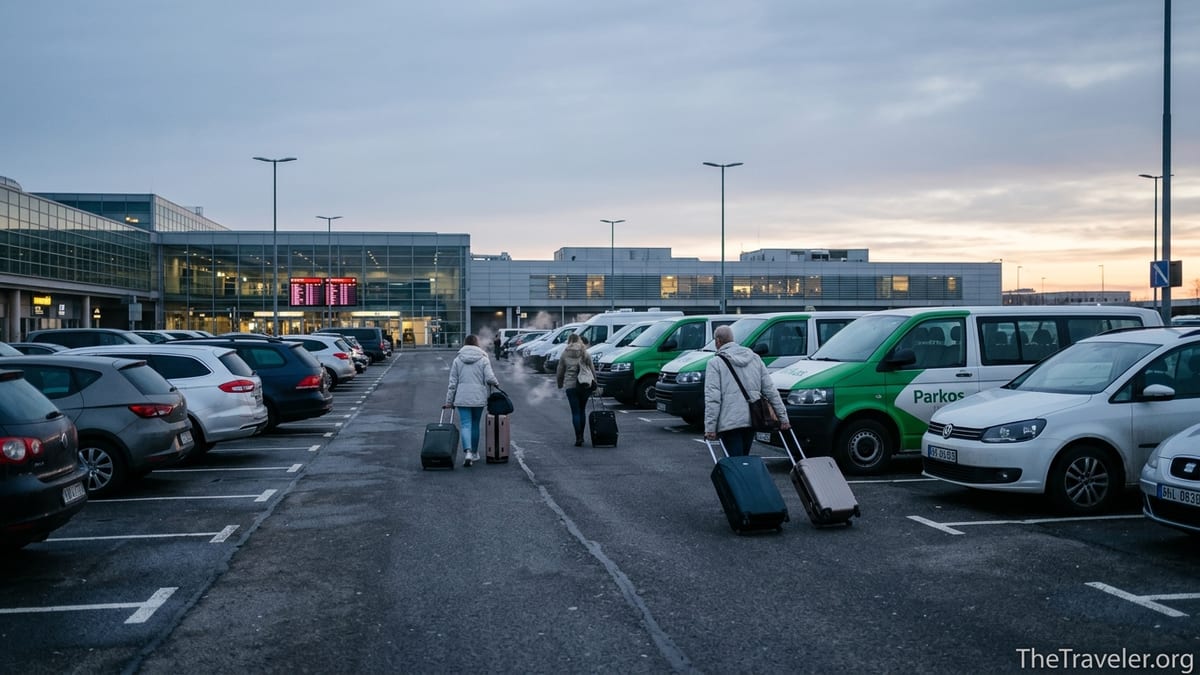
What Parkos Actually Is (And What It Is Not)
Parkos is a comparison and booking website for airport parking across a wide network of regional and major European airports. The company positions itself as a neutral platform where you can compare different off-site and sometimes on-site parking providers by price, distance, type of service, and customer ratings, then reserve and pay online in advance. Its own materials describe Parkos as a way to find “reliable and affordable” airport parking at regional and international airports, with an emphasis on convenience rather than rock-bottom pricing alone.
It is important to understand that Parkos is not the company physically looking after your car. At Madrid Barajas, for example, Parkos lists independent operators like outdoor shuttle car parks a short drive from the terminals, indoor valet services that collect your vehicle at the departure curb, and park-and-walk garages near the terminals. When you book through Parkos, your confirmation shows the name and address of that specific parking provider, along with what they promise to deliver. In practice, Parkos functions much like a hotel comparison site: it sits between you and dozens of small parking businesses that may not have sophisticated websites or booking tools of their own.
This distinction matters for trust. Many traveler complaints about airport parking platforms in general center around confusion over who is ultimately responsible when something goes wrong. With Parkos, any shuttle delays, damage disputes, or lost keys will normally involve the local parking company first, not Parkos head office. The platform’s role is to vet providers, standardize information, take payment, and support you if the contracted service does not match what was sold.
For context, Parkos has expanded from its Dutch roots to cover major hubs such as Amsterdam Schiphol, Frankfurt, Munich, Brussels, Rome, and Madrid, along with a growing list of secondary airports. On its European homepage, Parkos highlights a customer rating average above 9 out of 10 for its parking partners, drawn from thousands of post-stay reviews. Those aggregated scores can be useful, but it is still crucial to click through to the recent comments for the specific lot you are considering, especially if you have special needs like oversized vehicles or very early departures.
How Parkos Works When You Actually Use It
Using Parkos is relatively straightforward. You start by selecting your departure airport and entering drop-off and pickup dates and times. The platform then displays a list of parking options around that airport, typically including shuttle parking, valet “meet and greet,” and sometimes park-and-walk or park-and-public-transport options. In Frankfurt, for instance, a one-week stay in mid-season might show an outdoor shuttle lot about 8 to 10 minutes from the terminals, an indoor valet service collecting directly outside departures, and a covered park-and-walk garage within walking distance of the terminal doors, all at noticeably different price points.
Each listing includes key details that travelers care about in practice: whether the lot is indoor or outdoor, if keys are kept or you can retain them, shuttle frequency, approximate transfer time, opening hours, and user ratings. For a Madrid off-site shuttle car park, you might see a 10-to-15-minute transfer time, a shuttle that runs “on demand” rather than on a fixed schedule, and confirmation that the lot is fenced, gated, and covered by camera surveillance. Prices for a week in mid-season can often come out at roughly half of the official on-airport long-stay rates, which is a major reason people turn to platforms like Parkos.
Once you choose, you book and pay online, typically by card. Parkos then emails a confirmation that includes driving directions, arrival instructions, the phone number of the parking operator, and what to do if your flight is delayed. For a valet service at Amsterdam or Brussels, for example, the confirmation usually tells you to call a specific number 20 to 30 minutes before arrival so a driver can meet you at the terminal drop-off lane. For a shuttle lot, you are asked to arrive 30 to 45 minutes before your preferred check-in time to allow for the transfer.
One of Parkos’s selling points is flexibility. Its terms typically allow free changes or cancellations up to 24 hours before the scheduled drop-off time. That can be useful if your trip dates move or you decide, for instance, to switch from a low-cost shuttle car park to a closer, slightly pricier park-and-walk option because you now have bulky ski bags or young children in tow. However, policies can vary slightly by provider, so it is still wise to skim the cancellation conditions on the specific lot page before committing.
What Real Travelers Say About Parkos
Traveler feedback on Parkos is generally positive, particularly regarding ease of use and value. On mainstream review platforms, Parkos tends to hold a solid rating, with many recent reviewers praising quick shuttle transfers, friendly staff at partner lots, and straightforward handovers. A recurring theme in five-star comments is that the experience “worked exactly as described”: drivers met them on time, vehicles were waiting upon return, and the total cost undercut the official airport parking garage, sometimes by a meaningful margin over a one- or two-week stay.
Take a typical example from a traveler flying out of Paris Charles de Gaulle in June 2026. They booked an off-site indoor shuttle car park through Parkos for around the price of five or six days in the official economy lot, but stayed nearly two weeks. In their review, they highlighted that the car park was on a quiet street, fenced, with a short shuttle run to CDG. They noted that drop-off and pickup were both quick, and they would use the same operator again, specifically naming how much cheaper it was than parking directly at the airport.
Another pattern of positive feedback comes from those using Parkos for airports where the official parking is limited or undergoing changes. In some regional Spanish and Italian airports, travelers report that on-airport lots can feel chaotic or be temporarily closed during expansion works, making an organized off-site shuttle lot reserved via Parkos feel less stressful. For people catching early-morning flights, having a known, pre-booked shuttle that runs through the night can also be a strong reassurance compared with gambling on regular public transport and finding it does not operate at 4 a.m.
That said, there are critical reviews and cautionary stories that shed light on where trust can be strained. Some complaints mention long waits for shuttles after landing, particularly at peak times, or confusion about the exact pickup point outside arrivals. Others describe disagreements over pre-existing damage on cars when using valet-style services, which often hinge on how thoroughly the initial inspection was documented. A smaller number of negative experiences appear to stem from parking operators changing their on-the-ground procedures without Parkos updating the description quickly enough, leaving travelers surprised by, for example, a new meeting point or slightly different shuttle schedule.
The Main Risks: Where Things Can Go Wrong
When you decide whether to trust Parkos, it helps to separate two levels of risk: the reliability of Parkos as a platform, and the reliability of the individual parking provider you choose through it. On the platform side, Parkos has an established presence across multiple European markets and collaborates with a broad network of independent operators. There is no widespread evidence of systemic non-delivery of bookings or mass cancellations without alternatives, issues that sometimes plague less mature platforms.
The more tangible risks for the average traveler sit at the provider level, and they are similar to those you face when using any off-airport parking, booked direct or via a middleman. Shuttle delays are one of the most frequently mentioned frustrations. For example, a traveler landing late at night in winter might call the shuttle number and wait 20 or 30 minutes in the cold if several passengers are being grouped into the same transfer run. That delay may still be acceptable at a heavily discounted rate, but if you are traveling with small children or tight onward connections, it can be stressful.
Valet parking introduces its own concerns. Because you hand over your keys at the terminal, you must trust that the operator will park your car securely, record any pre-existing damage accurately, and not clock up unnecessary mileage. In the European parking market, there have been occasional scandals around low-cost meet-and-greet operators at various airports, including cars left in unsecured lots or on public streets. While there has been no high-profile, Parkos-specific scandal of that nature, the general category risk still applies. This is why documenting your car’s condition with time-stamped photos at drop-off, and checking how many kilometers you had on the odometer, is smart regardless of where or how you book.
Another area where things can go wrong is misalignment between what is sold on the platform and what the operator actually delivers. Imagine booking a “covered” parking space at a secondary Italian airport, only to find that the majority of the lot is outdoor and your space ends up partially exposed. Or choosing a “24/7 shuttle” in Portugal and discovering on arrival that overnight service is on request only, with longer waits than implied. These situations typically generate pointed reviews and, if reported, pressure Parkos to clarify listings or intervene with the operator. But from the traveler’s perspective, the frustration on the day is real, even if compensation or apology comes later.
How Parkos Tries to Build Trust
Parkos publicly emphasizes vetting and monitoring of its parking partners. In its own description, the company notes that it selects providers through market research, focusing on security, punctuality, and reliability. Many listings highlight features such as fenced perimeters, CCTV, gated access, and regular patrols. For example, a Parkos-listed garage near Madrid might specify 24-hour camera surveillance and secure key storage, while a shuttle lot near Munich notes both fenced boundaries and automatic barriers at the entrance and exit.
The platform also leans heavily on customer reviews. After each stay, travelers receive an invitation to rate their experience. Those aggregated scores appear prominently on search results, making it easier to spot which providers are consistently performing well. A car park at Brussels with hundreds of reviews averaging around 9.2 out of 10 will typically feel like a safer bet than a brand-new operator with only a handful of comments, even if the latter undercuts the price by a few euros per day.
Another trust-building feature is the standardized display of conditions such as key handling and opening hours. Many travelers are understandably uncomfortable leaving their keys, especially after hearing about stories where cars were moved to overspill lots far from the advertised facility. Parkos flags whether you can keep your keys in your car or must surrender them. In markets like Italy and Spain, it is quite common for shuttle lots to keep keys in order to move vehicles around tightly packed spaces. If that is a deal breaker for you, the transparency in the listing helps avoid awkward surprises on arrival.
Finally, the change and cancellation policy is a practical safety net. Being able to cancel or modify up to 24 hours before arrival without penalty means you can back out if, during last-minute research, you uncover poor recent reviews of the lot you picked or find a better option elsewhere. That flexibility reduces the risk of being locked into a provider that no longer feels comfortable, and it encourages travelers to keep checking feedback right up to the week of travel.
When Booking Through Parkos Makes Sense
There are several scenarios in which Parkos can be a particularly sensible choice. One is when you are flying from a large European hub where official parking is expensive and highly variable by season, like Amsterdam Schiphol or Frankfurt. In such cases, comparing multiple off-site options on one screen, with clear transfer times and recent ratings, is more efficient than hopping between a dozen small websites in different languages. Travelers doing a two-week summer holiday often report savings that can cover a hotel night or significant portion of their fuel costs.
Another situation where Parkos adds value is in unfamiliar regional airports. Perhaps you booked a low-cost flight from a secondary Italian airport where you do not know the area. Official airport websites in some markets can be sparse on detail about security, shuttle frequency, or overnight staffing. Parkos, by aggregating independent car parks that specialize in airport transfers, can reveal options you might not find easily through search engines alone, including niche services like “park, sleep and fly” deals tied to nearby hotels.
The platform also makes sense for travelers who prioritize specific services rather than just price. For example, a business traveler connecting through Brussels with tight schedules may be willing to pay more for a well-reviewed valet service that minimizes walking and waiting time. A family with a lot of luggage at Madrid might prefer a fenced indoor lot with on-demand shuttles so they are not juggling bags across multiple bus stops. Parkos’s filters and detailed listings allow you to refine by these real-world needs rather than just scanning a raw price list.
Finally, Parkos can be useful if you value a single, standardized booking process across multiple trips and destinations. Frequent flyers who park at different airports across Europe may appreciate having one account, one style of confirmation, and one place to manage changes and receipts. For people who need to expense parking, having uniform invoices from a single platform, regardless of which local operator you used, can simplify paperwork considerably.
Practical Tips to Use Parkos Safely and Confidently
If you decide to trust Parkos with your booking, a few practical steps can significantly reduce your risk of disappointment. First, always sort or filter by recent reviews rather than relying only on the average score. A lot that maintained a strong rating through 2024 might have changed management or procedures in 2026. Reading a handful of the most recent comments will quickly reveal if shuttles are running later than advertised, if meeting points have moved due to airport construction, or if staff attitudes have shifted.
Second, pay close attention to operating hours and shuttle frequency in the context of your exact flight times. For a 6 a.m. departure out of a regional airport, you might need to be at check-in by 4 a.m. If the lot’s shuttle “operates 24/7” but recent reviewers mention that overnight service is by phone request with a 20-minute wait, build that into your planning or choose a closer park-and-walk option. Early-morning misses are among the most stressful parking-related problems, and they are usually preventable by reading the fine print.
Third, document your vehicle when using valet or key-retention services. Take photos or a short video of all sides of your car, including close-ups of existing scratches or dents, and a clear shot of the odometer. This is a standard precaution any time you hand over keys, whether through Parkos or directly with a provider. Most operators are honest and professional, but in the rare case of a dispute, having evidence protects both you and them from vague accusations.
Finally, keep the parking operator’s phone number handy, not just the Parkos confirmation email. Save it into your phone before you leave home, so you can quickly call for shuttle pickups or signal delays. If your flight is significantly delayed, contacting the lot directly often resolves practical issues more quickly than going through the platform’s support, especially late at night when you just want to retrieve your car and get home.
The Takeaway
So, should you trust Parkos with your airport parking booking? For most travelers flying from European airports, the answer is cautiously yes, provided you understand the platform’s role and do a bit of due diligence. Parkos is a mature comparison and booking service that routes you to a wide range of independent parking providers. It brings order and transparency to a fragmented market, often delivers meaningful savings compared with official airport parking, and generally reflects a high level of user satisfaction across many routes and seasons.
However, Parkos is not a magic shield against the inherent risks of off-airport parking. Shuttle waits, miscommunications about pickup points, and the occasional dispute over vehicle condition can still occur, because those depend on the individual operator you choose. Your trust should therefore be placed not only in Parkos as the intermediary, but also in the specific lot you select based on recent reviews, detailed descriptions, and your own risk tolerance.
If you are willing to trade a bit of extra planning and a short transfer for better prices or specific services like valet, Parkos can be a valuable tool in your travel planning kit. Use it with your eyes open, read the latest feedback carefully, and treat your car handover with the same attention you give to booking a flight or hotel. Do that, and Parkos is likely to serve you well as a practical, trustworthy way to sort out airport parking so you can focus on the trip itself.
FAQ
Q1. Is Parkos a legitimate company or just a reseller of parking spaces?
Parkos is a legitimate comparison and booking platform that connects travelers with independent airport parking providers. It processes your booking and payment, but the actual parking service is delivered by the local operator named on your confirmation.
Q2. What happens if my flight is delayed and I return later than planned?
Most Parkos-listed providers are used to handling delays. In many cases, an overstay of a few hours is either included or charged at a modest extra fee on exit. For significant delays or an extra day, you should call the parking operator directly using the number on your confirmation to let them know and ask about any additional cost.
Q3. Can I cancel or change a Parkos booking without losing my money?
Parkos generally allows free changes or cancellations up to 24 hours before your scheduled drop-off time, although exact conditions may vary by provider. Always confirm the cancellation policy on the specific lot’s page before you book, and keep an eye on the deadline if your travel plans might shift.
Q4. How safe are the parking lots I can book through Parkos?
Security standards vary by provider, but Parkos tends to work with fenced or gated facilities that often have CCTV and controlled access. Listings usually detail security measures such as cameras, lighting, and key storage practices. Reading recent reviews for mentions of how secure the lot feels is a good way to gauge real-world safety.
Q5. Is it better to book official airport parking directly instead of using Parkos?
Official airport parking can be simpler and sometimes closer to the terminal, but it is often more expensive and not always as flexible. Parkos shines when you want to compare multiple off-site options, find better value for longer trips, or secure services like valet or park-and-walk that match specific needs.
Q6. Does Parkos operate in the United States or only in Europe?
Parkos is primarily focused on European airports, including major hubs and many regional airports. Its coverage outside Europe is more limited, so travelers flying from North American airports may need to look at local alternatives or official airport parking instead.
Q7. Who is responsible if my car is damaged while parked?
The primary responsibility lies with the local parking provider, not Parkos, because they are the ones physically handling and storing your car. If you believe damage occurred during the parking period, document it immediately, contact the operator on site, and then follow up with Parkos support if you feel the service did not match what was promised.
Q8. Are the prices on Parkos always the cheapest available?
Parkos usually offers competitive, pre-booked rates that are lower than turning up and paying on the spot, and often cheaper than official long-stay lots. However, promotions or coupon codes directly from airports or individual operators can sometimes match or beat those prices, so it can be worth a quick comparison if you are very price-sensitive.
Q9. Can I keep my car keys when using a Parkos-listed parking lot?
It depends on the provider and the type of service. Some park-and-walk or certain shuttle lots allow you to keep your keys, while many valet and tightly packed shuttle facilities require key retention. Parkos clearly indicates this in each listing, so check the “keep your keys” detail if it matters to you.
Q10. How far in advance should I book airport parking through Parkos?
For peak holiday periods or major hubs like Amsterdam or Frankfurt, booking several weeks in advance is wise to lock in lower prices and better-rated providers. For quieter midweek trips or regional airports, you may find availability closer to departure, but booking at least a few days ahead still improves your chances of getting the service type and schedule you prefer.