


More news on this day
Royal Caribbean is accelerating a new wave of ship revamps across Singapore, Cadiz and St. Nazaire, turning strategic drydocks into hubs of cruise innovation as global tourism rebounds.
Get the latest news straight to your inbox!
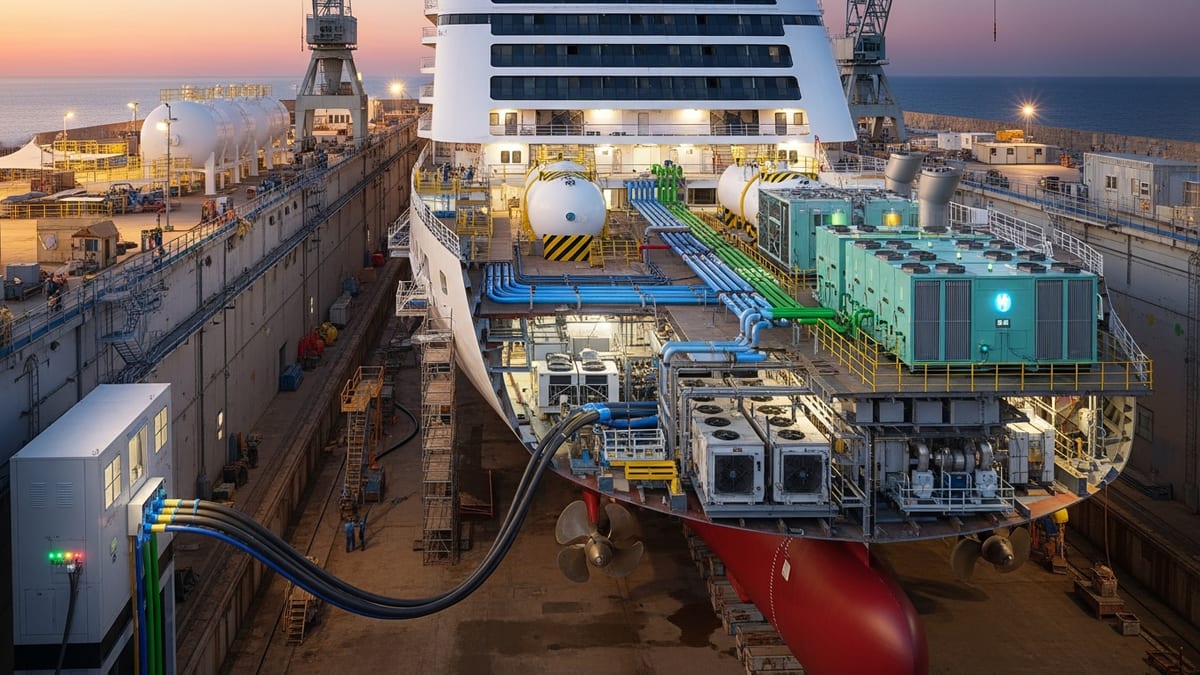
Three Shipyards, One Global Refurbishment Strategy
Recent drydock activity in Asia and Europe points to a coordinated Royal Caribbean strategy that uses shipyards in Singapore, Cadiz and St. Nazaire to refresh existing vessels and prepare the line for the next phase of cruise growth. Publicly available information shows that several large ships are now cycling through these facilities for maintenance, refurbishments and technology upgrades timed around key seasonal deployments.
Industry coverage indicates that Ovation of the Seas has entered drydock in Singapore ahead of its upcoming Alaska season, with work focused on technical overhauls and guest‑facing enhancements. In parallel, Harmony of the Seas and other large vessels are tied to upgrade programs in Cadiz, while St. Nazaire is emerging as a focal point for newbuild and lifecycle projects tied to the line’s future Discovery Class.
Reports describe this networked approach as a way for Royal Caribbean to balance routine safety and regulatory work with high‑impact refurbishments that keep older ships competitive with the latest hardware. By staggering projects across multiple continents, the line aims to reduce schedule disruption while ensuring that capacity returns to service aligned with peak demand in North America, Europe and Asia Pacific.
The timing coincides with a broader cruise tourism rebound, with recent travel data indicating that international visitor numbers have surpassed pre‑pandemic levels. The shipyard work in Singapore, Cadiz and St. Nazaire is therefore being read by analysts as a signal that Royal Caribbean expects sustained demand on marquee itineraries in Alaska, the Caribbean, the Mediterranean and selected Asia routes.
Singapore Drydock: Ovation and Asia’s Cruise Hub
Singapore’s role in this refit wave is anchored by Ovation of the Seas, which entered drydock in the city‑state in early April 2026. Cruise trade publications report that the work package includes routine underwater inspections, propulsion and hull maintenance, as well as interior refreshes designed to extend the ship’s commercial life and refine the onboard experience before it repositions for summer sailings.
Ovation is scheduled to return to service later in April, repositioning from Asia toward Japan and then to North America for an Alaska program. Travel industry coverage notes that this tight turnaround illustrates how drydock windows are engineered around revenue seasons, with shipyards in Singapore capable of handling complex work on large vessels within compressed timelines.
Singapore’s standing as a cruise hub is also reinforced by its ability to attract refit business beyond regular homeport calls. The city’s deepwater facilities, skilled maritime workforce and established supplier network make it an efficient stop for lines seeking to combine deployment changes with dockyard work. Analysts point out that Royal Caribbean’s decision to send a Quantum‑class ship to drydock there underscores confidence in the region’s technical capabilities.
For travelers in Asia and the Pacific, the Singapore drydock activity signals that more refreshed tonnage will rotate through the region in coming years. With competing brands also planning deployments from Singapore, enhanced Royal Caribbean hardware is likely to sharpen competition on itineraries stretching from Southeast Asia to Japan and Australia.
Cadiz Upgrades: Royal Amplification and Economic Impact
In Spain, Navantia’s Cadiz shipyards have become a key pillar of Royal Caribbean’s European refit strategy. Company statements and regional business coverage describe a multi‑year pipeline of cruise repair and revitalization projects, including extensive work on Allure of the Seas completed in 2025 and planned Royal Amplified upgrades on additional ships such as Harmony of the Seas.
Media reports from early 2026 highlight that Navantia expects another strong year for cruise ship repairs, with dozens of large vessels booked for maintenance and modernization at its facilities. Royal Caribbean features prominently within that schedule, reflecting a longstanding partnership that has seen several of the line’s largest ships undergo structural modifications, propulsion updates and major guest‑area redesigns in Cadiz.
The scale of these projects has meaningful economic consequences for the surrounding Andalusian region. Press accounts from Spanish outlets cite thousands of direct and indirect jobs linked to recent Royal Caribbean refurbishments, alongside investments running into the tens or hundreds of millions of euros for individual projects. Local observers frame the cruise refit segment as a stabilizing force for Navantia, complementing its naval and industrial contracts.
For cruise passengers, the Cadiz upgrades feed directly into the Royal Amplification program, which aims to bring features from the newest ships to earlier classes. Travel writers note that amplified ships typically return to service with reimagined pool decks, expanded family spaces, upgraded dining venues and refreshed cabins, raising the bar on short Caribbean and Mediterranean itineraries that rely on repeat customers.
St. Nazaire’s Role: New Discovery Class and Lifecycle Work
While Singapore and Cadiz focus largely on refits and maintenance, St. Nazaire in western France is emerging as the construction and long‑term lifecycle hub for Royal Caribbean’s next generation of ships. In January 2026, Royal Caribbean Group and Chantiers de l’Atlantique announced agreements for new Discovery Class vessels to be built in St. Nazaire, reinforcing a partnership that previously produced several of the line’s flagship ships.
According to the company’s public statements, Discovery Class is envisioned as a platform that will introduce new energy‑efficient technologies and guest experiences while aligning with tightening environmental regulations. Observers expect that St. Nazaire’s facilities will not only build these ships but also support future drydock periods focused on system upgrades, sustainability retrofits and design refreshes over the vessels’ operating lives.
For the shipyard, the contracts provide visibility into long‑term workload and sustain a skilled workforce experienced in large passenger‑ship construction. French regional coverage has underscored the strategic significance of securing multiple firm orders and options from Royal Caribbean, describing it as a boost for the local industrial ecosystem and a vote of confidence in St. Nazaire’s expertise.
From a tourism perspective, the Discovery Class pipeline suggests that Royal Caribbean is planning for demand scenarios that extend well into the 2030s. Analysts link this to expectations of continued growth in cruise markets in North America, Europe and emerging regions, with St. Nazaire’s output helping to refresh the fleet and eventually complement refitted vessels coming out of Singapore and Cadiz.
What Travelers and Destinations Should Watch Next
The current wave of drydock activity carries several practical implications for travelers. First, itineraries around refit windows can be subject to adjustments, and recent coverage has highlighted isolated cancellations or modified voyages when projects encounter delays. Prospective passengers are therefore being advised by travel agents to monitor booking communications closely for any changes linked to shipyard schedules.
Second, ships returning from major revitalizations typically command strong early demand, as frequent cruisers seek to experience new amenities and refreshed spaces. Industry analysts suggest that Ovation of the Seas post‑Singapore, Harmony of the Seas after Cadiz work, and future Discovery Class entrants from St. Nazaire are likely to feature prominently in marketing campaigns focused on upgraded hardware.
Destination ports also stand to benefit from the shipyard activity. As revitalized and newly built ships reenter service, they are expected to support higher onboard spending and potentially attract new demographics, from multigenerational families to premium travelers seeking resort‑style experiences at sea. Tourism boards in Alaska, the Caribbean, the Mediterranean and Asia are already factoring enhanced cruise capacity into their forward‑looking visitor strategies.
Finally, observers note that the geographic distribution of Royal Caribbean’s drydock and construction partners reflects a hedging strategy against regional disruptions. By maintaining major projects in Singapore, Cadiz and St. Nazaire simultaneously, the line gains flexibility to adapt to labor issues, regulatory changes or logistical bottlenecks while keeping its broader modernization timetable largely on track.