


More news on this day
King Charles III has expressed that he is “greatly saddened” after a train driver was killed and dozens of passengers were injured when two passenger services collided near Bedford in central England, a rail tragedy that has also caused major disruption for travelers heading into London.
Get the latest news straight to your inbox!
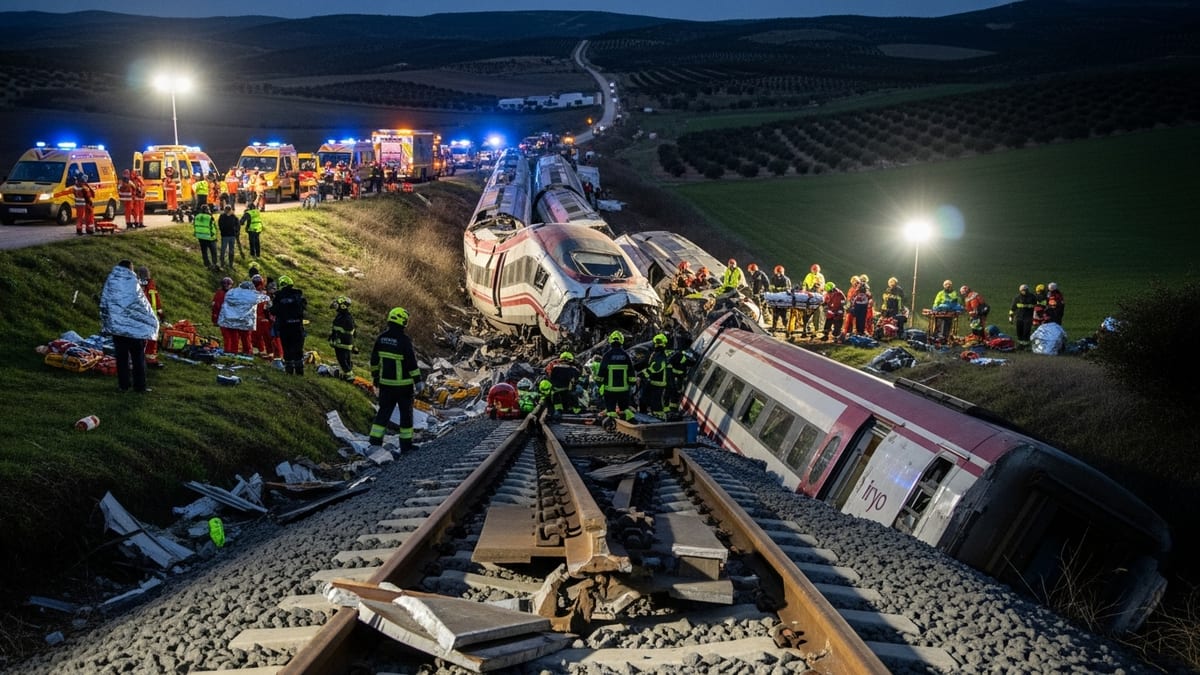
Collision near Bedford leaves one dead and many injured
According to published coverage from British and international outlets, the crash occurred on the afternoon of Friday 19 June 2026 on a busy section of line south of Bedford, around 90 kilometers north of London. Two London bound passenger trains operating for East Midlands Railway were traveling toward St Pancras station when one train ran into the rear of another.
Reports indicate that the driver of the rear train was killed in the impact, while around 80 to 90 passengers suffered injuries ranging from minor to critical. Several people were reported to be in very serious condition in nearby hospitals on Saturday, as emergency services continued to assess the full consequences of the crash.
Images and video shared by passengers and local media show carriages still upright but badly damaged, with twisted metal at the point of impact and shattered windows. Passengers were seen evacuating along the trackside while lines of ambulances and other emergency vehicles formed on adjacent roads, illustrating the scale of the response and the severity of the incident.
For many travelers, the incident turned an ordinary commuter or airport transfer journey into a prolonged ordeal. Some described being thrown from seats, while others spoke of helping fellow passengers who were unable to walk from their injuries. Rail services in the area were suspended for hours, stranding passengers across the Midlands and south east England.
Palace statement reflects national shock
In the aftermath of the collision, Buckingham Palace released a message stating that King Charles III was greatly saddened to learn of the crash. Publicly available information shows that the monarch’s thoughts and sympathies were extended to the family of the deceased driver as well as to those injured and affected by the tragedy.
The language of the Palace message underlined the sense of national shock around an accident of this kind on a network widely regarded as one of the safest in the world. Britain’s rail system has recorded relatively few fatal collisions in recent decades, so a crash involving mass casualties and the death of a train driver resonates strongly with both rail workers and regular passengers.
While the statement was primarily one of condolence, it also implicitly acknowledged the distress caused to the many people caught up in the incident, from those on board the trains to their families and friends awaiting news. For travelers, the public expression of sympathy by the monarch reinforces that the Bedford crash is being viewed as a serious national event rather than an isolated operational problem.
Such royal messages are customary after major transport accidents in the United Kingdom, but the specific reference to the driver and the injured highlights the human cost behind the technical investigations that now follow. It also reflects the importance of rail travel in the country’s daily life, connecting regional towns with the capital for both work and leisure.
What early reports say about how the crash unfolded
Rail operators and investigators have begun to piece together the sequence of events that led to the collision, although the full picture is expected to emerge only after a detailed inquiry. Based on reporting from news agencies and specialist rail coverage, an East Midlands Railway service toward London St Pancras is believed to have stopped or slowed unexpectedly on the line south of Bedford before a following service struck it from behind.
Technical issues on the leading train have been cited in some accounts as a possible factor, with suggestions that an onboard protection or safety system may have brought the train to a halt in an unusual location. The second train, traveling in the same direction, then approached at speed. Despite what is described as an emergency braking attempt, it was unable to stop in time to avoid a collision.
Commentary from rail analysts notes that rear end collisions of this kind are rare on modern British railways, where multiple layers of signaling technology and operating procedures are designed to prevent trains occupying the same section of track. Attention is therefore likely to focus on how signaling, train protection systems and human decision making interacted in the minutes before the crash.
The Rail Accident Investigation Branch has been notified and is expected to conduct a comprehensive investigation, reviewing data from onboard recorders, signal logs and radio communications. While no official findings have been released, previous inquiries into serious rail incidents in Britain have typically examined themes such as signal adherence, equipment reliability, driver workload and fatigue, and the configuration of automatic protection systems.
Impact on rail services and traveler confidence
The Bedford collision has had immediate and visible repercussions for passengers on key north south routes. Published reports describe widespread cancellations and diversions across East Midlands Railway services, with long distance trains from Nottingham, Sheffield and other cities disrupted as engineers assessed track and signaling damage at the crash site.
Services linking London to Luton Airport and to regional towns through Bedford were also heavily affected, forcing many travelers to transfer to replacement buses or to seek alternative rail routes into the capital. For international visitors connecting through London’s airports or planning onward journeys by train, the disruption served as a reminder of how a single incident on a congested main line can cascade across the wider network.
In the longer term, travel commentators expect questions about passenger confidence and perceptions of safety, particularly among those who witnessed the crash or followed dramatic images on news outlets and social media. While statistics still indicate that rail remains one of the safest ways to travel in Britain, the rarity of such serious collisions means that when they do occur, they can reshape public discussion about rail investment, signaling upgrades and staffing levels.
Tourism bodies and transport operators are likely to emphasize the overall safety record of British rail, even as they acknowledge the gravity of the Bedford incident. For many regular users and visiting travelers, reassurance may depend on seeing clear, transparent reporting of the investigation’s findings and concrete steps aimed at preventing a similar event.
Safety questions and the road ahead for Britain’s railways
Beyond the immediate condolences and service recovery, the Bedford crash is expected to feed into a broader debate about the future of rail safety standards in the United Kingdom. Recent years have seen ongoing programs to introduce more advanced signaling and train control technologies on busy routes, but coverage of the collision has highlighted the gaps that remain on some stretches of track.
Specialist commentary has pointed in particular to the role of automatic train protection and systems designed to intervene if a train passes a signal at danger or approaches another service too closely. Where such systems are not yet fully implemented, or where older equipment is still in use, investigators may look closely at whether technology could have reduced the severity of the Bedford impact or prevented it altogether.
There is also likely to be renewed scrutiny of operational policies including driver training, shift patterns and communication protocols between train crew and control centers. If inquiries identify any link between human factors and the circumstances of the crash, recommendations may follow that affect working practices across the wider network, not only on the line south of Bedford.
For travelers, the outcome of these reviews may eventually be visible in the form of infrastructure upgrades, revised safety briefings or new on board systems designed to protect passengers and staff. In the meantime, the focus remains on supporting those injured, assisting affected families and restoring normal service where possible, even as the rail industry absorbs the impact of a rare but deeply troubling tragedy in the heart of England’s main line network.